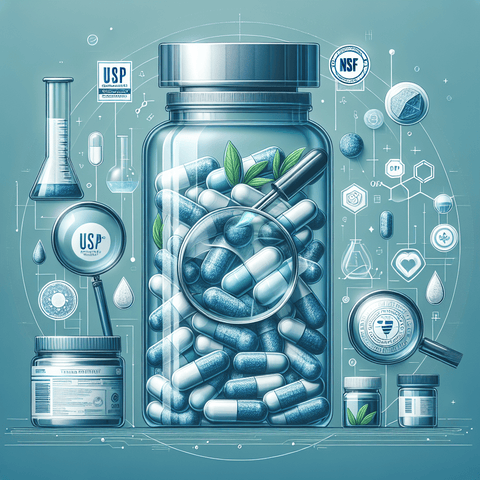
Third-party verification processes are independent testing and certification steps in which a qualified laboratory or certification body — not the supplement manufacturer — evaluates a product's identity, potency, and purity. This article explains how these processes work, why independent testing is not uniformly required in the supplement market, what research says about label accuracy and contamination, and how you can use certification seals, certificates of analysis, and label details to judge quality. It also clarifies what verification can and cannot tell you about whether a specific supplement is right for your individual needs.
Introduction: Why Third-Party Verification Processes Matter for Supplement Quality and Trust
Most dietary supplements are purchased without a prescription and used on personal judgment alone. Unlike medicines, they generally do not undergo pre-market approval, and in many markets there is no requirement that a finished product be independently tested before it reaches a shelf. Quality, therefore, depends heavily on the manufacturer's own standards. Third-party verification processes provide an external check: an independent organization confirms that what the label promises is actually in the container. For consumers, this transforms marketing claims into evidence, and it is one of the most practical tools available for making informed supplement decisions.
What Are Third-Party Verification Processes? Definition and How They Work
Third-party verification means that an organization with no financial stake in the product's sale tests or audits it against defined standards. The third party samples the product — ideally as a random retail purchase — analyzes it in a laboratory, compares results against the label and quality specifications, and either reports the findings or grants a certification mark. Because the verifier is independent, the results are more credible than internal claims alone.
Third-Party Testing vs. Self-Verification vs. Full Certification
- Self-verification refers to a manufacturer's in-house quality control. This can be legitimate and thorough, but the company has an inherent conflict of interest, and results are rarely published in full.
- Third-party testing means a specific batch is analyzed by an independent laboratory. It provides a reliable snapshot of that batch, but it does not automatically cover future production runs.
- Full certification is an ongoing program that combines product testing with facility audits, periodic re-testing, and the right to display a certification seal. It offers broader, but not absolute, assurance.
Key Terms Explained: Certificates of Analysis, ISO 17025 Labs, and cGMP Compliance
A certificate of analysis (CoA) is a laboratory document reporting test results for a specific batch — typically identity, potency against the label claim, and contaminant screening. A credible CoA should reference the batch number printed on your product. ISO/IEC 17025 is the international accreditation standard for testing laboratories; it confirms that the lab uses validated methods, calibrated equipment, and competent personnel. cGMP compliance (current Good Manufacturing Practice) refers to legally enforced manufacturing standards — in the United States, the FDA requires supplement manufacturers to follow them. Importantly, cGMP governs how products are made, but it does not guarantee that every finished batch has been independently tested.
Step by Step: What Happens During a Third-Party Verification Process
Although programs differ, most follow a recognizable sequence. First, the product is sampled, ideally purchased anonymously to prevent special handling. The laboratory then confirms ingredient identity — for botanicals this may involve DNA analysis or chemical fingerprinting. Potency testing compares actual nutrient levels with the label. Contaminant screening checks for heavy metals, microorganisms, pesticides, solvents, and, in some programs, undeclared pharmaceutical substances. Results are reviewed against specifications, and certification programs also audit the manufacturing facility and re-test products periodically.
Why Third-Party Verification Processes Matter for Your Health and Safety
Because supplements are used without medical supervision, label accuracy is a genuine safety issue. A person taking a product for vitamin D, for example, relies on the stated dose to avoid creeping toward excessive intake over time. Independent verification gives consumers a defensible reason to trust the numbers on the panel rather than marketing claims.
The Regulatory Gap: Why Third-Party Testing Isn't Legally Required for Supplements
In the United States, dietary supplements are regulated under the Dietary Supplement Health and Education Act of 1994. Manufacturers are legally responsible for safety, truthful labeling, and cGMP compliance, but there is no routine pre-market approval and no federal requirement for independent finished-product testing. In the European Union, claims and safety are harmonized under regulation, but enforcement intensity varies between member states. The practical takeaway: a product being legally sold does not mean it has been independently verified.
What Research Reveals About Label Accuracy, Contamination, and Adulteration
Market surveillance programs and independent testing organizations have repeatedly documented quality problems. These include products containing substantially less or more of an ingredient than stated, botanical products substituted with cheaper or incorrect plant material, omega-3 oils with elevated oxidation, probiotics with fewer live cultures than claimed, and — most concerning — supplements adulterated with undeclared pharmaceutical compounds, particularly in categories marketed for weight loss, sexual enhancement, or rapid muscle gain. Regulatory authorities including the FDA maintain public warning lists of tainted products, underscoring that these are recurring rather than isolated issues.
From Compliance to Confidence: How Verification Builds Trust Between Brands and Buyers
Verification converts a claim into auditable evidence. Brands that publish batch-level results invite scrutiny, which creates accountability that regulation alone cannot always provide. For buyers, verified quality makes products comparable on substance rather than packaging, and it signals that a company views quality assurance as an ongoing commitment rather than a one-time marketing exercise.
Red Flags and Situations That Make Verification Especially Important
Warning Signs a Supplement Has Not Been Independently Verified
- No certification seal and no certificate of analysis available on request
- Vague language such as "lab tested" or "clinically proven" without naming a laboratory
- No verifiable company address or contact information
- Dramatic, fast-result claims that sound too good to be true
- Prices far below market norms for expensive ingredients
- Proprietary blends that hide the amount of each ingredient
When the Stakes Are Highest: Drug-Tested Athletes and Third-Party Marketplace Purchases
For athletes subject to anti-doping rules, contamination with banned substances — even in trace amounts — can end careers, and inadvertent positive tests from contaminated sports supplement categories are a documented risk. Programs such as Informed Sport and Informed Choice test every batch against hundreds of prohibited substances specifically to address this risk. Marketplace purchases carry a different concern: products sold through third-party sellers may be counterfeit, expired, improperly stored, or diverted from their intended supply chain, which can invalidate even a genuine certification. Buying directly from the brand or an authorized retailer reduces this exposure.
Why Supplement Quality Problems Happen: Common Causes and Risk Factors
Complex Global Supply Chains and Economically Motivated Adulteration
A single supplement may contain raw materials sourced across several continents, passing through growers, brokers, processors, and contract manufacturers. At each step, high-value ingredients — premium botanicals, omega-3 concentrates, specialized extracts — become targets for dilution or substitution with cheaper analogs. This phenomenon, known as economically motivated adulteration, is difficult to detect without laboratory methods such as chromatography or DNA testing.
Manufacturing Weak Points: Cross-Contamination, Dosing Errors, and Inadequate In-House Testing
Even honest manufacturers face technical challenges. Shared equipment can leave traces of allergens or undeclared ingredients if cleaning is inadequate. Uneven blending can produce tablets with inconsistent doses, and weighing errors affect low-dose ingredients disproportionately. Nutrients also degrade during storage: some vitamins and oils are sensitive to heat, light, and oxygen. Smaller in-house laboratories may lack the validated methods needed to detect these issues, which is precisely where accredited external testing adds value.
What Third-Party Verification Can and Cannot Guarantee for You as an Individual
Verified Quality vs. Personal Suitability: Why Nutritional Needs Differ From Person to Person
Verification confirms identity, potency, and purity — not suitability. Whether a product fits your physiology depends on your age, sex, dietary pattern, pregnancy status, medication use, gastrointestinal health, sun exposure, and underlying health conditions. A perfectly verified vitamin D product, for instance, may be unnecessary for someone with high sun exposure or substantial dietary intake.
Why a Certified Product Is Not Automatically the Right Dose or Formula for Your Body
A certified multivitamin may contain more of certain nutrients than a particular person needs, and public health authorities set upper intake levels precisely because more is not always better. Form also matters: verification cannot optimize mineral forms, such as magnesium salts that differ in absorption and tolerability, or vitamin D3 versus D2. Evidence comparing forms is sometimes limited or conflicting, so a verified product should still be matched to your individual requirements.
A Food-First Foundation: Where Verified Supplements Fit Into a Healthy Lifestyle
Why Nutrient-Rich Whole Foods Come First and Supplements Fill the Gaps
Foods deliver nutrients within a matrix of fiber, protein, and phytochemicals, and balanced dietary patterns have been consistently associated with better long-term health outcomes. Supplements are designed to fill specific gaps, not to replace meals or offset a poor diet. Before purchasing anything, the most useful first step is an honest assessment of your usual food intake — vegetables, fruit, whole grains, dairy or fortified alternatives, fish, legumes, nuts, and seeds.
Everyday Habits That Protect Supplement Quality: Sourcing, Storage, and Shelf Life
Even a verified product loses value if stored poorly. Keep supplements in a cool, dry, dark place — not a steamy bathroom — and refrigerate products whose labels require it, such as certain probiotics and liquid oils. Buy quantities you will realistically finish before the expiry date, as potency of some vitamins and the viability of probiotic cultures decline over time. Omega-3 products are particularly vulnerable to oxidation, so check for freshness indicators and avoid capsules that smell rancid.
Which Supplement Categories Benefit Most From Third-Party Verification
Vitamins and Minerals: Confirming Potency and Label Accuracy
For basic vitamins and minerals, the primary risks are mislabeled potency and inadvertent overdose, especially with fat-soluble vitamins such as A, D, E, and K. Batch-tested products confirm that each serving delivers what the label states, which matters most for anyone using a multivitamin guide to ingredients, usage, and safety as part of a long-term daily routine.
Herbal and Botanical Supplements: Identity Testing, Heavy Metals, and Adulteration Risks
Botanicals are the hardest category to verify. Plant identity can be confused or intentionally substituted, active compound levels vary naturally between harvests, and plants can accumulate heavy metals from soil. Verification programs use DNA barcoding and chemical fingerprinting to confirm species and detect adulteration. Anyone exploring herbal supplement safety, sourcing, and traditional use should treat independent verification as especially important in this category.
Probiotics, Omega-3s, and Sports Supplements: CFU Counts, Oxidation, and Banned Substances
Probiotics contain living organisms, so the colony-forming unit (CFU) count should reflect the end of shelf life, and strain identity should be clearly stated — quality issues here are well documented. Omega-3 products can oxidize, reducing quality and potentially increasing rancidity, so verified testing of EPA and DHA content and oxidation values is meaningful. Sports supplements carry a distinct risk of contamination with banned stimulants or hormones. For products like probiotic and prebiotic supplements, verification adds assurance that live cultures and counts are accurate.
When a Third-Party Verified Supplement Makes Sense
Filling Real Nutritional Gaps vs. Supplementing "Just in Case"
Some gaps are relatively predictable: limited sun exposure affects vitamin D status; strict vegan diets may lack vitamin B12; people who eat little fish may have low omega-3 intake; pregnancy increases requirements for folate and iodine. These are clearer targets than an untargeted "just in case" product, which is often unnecessary when the diet is already varied.
General Nutritional Support vs. Addressing a Diagnosed Deficiency
General nutritional support can be a reasonable choice for people with restricted diets, but a diagnosed deficiency changes the equation. In that case, a clinician typically specifies a dose, form, and duration — and independent verification becomes particularly valuable, because treatment depends on getting the stated dose reliably. Self-treating vague symptoms without diagnosis risks masking an underlying cause.
How to Choose a Third-Party Verified Supplement
Major Certification Seals Compared: USP, NSF, Informed Choice, BSCG, and ConsumerLab
- USP Verified: confirms identity, potency, purity, and manufacturing quality through testing and facility audits.
- NSF: certifies products against the ANSI/NSF 173 standard; NSF Certified for Sport adds screening for banned substances.
- Informed Choice / Informed Sport: tests every production batch against a broad list of substances prohibited in sport.
- BSCG: focuses heavily on banned-substance screening, with additional quality testing programs.
- ConsumerLab.com: an independent testing organization that publishes results and grants its approval mark to products that pass.
No single seal covers everything, so match the program to your concern — banned substances for athletes, identity and potency for general use.
Beyond the Seal: Lab Accreditation, Batch Testing, and Brand Transparency
A seal is more meaningful when it reflects batch-level testing rather than a one-time product review. Look for brands that publish certificates of analysis, name their testing laboratories, and state whether those labs hold ISO/IEC 17025 accreditation. A company's willingness to answer specific quality questions is itself a useful signal.
Form, Dosage, and Bioavailability: Why Verification Alone Isn't Enough
Verification confirms the product is honest, not that it is optimal. Chemical form influences absorption — organic magnesium salts are generally absorbed more efficiently than magnesium oxide, and vitamin D3 is commonly preferred over D2 for maintaining status, though evidence comparing some forms remains limited. Nutrients such as vitamins A, D, E, and K are better absorbed when taken with dietary fat. Match the verified product to an appropriate dose and form for your situation.
Allergens, Added Ingredients, and Delivery Formats: Capsules, Tablets, Powders, and Gummies
Check for allergens such as gluten, soy, dairy, or gelatin if they matter to you, and review fillers, sweeteners, and colors. Delivery format affects practicality: tablets are compact but may be harder to swallow; powders allow flexible dosing; gummies are palatable but often contain sugar, may degrade faster, and can have less accurate dosing for some nutrients.
How to Read a Supplement Label Like a Quality Auditor
Decoding the Supplement Facts Panel: Serving Sizes, Amounts, and Proprietary Blends
Always start with the serving size — all amounts listed apply to that quantity, not the whole package. Compare each nutrient's amount and % Daily Value with your actual needs, and check whether a proprietary blend disguises the individual doses of key ingredients, which makes it impossible to evaluate meaningful dosing.
Meaningful Seals vs. Marketing Buzzwords on the Front of the Package
Front-of-pack terms like "premium quality," "pharmaceutical grade," and "clinically tested" are largely unregulated marketing language. Recognized certification seals from established organizations carry more weight because they are backed by defined standards, laboratory testing, and the certifier's own accountability.
How to Confirm a Certification Is Genuine Using Databases and Certificates of Analysis
Verify seals directly: USP, NSF, Informed Choice, and ConsumerLab all maintain searchable databases of certified products, and genuine seals are usually tied to a specific product and form. If a brand advertises third-party testing, request a recent certificate of analysis, confirm the batch number matches your product, and check that the laboratory named on the CoA is identifiable and, ideally, ISO/IEC 17025 accredited.
Who Benefits Most From Choosing Third-Party Verified Supplements
Higher-Stakes Groups: Pregnancy, Childhood, Older Adults, and People With Allergies or Restricted Diets
Verification matters most when dosing precision is critical. During pregnancy, accuracy matters for nutrients such as folate and iodine, while high-dose retinol forms of vitamin A are generally advised against. Children require appropriately scaled doses; older adults often use multiple medications, increasing interaction risk; and people with allergies or restricted diets depend on accurate allergen labeling.
Suspected Deficiencies: Why Blood Testing and Verified Products Work Together
Symptoms such as fatigue, muscle cramps, or low mood are non-specific and cannot confirm a nutrient deficiency on their own. For nutrients with validated tests — vitamin D (25-hydroxyvitamin D), vitamin B12, iron status (ferritin) — laboratory assessment guided by a healthcare professional is far more reliable than guessing. Once testing establishes a need, a verified product makes the dose you take predictable.
Safety Considerations That Verification Does Not Cover
Verified Doesn't Mean Risk-Free: Upper Limits, Medication Interactions, and Combination Products
A pure, accurately labeled product can still cause harm in excess. Public health authorities set tolerable upper intake levels for many nutrients — for example, the adult upper level for vitamin D is 100 micrograms (4,000 IU) per day — and combining a multivitamin with single-nutrient products can unintentionally exceed them. Known interactions matter too: vitamin K can counteract warfarin, high-dose vitamin E may increase bleeding risk with anticoagulants, and high-dose zinc over time can deplete copper.
When to Seek Professional Advice: Surgery, Chronic Conditions, and New Medications
Consult a qualified healthcare professional before supplementing if you take prescription medication, manage a chronic condition affecting the kidneys or liver, are scheduled for surgery, are pregnant or breastfeeding, or are considering high-dose products. A pharmacist can also screen for nutrient–drug interactions that verification processes are never designed to detect.
Do You Really Need a Third-Party Verified Supplement? A Practical Decision Framework
When Dietary Changes Alone May Be Enough
If your diet is varied, includes the main food groups, and you have no restrictions, allergies, or specific performance goals, improving food choices is usually more effective and more economical than adding supplements. Supplements work best as targeted tools, not dietary insurance.
When the Price Premium for Verified Products Is Worth Paying
The premium is most justified for products used daily over long periods, botanical supplements where identity and adulteration risks are higher, products for children or during pregnancy, and anything used by drug-tested athletes. If budget is limited, it is generally wiser to buy fewer, better-verified products than several unverified ones.
A Pre-Purchase Checklist for Confident Supplement Selection
- Identify the specific gap you are trying to fill, and check whether food changes could address it first
- Confirm a recognized certification seal and verify it in the certifier's database
- Review a current certificate of analysis matching the batch you are buying
- Check the nutrient form, dose per serving, and whether it fits your needs
- Review allergens, sweeteners, and other added ingredients
- Confirm the expiry date and storage requirements
- Screen for interactions with your medications with a professional if needed
The Bottom Line: Let Third-Party Verification Processes Guide Your Next Supplement Decision
Third-party verification processes are the clearest available evidence that a supplement is what it claims to be — correctly identified, accurately dosed, and free of significant contaminants. That assurance is worth seeking, especially for daily-use products, botanicals, higher-stakes groups, and athletes. But verification answers a quality question, not a personal health question. Whether you need a supplement at all depends on your diet, lifestyle, testing results, and individual circumstances, and food should remain the foundation. When supplementation is justified, choosing a verified product — matched to an appropriate dose and form — is one of the most rational decisions you can make.
Key Takeaways
- Third-party verification means an independent organization — not the manufacturer — tests a supplement's identity, potency, and purity.
- In most markets, including the United States, independent finished-product testing is not legally required for supplements.
- Research and regulatory surveillance have repeatedly documented label inaccuracy, contamination, and adulteration, especially in weight-loss, sexual enhancement, and sports categories.
- A certificate of analysis tied to your product's batch number is the most direct evidence of tested quality.
- Recognized seals — USP, NSF, Informed Choice/Informed Sport, BSCG, and ConsumerLab — differ in scope; match the program to your goal.
- Verification confirms quality, not personal suitability: dose, chemical form, and bioavailability still matter.
- Whole foods should come first; supplements are most valuable for filling identified gaps or diagnosed deficiencies.
- Higher-stakes users — pregnant women, children, older adults, allergy sufferers, and drug-tested athletes — benefit most from verified products.
- Verified does not mean risk-free: upper intake limits and medication interactions still require professional awareness.
Frequently Asked Questions
Is third-party testing legally required for dietary supplements?
No. In the United States, manufacturers must follow cGMP regulations and ensure truthful labeling, but there is no federal requirement for independent finished-product testing. Independent verification is voluntary, which is why certification seals and certificates of analysis carry real value.
What is a certificate of analysis and how do I use one?
A certificate of analysis (CoA) is a laboratory report showing test results for a specific batch, typically covering identity, potency, and contaminants. To use one, match the batch number on the CoA to your product, check that the results align with the label claim, and confirm the testing laboratory is named and preferably ISO/IEC 17025 accredited.
What does ISO 17025 accreditation mean for a testing laboratory?
ISO/IEC 17025 is the international standard confirming that a laboratory is technically competent: it uses validated methods, calibrated equipment, and trained personnel. Results from an accredited lab are considerably more reliable than results from an unevaluated facility.
Does third-party verification mean a supplement is FDA-approved?
No. The FDA does not approve dietary supplements for safety or effectiveness before marketing, and no certification seal changes this. Verification confirms product quality and label accuracy, not regulatory endorsement of therapeutic claims.
Which certification is best for athletes subject to drug testing?
Programs that test every batch for banned substances are most relevant: Informed Sport, Informed Choice, NSF Certified for Sport, and BSCG all screen against lists of prohibited substances. Athletes should choose products from these programs because contamination with even trace amounts of banned substances can trigger positive drug tests.
Are supplements bought from online marketplaces riskier?
They can be. Third-party sellers may list counterfeit, expired, or improperly stored products, and supply chains outside the brand's control can compromise quality. Buying directly from the manufacturer or an authorized retailer preserves the value of any certification.
Does third-party verification guarantee a supplement will work for me?
No. Verification confirms identity, potency, and purity, but whether a supplement suits you depends on your diet, health status, medications, and individual nutritional needs. Quality is a prerequisite, not a prescription.
How can I check whether a certification seal is genuine?
Look the product up in the certifier's official database — USP, NSF, Informed Choice, and ConsumerLab all offer searchable lists. A genuine seal corresponds to a specific product and formulation, not just a brand name, and can usually be verified in seconds online.
Are herbal supplements more likely to be mislabeled than vitamins?
They are generally considered higher risk because botanical identity can be confused or substituted, active compound levels vary naturally between harvests, and plants can absorb heavy metals from soil. Chemical fingerprinting and DNA-based identity testing are the main safeguards, making verification especially valuable in this category.
Should I still get blood tests if I already take a verified supplement?
If you are supplementing to correct or prevent a deficiency, testing is how you confirm whether your intake is actually adequate. Nutrients with validated clinical tests — such as vitamin D, vitamin B12, and ferritin — can be monitored with professional guidance, which is more reliable than judging by symptoms alone.
Is the price premium for third-party verified supplements worth it?
It depends on use. For occasional products with a low risk profile, the premium may be less critical. For long-term daily use, botanicals, pregnancy and children's products, and sports supplements where banned-substance contamination matters, the premium is generally justified by the reduced risk.
Can a verified product still contain too much of a nutrient?
Yes. Verification confirms the product matches its label — and some labels legitimately contain high doses. Check the amount per serving against established upper intake levels, and account for all products you take, since combination and multivitamin products can stack doses of the same nutrient.
Related Keywords
- third-party verification processes
- third-party supplement testing
- independent lab testing for supplements
- certificate of analysis (CoA)
- ISO 17025 accredited laboratory
- cGMP compliance for supplements
- USP Verified seal
- NSF Certified for Sport
- Informed Choice certification
- supplement label accuracy
- supplement adulteration and contamination
- heavy metals in supplements
- batch testing and supplement quality control
- banned substance testing for athletes