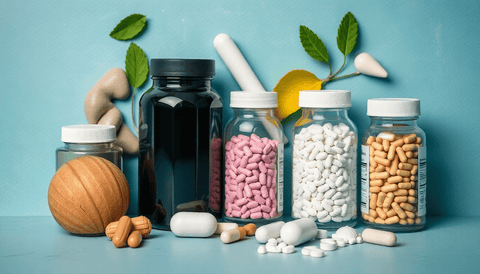
How Do You Know If Supplements Are High Quality?
Choosing a supplement that is safe, effective, and contains exactly what the label claims can be a challenge. The surest way to identify high-quality supplements is to look for brands that demonstrate transparency, use independent third-party testing, manufacture according to Good Manufacturing Practices (GMP), and provide clear evidence of potency, purity, and ingredient accuracy.
In this guide, we will walk you through a clear checklist, explain the role of third-party certifications, list the red flags to avoid, and answer your most common questions about supplement quality.
Your High-Quality Supplement Checklist
Use this abbreviated checklist when evaluating any supplement. Quality supplements should meet these important criteria:
- Third-Party Testing: Independent verification for purity, potency, and the absence of contaminants.
- Transparent Labeling: Clear, complete disclosure of every ingredient, including the amount per serving.
- GMP Compliance: Manufacturing in a facility that follows strict Good Manufacturing Practices.
- cGMP Certification: Certification that the facility meets current Good Manufacturing Practices standards set by the FDA.
- Absence of Red Flags: No miracle claims, hidden blends, or vague ingredient lists.
- Brand Integrity: A history of transparency, positive customer feedback, and accessible quality documentation.
Third-Party Testing and Certifications
Third-party testing involves an independent laboratory, separate from the manufacturer, that verifies a product’s quality. Look for recognized seals from organizations like:
- USP (United States Pharmacopeia): Verifies potential, purity, and that products are free from contaminants.
- NSF International: Confirms products meet strict quality and safety standards. Includes athletic banned-substance testing programs.
- ConsumerLab.com: Third-party testing that inspects quality, purity, and labeling.
These certifications confirm that the product contains what it claims to contain, is free from harmful levels of heavy metals, pesticides, and microbes, and has been made according to strict quality standards. Always prioritize brands that make their certificates of analysis (COA) easily accessible, usually on their website or upon request.
Understanding the Different Certification Types
Here’s a quick comparison of common certification types:
| Certification | What It Does | Key Benefit |
|---|---|---|
| USP | Verifies purity, potency, and manufacturing quality | Independent assurance of quality |
| NSF International | Tests for banned substances and quality | Ideal for athletes |
| ConsumerLab | Runs independent tests for quality and purity | Provides product-specific reviews and comparisons |
| GMP | Certifies a facility follows Good Manufacturing Practices | Showcases facility compliance with quality controls |
What is the Highest Quality Supplement Brand?
There is no single "highest quality" brand that works for everyone. The best brand for you depends on your individual health needs, dietary preferences, and budget. However, high-quality supplement brands generally share these attributes:
- Radical Transparency: They openly share ingredient sourcing, manufacturing details, and third‑party test results.
- Expert Involvement: Products are developed with input from pharmacologists, chemists, and nutrition experts.
- Positive Reputation: Customer reviews are consistently positive, but check for patterns, not occasional complaints.
- Industry Certifications: They often hold at least one independent certification claim (e.g., NSF, USP).
- Clear Product Info: They show exact ingredient amounts and forms (e.g., Vitamin D3 vs. D2), avoiding so-called "proprietary blends" that do not disclose individual doses.
Retailers like Topvitamine, which source from trusted international brands, can help you narrow the field. However, you still need to verify each product's quality checks.
How to Verify Ingredient Transparency and Dosage Accuracy
A high-quality supplement has a clear, transparent label. Does the supplement facts panel display the full amount of every active ingredient, including any that are part of a blend? If they’re complete, the product is probably legitimate.
- Active Ingredient Forms: Are the nutrient forms disclosed? For example, vitamin D3 (cholecalciferol) and D2 (ergocalciferol) have different potencies, and your label should state which form is used.
- Dose per Serving: Does the serving size provide an amount that is considered to be within a normal range? Avoid both underdosed (ineffective) and overdosed (possibly harmful) products.
- Allergens and Sensitivities: Look for gluten, soy, dairy, and other allergens in the “Other Ingredients” list if you have sensitivities.
- Fillers and Additives: check for artificial colors, sweeteners, preservatives, and unnecessary fillers. These do not contribute to quality or safety.
If a manufacturer is hesitant to share the exact form or amount of a nutrient, or uses a distributor to hide it, it’s a red flag.
Manufacturing Quality: GMP and Other Seals
- GMP (Good Manufacturing Practices): Ensures the product is consistently produced and controlled to ensure stable quality standards from raw material through final packaging.
- NSF Certified for Sport®: A stricter program that screens for banned athletic substances. It’s not just for athletes, but for anyone who wants extra assurance.
- USDA Organic: Indicates ingredients were grown without certain synthetic pesticides or fertilizers, but it is not a direct dashboard of supplement quality.
The seal of approval should be clearly stated on the product label, and you can even verify the brand’s certification number.
What Company Makes the Purest Supplements?
“Purity” refers to the absence of unwanted contaminants and how closely the product is to its label claims. It is difficult to name one single maker as the "purest.", because purity varies by batch, and the independent testing is the only guarantee. Consumers seeking pure supplements should rely on independent COAs and certifications. Look for brands that routinely test for pesticides, heavy metals, and microbial contamination.
Where Should You Buy Supplements?
High-quality supplements are available from various retailers, including pharmacies, online marketplaces, and specialty stores. Distinguish between drugstore brands and premium brands:
- Drugstores (Walgreens, CVS, etc.): Often sell value brands that may contain fewer ingredients, more fillers, and lower-cost forms. They can still meet regulatory requirements, but they may not always be the most effective.
- Online Specialty Retailers (like Topvitamine): Often curate brands from around the world, with higher certification standards and transparency. But they are not a complete guarantee—check for testing, ingredients.
- Healthfood stores: Often carry premium brands that are committed to clean labels, but price may be higher.
Where you buy largely comes down to the brand’s own quality criteria. Independently supplements with a USP or NSF seal, regardless of the store.
How to Evaluate Supplement Brand Quality and Reputation
Research a brand’s transparency and quality history. High-quality brands often:
- Show you their manufacturing processes: Look for pictures or a video of the facility, or a "free from" statement for common allergens.
- Provide COAs (Certificates of Analysis): This document from a lab shows you the exact results of the product quality test.
- Engage with customer concerns: A responsive support team that answers questions professionally is a good.
- Display regulatory compliance: Are they registered with the FDA as a dietary supplement facility?
How to Read a Certificate of Analysis (COA)
A COA is a lab report that tells you what is in the bottle. You should see, at minimum, the name of the supplement, the lab, the date, the results for potential and purity, and a limit component for contaminants. If the COA isn’t available publicly, ask the company. A high-quality brand will provide it.
Red Flags to Avoid When Buying Supplements
- Miracle Cure Claims: Be skeptical of language like "cures," "gets rid of," or "revolutionary."
- Unreasonably Low Price: Good ingredients cost money. Extremely cheap products often cut corners or Contain inferior or ineffective raw materials.
- Proprietary Blends Without Disclosure: A hidden blend that lists "Proprietary Blend" but doesn't state each ingredient, is opaque and puts you at risk.
- No Contact Information: Reputable companies provide a physical address, email, and phone number in their contact page.
- No Evidence of Third-Party Testing: If a company doesn't showcase testing, it hasn't been done.
- No Expiration Date or Lot Number: High-quality supplements are marked clearly. A missing number could mean poor quality controls.
Frequently Asked Questions
What is the highest quality supplement brand?
There is no single ranking. The best brand for you depends on your needs and budget, but you should look for brands that demonstrate high.
Where can I buy the highest quality supplements?
You can find high-quality supplements at pharmacies, online stores, and brands directly. Look for brands that have independent certification, even if they are in the premium tier.
How do you know if supplements are high quality?
You can know by looking for three key elements: third-party testing, transparent labeling, and GMP-compliant manufacturing. Third-party lab reports confirm the ingredients and purity. Label claims show the ingredient list and amounts. GMP compliance ensures the facility follows strict federal or international standards.
What company makes the purest supplements?
Several brands are known for their rigorous testing. But purity is achieved by -party testing and clean sourcing. Check the company’s certificates of analysis to confirm you’re buying a pure product.
Do high-quality supplements need to cost more?
Price is not always the best indicator of quality. But you should expect to pay more for certified organic ingredients, some forms like chelated minerals, and premium protocols. Price differences can reflect the quality of ingredients, not just brand.
Are cheaper supplements a good deal?
Sometimes, they can be safe, but they may be less bioavailable due to the use of lower-grade raw materials. It’s best to calculate the cost per effective serving, rather than the price per bottle.
Conclusion: Invest in Quality for Your Health
Choosing high-quality supplements is an investment in your health. Use our checklist to verify independent testing, label transparency, and manufacturing practices. Avoid red flags like vague labels and exaggerated claims. And when in, consult a healthcare professional, particularly if you are pregnancy, taking medication, or managing a health condition.
Remember, Topvitamine is here to help you make an informed selection with confidence. Always check with your doctor before adding new supplements to your routine.