Vitamin B12 is essential for nerve function, red blood cell production, and DNA synthesis. Yet, many people struggle with low B12 levels—not because they don't consume enough, but because their bodies cannot effectively absorb it. Understanding the key B12 absorption factors is essential for optimizing your health, especially if you are over 50, follow a plant-based diet, or have digestive issues. This guide explores the science of B12 bioavailability, the common barriers to absorption, and practical steps you can take to maintain healthy vitamin B12 status.
What Are B12 Absorption Factors and Why Do They Matter?
B12 absorption factors are the biological, dietary, and lifestyle variables that determine how much vitamin B12 your body can actually use from food or supplements. Bioavailability is the key concept: the amount of vitamin B12 that enters your circulation and reaches the cells where it is needed. The amount listed on a food label or supplement pack does not necessarily reflect what your body will retain.
B12 is unlike most other vitamins because its absorption depends on a highly specific sequence of steps. Any disruption along that chain can lead to deficiency even when dietary intake appears sufficient. This is why understanding the entire journey of B12—not just how much you consume—is essential for anyone assessing their nutritional status.
By exploring the full range of factors—from stomach acid to medications to gut health—you can better understand your own risk and take informed steps to support your health.
Defining Bioavailability
Bioavailability is the proportion of a nutrient that your body can absorb and use. In the case of vitamin B12, your digestive system must release B12 from food proteins, bind it to transport proteins, and deliver it to specific receptors in the small intestine. Each step can fail under certain conditions, which is why many people can eat plenty of B12 and still develop a deficiency.
The Journey of B12: From Mouth to Cells
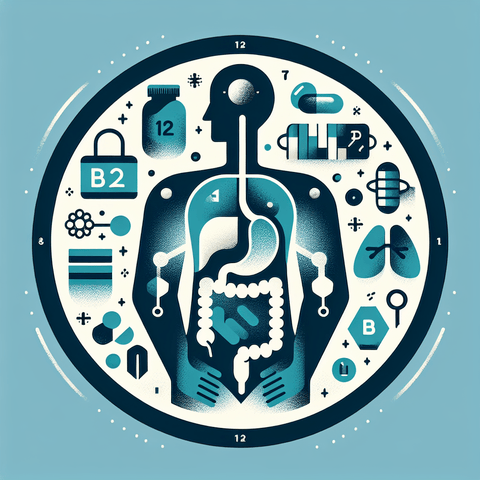
Vitamin B12 is one of the most complex vitamins in terms of absorption. It travels from the stomach into the small intestine, where it binds to a protein called intrinsic factor before being absorbed in the ileum. This multi-step process involves several key stages:
- Release from food proteins in the stomach, which requires hydrochloric acid and the enzyme pepsin.
- Binding to intrinsic factor, a protein produced by the stomach’s parietal cells, in the small intestine.
- Receptor-mediated uptake in the final section of the small intestine, known as the ileum.
- Transport into the bloodstream where B12 binds to proteins such as transcobalamin for delivery to tissues.
A disruption at any of these steps can reduce absorption, making it possible to consume adequate amounts of B12 and still experience deficiency.
What Depletes or Blocks B12 Absorption?
Several common factors can impair your body’s ability to absorb vitamin B12. Understanding these can help you identify potential risks and take proactive measures.
Age-Related Decline in Stomach Acid
As people age, stomach acid production naturally declines. This reduces the ability to release B12 from food proteins. Older adults may have normal blood levels of the vitamin but poor absorption of food-bound B12, which is why many guidelines recommend synthetic B12 sources for people over 50.
Medications That Interfere with B12 Absorption
Some medications can directly impact B12 absorption:
- Proton pump inhibitors (PPIs) and H2 receptor antagonists suppress gastric acid secretion, which is essential for extracting protein-bound B12 from food.
- Metformin, used for type 2 diabetes, may interfere with B12 absorption, particularly at higher doses or after years of use.
Gastrointestinal Conditions
Chronic digestive conditions can damage the areas of the gut where B12 is absorbed. For example, Crohn’s disease and celiac disease can affect the ileum, while atrophic gastritis reduces both stomach acid and intrinsic factor production, directly impairing absorption.
Dietary Factors
Natural B12 is almost exclusively found in animal products. Vegans and strict vegetarians who do not consume fortified foods or supplements are at high risk of deficiency, regardless of how healthy their diet may be. In this case, the issue is not absorption, but intake.
The Critical Link Between Stomach Acid and B12 Absorption
Stomach acid and pepsin are essential first steps in B12 absorption. Without adequate gastric acid production, the body cannot efficiently separate vitamin B12 from food proteins. This is why older adults—who frequently have reduced stomach acid—may consume enough B12 yet still become deficient.
The synthetic vitamin B12 found in supplements and fortified foods is not protein-bound and remains biologically accessible without stomach acid. This is why supplemental B12 can be a reliable source even when gastric acid secretion is reduced.
Supplementation as a Solution
For many people—especially vegans, older adults, those with GI conditions, and those on long-term medication affecting stomach acid—dietary intake alone may not be enough to maintain optimal B12 levels.
The body can absorb about 1–2% of a high oral dose through passive diffusion across the intestinal lining, without needing intrinsic factor. This is why high-dose oral B12 supplements (typically 1,000–2,000 mcg) can be effective even for those with malabsorption issues.
Forms of Vitamin B12 in Supplements
Vitamin B12 exists in several forms, and the type used in supplements can influence how well the nutrient is utilized, though individual needs vary. The most common forms include:
- Cyanocobalamin: A stable, synthetic form that the body converts to active coenzymes after absorption. It is well-researched and cost-effective.
- Methylcobalamin: A form that is already active and may be preferable for certain individuals.
For those exploring options, the vitamin B collection provides background on sources and safety considerations.
Supporting overall digestive health may be relevant for improving nutrient absorption in general. The probiotics and prebiotics collection addresses this area.
How to Get Vitamin B12 If Your Body Doesn't Absorb It Well
If absorption is impaired, focusing on intake from sources that do not rely on the normal digestive pathway can be helpful. There are several practical strategies to consider:
- Choose fortified foods: Fortified cereals, plant-based milks, and nutritional yeast contain synthetic B12, which can be absorbed without stomach acid.
- Consider high-dose oral supplements: High-dose supplements (1,000-2,000 mcg) rely on passive diffusion, bypassing intrinsic factor and stomach acid requirements.
- Explore different delivery methods: While sublingual drops, sprays, and tablets are available, the most important factor is the dose and consistent use.
For individuals with severe malabsorption, such as pernicious anemia, B12 injections may be necessary under medical supervision. However, for many, high-dose oral supplements are a safe and effective option.
Recognizing Signs of Low B12 Status
B12 deficiency can affect nearly any system in the body, but the most common signs cluster around the nervous system and blood production. Symptoms can be non-specific, which makes blood testing essential for confirmation.
Common neurological and cognitive symptoms include:
- Numbness, tingling, or a sensation in the hands and feet
- Balance problems and unsteadiness
- Brain fog, memory lapses, and difficulty concentrating
- Fatigue and weakness
Because these symptoms are not unique to B12 deficiency, relying on them alone is unreliable. Blood tests measuring serum B12, methylmalonic acid, and homocysteine provide far more accurate diagnostic information. A healthcare professional can help determine the most appropriate workup.
Who Should Monitor B12 Status?
Certain groups are at higher risk of poor B12 status and should prioritize monitoring their levels:
- Adults over 50
- People on long-term PPI or metformin therapy
- Vegans and strict vegetarians
- Individuals with autoimmune atrophic gastritis or other GI conditions
- People who have had gastric or ileal surgery
If you fall into one of these categories, discussing B12 testing with your healthcare provider is a sensible approach.
Key Takeaways on B12 Absorption Factors
Understanding the factors that affect B12 absorption is the first step in taking control of your health. Here are the main points to remember:
- B12 absorption is a multi-step process involving stomach acid, enzymes, intrinsic factor, and receptors in the ileum.
- Adequate stomach acid is required to absorb food-bound B12; impaired acid secretion can lead to deficiency even with a B12-rich diet.
- Older adults, people on acid-suppressing medication, and those with intestinal disorders are at increased risk.
- High-dose oral B12 supplements (1,000–2,000 mcg) may be effective even without intrinsic factor due to passive diffusion.
- Symptoms of deficiency are nonspecific and should be confirmed through blood tests.
- People over 50, patients on metformin or PPIs, those with GI conditions, and strict vegans should monitor B12 status regularly.
This article is for informational purposes only and does not replace professional medical advice. Always consult a healthcare provider before starting or changing your supplement routine.