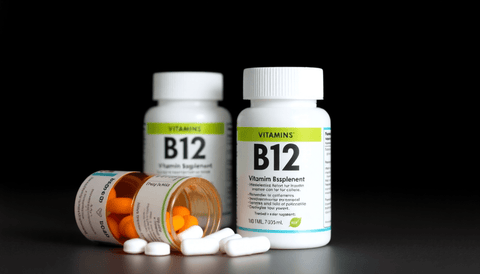
Vitamin B12 is often described as an "energy vitamin," and for good reason: it plays a central role in how your body converts food into usable fuel. If you have been searching for a b12 energy booster, you probably want to understand whether B12 can genuinely improve tiredness, how it works, and what to look for in a supplement. This article explains how vitamin B12 supports energy metabolism, why low levels can leave you feeling drained, when supplementation may be useful, and how to choose a quality product. It also clarifies an important point up front: B12 supports energy production in the body, but it is not a stimulant and will not create energy in someone whose levels are already adequate.
What Is a B12 Energy Booster and How Does It Work?
A B12 energy booster is typically a supplement — capsule, tablet, lozenge, liquid, or spray — that provides vitamin B12 (cobalamin) in one of several chemical forms. The goal is to correct or prevent low B12 status so that the body's normal energy-producing processes can function optimally. Unlike caffeine, B12 does not act on the nervous system to produce a quick lift; its effects, when a deficiency exists, relate to restoring normal metabolism over days to weeks.
Why Vitamin B12 Is Tied to Energy Levels
Vitamin B12 functions as a coenzyme in two processes directly relevant to how you feel day to day. First, as methylcobalamin inside cells, it supports the conversion of homocysteine to methionine, a step in the methylation cycle that is important for producing S-adenosylmethionine (SAMe), involved in numerous cellular reactions. Second, as adenosylcobalamin, it enables a key step in the breakdown of certain fatty acids and amino acids inside mitochondria — the structures where your cells generate most of their ATP, the body's energy currency. When B12 is insufficient, these reactions slow, and research links deficiency with fatigue, weakness, and reduced exercise tolerance.
B12 is also required for red blood cell formation. Inadequate B12 can lead to megaloblastic anemia, in which red blood cells are larger and less efficient at carrying oxygen. Reduced oxygen delivery to tissues is a well-established cause of tiredness and breathlessness during exertion.
The Difference Between B12, B-Complex, and Multivitamin Energy Formulas
Not all "energy" supplements are the same. A single B12 supplement provides cobalamin alone and suits people specifically concerned with B12 status. A B-complex contains all eight B vitamins, which makes sense when your diet is broadly low in B vitamins, since several of them (including B6, folate, and riboflavin) also participate in energy metabolism and methylation. A multivitamin covers the whole micronutrient spectrum at modest doses and is a general safety-net option rather than a targeted B12 intervention. Choosing between them comes down to your diet, risk factors, and whether a specific gap or a general top-up is the goal. You can learn more in our guide to vitamin B — benefits, sources and safety.
How a B12 Deficiency Can Affect Your Energy
B12 deficiency develops gradually. The body stores several years' worth of B12 in the liver, so blood levels can take a long time to fall, and symptoms often appear slowly. This is one reason deficiency is frequently overlooked: persistent tiredness is attributed to busy lifestyles when an underlying nutritional cause may be contributing.
Early Signs Your Energy Levels Might Be Linked to B12
Low B12 has been associated with symptoms such as:
- Persistent fatigue and weakness that rest does not resolve
- Shortness of breath or reduced exercise tolerance
- Pale or slightly yellowish skin
- Dizziness or lightheadedness on standing
- Tingling or numbness in hands and feet (a sign of nerve involvement)
- Difficulty concentrating, brain fog, or low mood
These symptoms are non-specific — many of them can be caused by conditions entirely unrelated to B12, including thyroid problems, iron deficiency, sleep deprivation, and depression. Experiencing fatigue does not mean you are B12 deficient, and supplementing based on symptoms alone can delay diagnosis of another issue. This is why testing and professional assessment matter.
Who Is Most at Risk for Low B12 Levels
Several groups are more likely to have low B12 status:
- People following vegetarian or vegan diets, since B12 occurs almost exclusively in animal-derived foods
- Adults over roughly 50, due to declining stomach acid production that impairs absorption of food-bound B12
- People with digestive conditions such as pernicious anemia, celiac disease, Crohn's disease, or gastric surgery history
- Long-term users of certain medications, particularly metformin and acid-reducing drugs (proton pump inhibitors and H2 blockers)
Causes and Contributing Factors Behind Low B12
Dietary Intake: Vegetarian and Vegan Considerations
B12 is produced by microorganisms and accumulates in the food chain through animals. Meat, fish, eggs, and dairy are therefore the main natural sources. Plant foods are essentially unreliable sources unless fortified. People who eat little or no animal food can maintain status through fortified foods (fortified plant milks, nutritional yeast, breakfast cereals) or supplements, and research consistently indicates that supplementation is a practical necessity for many vegans rather than an optional extra.
Age, Absorption, and Digestive Health
Absorbing B12 from food is a multi-step process requiring stomach acid to release B12 from proteins, plus a carrier molecule called intrinsic factor, produced in the stomach. With age, stomach acid output often declines, reducing absorption of food-bound B12 — though synthetic B12 in supplements, which does not require stomach acid, can still be absorbed. Conditions affecting the stomach or small intestine — atrophic gastritis, celiac disease, inflammatory bowel disease, or prior gastric bypass — can substantially reduce absorption regardless of intake.
Medications and Conditions That Interfere with B12 Absorption
Long-term use of proton pump inhibitors and H2 receptor antagonists can lower B12 absorption by reducing stomach acid. Metformin, widely used for blood sugar management, has been associated with reduced B12 status over time, and guidelines in some countries recommend periodic monitoring. Nitrous oxide misuse can inactivate B12, and heavy alcohol use may contribute to poor status through both intake and absorption effects. If you take any of these medications long-term, it is worth discussing B12 monitoring with your doctor rather than self-supplementing blindly.
Why Individual B12 Needs Vary
The official adequate intake for B12 is small — a few micrograms per day — but the amount you actually need to absorb depends on individual circumstances. Someone with strong stomach acid and a varied omnivorous diet may have no trouble meeting needs from food, while an older adult with atrophic gastritis may absorb only a fraction of dietary B12 and benefit from supplemental forms.
How Genetics Can Affect B12 Conversion and Utilization
Genetic variation can influence how the body processes B12 and related nutrients. Variants in genes involved in the methylation cycle, such as MTHFR (which affects folate metabolism), interact with B12 status, though the practical implications for healthy people are modest and often overstated in marketing. Transport proteins involved in B12 delivery into cells also vary genetically. The evidence here is evolving; genetic tests are not a substitute for measuring actual B12 status through blood work.
Lifestyle Demand: Stress, Activity, and Recovering from Fatigue
High training loads, physical recovery from illness, and periods of chronic stress all increase overall metabolic demand on B vitamins. This does not mean athletes automatically need megadoses of B12, but energy metabolism does depend on an adequate supply of all B vitamins, and marginal intake combined with high demand can contribute to feeling run down. Sleep quality, alcohol intake, and general diet quality remain the larger levers for most people.
Dietary and Lifestyle Foundations for Energy
Best Food Sources of Vitamin B12
For most people eating animal products, food alone easily covers B12 needs. The richest sources include:
- Liver and organ meats (exceptionally high in B12)
- Shellfish, particularly clams
- Fatty fish such as salmon, sardines, and mackerel
- Beef, pork, and poultry
- Eggs and dairy products, including milk, cheese, and yogurt
- Fortified foods: plant milks, vegan spreads, nutritional yeast, and breakfast cereals
B12 is fairly heat-stable compared to some other vitamins, though prolonged boiling can cause some losses. Dairy and eggs contain smaller amounts than meat, so strict vegetarians who eat only these should still pay attention to total intake.
Everyday Habits That Naturally Support Energy and Nutrient Absorption
B12 is only one piece of the energy puzzle. Habits with strong evidence for improving day-to-day energy include consistent sleep of sufficient duration, regular physical activity (which itself improves mitochondrial function), adequate hydration, balanced meals containing protein and fiber to avoid blood sugar dips, and moderating alcohol. Iron status, vitamin D status, and overall diet quality all influence fatigue as well — our guide to multivitamins, ingredients and usage covers the broader nutritional picture, and vitamin D — benefits, sources and safety is relevant if your fatigue coincides with low sun exposure.
What to Know About B12 Supplementation
Which Forms of B12 Are Used in Supplements
Supplements use several chemical forms of cobalamin:
- Cyanocobalamin: the most common and least expensive form; a synthetic, highly stable form that the body converts to active coenzymes.
- Methylcobalamin: the methylated form used directly in the methylation cycle; popular for sublingual and lozenge products.
- Adenosylcobalamin: the mitochondrial form; less common, sometimes paired with methylcobalamin.
- Hydroxocobalamin: used mainly in medical injections; occasionally found in supplements.
The Difference Between Single B12 and B-Complex Energy Boosters
A single B12 product is appropriate when you know B12 is your specific concern — for example, vegan diets, metformin use, or confirmed low levels. B-complex formulas make sense when multiple B vitamins may be low, such as with very restrictive diets or high alcohol intake. There is no evidence that taking a full B-complex produces "more energy" than correcting an actual deficiency; excess B vitamins beyond what the body needs are simply excreted or offer no added benefit.
When Supplementing B12 May Be Worth Considering
Situations Where Food Alone Often Falls Short
Supplementation is reasonably considered when:
- You follow a vegan or largely plant-based diet without consistent fortified foods
- You are over 50 with reduced stomach acid
- You take metformin or long-term acid suppressants (ideally with monitoring)
- You have a malabsorption condition or gastric surgery
- Blood testing has indicated low or borderline B12 status
For someone eating a varied omnivorous diet with no risk factors, food alone is typically sufficient, and routine B12 supplementation adds little.
How B12 Supplements Differ from Medical Treatment for Fatigue
It is crucial to distinguish nutritional support from medical care. Fatigue is a symptom with many possible causes — thyroid disorders, anemia of other origins, sleep disorders, depression, heart or kidney conditions, and more. Diagnosing and treating fatigue is a medical process; a B12 supplement is only appropriate when B12 status is genuinely low or intake is unreliable. If you have persistent, unexplained fatigue — especially with neurological symptoms like numbness, balance problems, or cognitive changes — see a doctor before self-treating. Early B12-related nerve damage responds best to prompt medical intervention.
How to Choose a B12 Energy Booster
Cyanocobalamin vs. Methylcobalamin and Other Forms
Both cyanocobalamin and methylcobalamin can correct deficiency, and head-to-head evidence for superiority in healthy people is limited and mixed. Cyanocobalamin is the most studied and affordable option, and the body converts it to active forms. Methylcobalamin is the form directly used in methylation and is often preferred by those with methylation concerns, though most people convert cyanocobalamin efficiently. Some products combine methyl- and adenosylcobalamin to cover both active roles. Price and marketing claims often exaggerate differences that the evidence does not clearly support — any reliable form, taken adequately, will raise B12 status.
Capsules, Tablets, Liquids, Lozenges, and Sprays
Delivery format matters mainly for practicality and absorption circumstances. Swallowed capsules and tablets are the standard, cost-effective choice. Sublingual tablets and lozenges dissolve under the tongue and are popular, though research suggests swallowed B12 at adequate doses is absorbed comparably well through a passive diffusion pathway in the gut. Liquids and sprays suit people who have difficulty swallowing pills. A meaningful advantage of high-dose oral B12 (typically in the range of 500–1,000 micrograms) is that passive diffusion allows a small percentage to be absorbed even without intrinsic factor — which is why oral high-dose regimens are used in some clinical contexts under medical supervision.
Essential Quality Indicators and Third-Party Testing
Supplement quality varies. Look for:
- Clear labeling of the B12 form and dose per serving
- Third-party testing or certification for identity and purity
- Manufacturing under recognized quality standards (e.g., GMP)
- Transparent ingredient lists without unnecessary fillers, artificial colors, or allergens you avoid
- Suitable certifications if you need vegan, gluten-free, or allergen-free products
Understanding Supplement Labels and Dosage
How to Read Ingredient Names and Nutrient Forms
Labels list the chemical form (e.g., "methylcobalamin") and the amount per serving in micrograms (mcg). Note whether the dose is per capsule, per lozenge, or per spray, and check for a "proprietary blend" — a practice that hides individual ingredient amounts and is best avoided for targeted supplements like B12.
What to Look For in a Serving Size and Potency
Supplement doses of B12 are often dramatically higher than the few micrograms you need daily — products commonly contain 500 to 5,000 mcg. This is not inherently dangerous (see safety below), but it means label potency reflects marketing and absorption strategy rather than nutritional requirement. If your goal is routine insurance against low intake, a modest-dose product is sufficient. Higher doses are typically intended for absorption problems or confirmed deficiency, ideally with professional guidance.
Added Ingredients: Methylfolate, Magnesium, and CoQ10
Some "energy" formulas combine B12 with methylfolate (the active folate form, which works alongside B12 in methylation and prevents folate from masking a B12 deficiency), magnesium (involved in hundreds of energy-releasing reactions — see our guide to magnesium for energy, muscle and bone support), or CoQ10 (a mitochondrial compound). These combinations can be convenient, but each added nutrient raises the dose and interaction considerations, and combination products may supply amounts you do not need. A targeted single-nutrient product or a well-formulated B-complex is often the more precise choice.
Who May Benefit Most from a B12 Energy Booster
Athletes, Older Adults, and Plant-Based Eaters
The clearest candidates are vegans and vegetarians with limited fortified-food intake, adults over 50, and people taking metformin or long-term acid suppressants. Athletes with restrictive diets may also benefit, but there is no evidence that B12 supplementation above adequate levels enhances performance in athletes with normal status. For general sports nutrition, our sports supplements guide covers evidence-based options.
When Blood Testing Can Help Confirm Your Status
Symptoms cannot reliably establish B12 status. A standard serum B12 blood test is widely available and inexpensive; borderline results can be clarified with methylmalonic acid (MMA) and homocysteine tests, which are more sensitive functional markers. If your fatigue is persistent, unexplained, or accompanied by neurological symptoms, testing is a better first step than guessing. People with risk factors — vegan diets, metformin use, malabsorption conditions, age over 50 — may benefit from periodic checking even without symptoms, and supplement decisions are much easier to make when you know your starting point.
Safety, Side Effects, and Interactions
How Much B12 Is Too Much
B12 has a very favorable safety profile. No toxic upper intake level has been established, because excess B12 is largely excreted in urine. Intakes many hundreds of times the daily requirement have not shown consistent adverse effects in adults. Mild side effects occasionally reported include digestive upset or, rarely, allergic-type reactions. That said, very high doses should not be taken casually or indefinitely without a reason, and self-treating fatigue with megadoses can mask an undiagnosed condition.
Interactions with Medications and Other Supplements
Key considerations include:
- Potassium supplements: very high doses of B12 taken long-term may lower potassium levels in susceptible people.
- Chloramphenicol: this antibiotic can interfere with B12's role in red blood cell production.
- Folic acid: high-dose folate can correct anemia caused by B12 deficiency while allowing nerve damage to progress undetected — a key reason paired B12/folate products and testing matter.
- Metformin and acid suppressants: these reduce B12 absorption, meaning supplementation may be reasonable rather than contraindicated — but monitoring is preferable.
If you take prescription medication regularly or have kidney or liver conditions, check with a pharmacist or doctor before adding high-dose B12.
Making an Informed Decision About B12 Energy Boosters
When Diet and Lifestyle Should Come First
For most people with adequate B12 status, no supplement will match the energy benefits of better sleep, regular movement, balanced meals, stress management, and adequate intake of iron, magnesium, and other nutrients. Supplements fill gaps; they do not override lifestyle fundamentals. Address diet first — particularly if you eat animal products regularly and have no absorption concerns.
How to Match a Supplement to Your Personal Needs
If supplementation is appropriate for you, match the product to the reason: a modest-dose single B12 for dietary insurance, a B-complex for broader B-vitamin coverage, or a higher-dose product when absorption is compromised — the latter ideally guided by testing and professional advice. Choose a form and format you will actually take consistently, from a manufacturer with transparent quality practices.
When to Consult a Healthcare Professional
Seek professional input if you have persistent or severe fatigue, any neurological symptoms, a diagnosed malabsorption condition, complex medication use, or pregnancy and breastfeeding (when needs and monitoring differ). A clinician can order appropriate tests and determine whether B12 is genuinely the issue.
The Bottom Line on B12 Energy Boosters
Vitamin B12 genuinely supports energy — through mitochondrial metabolism, red blood cell formation, and nerve function — but it works by enabling normal physiology, not by acting as a stimulant. If your B12 status is low, correcting it can meaningfully improve tiredness over weeks. If your levels are already adequate, extra B12 is unlikely to add energy, and better sleep, diet, and activity will do more. Know your risk factors, consider testing if fatigue is unexplained, and when supplementation makes sense, choose a quality product with a clear form, sensible dose, and third-party verification.
Key Takeaways
- B12 supports energy by enabling mitochondrial ATP production, methylation, and red blood cell formation — it is not a stimulant.
- Correcting a genuine B12 deficiency may improve fatigue; taking extra B12 when levels are adequate offers no proven benefit.
- Plant-based eaters, adults over 50, people with malabsorption conditions, and long-term users of metformin or acid suppressants are at highest risk of low B12.
- B12 is found almost exclusively in animal foods; vegans need fortified foods or supplements to maintain status.
- Symptoms of low B12 are non-specific — testing (serum B12, plus MMA or homocysteine if borderline) is more reliable than self-diagnosis.
- Cyanocobalamin and methylcobalamin can both restore B12 status; claims of large superiority differences are not well supported.
- B12 has no established toxic upper limit, but very high doses should not be used to self-treat unexplained fatigue.
- Folic acid can mask B12 deficiency's anemia while nerve damage progresses — a key interaction to understand.
- Diet, sleep, and activity remain the foundation of energy; supplementation fills specific gaps.
Frequently Asked Questions
Does a B12 supplement give you energy immediately?
No. B12 is not a stimulant and does not work like caffeine. If you are deficient, noticeable improvements in energy typically develop over days to weeks as metabolism and red blood cell production normalize. If your levels are already adequate, you are unlikely to feel any effect.
How long does it take to feel better after starting B12?
Energy-related symptoms in deficient individuals often begin improving within one to two weeks, with fuller recovery over several weeks to months. Neurological symptoms can take longer to resolve, which is why early diagnosis matters.
Which form of B12 is best for energy?
All nutritionally adequate forms — cyanocobalamin, methylcobalamin, adenosylcobalamin — can restore B12 status. Evidence does not clearly show one form is superior for energy in healthy people. Choose based on tolerability, price, and product quality rather than marketing claims.
Can I take too much B12?
B12 toxicity is rare and no official upper limit exists, as excess is excreted in urine. However, taking very high doses long-term without a reason is unnecessary, and it can mask underlying problems if fatigue has another cause.
Is sublingual B12 better than capsules?
Research suggests sublingual and swallowed forms are absorbed comparably well at adequate doses. Sublingual tablets are convenient for people who dislike swallowing pills, but there is no proven absorption advantage.
Do vegans really need a B12 supplement?
Yes, in most cases. Reliable plant-based sources are limited to fortified foods and supplements, and studies consistently show that vegans who do not use either have a high likelihood of low B12 status over time.
Can low B12 cause anxiety or brain fog?
Low B12 has been associated with cognitive symptoms, low mood, and difficulty concentrating, but these symptoms have many other causes. Testing is the only reliable way to know whether B12 is contributing.
Should I take B12 in the morning or at night?
Timing does not meaningfully affect B12 absorption or its energizing effects. Take it whenever you will remember consistently; some people prefer morning as part of a routine.
Does metformin cause B12 deficiency?
Long-term metformin use has been associated with reduced B12 status in a significant minority of users. Guidelines in some countries suggest periodic monitoring, and supplementation is often reasonable — ideally discussed with your doctor.
Can B12 replace caffeine?
They work entirely differently. Caffeine provides a temporary stimulant effect; B12 supports underlying metabolism only when levels are low. B12 does not produce an immediate alertness boost in someone with adequate levels.
Is it safe to take B12 every day?
Daily B12 at typical supplement doses is considered very safe for most people. If you have kidney or liver conditions, take regular medications, or are pregnant or breastfeeding, confirm dosing with a healthcare professional.
How much B12 should I take daily?
The recommended daily intake for adults is only about 2.4 micrograms, while common supplement doses range from 500 to 1,000 micrograms to account for absorption limits. The right dose depends on your reason for supplementing — modest doses for dietary insurance, higher doses (professionally guided) for absorption problems or confirmed deficiency.
Related Keywords
- b12 energy booster
- vitamin B12 for energy
- vitamin B12 deficiency fatigue
- methylcobalamin vs cyanocobalamin
- B12 supplement for tiredness
- sublingual vitamin B12
- vitamin B12 vegan supplement
- B-complex for energy
- vitamin B12 absorption problems
- B12 and red blood cell production
- metformin vitamin B12 deficiency
- best form of vitamin B12 supplement
- B12 for older adults
- vitamin B12 dosage for energy