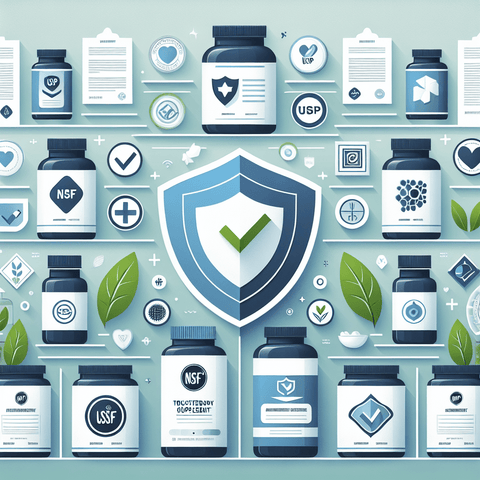
Certified dietary brands are supplement companies whose products have been evaluated by independent organizations—such as USP, NSF International, or Informed Choice—that verify identity, potency, purity, and manufacturing quality. Because dietary supplements are regulated differently from prescription drugs, third-party certification is one of the most practical tools shoppers have for judging product quality. This article explains what the major certifications actually mean, where regulatory gaps exist, which supplement categories carry the highest risks, and how to read labels and verify seals before buying. You will also learn when testing and professional guidance matter more than any label, and how a healthy diet fits into the decision.
Certified Dietary Brands: What to Know Before You Buy Any Supplement
Dietary supplements occupy a unique corner of the marketplace. Unlike prescription medicines, they do not require pre-market approval from regulators, which means the bottle on the shelf may not always contain exactly what the label promises. Certified dietary brands address this gap by submitting products to independent organizations that test for ingredient identity, strength, and contaminants while auditing manufacturing facilities. Below, you will learn what the major certification marks verify, where regulation leaves room for quality problems, which product categories carry the highest risks, and how to evaluate any brand—certified or not—before spending money.
What Are Certified Dietary Brands? Definition and Certification Basics
A certified dietary brand is a supplement manufacturer whose products have been voluntarily verified by an independent third party. Certification typically involves testing finished products for identity and potency, screening for contaminants such as heavy metals and microbes, and auditing manufacturing facilities against recognized quality standards. Importantly, certification is not a government endorsement. It is a commercial arrangement between the manufacturer and the certifying body—but because the certifier stakes its reputation on its mark, it creates an accountability layer that unverified brands lack.
Major Supplement Certifications Explained: USP, NSF, GMP, and Informed Choice
- USP Verified: The United States Pharmacopeia confirms that a product contains the ingredients listed on the label at the labeled amounts, screens for certain contaminants, and audits the manufacturer's processes.
- NSF International: NSF certifies products to the NSF/ANSI 173 standard for dietary supplements. NSF Certified for Sport adds screening for substances banned by major athletic organizations.
- GMP (Good Manufacturing Practices): cGMP compliance is the FDA-required baseline for supplement manufacturing in the United States. Third-party GMP certification, offered by organizations such as NSF and UL, adds independent facility audits on top of the legal minimum.
- Informed Choice / Informed Sport: These programs, run by the laboratory LGC, batch-test products for banned substances—a priority for tested athletes.
USP vs. NSF vs. GMP: Which Certification Should You Look For?
GMP certification addresses how a product is made, while USP and NSF primarily verify what is in the finished product. For general quality assurance, a USP Verified or NSF-certified mark is the most directly relevant to shoppers, because it confirms label accuracy in the bottle you purchase. Athletes subject to drug testing should prioritize NSF Certified for Sport or Informed Choice marks, which specifically screen for banned substances. Ideally, a brand combines GMP-compliant manufacturing with product-level third-party testing—though even one recognized mark meaningfully reduces quality uncertainty.
Why Certified Dietary Brands Matter for Your Health and Safety
How Dietary Supplements Are Regulated — and Where the Gaps Are
In the United States, the Dietary Supplement Health and Education Act of 1994 (DSHEA) classifies supplements as a category of food rather than drugs. Manufacturers are legally responsible for safety and label accuracy, but products do not undergo FDA review before sale. The FDA acts largely after the fact—inspecting facilities, monitoring adverse event reports, and issuing warnings. This means that a supplement can reach shelves without any regulator having verified its contents, leaving third-party certification as the main independent check available to consumers.
Common Quality Problems: Contamination, Mislabeling, and Adulteration
Independent testing programs have repeatedly documented three categories of problems. Mislabeling includes products containing substantially more or less of an ingredient than stated, which can undermine both effectiveness and safety. Contamination involves heavy metals, pesticides, or microbes entering products through poor sourcing or manufacturing. Adulteration—the deliberate addition of undeclared pharmaceutical or experimental compounds—is less common but most serious. "Proprietary blends" that hide individual ingredient amounts add a further layer of uncertainty, since you cannot verify whether therapeutic amounts are actually present.
Which Supplement Categories Carry the Highest Quality Risks
FDA warnings and testing surveys suggest that risk is not evenly distributed. Products marketed for weight loss, sexual enhancement, and rapid bodybuilding results account for a disproportionate share of adulteration warnings, because undeclared drugs produce the "quick results" these products promise. Complex herbal supplements with multi-ingredient blends also carry elevated risks, since botanical identity, sourcing, and concentration are harder to verify. Certified marks are particularly valuable in these categories.
How to Spot a Trustworthy Supplement Brand: Signs and Red Flags
Clear Signs of a Certified, Quality-Focused Brand
- Recognized third-party seals (USP, NSF, Informed Choice) on packaging
- Publishing certificates of analysis or batch-test results on request or online
- Fully disclosed ingredient amounts with no hidden proprietary blends
- Clear contact information and a reachable customer service team
- Transparent sourcing and expiration or lot tracking
Red Flags That a Supplement Brand Isn't Truly Verified
- Claims to cure, treat, or reverse specific diseases, which supplements legally cannot make
- "Miracle" or rapid-results promises, especially for weight or muscle gain
- Seals that cannot be found in the certifier's official database
- No listed manufacturer address or contact details
- Vague buzzwords like "pharmaceutical grade" with no supporting documentation
- Prices dramatically below market, which may reflect diluted or absent actives
Do You Need a Certified Brand? Why Certification Needs Vary From Person to Person
Certification is a risk-reduction tool, and the level of risk depends on the person. Tested athletes, pregnant women, people taking prescription medications, children, and those with kidney or liver conditions have the most to lose from a mislabeled or contaminated product, making certified dietary brands a sound priority for these groups. For someone occasionally taking a basic vitamin with a varied diet, the stakes are lower—though certification still offers inexpensive peace of mind. Nutritional needs also vary with age, diet, sun exposure, genetics, and health status, so the right product for one person may be unnecessary for another.
Food First: Certified Supplements as Support for, Not Substitutes for, a Healthy Diet
Whole foods supply fiber, beneficial plant compounds, and nutrient combinations that supplements cannot replicate, and research consistently associates food-based eating patterns with better health outcomes. A certification seal confirms that a supplement is well-manufactured—it does not make supplementation necessary. The most evidence-supported approach is to build a nutrient-dense diet first, identify genuine gaps through diet review or testing, and use certified products to fill specific, identified gaps rather than as nutritional insurance.
When Supplementation May Be Relevant — and When Certification Matters Most
Situations Where Additional Nutritional Support Is Often Considered
Certain life stages and diets are associated with increased nutrient requirements or reduced intake. These include pregnancy (when folic acid is widely advised before and during early pregnancy), limited sun exposure (relevant to vitamin D status), vegan diets and older adulthood (both linked to lower vitamin B12 absorption or intake), heavy menstrual bleeding (iron), and restrictive diets that exclude whole food groups. People evaluating broader options sometimes compare certified multivitamin formulas as a convenient baseline—though a multivitamin is a tool, not a substitute for a varied diet.
Why Testing and Professional Guidance Should Come Before Supplement Guesswork
Symptoms such as fatigue or poor concentration are nonspecific and can have many causes, so they cannot confirm a deficiency on their own. For nutrients like vitamin D, vitamin B12, and iron, validated blood tests exist and often provide far better guidance than symptom-based guessing. A doctor, pharmacist, or registered dietitian can interpret results in context, rule out non-nutritional causes, and recommend appropriate doses—preventing both untreated deficiency and unnecessary high-dose supplementation.
How to Choose a Certified Dietary Brand: A Practical Buying Guide
Nutrient Forms, Dosage, and Bioavailability: Capsules, Tablets, Powders, and Liquids
Beyond the certification seal, product design matters. The chemical form of a nutrient can influence absorption: calcium citrate is less dependent on stomach acid than calcium carbonate, making it more suitable for older adults or those taking acid-reducing medication, and magnesium is generally absorbed better from forms such as citrate or glycinate than from oxide. Capsules and liquids may be easier to swallow or digest, while tablets are compact and powders allow flexible dosing. When comparing mineral supplements, note that evidence comparing forms is stronger for some nutrients than others, and a higher dose is not automatically better—exceeding needs offers no added benefit and may raise side-effect risk.
Single-Nutrient Supplements vs. Combination Formulas
Single-nutrient products allow precise, targeted dosing and are easier to adjust individually. Combination formulas offer convenience and may reflect nutrients that work together, but they can create overlap—especially if you take several products, it becomes easy to exceed the tolerable upper intake level for nutrients such as vitamin A, zinc, or iron. If you use combinations, tally your total intake across all products.
Allergens, Added Ingredients, and Dietary Preferences
Check labels for allergens such as gluten, soy, dairy, shellfish, and gelatin, particularly if you have allergies or follow a vegan diet. Fillers, sweeteners, colors, and flavorings are generally present in small amounts but matter to some individuals. Certified products must still declare these ingredients, so the label remains your primary tool here.
How to Read a Supplement Label Like an Informed Shopper
The Supplement Facts Panel: Serving Sizes, Dosages, and % Daily Values
The Supplement Facts panel lists serving size, amount per serving, and the percentage of the Daily Value (%DV) for each nutrient. Start with the serving size—many products contain multiple capsules per serving, which changes the real dose. Note that %DV reflects general reference intakes for average adults, not personalized needs, and research studies sometimes use doses above the DV, so a product's dose does not have to match study doses to be reasonable.
Certification Seals on Labels — and How to Verify They're Real
A genuine seal appears crisp and names the certifying organization. Because counterfeit marks exist, verify the product directly: both USP and NSF maintain public online databases of certified products, and Informed Choice lists tested brands on its website. If a product is not listed by the certifier, treat the seal as unverified regardless of how it looks.
Marketing Terms That Aren't Certifications (and What They Actually Mean)
Terms like "clinically proven," "doctor recommended," "premium," "pure," "pharmaceutical grade," and "highly absorbable" have no standardized legal definitions in the supplement industry and are not verified by any third party. They are marketing language. Only seals from established certifying bodies—backed by auditable standards—constitute genuine third-party verification of product quality.
Safety First: What Certification Does — and Doesn't — Guarantee
Interactions, Side Effects, and Upper Intake Limits
Certification confirms that a product contains what it says, free of significant contaminants—it does not confirm the product is safe for you. Nutrients interact with medications: vitamin K can reduce the effect of warfarin, and high-dose vitamin E may increase bleeding risk when combined with blood thinners. Excess intake carries its own risks—high retinol (preformed vitamin A) intake is linked to harm in pregnancy, iron is dangerous in overdose, and several nutrients including vitamin A, vitamin D, iron, and zinc have established tolerable upper intake levels. Long-term high-dose supplementation should never be undertaken casually.
When to Talk to a Doctor, Pharmacist, or Registered Dietitian First
Professional guidance is especially important if you take prescription medications, are pregnant or breastfeeding, have kidney or liver conditions, are scheduled for surgery, or are considering supplements for a child. A pharmacist can quickly screen for interactions, while a dietitian can assess whether your diet already covers your needs. This step costs nothing and often prevents both wasted money and avoidable harm.
Making Your Decision: A Checklist for Choosing (or Skipping) a Certified Supplement
- Identify a reason: a dietary gap, life stage, or test result—not a vague desire for "more energy"
- Check for a recognized seal and verify it in the certifier's public database
- Read the Supplement Facts panel for dose, serving size, and nutrient form
- Avoid proprietary blends and disease-treatment claims
- Tally total intake across all products to stay within upper limits
- Screen for allergens and ingredients that conflict with your diet
- Consult a professional if you take medications or have a health condition
- Skip the supplement entirely if a dietary change can reasonably fill the gap
Key Takeaways
- Supplements do not require pre-market approval, so third-party certification is the main independent quality check available to shoppers.
- USP and NSF primarily verify what is in the finished product; GMP certification verifies manufacturing processes.
- Informed Choice and NSF Certified for Sport screen for banned substances, which matters most for tested athletes.
- The highest quality risks cluster in weight-loss, sexual enhancement, and bodybuilding products, plus complex herbal blends.
- A certification seal confirms product quality and label accuracy—not that the supplement is necessary, effective for your goals, or safe for your situation.
- Certification matters most for pregnant women, athletes, medication users, children, and people with liver or kidney conditions.
- Food should come first: certified supplements are best used to fill identified gaps, not as insurance against an inadequate diet.
- Blood testing and professional guidance are more reliable than symptom-based guessing for assessing nutritional status.
- Verify certification seals in official databases, since counterfeit marks exist.
- Respect tolerable upper intake levels and tally nutrients across all products you take.
Frequently Asked Questions
Do Certified Dietary Brands Cost More — and Is It Worth It?
Certified products often cost somewhat more because testing and auditing are expensive. For most shoppers the premium is modest relative to the reduction in quality risk, particularly for products used daily or in higher-stakes situations such as pregnancy or athletic testing. For occasional, low-dose use, the value judgment is more personal.
Are Store-Brand or Generic Supplements Ever Certified?
Yes. Several major pharmacy and warehouse chains carry store-brand products that have earned USP Verified or NSF certification. Certification depends on the manufacturer's willingness to submit to testing, not on branding, so generics can be just as well verified as premium brands—sometimes at a lower price.
What Does the USP Verified Mark Actually Confirm?
It confirms that the product contains the ingredients listed on the label at the stated amounts, screens for certain contaminants, and that the manufacturing facility follows acceptable quality practices. It does not evaluate whether the supplement is effective for a particular health purpose.
Is GMP Certification the Same as Third-Party Testing?
No. GMP certification evaluates manufacturing processes and facility conditions, while third-party testing analyzes finished products for identity, potency, and contaminants. The strongest assurance combines both: GMP-compliant production plus product-level verification from a certifier such as USP or NSF.
How Can I Verify a Certification Seal Is Genuine?
Look the product up in the certifier's official database—USP and NSF both publish searchable lists of certified products, and Informed Choice lists tested brands online. A seal that appears on packaging but cannot be found in the certifier's records should be treated as invalid.
Does Certification Guarantee a Supplement Will Work for Me?
No. Certification verifies identity, potency, purity, and manufacturing quality—not clinical effectiveness for your specific situation. Whether a supplement is likely to help depends on your nutritional status, diet, and health circumstances, which is why testing and professional advice matter alongside product quality.
Which Supplement Categories Are Most Often Flagged for Adulteration?
FDA warnings most frequently involve products marketed for weight loss, sexual enhancement, and rapid muscle building, which are sometimes found to contain undeclared prescription drugs. Complex multi-ingredient herbal formulas also show elevated mislabeling rates. Certification is especially valuable in these categories.
Can Certified Supplements Still Interact With Medications?
Yes. Certification ensures the product contains what the label states, but even accurately labeled nutrients can interact with medications—vitamin K with warfarin is a classic example. Always ask a pharmacist or doctor to review supplements alongside your prescriptions.
What Does Informed Choice or Informed Sport Certification Mean?
These programs batch-test supplements for substances banned in sport, using WADA-aligned lists. Products bearing the mark have been screened by an accredited laboratory. They are designed for tested athletes, not as a general quality guarantee, though they also require GMP-aligned manufacturing.
Are Certified Supplements Necessary if I Eat a Balanced Diet?
Often not. A varied, nutrient-dense diet meets most people's needs for most nutrients, and supplementation without an identified gap offers limited benefit. Certified products become relevant when diet, life stage, or testing indicates a specific shortfall that food alone cannot practically fill.
Can You Take Too Much of a Certified Supplement?
Yes. Certification confirms label accuracy, so taking multiple products or high doses can still push intake above established tolerable upper limits for nutrients such as vitamin A, vitamin D, iron, and zinc. Total intake across all products should stay within safe bounds.
How Long Does It Take to Notice a Difference From a Certified Supplement?
It depends on the nutrient and the starting point. Correcting a genuine deficiency—for example, low iron or vitamin B12—may take weeks to months, as body stores need time to replenish. If no meaningful difference appears after a reasonable period, reassess with a healthcare professional rather than increasing the dose.
The Bottom Line on Certified Dietary Brands: Verified Nutrition Starts With Informed Choices
Certified dietary brands offer something uncertified products cannot: independent verification that the bottle contains what the label promises, produced under audited quality standards. That verification is most valuable for people with elevated stakes—tested athletes, pregnant women, medication users, and anyone using supplements long-term. Yet certification is only one part of an informed decision. Needs differ from person to person, a nutrient-dense diet remains the foundation, and testing or professional guidance is more reliable than symptom-based guesswork. Start with food, identify genuine gaps, verify seals rather than trusting them at face value, and choose products whose quality you can confirm—so that supplementation, when it is appropriate, supports your health rather than complicating it.
Related Keywords
- certified dietary brands
- third-party tested supplements
- USP verified supplements
- NSF certified supplements
- GMP certified supplement brands
- Informed Choice certified supplements
- supplement quality standards
- how to read supplement labels
- supplement certification seals
- trustworthy supplement brands
- adulterated supplements
- supplement safety and interactions
- best supplement certifications
- verified nutrition supplements