Clean label supplements are products formulated with a short, fully disclosed list of recognizable ingredients — no hidden fillers, artificial additives, or proprietary blends that obscure dosages. Because "clean label" is not a legally regulated term, understanding what it does and does not guarantee has become an essential skill for anyone comparing supplements. This article explains what clean label actually means, why ingredient transparency matters for your health, which label red flags to watch for, how to read a supplement facts panel like an insider, and how to judge whether a product's quality claims hold up. It also clarifies where supplements fit alongside a nutrient-rich diet — and when professional testing or guidance makes more sense than guesswork.
The Rise of Clean Label Supplements: Why Transparency Has Become the New Standard
Over the past decade, shoppers have become far more skeptical about what goes into their food — and that scrutiny has extended to the supplement aisle. Several forces have converged: high-profile quality scandals, growing awareness of food additives, and easier access to ingredient research online. The result is a market shift toward products that disclose exactly what they contain, in what amounts, and why. Transparency has moved from a niche preference to a baseline expectation, pressuring manufacturers to simplify formulas, document purity, and substantiate the claims printed on their labels.
What Are Clean Label Supplements? Meaning, Key Terms, and Core Principles
At its core, "clean label" describes a formulation philosophy rather than a fixed ingredient list. It signals an intent to keep products simple, honest, and verifiable.
What "Clean Label" Means on a Supplement — and Whether It's a Regulated Term
The term suggests short ingredient lists, recognizable nutrients, and minimal additives. However, clean label is not a legally defined or regulated term in either the United States or the European Union. No authority certifies products as "clean," which means the phrase functions as a marketing descriptor whose meaning varies by brand. In practice, credible products tend to share identifiable principles: full disclosure of every ingredient and its dose, use of well-characterized nutrient forms, avoidance of unnecessary excipients, and independent verification of purity.
Clean Label vs. Conventional Supplements: The Key Differences
The distinction usually shows up in a few consistent areas:
- Disclosure: every ingredient and its exact dose listed, versus proprietary blends that hide individual amounts.
- Additives: a minimal, functional "other ingredients" list versus long lists of fillers, flow agents, coatings, and colorants.
- Nutrient forms: bioavailable, well-researched chemical forms versus the cheapest available raw materials.
- Verification: voluntary third-party testing versus self-declared quality with no external oversight.
Neither approach automatically guarantees better results. The label tells you what a product claims to contain; testing and formulation quality tell you whether that claim is meaningful.
Why Ingredient Transparency Matters for Your Health
Transparency is not just an aesthetic preference. It directly affects your ability to evaluate safety, suitability, and value.
How Hidden Fillers and Additives Can Work Against Your Health Goals
Fillers, flow agents, coatings, and sweeteners are not active nutrients, yet they become part of your daily intake — especially if you take several products. Additives that are trivial in one capsule can accumulate across a multi-product routine. Some are genuinely relevant for specific people: gelatin capsules rule products out for vegetarians, certain colorants and preservatives are avoided by sensitive individuals, and undeclared traces of allergens such as soy, gluten, or dairy pose real risks. Transparency matters because it lets you see these details before a problem occurs, not after.
Do Clean Label Supplements Work Better? Separating Quality Signals From Hype
A clean label alone does not make a supplement more effective. Efficacy depends primarily on the nutrient form, the dose, and whether you actually need the nutrient. What transparency provides is verifiability: when a label states the exact chemical form and milligram amount, you can compare it against the forms and doses used in published research. In that sense, clean label is a quality signal that enables informed evaluation — but it is not a substitute for sound formulation. A fully transparent product with a poorly absorbed form and an inadequate dose is still a poor choice.
Red Flags on a Supplement Label: Signs a Product Isn't as Clean as It Claims
Front-of-pack design can be convincing regardless of what is inside. These signals deserve closer attention.
Proprietary Blends: When Dosages Stay Hidden
A proprietary blend groups several ingredients under one name and discloses only the total weight, hiding how much of each ingredient the product contains. This makes it impossible to know whether a nutrient is present at a meaningful dose or merely sprinkled in for label appeal. Blends are most common in multi-ingredient performance and weight-management formulas. If a brand promotes transparency while hiding individual doses, treat that inconsistency as a warning sign.
Artificial Colors, Sweeteners, and Unnecessary Additives to Watch For
Ingredients such as artificial colorants, titanium dioxide (no longer permitted as a food additive in the EU), sweeteners added to products that don't need them, and hydrogenated oils contribute nothing nutritionally. When the "other ingredients" list is longer than the list of active nutrients, formulation is usually driven by cost rather than quality. Many excipients are considered safe at typical exposure, but each addition is a deliberate choice — and long lists justify questions.
Buzzwords Like "Natural" and "Pure": What They Do — and Don't — Guarantee
"Natural," "pure," and "premium" are largely unregulated marketing words. A "natural" product may still contain synthetic nutrients, and "pure" has no defined standard unless backed by testing. The claims with real legal weight are those tied to regulation: authorized health claims, declared allergens, and quantified nutrient content on the facts panel. Judge products by verifiable label content and certifications, not by adjectives.
Why the Supplement Industry Has a Transparency Problem
How Supplements Are Regulated — and Where the Gaps Are
In the United States, dietary supplements are regulated under the Dietary Supplement Health and Education Act (DSHEA) of 1994: manufacturers are responsible for safety and labeling, and products reach the market without FDA pre-market approval. In the European Union, food supplements fall under food law, with permitted vitamin and mineral forms, EFSA-authorized health claims, and national maximum levels — but ingredient quality still depends heavily on individual manufacturer practice. In both systems, third-party verification is voluntary, which leaves considerable room for variation between responsible brands and minimal-compliance producers.
Cost-Cutting and "Health Halo" Marketing: How Labels Become Misleading
Inexpensive raw materials, low-dose "label dressing," and exotic ingredient names included at sub-meaningful amounts can make a margin-friendly product look impressive. Meanwhile, health halo marketing — earthy packaging, scientific-sounding language, selective testimonials — exploits consumer trust. The gap between what a label implies and what it can prove is exactly where misleading products thrive.
What "Clean" Means for You: Why Supplement Needs Differ From Person to Person
Because nutritional requirements are individual, the same bottle can be appropriate for one person and unnecessary for another.
Age, Health Status, and Absorption: Internal Factors That Shift Your Needs
Nutrient needs shift with age, pregnancy, diet composition, digestive health, medication use, sun exposure, and activity level. Absorption varies too: stomach acid production tends to decline with age, some gastrointestinal conditions reduce uptake of specific nutrients, and certain medications interfere with the absorption or metabolism of particular vitamins and minerals. Two people can take an identical product and experience entirely different outcomes, because individual requirement — not just product quality — determines the result.
Allergies, Intolerances, and Dietary Choices That Redefine "Clean"
For someone with celiac disease, a soy allergy, or a vegan lifestyle, "clean" necessarily includes details many shoppers overlook: capsule source (gelatin versus plant cellulose), gluten cross-contact, vitamin D3 derived from lanolin versus lichen, and shellfish-derived ingredients such as glucosamine. If you have restricted dietary requirements, the "other ingredients" and allergen sections matter as much as the active nutrients themselves.
Food First: Why Whole Foods Are the Original Clean Label
Building a Nutrient-Rich Diet Before Reaching for a Bottle
Whole foods are the original transparent product: naturally complex, containing fiber and nutrient combinations refined over time. Dietary patterns built on vegetables, fruit, legumes, whole grains, fish, eggs, and quality fats typically cover most micronutrient needs for healthy adults. Before evaluating any supplement, it is worth reviewing whether your diet has gaps that simple food changes could close. Our guide to nutrient-dense superfoods and EFSA-approved health claims offers a practical starting point.
Label-Reading Habits That Carry Over From Food to Supplements
The skills transfer directly: check ingredient lists, note serving sizes, and stay skeptical of front-of-pack claims. Someone who reads food labels carefully is far less likely to be swayed by supplement marketing, because the same questions apply — what exactly is this, how much is in a serving, and do I actually need it?
Where Supplements Fit: The Role of Clean Label Nutritional Support
What Supplements Can — and Cannot — Do
Supplements can help correct or prevent shortfalls of specific vitamins and minerals, support intake during life stages with elevated requirements, and conveniently deliver nutrients that are difficult to obtain in sufficient amounts. They cannot replace a balanced diet, compensate for chronic sleep deprivation or inactivity, or treat medical conditions. Regulators are explicit on this point: supplements support nutrition; they are not medicines.
Why Ingredient Quality Matters More in Concentrated Daily Doses
A supplement delivers nutrients in far higher concentration than most foods, in a small volume, often taken daily for years. That concentration raises the stakes of every formulation decision — the chemical form, the excipients, and the dose accuracy. At food-level intakes, small impurities are trivial; at supplemental doses repeated daily, verified purity and accurate labeling become genuinely important. This is where clean label principles earn their relevance.
When May Supplementation Be Worth Considering?
Common Situations Where Diet Alone May Fall Short
Even a well-constructed diet can leave gaps in certain circumstances:
- Limited sun exposure, which affects vitamin D status
- Vegan or vegetarian diets, which may provide little vitamin B12 and less iron, zinc, iodine, and omega-3
- Pregnancy or planning pregnancy, when requirements for folate, iodine, and DHA rise
- Older adults with reduced appetite, lower absorption, or limited dietary variety
- Heavy menstrual bleeding or intense training, which can increase iron and overall nutrient turnover
- Medical conditions or medications that impair absorption, ideally managed with clinical oversight
Everyday Nutritional Support vs. Addressing a Confirmed Deficiency
There is an important difference between general nutritional support and correcting a diagnosed deficiency. Confirmed shortfalls — identified through blood tests such as 25-hydroxyvitamin D for vitamin D status, ferritin for iron stores, or B12 markers — typically warrant defined doses over defined periods, ideally with professional follow-up. Everyday low-dose support is a more conservative use case. Confusing the two leads either to unnecessary supplementation or to under-addressing a genuine shortfall.
How to Choose a Clean Label Supplement: 6 Criteria That Actually Matter
Nutrient Forms and Bioavailability: Why the Same Vitamin Isn't Always Equal
Nutrients come in chemical forms that differ in absorption and tolerability. Vitamin D3 is generally more effective at raising blood levels than D2, and magnesium citrate or glycinate is typically better absorbed — and gentler on digestion — than magnesium oxide. No form is universally superior; match the form to your goal, budget, and tolerance, and view brand claims about "superior forms" against the actual evidence.
Dosages That Match the Evidence, Not Just the Marketing
Compare the labeled dose against the amounts associated with benefit in research, the recommended daily intake for your age and sex, and the tolerable upper intake level. More is not better: several nutrients have narrow safety margins, and mega-doses are rarely justified without documented need.
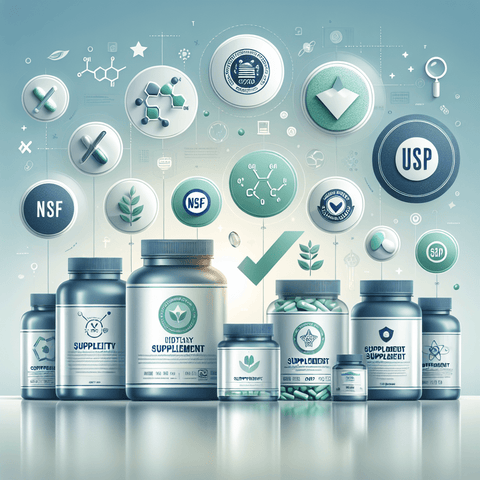
Third-Party Testing and Certifications Worth Looking For: NSF, USP, Informed Choice, GMP
Independent programs such as USP, NSF, and Informed Choice test finished products for identity, potency, and contaminants. GMP certification indicates manufacturing under documented quality-control processes rather than third-party product testing specifically. These marks are voluntary — their presence signals a brand willing to be audited, which is itself a useful trust signal.
Single Ingredients vs. Combination Formulas: Which Suits Your Goal?
Single-ingredient products offer dose control and clarity; combination formulas offer convenience and coordinated nutrients, as in most multivitamin formulas. Combinations make sense when nutrients are genuinely complementary. They become a liability when long ingredient lists hide doses too low to be meaningful.
Allergen Declarations, Vegan Capsules, and Other Dietary Fit Factors
Check declared allergens, capsule material, and sweetening agents against your personal requirements. Clear allergen statements, plant-cellulose capsules, and explicit guidance for restricted diets are all markers of a brand that has thought beyond the active ingredients.
Capsules, Tablets, Powders, and Liquids: Does the Format Matter?
Formats differ mainly in convenience, stability, and tolerability. Powders and liquids suit people who swallow capsules poorly and allow flexible dosing; tablets are compact but may require more compression agents. In practice, the format you will actually take consistently matters more than any theoretical advantage.
How to Read a Supplement Label Like an Insider
The Supplement Facts Panel: Serving Sizes, Amounts, and % Daily Values
This panel is the legally verified core of the label: serving size, amount per serving, and % daily value. Check whether amounts are stated per capsule or per serving of two capsules — a common source of confusion. Percent daily values show how a serving contributes to reference intakes for the general population, not your personal requirement.
Decoding the "Other Ingredients" List: Flow Agents, Coatings, and Fillers
This list covers excipients: flow agents such as magnesium stearate or silicon dioxide, fillers such as rice flour or microcrystalline cellulose, coatings, sweeteners, and colorants. A short list of functional, well-characterized excipients is normal. A list longer than the actives suggests cost-driven formulation, and any unfamiliar ingredient is worth looking up before you accept or reject it.
Front-of-Pack Claims vs. What the Label Can Actually Verify
Claims such as "supports immunity" must, in the EU, correspond to authorized health claims; in the US, structure-function claims require a legal disclaimer. Neither system guarantees the product is right for you personally. The verified content is the facts panel — everything on the front of the bottle is advertising.
Who May Benefit Most From Clean Label Supplements
People With Allergies, Intolerances, or Restricted Diets
Anyone managing allergies, intolerances, or a vegan or vegetarian diet benefits disproportionately from full disclosure, because ingredient-fit details determine whether a product is usable at all — not merely preferable.
Long-Term Users, Athletes, and Anyone Taking Multiple Products
Daily use over years, high training loads, and multi-product routines all magnify cumulative exposure to both nutrients and excipients. Athletes subject to anti-doping rules have an additional reason to choose products certified through programs such as Informed Choice, which screen for banned substances.
When Professional Guidance or Testing Should Come First
If you suspect a deficiency, have a medical condition, take prescription medication, or are pregnant, assessment should precede supplementation. Symptoms such as fatigue are notoriously non-specific and can have many causes — a blood test often provides more useful information than trial and error. General nutritional education, clinical assessment of your nutritional status, and medical diagnosis are three distinct things, and only the first can be done safely from an article.
Safety, Interactions, and the Limits of "Clean"
Side Effects and Upper Intake Limits: Why "Clean" Isn't Automatically Gentle
Clean formulation does not remove dose-related risk. Vitamins A, D, E, and K accumulate in the body; long-term high-dose vitamin B6 has been associated with nerve damage; and iron can be dangerous, particularly for children. Authorities in the EU and US publish tolerable upper intake levels for many nutrients, and staying within them is a sensible default unless a professional advises otherwise.
Medication Interactions, Pregnancy, and Conditions That Require Extra Care
Nutrients interact with medicines: vitamin K can reduce the effect of warfarin, high-dose vitamin E may amplify anticoagulant effects, and minerals can interfere with the absorption of certain antibiotics. Pregnancy, kidney or liver disease, and upcoming surgery all change the risk calculation. If any of these apply to you, discuss supplementation with a qualified healthcare professional before starting.
Clean Label or Clever Marketing? How to Make the Call
When Dietary Changes Alone May Be Enough
If your diet is varied and you have no diagnosed gaps, refining your food choices will usually deliver more than adding another bottle. Supplementation is most defensible when it targets a specific, identified need — not when it serves as insurance for an eating pattern you intend to improve anyway.
A Pre-Purchase Checklist: Factors That Should Influence Your Choice
- Every ingredient and dose is disclosed, with no proprietary blends
- The nutrient form is identifiable and supported by reasonable evidence
- The dose aligns with recommended intakes and stays below upper limits
- Third-party certification or a published certificate of analysis is available
- The "other ingredients" list is short, functional, and free of what you want to avoid
- Allergen and dietary-fit information is explicit
- The company is contactable and transparent about sourcing and testing
Applying these criteria across categories — from single minerals to broader natural supplement ranges — makes quality comparisons far more objective than packaging alone ever can.
The Bottom Line: Choosing Ingredients You Can Actually Verify
Clean label supplements earn their place by making products verifiable rather than merely appealing. The most reliable hierarchy remains the same: build a genuinely nutrient-rich diet, address lifestyle factors that influence your nutritional status, and use supplementation to fill specific, identified gaps in appropriate forms and doses. Because needs differ by age, diet, health status, and medication use, the right choice for one person may be unnecessary for another. When in doubt, let testing and professional guidance replace guesswork — and let the label, not the marketing, make the case for any product you take daily.
Key Takeaways
- "Clean label" is not a legally regulated term; it describes a formulation philosophy of full disclosure and minimal additives.
- Transparency enables verification — you can compare labeled forms and doses against research, but a clean label alone does not guarantee effectiveness.
- Proprietary blends hide individual dosages and are a significant red flag in multi-ingredient products.
- The Supplement Facts panel is the legally verified content of a label; front-of-pack claims are marketing.
- Whole foods should form the foundation; supplements are best used to address specific, identified gaps.
- Nutrient forms differ in bioavailability — vitamin D3 versus D2 and magnesium citrate versus oxide are well-known examples.
- Third-party certifications such as USP, NSF, and Informed Choice, along with GMP manufacturing, provide voluntary but meaningful quality assurance.
- "Clean" does not mean risk-free: upper intake limits, medication interactions, and pregnancy all require professional guidance.
- Individual needs vary with age, diet, absorption, and health status; blood testing is often more reliable than symptoms for assessing nutritional status.
Frequently Asked Questions
What does "clean label" mean on a supplement?
It generally refers to products with fully disclosed ingredients, recognizable nutrient forms, minimal additives, and no proprietary blends. Because the term is not legally defined, its meaning depends on the individual manufacturer's standards.
Is "clean label" a regulated or certified term?
No. Neither the FDA in the United States nor food authorities in the European Union define or certify products as "clean label." It functions as a marketing descriptor, which is why reading the actual ingredient list matters more than the claim.
Are clean label supplements better absorbed?
Not automatically. Absorption depends on the chemical form of the nutrient, the dose, and your individual digestive function. Transparency simply lets you identify which form a product uses so you can evaluate it against the evidence.
What fillers and additives should I watch out for?
Common ones include artificial colorants, titanium dioxide, unnecessary sweeteners, hydrogenated oils, and long lists of flow agents and coatings. Many excipients are considered safe at typical amounts, but a list longer than the active ingredients suggests cost-driven formulation.
What is a proprietary blend and why is it a problem?
A proprietary blend lists several ingredients under one name with only the total weight disclosed, hiding individual amounts. This prevents you from knowing whether key ingredients are present at evidence-based doses or included only in token amounts.
Do supplements need government approval before being sold?
In the US, no — manufacturers are responsible for safety and labeling under DSHEA, and products do not require FDA pre-market approval. In the EU, supplements are regulated as foods with permitted ingredient forms and authorized claims, but quality still depends on manufacturer practice.
Which third-party certifications are most trustworthy?
USP, NSF, and Informed Choice are independent programs that test products for identity, potency, and contaminants. GMP certification indicates quality-controlled manufacturing. All are voluntary, which makes their presence a meaningful signal about a brand's standards.
Which supplement form is absorbed best?
It depends on the nutrient. Vitamin D3 raises blood levels more effectively than D2, and magnesium citrate or glycinate is generally better absorbed than magnesium oxide. No single format — capsule, tablet, powder, or liquid — is universally superior; consistency of use matters most.
Can I get all the nutrients I need from food alone?
Many healthy adults can meet most needs through a varied, nutrient-dense diet. However, limited sun exposure, vegan diets, pregnancy, older age, and certain medical conditions can create gaps that are difficult to close through food alone.
Can you take too much of a vitamin or mineral?
Yes. Fat-soluble vitamins (A, D, E, K) accumulate in the body, long-term high-dose vitamin B6 has been linked to nerve damage, and excess iron can be dangerous. Tolerable upper intake levels exist for many nutrients and should not be exceeded without professional guidance.
Do supplements interact with medications?
Some do. Vitamin K can counteract warfarin, high-dose vitamin E may intensify blood-thinning effects, and minerals can reduce the absorption of certain antibiotics. If you take prescription medication, consult a healthcare professional before starting any supplement.
How do I know if I actually need a supplement?
The most reliable approach is to assess your diet honestly and, where relevant, use blood testing — such as 25-hydroxyvitamin D, ferritin, or B12 markers — rather than judging by symptoms, which are often non-specific. A healthcare professional can help interpret results in context.
Related Keywords
- clean label supplements
- supplement ingredient transparency
- supplement fillers and additives
- third-party tested supplements
- proprietary blends in supplements
- supplement facts panel
- bioavailable nutrient forms
- GMP-certified supplements
- additive-free vitamins
- how to read a supplement label
- supplement quality standards
- natural supplements without artificial ingredients
- vitamin and mineral supplement safety
- choosing a quality supplement