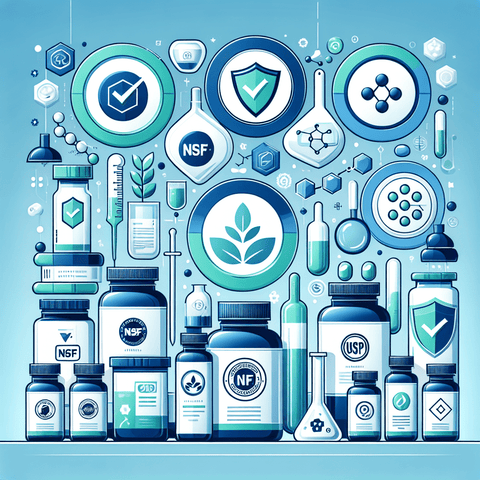
Dietary supplement certifications are independent verifications that a product contains what its label promises and meets defined limits for contaminants. Because supplements are not approved for safety or effectiveness before they reach the market, product quality can vary considerably between brands and even between batches. This guide explains what the FDA does and does not require of supplement makers, how leading third-party seals such as USP Verified and NSF certification work, which certifications matter for drug-tested athletes, and how to verify a product's seal and certificate of analysis before you buy — so your choices rest on evidence rather than marketing.
Introduction: How to Verify Supplement Quality Before You Buy
Dietary supplements occupy a unique position in the marketplace. They are sold over the counter, often taken daily for years, yet no government authority reviews them for safety or efficacy before sale. Quality assurance therefore depends on two things: the manufacturer's own compliance with good manufacturing practices, and voluntary verification by independent organizations. Understanding how to recognize credible seals, read a certificate of analysis, and interpret a supplement label can meaningfully reduce the risk of paying for an under-dosed, contaminated, or mislabeled product. This article walks through each of these skills in practical detail.
What Are Dietary Supplement Certifications?
A dietary supplement certification is a voluntary program in which an independent organization tests a specific product against published standards for identity, potency, purity, and manufacturing quality. Certification is not the same as regulatory compliance. Compliance with current Good Manufacturing Practices (cGMP) is a legal requirement for supplement makers; certification is an additional, opt-in layer of scrutiny that goes beyond the legal minimum.
Most credible programs verify a combination of the following:
- Identity: the product contains the ingredients listed on the label
- Potency: the amounts match the label within accepted tolerances
- Purity: contaminants such as heavy metals, microbes, pesticides, or unlisted substances fall below defined limits
- Manufacturing quality: the facility follows audited good manufacturing practices
What the FDA Requires of Supplement Makers — and What It Doesn't
Under the Dietary Supplement Health and Education Act of 1994 (DSHEA), supplements are regulated as a category of food rather than drugs. Manufacturers are legally responsible for ensuring their products are safe and accurately labeled before marketing them. There is no pre-market approval process. Companies must follow cGMP regulations, register their facilities, report serious adverse events, and include a Supplement Facts panel on the label. Structure and function claims — statements about how a nutrient supports normal body processes — must carry the familiar disclaimer that the FDA has not evaluated the statement.
What the FDA does not do is equally important. It does not test every product, verify label accuracy, or confirm that a supplement works. Regulatory action such as recalls and warning letters typically occurs after a product is already on the market. This gap is precisely why third-party dietary supplement certifications exist.
Third-Party Testing, cGMP, and Certificates of Analysis: Key Terms Explained
- cGMP (current Good Manufacturing Practices): the baseline legal standard governing equipment, sanitation, staff training, raw material testing, and finished-product verification. Compliance is required, but enforcement is via facility inspections rather than product-by-product approval.
- Third-party testing: analysis performed by an independent laboratory — ideally one accredited to ISO/IEC 17025 standards — rather than by the manufacturer's own lab.
- Certificate of Analysis (CoA): a laboratory document showing test results for a specific batch, typically covering identity, potency, and contaminant levels. A genuine CoA should include a lot or batch number that matches your bottle.
- Third-party certification: an ongoing program combining product testing with facility audits, verified through a seal and a public database — a step beyond a one-time CoA.
The Major Third-Party Supplement Certifications, Explained
USP Verified vs. NSF Certified: How the Two Leading Quality Seals Compare
The USP Verified mark, operated by the U.S. Pharmacopeia, confirms that a specific product formulation has been tested for identity, potency, and purity against USP's public standards, and that the manufacturing site has passed a GMP audit. NSF certification under the NSF/ANSI 173 standard covers very similar ground: independent product testing plus facility audits, with additional attention to allergen control.
Both programs are rigorous, both involve ongoing surveillance rather than a single test, and both apply to the specific product and site certified — not to an entire brand. For a consumer choosing between them, either seal provides substantially more assurance than no seal at all. The practical difference is less about rigor than about which certifier a manufacturer chooses to work with.
NSF Certified for Sport, Informed Sport, and BSCG: Certifications for Drug-Tested Athletes
These programs add banned-substance screening to standard quality testing. NSF Certified for Sport screens for substances prohibited by major professional and collegiate sports organizations. Informed Sport, run by the laboratory LGC, tests every production batch against a list of more than 250 banned substances. BSCG (Banned Substances Control Group) offers comparable banned-substance certification, along with programs covering banned drugs and contaminants.
For competitive athletes, these certifications significantly reduce — though they cannot entirely eliminate — the risk of inadvertently consuming a prohibited substance through contamination. Anyone subject to drug testing should also cross-check their governing body's current prohibited list. When evaluating sports supplements, a banned-substance certification should be treated as a baseline requirement rather than a bonus.
USDA Organic, Non-GMO, Gluten-Free, and Vegan Labels: What They Do and Don't Guarantee
These labels address how ingredients are produced, not whether the finished product is potent, pure, or accurately labeled. USDA Organic verifies that at least 95 percent of ingredients were grown without most synthetic pesticides and without genetic modification — it says nothing about heavy metal levels or active ingredient content. Non-GMO Project Verified confirms GMO avoidance thresholds. Gluten-free claims in the U.S. must meet the FDA's threshold of under 20 parts per million, though third-party gluten-free certifications may apply stricter limits and audits. Certified Vegan confirms the absence of animal-derived ingredients, which also matters for capsule shells made from gelatin.
These designations are valuable for matching products to personal needs, but they complement rather than replace quality seals such as USP or NSF.
Why Supplement Certifications Matter for Your Health and Safety
The case for verification is grounded in documented problems rather than theory. Independent laboratory analyses have repeatedly found products containing substantially less active ingredient than labeled — and occasionally more, which raises its own overdose concerns for nutrients with established upper intake limits. Studies of melatonin gummies, for example, have reported content ranging well below and well above the labeled amount. FDA warnings have identified weight-loss and sexual-enhancement products adulterated with undisclosed pharmaceutical drugs. For anyone taking a supplement daily, or taking one alongside medication, label accuracy is a genuine safety issue, and certifications provide an extra layer of scrutiny that voluntary manufacturer claims cannot match.
Red Flags: Signs a Supplement May Not Meet Quality Standards
- Claims that the product cures, treats, or prevents a specific disease
- Proprietary blends that list no amounts for individual ingredients
- No manufacturer name, physical address, or contact information
- Missing batch number or expiration date
- A quality seal that cannot be found in the certifier's public database
- Marketing built on dramatic testimonials, urgency, or "miracle" language
- Prices so low they raise questions about ingredient sourcing and testing
- Unregulated terms such as "pharmaceutical grade" used as the main selling point
Where Supplement Quality Problems Come From
Contamination and Adulteration: Heavy Metals, Microbes, and Unlisted Ingredients
Most quality failures originate in the ingredient supply chain rather than in deliberate deception by the brand selling the final product. Heavy metals such as lead, cadmium, and arsenic occur naturally in soil and can concentrate in plants — a documented issue for some botanicals, including cases where turmeric supplies were adulterated with lead-containing pigments to improve color. Microbial contamination can affect herbal powders and probiotic products if hygiene and testing are inadequate. Adulteration takes several forms: cheaper plant species substituted for the labeled one, synthetic compounds spiked in to inflate apparent potency, or — in the worst cases — prescription drugs added to products marketed for weight loss or performance. Undeclared allergens such as gluten, milk, or soy can also appear through shared production lines. Supplier qualification and routine finished-product testing are what separate careful manufacturers from careless ones.
How Your Personal Needs Change Which Certifications Matter Most
There is no single "best" certification for everyone; the most relevant one depends on your circumstances. Competitive athletes subject to drug testing should prioritize NSF Certified for Sport, Informed Sport, or BSCG. People with celiac disease or gluten sensitivity should look for gluten-free certification from a third-party program. Those who are pregnant, immunocompromised, or managing a chronic condition have stronger reasons to insist on USP Verified or NSF certification for label accuracy and contaminant control. Vegans may want both vegan certification and a quality seal. For general wellness use, a recognized quality seal combined with a transparent certificate of analysis covers most of what matters.
Food First: Where Certified Supplements Fit in a Healthy Diet
A varied, balanced diet remains the foundation of good nutrition. Whole foods provide fiber, nutrient matrices, and synergistic compounds that isolated products do not replicate, and most people with varied diets meet the majority of their vitamin and mineral needs through food alone. Supplementation is best understood as a targeted tool for specific gaps — such as vitamin B12 for people following vegan diets, vitamin D during periods of limited sun exposure, or folic acid in pregnancy, where the case for supplementation is well established. When a supplement is genuinely useful, certification ensures you receive the amount and purity you are paying for. Anyone wanting a broader overview of how individual nutrients work in the body can explore educational resources such as multivitamin ingredients and usage guides to understand what different formulas are designed to do.
How Certifications Apply Across Popular Supplement Types
Category-Specific Testing: Fish Oil, Probiotics, Protein Powders, and Herbal Extracts
Different supplement categories carry different quality risks, and credible certifications adapt their testing accordingly.
Fish oil and omega-3 products: testing focuses on EPA and DHA content matching the label, oxidation (rancidity) values, and heavy metal limits. Because oils degrade over time, freshness testing matters as much as purity. Independent verification is particularly worthwhile when comparing omega-3 and DHA/EPA supplements.
Probiotics: key questions include strain identity, viable cell counts at the end of shelf life rather than at manufacture, and appropriate storage guidance. Certification helps distinguish evidence-based products from those listing unverifiable organism counts. Learn more in our probiotic and prebiotic supplements guide.
Protein powders: analyses by consumer organizations have found heavy metals in some products, making contaminant testing and third-party certification especially relevant for items consumed daily in large servings.
Herbal extracts: risks include misidentified species, adulteration, and inconsistent standardization of active markers. Because botanical supply chains are complex, third-party verification carries added weight when choosing herbal supplements.
When Supplementation May Be Worth Considering
Supplementation makes most sense when a specific gap exists or requirements are elevated. Common examples include restricted diets (vitamin B12 for vegans), life stages with increased needs (pregnancy, older adulthood), limited sun exposure affecting vitamin D status, diagnosed deficiencies confirmed by blood testing, and medical conditions or medications that impair absorption. In many of these situations, nutritional status can be assessed through validated laboratory tests — such as blood levels of vitamin B12, ferritin, or 25-hydroxyvitamin D — which provide far more reliable information than guessing from symptoms. A healthcare professional can help determine whether supplementation is appropriate, at what intake level, and for how long.
How to Choose a High-Quality Supplement: A Practical Checklist
Ingredient Form, Dosage, and Bioavailability
- Check the chemical form of the active ingredient; forms can differ in absorption, tolerability, and stability, though marketing claims about "enhanced absorption" are not always supported by strong evidence
- Compare the dose per serving against the Daily Value and, where relevant, the Tolerable Upper Intake Level — higher is not automatically better, and some nutrients (vitamin A, iron, niacin, selenium) carry meaningful overdose risks
- Prefer products that state exact amounts for every active ingredient
- Be skeptical of unverified bioavailability claims; where evidence comparing forms is limited or conflicting, honest brands acknowledge it
Purity, Added Ingredients, Allergens, and Format
- Review the "other ingredients" list for allergens such as gluten, soy, milk, or shellfish
- Confirm the format suits you — capsules, tablets, powders, and liquids differ in convenience and, for some products like certain probiotics, in storage requirements
- Look for a batch number and expiration date, which indicate traceability
- Choose a product with a recognized third-party seal, and verify it
- Consider vegan or vegetarian suitability, including capsule shells
How to Read a Supplement Label Like a Quality Expert
The Supplement Facts Panel: Serving Size, Amounts, and %DV
The Supplement Facts panel lists the serving size, the amount of each nutrient per serving, and the Percent Daily Value (%DV). The %DV shows how much one serving contributes to reference daily intakes for a general adult population — not to your personal needs, which vary with age, sex, pregnancy, diet, and health status. Watch the units: milligrams (mg), micrograms (mcg), and International Units (IU) are easy to confuse, and confusion has real safety consequences. A long list of ingredients each present at trivially small percentages of the DV is a common marketing pattern with little nutritional substance.
"Other Ingredients," Proprietary Blends, and Expiry Dates: Details That Signal Quality
The "other ingredients" section lists excipients, fillers, coatings, and flavorings. Most are benign, but this list is where allergens and non-vegan components such as gelatin hide. Proprietary blends bundle several ingredients under a total weight without disclosing individual amounts, making it impossible to judge whether meaningful doses are included — a significant transparency red flag. Expiration dates and batch numbers indicate that the manufacturer tracks lots and stands behind potency through a defined shelf life, which matters most for perishable categories such as probiotics and oils.
Who May Benefit Most from Choosing Certified Supplements
- Competitive athletes subject to drug testing
- People who are pregnant or planning pregnancy
- Individuals with celiac disease or significant food allergies
- People who are immunocompromised or managing chronic illness
- Older adults taking multiple medications
- Parents selecting supplements for children
- Anyone who values confirmed label accuracy over marketing claims
Safety: What Certifications Can and Can't Protect You From
Certifications verify that a product matches its label and meets contaminant limits. They do not verify that a product is appropriate for you, at your dose, given your medications and health conditions. Nutrient–drug interactions are real: vitamin K affects blood thinners, and several minerals and botanicals influence drug metabolism. Some supplements may need to be paused before surgery. People with kidney or liver conditions, and anyone who is pregnant or breastfeeding, should consult a qualified healthcare professional before starting any supplement. Certifications also cannot protect against excessive intake chosen by the user — staying within recommended amounts and established upper limits remains the user's responsibility.
Do You Need a Certified Supplement? A Step-by-Step Decision Guide
- 1. Define your goal. Identify the specific gap or need you are addressing, rather than supplementing generally.
- 2. Evaluate your diet first. Determine whether food sources can realistically cover the need.
- 3. Consider testing. For nutrients like vitamin D, B12, or iron, blood tests provide better information than symptoms alone.
- 4. Seek professional advice when relevant. Pregnancy, medications, and chronic conditions warrant guidance from a healthcare provider.
- 5. Shortlist certified products. Prioritize those carrying a recognized third-party seal matched to your needs.
- 6. Verify the seal and review the CoA. Confirm both against the certifier's database and the product's batch number.
- 7. Read the full label. Check the ingredient form, dose, allergens, and expiry before purchasing.
- 8. Reassess periodically. Needs change with diet, life stage, and health status.
How to Verify a Supplement's Seal and Certificate of Analysis Before You Buy
Both USP and NSF maintain public, searchable databases of certified products on their websites — if a product displaying the seal does not appear there, treat the claim as unverified. For certificates of analysis, reputable brands publish batch-specific CoAs on their websites or provide them on request. Check three things: that the lot number on the CoA matches your bottle, that the testing laboratory is independent and ideally ISO/IEC 17025-accredited, and that the document is recent. A generic CoA without batch numbers, or one produced only as a marketing image, offers little assurance.
The Bottom Line on Dietary Supplement Certifications
Dietary supplement certifications fill a real gap left by regulation: they independently confirm that a product contains what its label states, at verified potency, within defined contaminant limits. The FDA sets the legal floor through cGMP requirements, but voluntary programs like USP Verified, NSF certification, and the sport-specific seals add meaningful product-level scrutiny. Which seal matters most depends on your individual situation — banned-substance testing for athletes, gluten-free certification for celiac disease, baseline quality verification for everyone else. Food should remain your primary source of most nutrients, with supplementation reserved for genuine gaps, increased needs, or professionally confirmed deficiencies. No certification guarantees health outcomes; it guarantees product quality. Combined with an informed look at your diet, sensible dosage, and professional guidance where appropriate, that verification is one of the most practical tools available for making safer, smarter supplement decisions.
Key Takeaways
- Dietary supplement certifications are voluntary, independent verifications of identity, potency, purity, and manufacturing quality — beyond what the law requires.
- The FDA regulates supplements as foods, does not approve them before sale, and acts mainly after problems reach the market.
- USP Verified and NSF certification are the two leading general quality seals; both involve product testing plus facility audits.
- NSF Certified for Sport, Informed Sport, and BSCG add banned-substance screening that is essential for drug-tested athletes.
- USDA Organic, Non-GMO, gluten-free, and vegan labels describe ingredient production or composition — not potency or contaminant levels.
- A genuine certificate of analysis is batch-specific, recent, and issued by an independent, accredited laboratory.
- Common quality failures — heavy metals, microbes, adulterants, and unlisted ingredients — usually enter through the ingredient supply chain.
- Certification applies to specific products, not entire brands, and should be verified in the certifier's public database.
- Certifications verify product quality, not whether a supplement is appropriate for your body, dose, or medications.
- Food should come first; supplementation is most appropriate for identified gaps, elevated needs, or deficiencies confirmed through testing.
Frequently Asked Questions
Are third-party supplement certifications required by law?
No. Manufacturers must legally comply with cGMP regulations, but third-party certification is entirely voluntary. The presence of a seal indicates a brand has opted into independent verification beyond the legal minimum.
Is USP Verified better than NSF certification?
Neither is objectively superior; both test products for identity, potency, and purity and audit manufacturing facilities under rigorous published standards. Choosing a product carrying either seal provides more assurance than choosing an uncertified product.
Does a quality seal on one product mean the whole brand is certified?
No. Certification is granted to specific product formulations and manufacturing sites, not to companies. An uncertified product from a certified brand has not undergone the same verification.
What should a legitimate certificate of analysis include?
A credible CoA identifies the product and batch number, lists the laboratory that performed the testing, states test dates, and reports results for identity, potency, and relevant contaminants. The batch number should match the bottle you purchase.
Does USDA Organic mean a supplement is higher quality?
Not in the sense of potency or purity. Organic certification confirms how ingredients were grown — without most synthetic pesticides and GMOs — but does not verify that active ingredient amounts match the label or that heavy metals are absent.
What does "pharmaceutical grade" mean on supplement labels?
It is a marketing term with no regulated definition for dietary supplements in most markets. It does not indicate independent testing, and it should never replace a third-party seal or a verifiable CoA.
Can certifications confirm a supplement is safe to take with my medications?
No. Certifications verify product composition, not clinical appropriateness. Interactions between supplements and medications — such as vitamin K and anticoagulants — require guidance from a healthcare professional or pharmacist.
Why do some protein powders contain heavy metals?
Heavy metals occur naturally in soil and can be taken up by plants or introduced during processing and manufacturing. Because protein powders are consumed in large, frequent servings, third-party contaminant testing is especially worthwhile for this category.
Do probiotic supplements always need refrigeration?
Not always. It depends on the strains, formulation, and stabilization methods used. Well-manufactured products specify storage requirements and guarantee viable counts through the expiration date rather than the date of manufacture.
How can I check whether a supplement has been recalled?
The FDA maintains a public recall database searchable by product and company, and major certifiers list revoked certifications on their websites. Checking both periodically is a reasonable habit for products you take long term.
How often are certified products retested?
Reputable programs such as USP and NSF conduct ongoing surveillance, including periodic retesting of products pulled from shelves and regular facility audits, rather than certifying a product once and never checking again.
Can a CoA be faked or outdated?
Yes. Forged or recycled CoAs are a documented problem. Warning signs include missing batch numbers, mismatched lot numbers, generic layouts, and laboratories that cannot be independently verified through accreditation records.
Related Keywords
- dietary supplement certifications
- third-party testing supplements
- USP Verified supplements
- NSF Certified for Sport
- certificate of analysis (CoA)
- cGMP supplement manufacturing
- Informed Sport certification
- supplement label accuracy
- heavy metals in supplements
- supplement contamination and adulteration
- banned substance testing for athletes
- how to choose quality supplements
- supplement safety and dosage
- supplement quality red flags