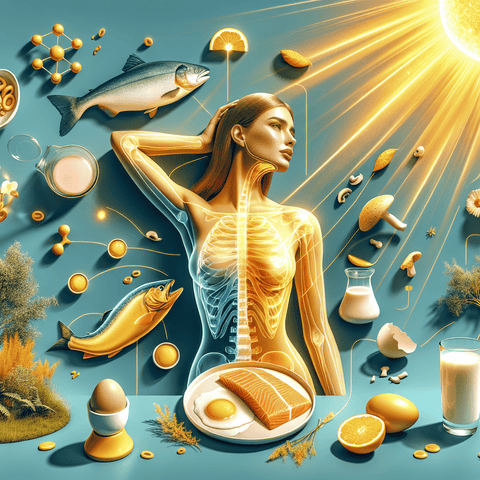
Vitamin D is one of the few nutrients the human body can produce itself — but only when skin is exposed to sufficient ultraviolet B (UVB) light. Because that is not always possible, dietary vitamin D sources remain an important part of the picture. This guide explains which foods actually contain meaningful amounts of vitamin D, how much they contribute to daily needs, and why certain foods are more reliable than others. You will also learn how food form, farming methods, cooking and dietary fat affect what your body absorbs, and when food alone may not be enough. The goal is practical: understanding dietary vitamin D sources so you can make informed decisions rather than guesswork.
What Are the Best Dietary Vitamin D Sources?
Very few foods contain vitamin D naturally, and those that do tend to be animal-based and fatty. The most concentrated natural sources are oily fish, cod liver oil and, to a smaller extent, egg yolks and dairy fat. Mushrooms are the only meaningful plant-based source, and only when they have been exposed to UV light. Fortified foods — milk, plant-based drinks, margarine, some cereals and juices — fill gaps in national food supplies but vary considerably between countries and brands.
Why Getting Vitamin D From Food Matters
Vitamin D supports normal calcium absorption, bone maintenance, muscle function and immune function. When intake falls short over time, bone mineral density can decline, which is why public health bodies monitor vitamin D status closely. Food is the most dependable baseline because it is not dependent on latitude, season, sunscreen, skin pigmentation or time spent outdoors. Even so, food typically supplies only a fraction of the reference intake — a fact that matters when interpreting claims about “foods high in vitamin D.”
How Much Vitamin D Do You Actually Need Per Day?
In the United States, the Recommended Dietary Allowance is 600 IU (15 micrograms) daily for adults aged 19–70 and 800 IU (20 micrograms) for adults over 70. European authorities commonly cite an adequate intake of 15 micrograms, with 20 micrograms often advised for older adults. These figures assume minimal sun exposure — they represent what should come from food and supplements combined. They are not a target that a single food can realistically deliver.
Can Food Alone Provide Enough Vitamin D?
For most people, consistently reaching 600–800 IU from unfortified whole foods alone is difficult without eating oily fish several times a week. National dietary surveys in Europe and North America generally show average intakes well below recommendations when fortified foods are not counted. For people who eat fish regularly, use fortified dairy or plant drinks, and get some sun exposure, food can contribute substantially. For everyone else, diet is best viewed as an important contributor rather than a guaranteed solution.
The Top 15 Foods High in Vitamin D
The following list groups the main contributors by type. Values are approximate and vary with species, farming method, cut of meat and fortification levels; they are useful for comparison rather than precise calculation.
1. Wild salmon — roughly 600–1,000 IU per 100 g
2. Farmed salmon — roughly 400–600 IU per 100 g
3. Mackerel — around 600–1,000 IU per 100 g
4. Rainbow trout — around 300–600 IU per 100 g
5. Herring — around 200–800 IU per 100 g, depending on preparation
6. Sardines (canned, with bones) — roughly 200–300 IU per 100 g
7. Cod liver oil — around 400–1,000 IU per teaspoon, brand-dependent
8. Tuna (canned in oil) — roughly 100–200 IU per 100 g
9. UV-exposed mushrooms — up to 400 IU per 100 g; untreated mushrooms far less
10. Egg yolks — roughly 20–50 IU per yolk, higher in pasture-raised eggs
11. Fortified milk — around 100–130 IU per cup in countries that mandate fortification
12. Fortified plant-based drinks — typically 80–150 IU per cup
13. Fortified yogurt — around 40–100 IU per serving
14. Fortified margarine and spreads — around 40–80 IU per 10 g
15. Fortified breakfast cereals — around 40–100 IU per portion
Liver, cheese and butter contain small amounts that add up over a week but rarely dominate intake. Further detail on vitamin D's roles and food sources is available in the vitamin D benefits, sources and safety guide.
Fatty Fish: The Most Concentrated Natural Sources
Oily fish such as salmon, mackerel, herring, sardines and trout are the most reliable natural sources. A 150 g portion of mackerel can exceed a full day's reference intake, and two servings of oily fish per week can supply a meaningful weekly contribution. Tinned fish counts and is often more affordable, though oil-packed varieties retain more vitamin D than those packed in brine and drained.
Cod Liver Oil: A Potent but Specialized Option
Cod liver oil is highly concentrated and supplies vitamin A alongside vitamin D — which is both its advantage and its limitation. Because preformed vitamin A can accumulate, cod liver oil is not suitable for unrestricted daily use during pregnancy or for anyone already taking a retinol-containing supplement. It is best treated as a traditional, dose-sensitive supplement rather than an everyday food.
Mushrooms: The Only Significant Plant-Based Source
Mushrooms contain ergosterol, which converts to vitamin D2 when exposed to UV light. Commercially grown mushrooms are usually cultivated in darkness and therefore contain little vitamin D unless producers deliberately expose them to UV. Look for labels stating UV-treated or “vitamin D enhanced” — otherwise mushrooms contribute minimal amounts.
Egg Yolks and Dairy Products: Everyday Contributors
Eggs and dairy are eaten frequently but supply modest quantities per serving. Their value lies in regularity: an egg at breakfast and a fortified dairy product at lunch can together contribute 150–200 IU across a day. Pasture-raised hens and those fed vitamin D-enriched diets can produce yolks with higher levels, though the difference is rarely decisive on its own.
Fortified Foods: How They Compare to Natural Sources
Fortification is the reason many people reach even modest vitamin D intakes. Per serving, fortified foods usually deliver less than oily fish, but they are eaten more often and by more people. The key limitation is inconsistency: fortification is mandatory in some countries, voluntary in others, and levels can differ between brands and product lines. Reading labels is more useful than assuming.
Vitamin D2 vs. Vitamin D3: What’s the Difference in Food?
Vitamin D2 (ergocalciferol) comes from plant and fungal sources — mainly UV-exposed mushrooms and fortified foods using D2. Vitamin D3 (cholecalciferol) comes from animal sources: oily fish, egg yolks, liver and, in supplements, lanolin or lichen. Both forms raise blood levels of 25-hydroxyvitamin D, the marker used to assess status, and both support calcium metabolism. The difference lies mainly in how efficiently they do so.
Which Form Is More Effective at Raising Blood Levels?
Randomized trials generally show that D3 raises serum 25-hydroxyvitamin D somewhat more effectively and sustains it longer than an equal dose of D2. The effect is consistent but moderate rather than dramatic, and D2 remains functionally active. For food choices, this is rarely a reason to avoid mushrooms or D2-fortified products — but it does explain why oily fish and D3-fortified foods are often described as more efficient contributors.
Factors That Affect the Vitamin D Content in Foods
The number on a food label is an average, not a fixed value. Species, diet, farming conditions, processing and storage all shift vitamin D content, sometimes considerably.
Farmed vs. Wild-Caught Fish Differences
Wild fish feed on plankton and accumulate vitamin D through the food chain, so wild salmon and mackerel often contain more than farmed equivalents. However, farmed fish are fed formulated diets that can be adjusted, and some studies find comparable or even higher levels in farmed salmon. The practical conclusion is that both are useful sources, and origin matters less than eating oily fish regularly.
How Sunlight Exposure Changes Mushroom Vitamin D Levels
Sliced mushrooms placed in direct sunlight for 15–60 minutes can generate substantial vitamin D2, occasionally reaching levels comparable to a supplement serving. Results depend on season, latitude, cloud cover and slice thickness. Mushrooms left in a dark refrigerator gain nothing. Commercially UV-treated products are the more predictable choice.
Processing and Cooking Effects on Vitamin D Stability
Vitamin D is relatively stable during normal cooking but sensitive to prolonged high heat, frying at very high temperatures and long storage. Baking, steaming and gentle pan-cooking retain most of the content. Canned fish retains vitamin D well, though draining oil reduces it. Freezing is generally not a concern.
How to Combine Dietary Sources to Improve Your Vitamin D Intake
Because individual foods contribute modestly, combining sources across the day is more effective than relying on one “superfood.” A practical pattern is oily fish two to three times weekly, fortified dairy or plant drinks daily, eggs regularly, and UV-treated mushrooms as a plant-based option.
Why Vitamin D Absorption Depends on Dietary Fat
Vitamin D is fat-soluble, so absorption improves when it is eaten with a meal containing some fat. This is largely automatic with oily fish, which supplies its own fat, but matters for supplements and fortified low-fat products. Taking a vitamin D capsule with a fat-containing meal such as eggs, avocado, nuts or olive oil is a reasonable practical step.
Practical Meal and Snack Ideas for Boosting Intake
Try mackerel on wholegrain toast, sardines with olive oil and lemon, a salmon and avocado salad, an omelette with UV-treated mushrooms, fortified yogurt with nuts and berries, or a smoothie made with fortified plant milk. These combinations pair vitamin D with fat and protein, and several also contribute calcium — relevant because the two nutrients work together. The calcium guide explains that relationship in more detail.
When Diet Alone May Not Be Enough
Dietary vitamin D sources are valuable but not universally sufficient. Many people meet only a fraction of the reference intake from food, especially where fortification is limited.
Who Is Most Likely to Have Low Vitamin D Intake
Groups at higher risk include older adults, people with darker skin living at high latitudes, those who cover their skin or avoid sun exposure, people who work indoors, exclusively breastfed infants, individuals with obesity, and anyone with malabsorption conditions affecting fat absorption, such as coeliac disease, inflammatory bowel disease or cystic fibrosis. Vegan diets can also be low unless fortified products are used consistently.
Why Blood Testing Matters Before Assuming a Deficiency
Symptoms such as fatigue, muscle aches or low mood are non-specific and do not establish a deficiency. A serum 25-hydroxyvitamin D test is the standard way to assess status. Testing is particularly useful before starting higher-dose supplementation, since unnecessary high intake carries risks and provides no benefit. Interpretation should account for season, recent supplementation and individual health context.
When Vitamin D Supplementation Makes Sense
Supplementation is a reasonable consideration when dietary intake is habitually low, sun exposure is limited, or a clinician has identified low status. Standard doses in the 400–1,000 IU range are commonly used for general maintenance, while higher doses are typically reserved for documented deficiency under professional guidance. Supplementation complements food rather than replacing the broader nutritional benefits of a varied diet.
How to Choose Between Food and Vitamin D Supplements
Food should come first for most people because it delivers protein, omega-3 fatty acids and other micronutrients alongside vitamin D. Supplements are valuable when they close a specific, identified gap — they are a correction tool, not a substitute for dietary quality.
Comparing Supplement Forms and Dosages
Vitamin D3 is the most common form in capsules and softgels, typically in strengths of 400, 1,000, 2,000 or 4,000 IU. D2 is available but less frequently used. Liquid drops allow flexible dosing, useful for children or those who dislike capsules; sprays are convenient but deliver less consistent dosing than a measured drop. There is no meaningful evidence that one delivery format is inherently superior once the dose is equivalent.
What to Look for on a Vitamin D Supplement Label
Check the amount per serving rather than per capsule if the serving is multiple capsules, and confirm whether the label states IU or micrograms (1 microgram = 40 IU). Look for a named form (cholecalciferol), a clear carrier oil, and third-party testing or a recognized quality certification. If you follow a vegan diet, choose lichen-derived D3 rather than lanolin-derived. Check allergen and excipient information if you have sensitivities.
Combination Products: Why Vitamin K2 or Calcium Sometimes Appear
Vitamin K contributes to normal bone maintenance and works alongside vitamin D in calcium metabolism, which is why some products combine them. However, most people obtain adequate vitamin K from leafy greens and fermented foods, and combination products are not automatically superior. The vitamin K guide explains the interaction more fully. Anyone taking anticoagulants should discuss vitamin K-containing products with a clinician first.
Safety Considerations for High Vitamin D Intake
Vitamin D is safe within established limits but is not a nutrient where more is better. Excessive intake over time can raise blood calcium, which is the mechanism behind most adverse effects.
Upper Intake Limits and Symptoms of Excessive Intake
The tolerable upper intake level for adults is 4,000 IU (100 micrograms) per day from food and supplements combined. Sustained intake above this level can cause nausea, constipation, weakness, confusion and, in severe cases, kidney complications. Single very high doses used clinically are a different matter and should only occur under supervision.
Who Should Be Cautious Before Increasing Vitamin D
People with kidney disease, kidney stones, hyperparathyroidism, sarcoidosis or other granulomatous conditions, and those taking thiazide diuretics or certain cardiac medications, should seek advice before using higher doses. Anyone already taking a multivitamin plus a separate vitamin D supplement should total the combined intake, since double-dosing is common and easily overlooked.
Final Takeaway: Building a Realistic Vitamin D Strategy
Dietary vitamin D sources are genuinely useful but rarely sufficient on their own. Oily fish, cod liver oil, UV-treated mushrooms, eggs and fortified foods each contribute modestly; together, and eaten regularly, they can meaningfully raise intake. Absorption improves when these foods are eaten with fat, and food form, farming and processing all influence how much you actually get.
Needs vary with age, skin type, latitude, sun exposure, diet, body weight, medication use and absorption capacity, so there is no single correct strategy. A sensible approach is to build a diet that includes oily fish and fortified products, get reasonable sun exposure where safe, and consider targeted supplementation only when intake is low, exposure is limited, or testing shows low status. Higher doses deserve professional input rather than self-experimentation.
When to Rely on Food, When to Consider Supplements, and When to See a Doctor
Rely on food if you eat oily fish regularly, use fortified dairy or plant drinks and spend time outdoors. Consider a modest supplement if your diet is low in these foods and sun exposure is limited, especially in winter. Seek medical advice if you have symptoms you cannot explain, a condition affecting fat absorption, kidney disease, or you are considering doses above the upper limit. For broader context on how vitamin D fits with other nutrients, see the omega-3 DHA and EPA guide, since oily fish supplies both.
Key Takeaways
- Oily fish — salmon, mackerel, herring, sardines and trout — are the most concentrated natural dietary vitamin D sources.
- Very few foods contain vitamin D naturally; fortified products supply a large share of intake in many countries.
- Mushrooms only contain meaningful vitamin D when they have been exposed to UV light.
- Adults generally need 600–800 IU (15–20 micrograms) daily from food and supplements combined when sun exposure is minimal.
- Vitamin D3 tends to raise blood levels somewhat more effectively than D2, though both are functional.
- Eating vitamin D with fat-containing foods improves absorption.
- Food alone often falls short of reference intakes, particularly without fortified products.
- Symptoms are unreliable for identifying deficiency; a 25-hydroxyvitamin D blood test is the standard assessment.
- The adult upper limit is 4,000 IU per day from all sources combined.
- Older adults, people with darker skin at high latitudes, and those with fat malabsorption are at higher risk of low status.
Frequently Asked Questions
What are the best dietary vitamin D sources?
Oily fish such as salmon, mackerel, sardines, herring and trout are the richest natural sources, followed by cod liver oil. Fortified milk, plant drinks, margarine and cereals are important everyday contributors, and UV-treated mushrooms serve as a plant-based option.
Which food has the highest vitamin D content?
Cod liver oil and wild oily fish are typically highest per serving, with mackerel and wild salmon often exceeding 600 IU per 100 g. Fresh mushrooms exposed to UV light can also reach high levels, though content varies widely.
Can you get enough vitamin D from food alone?
It is possible but difficult without regular oily fish and fortified products. Most dietary surveys show average intakes below recommended levels, particularly in countries with limited fortification.
Are mushrooms a good source of vitamin D?
Only if they have been exposed to UV light, which converts ergosterol into vitamin D2. Commercially grown mushrooms cultivated in darkness contain very little, so check for UV-treated labelling.
Is vitamin D2 or D3 better from food?
D3 from animal sources generally raises blood levels slightly more efficiently, but D2 from mushrooms and fortified foods remains active and useful. The difference is modest and rarely a reason to exclude D2 sources.
Does cooking destroy vitamin D in food?
Normal baking, steaming and pan-cooking retain most vitamin D. Prolonged very high-heat frying and long storage can reduce content, but typical home cooking is not a major concern.
Should I take vitamin D with food?
Yes, it is fat-soluble, so absorption improves when taken with a meal containing some fat. Oily fish supplies its own fat; supplements are best taken with breakfast, lunch or dinner rather than on an empty stomach.
How much vitamin D do I need daily?
Adults generally need 600 IU (15 micrograms) daily up to age 70 and 800 IU (20 micrograms) thereafter, assuming minimal sun exposure. European guidance commonly cites 15–20 micrograms for adults.
Who is most at risk of low vitamin D?
Older adults, people with darker skin at high latitudes, those who cover their skin or stay indoors, exclusively breastfed infants, people with obesity and anyone with fat malabsorption conditions are at higher risk.
Can you take too much vitamin D from food?
It is very unlikely from food alone — even fortified diets rarely approach the upper limit. Excessive intake almost always comes from supplements, particularly high-dose products taken alongside multivitamins.
Does vitamin D interact with medications?
High-dose vitamin D may interact with thiazide diuretics, some cardiac medications and certain other drugs, mainly through effects on calcium. Anyone on regular medication should check with a pharmacist or doctor before using higher doses.
How long does it take to raise vitamin D levels through diet?
Blood levels respond gradually, typically over several weeks to months, depending on baseline status, dose and sun exposure. Dietary change alone raises levels slowly compared with supplementation.
Related Keywords
- dietary vitamin D sources
- foods high in vitamin D
- natural vitamin D sources
- vitamin D rich foods list
- plant-based vitamin D sources
- vitamin D2 vs vitamin D3 food
- fortified foods vitamin D
- UV-treated mushrooms vitamin D
- oily fish vitamin D content
- how much vitamin D per day
- vitamin D absorption with fat
- vitamin D deficiency risk groups
- vitamin D upper intake limit
- food sources of vitamin D for vegetarians