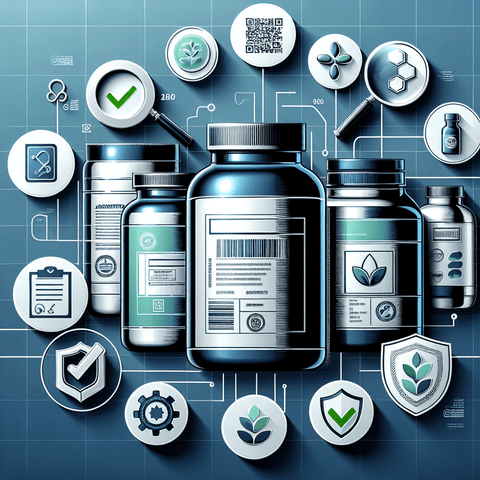
Fake supplement detection is the set of quick checks — seals, batch codes, QR scans, label review, and seller vetting — that tells you whether a product is what it claims to be before you swallow it. Counterfeit, adulterated, and substandard supplements are a genuine problem in the online shopping era, and a convincing-looking bottle can contain anything from nothing at all to hidden pharmaceutical drugs. This guide explains how to spot fake supplements before you buy, which red flags appear on packaging, labels, and product pages, how verification tools like batch numbers and scratch panels work step by step, and how to decide whether a supplement is worth buying at all — so the products you do purchase are genuine, correctly dosed, and actually appropriate for your needs.
Fake Supplement Detection: How to Spot Fake Supplements Before You Buy
Counterfeit products thrive where demand is high and scrutiny is low — and dietary supplements meet both conditions. A familiar brand name, a reasonable price, and professional-looking packaging can hide a product that contains nothing useful, the wrong ingredient, or something actively harmful. Fake supplement detection is the practical answer: a short, repeatable set of checks that takes only minutes per purchase and dramatically lowers the odds of buying a problem.
What Is Fake Supplement Detection? Counterfeit, Adulterated, and Substandard Products Explained
Fake supplement detection means verifying that a product is what its label claims: correct ingredients, declared amounts, no undeclared substances, valid shelf life, and an accountable manufacturer standing behind it. The word "fake" actually covers three distinct problems, each with a different kind of risk.
Counterfeit vs. adulterated vs. substandard supplements: three problems with different risks
- Counterfeit products imitate a genuine brand. They may contain nothing, cheap fillers, the wrong nutrient, or contaminated material — whatever the counterfeiter can produce at the lowest cost.
- Adulterated products contain undeclared substances. Documented examples include hidden stimulants in weight-loss pills and unapproved anabolic agents in muscle-building formulas, making this the category with the highest immediate safety risk.
- Substandard products may be honestly labeled but fail quality specifications: under-dosed active ingredients, degraded nutrients, or microbial and heavy-metal contamination resulting from poor manufacturing.
Common faking tactics: dilution, ingredient substitution, spiking, and expiry relabeling
Most fakes rely on a handful of predictable tricks. Dilution reduces the amount of active ingredient so production costs fall. Substitution swaps an expensive nutrient for a cheap lookalike — analyses of some herbal products have found little more than filler where the advertised plant extract should be. Spiking adds undeclared stimulants or hormones so the product seems to "work" fast, which is one reason rapid-results products deserve extra caution. Expiry relabeling reprints fresh dates onto aging stock. Regulators and independent laboratories have documented all four patterns, which is why each check below targets a specific tactic.
Why Fake Supplement Detection Matters for Your Health
From zero nutrients to hidden pharmaceuticals: what fake products can contain
A fake supplement can deliver anywhere from zero active ingredient to a pharmacologically active drug. Regulators have repeatedly found withdrawn weight-loss medications, undeclared stimulants, and anabolic agents in products sold as natural. Contamination with heavy metals or microbes is another documented risk. The consequences range from simple ineffectiveness to side effects such as palpitations, elevated blood pressure, and interference with prescribed medications.
The hidden costs: wasted money and false confidence in your nutrition
Beyond wasted money, the deeper cost is false confidence. If you take a vitamin D capsule believing you are covering a shortfall, and the capsule is empty, the gap silently remains — and may go unaddressed for months. Fakes also erode trust in genuinely useful products and can delay someone from seeking proper assessment of their actual nutritional status.
Warning Signs of Fake Supplements: Red Flags to Check Before and After Purchase
Packaging red flags: broken seals, poor print quality, missing batch numbers, and expired dates
- Broken, missing, or clumsily reapplied seals and shrink wrap
- Blurry printing, misaligned labels, or fonts and colors that differ from official product photos
- Missing batch numbers or expiry dates, or dates that look reprinted or overprinted
- Spelling errors, incorrect units (mg versus mcg), or incomplete ingredient lists
- Bottles noticeably lighter, or a tablet count that falls short of what is declared
Price, seller, and channel red flags: discounts that don't add up
Deep discounts are the most seductive red flag, but the danger lies in the combination: a price far below every authorized seller, offered by an unverified account with little history, no physical business address, and no return policy. Legitimate retailers discount too — the signal is when the seller, the channel, and the price all cut against the brand's own rules.
Claim red flags: language no genuine supplement is allowed to use
Legitimate supplements are generally restricted to structure-and-function claims such as "contributes to the maintenance of normal bones." Disease claims — "cures arthritis," "works better than medication," "reverses aging" — are not permitted for supplements and are a hallmark of the gray market. So are guarantees ("100% safe," "works for everyone overnight") and clinical claims without any identifiable research behind them.
What the product itself reveals — and why viral home "tests" often mislead
After opening, watch for unusual discoloration, a rancid smell (especially with fish oil), excessive clumping, crumbling tablets, or an unexpected taste. But be skeptical of viral home tests: dissolving a tablet in water, magnet tricks, or fizzing in vinegar reflect a product's formulation and physical form, not its authenticity — both genuine and fake products can pass or fail them. Only laboratory analysis can verify what a supplement actually contains, so sensory checks are a rough screen, never a verdict.
Why Fake Supplements Exist: Causes and Risk Factors
How counterfeit supplements enter the market: supply-chain gaps and gray-market sellers
Supplements combine high margins with relatively low enforcement risk, and e-commerce has multiplied the entry points. Gray-market channels — diverted stock, resold customer returns, expired lots, and dropshipping chains where no one verifies origin — all move products between hands without brand accountability. Every uncontrolled handoff is an opportunity for substitution.
Which products get faked most: popular, high-margin, and "quick-result" categories
Counterfeiters follow demand. Regulatory warnings and laboratory surveys have most often flagged weight-loss pills, muscle-building and sports supplements, and best-selling branded vitamins. Products promising fast, visible results make adulteration profitable, while popular branded items are easy to pass off because buyers already recognize the packaging.
Where fakes circulate: online marketplaces, social media sellers, and lookalike websites
Fakes concentrate in channels designed without brand accountability: third-party marketplace listings, sellers operating through social media messages, and lookalike websites with domain names one letter away from the real brand. None of these channels can reliably trace a bottle back to its manufacturer.
Why Your Situation Changes Both Your Supplement Needs and Your Fake-Product Risk
Diet, age, and life stage: why one person's essential supplement may be another's unnecessary purchase
Nutritional needs are highly individual. Pregnancy raises requirements for folate and iodine; older adults absorb less vitamin B12; people following vegan diets need a reliable B12 source; limited sun exposure affects vitamin D status. One person's genuinely useful supplement is another's unnecessary purchase — and an unnecessary purchase is the easiest one to eliminate, because it removes a product you would otherwise have to verify forever.
Absorption, medications, and health status: why the same product isn't equally useful — or equally safe — for everyone
Conditions such as celiac disease or inflammatory bowel disease, bariatric surgery, and certain medications (including proton-pump inhibitors and metformin, which can affect B12 absorption) reduce nutrient uptake. When absorption is already compromised, an under-dosed or fake product fails silently and matters far more. Health status also changes interaction risks, raising the stakes of every unverifiable ingredient.
Where you shop matters more than what you buy
Given two identical bottles, the channel determines the risk. Authorized retailers and brand-owned stores buy through controlled supply chains; anonymous third-party listings do not. Channel discipline is the single highest-impact habit in fake supplement detection — more protective than any post-purchase inspection.
Food First: Meeting Nutrient Needs Before Reaching for a Bottle
Nutrient-dense whole foods that cover the most common shortfalls
Fatty fish provides vitamin D and omega-3s; legumes supply folate, magnesium, and plant iron; nuts and seeds contribute vitamin E and magnesium; leafy greens deliver folate and vitamin K; eggs and dairy cover B12, calcium, and more; fortified foods fill specific gaps. Absorption can be improved with simple pairings — combining plant-based iron with vitamin C-rich foods, for example, or eating fat-soluble vitamins with a meal containing fat. For most people, a well-chosen diet covers a large share of nutrient needs; shortfalls depend on the overall pattern, not any single food.
Everyday lifestyle factors that shape your nutrient status
Sun exposure determines vitamin D production; regular alcohol intake affects folate and other B vitamins; smoking increases vitamin C turnover. Restrictive eating patterns, high training loads, pregnancy, and certain medications all shift requirements further. These factors explain why identical bottles suit different people very differently — and why "everyone needs this" marketing should raise suspicion on its own.
Why a streamlined supplement routine means fewer products to verify
Every product on your shelf is another authenticity check, another cost, and another potential interaction. A shorter, targeted routine — occasionally nothing more than a quality multivitamin plus one specific nutrient — reduces verification workload and exposure to fakes. Fewer, better-chosen products consistently beat a cabinet of impulse buys.
Where Genuine Supplements Fit: The Role of Quality Nutrition Support
The realistic purpose of supplementation: closing nutrient gaps, not replacing food or medicine
Supplements exist to close gaps that diet cannot reliably cover — nothing more, and nothing less. Whole foods deliver fiber, protein, and thousands of beneficial compounds alongside their nutrients, while a supplement supplies defined amounts of specific substances. Framed this way, two questions carry equal weight: "Do I need it?" and "Is it real?" A genuine product you don't need is wasted money; a needed product that's fake is a hidden risk.
Vitamins, minerals, omega-3s, and probiotics: why manufacturing quality determines whether they help at all
A genuine supplement is a manufactured promise. With omega-3 supplements, for example, the promise is a declared amount of EPA and DHA in oil that has not significantly degraded; with probiotics, it is viable strains surviving to the end of shelf life; with minerals, it is the stated form at the stated dose. Good manufacturing practice, testing, and honest labeling are what make that promise checkable. If a product cannot demonstrate its content, any benefit it might offer exists only on paper.
When Supplementation May Be Worth Considering
Confirmed shortfalls: why a blood test beats a hunch
Symptoms such as fatigue, poor sleep, or low mood are non-specific and cannot confirm any deficiency on their own. Where validated testing exists — 25-hydroxyvitamin D for vitamin D status, serum B12, ferritin for iron stores — a blood test provides clarity that guessing cannot, and it can distinguish low intake from an absorption problem that diet changes alone won't fix.
Life stages, restrictive diets, and high demands where intake may fall short
Public health bodies commonly recommend supplementation in defined situations: folic acid before and during early pregnancy, reliable vitamin B12 for people following vegan diets, and vitamin D where sunlight exposure is limited — for example during northern winters. Pregnant or breastfeeding readers, and anyone managing a health condition, should make these decisions together with a healthcare professional rather than based on general advice.
Nutritional support vs. treatment: the line supplements cannot cross
Supplements support normal physiological function; they do not treat, cure, or prevent disease and never replace prescribed therapy. They can also interact with medicines — vitamin K, for instance, counteracts anticoagulants such as warfarin. Anyone taking prescription medication should confirm supplement choices with a pharmacist or doctor first, both for safety and because interactions can change how a medication works.
How to Choose Genuine Supplements: What Actually Separates Real from Fake
Authorized channels first: where genuine products are actually sold
The safest sources are the brand's own webshop, retailers listed on its "authorized sellers" page, and licensed pharmacies. On large marketplaces, buy only from the brand's official store on that platform. This single rule eliminates more counterfeit risk than any other step in this article.
How to verify a supplement and its seller online before you order
Before ordering, compare the seller's name against the brand's authorized list, inspect the website domain for lookalike spellings, and check for a real business address and functioning contact details. On marketplaces, review the seller's history and ratings, and confirm a return policy exists. Five minutes of checking prevents most disappointments — and most exposure to fakes.
Quality marks that matter: GMP, third-party testing, and regulator registration
Meaningful markers include GMP-certified manufacturing, independent third-party certification (such as USP, NSF, or Informed Sport, where relevant), and registration with the appropriate national regulator. One caveat: logos can be copied. Treat quality marks as a starting point and verify them through the manufacturer's published certificates or the certifier's own database rather than trusting a badge on a bottle.
Batch numbers, QR codes, and scratch-panel verification: step-by-step
- Locate the batch number and expiry date printed on the bottle or carton.
- Find the brand's verification feature — a QR code, scratch-off panel, or holographic label — if it uses one.
- Scratch, scan, or enter the code, but only on the brand's official website or app; be wary if the code redirects to an unfamiliar third-party domain.
- Confirm that the returned product name, batch number, and expiry match your bottle exactly.
- If no digital system exists, contact the manufacturer with the batch number and purchase details to confirm it comes from a legitimate production run.
- Photograph the result. A mismatch, dead link, or "code already used" message means the product should not be used.
Form, dose, and bioavailability: the details counterfeiters most often get wrong
Labels on fakes frequently show implausible doses, unit errors, amounts far above established upper intake levels, or nutrient forms that don't match the product's story. Genuine bioavailability differences do exist — magnesium citrate, for instance, is generally better absorbed than magnesium oxide, and iron forms differ in tolerance and uptake — though the evidence is ingredient-specific rather than universal. The practical takeaway: a label whose scientific details don't add up is a reason to walk away, regardless of how attractive the price is.
How to Read a Supplement Label Like an Authenticity Expert
What every genuine label includes: ingredients, amounts, serving size, allergens, additives, and expiry
- A complete ingredient list, including the chemical form of each nutrient
- Exact amounts per serving, with a clearly stated serving size
- Allergen declarations and any additives or excipients used
- Net quantity, plus the manufacturer's name and address
- A legible batch number and expiry or best-before date
Label practices that should make you walk away: proprietary blends and missing doses
Two practices deserve immediate suspicion. First, proprietary blends that hide individual doses behind an aggregate weight make it impossible to know whether the product contains meaningful amounts of anything. Second, labels missing units, serving sizes, batch numbers, or manufacturer contact details fail the basic traceability standard every legitimate product should meet. Doses wildly exceeding established upper intake levels are a third red flag — they indicate either ignorance or indifference to safety.
Original vs. fake supplements: a side-by-side comparison
- Print and finish: crisp, aligned, consistent packaging vs blurry ink, glue residue, mismatched fonts
- Traceability: valid batch number with a working verification code vs missing or reprinted batches and dead links
- Price: within the normal retail range vs dramatically below every authorized seller
- Label content: complete doses and legal claims vs proprietary blends, missing units, and disease "cures"
- Accountability: a named, contactable manufacturer vs an anonymous importer only
Who Should Be Most Careful About Fake Supplements
Online-first shoppers and marketplace buyers
Marketplace inventory from different sellers is often stored and shipped together, which means even a legitimate-looking listing can dispatch stock of uncertain origin. If you shop online by default, prioritize official brand stores, inspect every delivery on arrival, and keep order records until you've finished the product.
Users of weight-loss, muscle-building, and energy-boost products
These categories carry a disproportionate share of documented adulteration cases, precisely because users judge them by rapid, visible results — a dynamic that rewards spiking. Treat any fast-working product in these categories with heightened skepticism, especially when bought from unverified sellers.
Anyone buying for pregnancy, children, or chronic-condition support
Smaller safety margins, dose sensitivity, and medication interactions make errors costlier here. Buy exclusively from authorized channels, prefer products with third-party verification, and involve a healthcare professional in product selection rather than relying on marketplace reviews.
If You Suspect You've Taken a Fake Supplement: Health Risks and Next Steps
Possible effects: contamination, hidden stimulants, and unsafe doses
Often the only consequence is wasted money. But contamination or hidden actives can cause palpitations, insomnia, blood-pressure changes, digestive upset, or interactions with prescription medication. Seek medical care urgently for severe symptoms such as chest pain, breathing difficulty, or fainting, and mention exactly what you took.
First steps: stop use, keep the packaging, and consult a pharmacist or doctor
Stop taking the product immediately, and resist the urge to throw it away — the bottle, packaging, receipt, and listing screenshots are your evidence. Note any symptoms and when they began, then bring everything to a pharmacist or doctor who can assess the situation and advise on next steps.
How to report counterfeit supplements to regulators, brands, and platforms
Report the product to your national food or medicines regulator (for example, the FDA in the United States or your national food safety authority in Europe), notify the brand directly, and open a case with the sales platform so the listing can be removed. Reporting protects other buyers and contributes to the enforcement data regulators rely on.
Quick Tricks to Verify Supplement Authenticity: Your Decision Checklist
Before buying: the two-minute authenticity check
- Is the seller authorized — the brand's own site, a listed retailer, or the official marketplace store?
- Is the price plausible compared with authorized sellers?
- Does the listing use unaltered official images and show batch or expiry information?
- Do the claims stay within legal structure-and-function language?
- Are the ingredients, doses, units, and forms complete and scientifically plausible?
On delivery and after opening: seal, batch, and sensory checks — and their limits
On arrival, confirm the seal is intact, the batch number matches the listing, the appearance and smell are normal, and the count or weight matches the declaration. Understand the limit, though: sophisticated fakes can pass every sensory check, and only laboratory analysis is definitive. That is why channel choice — not post-purchase inspection — carries most of the risk reduction in fake supplement detection.
Do you need this supplement at all? Deciding before you verify
Before verifying a purchase, question the purchase itself. Could your diet cover this nutrient? Would a blood test give you useful clarity instead of a guess? Does a healthcare professional agree the product makes sense for you? Not needing a product at all is the cheapest and most reliable protection from fakes — and it keeps your routine focused on what genuinely helps.
The Bottom Line: Making Fake Supplement Detection Part of Buying Smarter
Effective fake supplement detection rests on four habits working together: buying through authorized channels, reading labels critically, using batch numbers and verification codes on official brand domains, and distrusting miracle claims and too-good-to-be-true prices. Nutritional needs differ from person to person, so the smartest routine starts with food, uses testing or professional advice to identify real gaps, and adds only a small number of quality-verified products where they are genuinely justified. Fewer, better-chosen, properly verified supplements protect both your health and your budget — and when something seems wrong, stop using it, keep the packaging, seek advice, and report it.
Key Takeaways
- "Fake" covers three distinct problems — counterfeit brand copies, adulterated products with hidden substances, and substandard products that fail quality specifications — each carrying different risks.
- Channel choice is the strongest protection: buy from the brand's own store, listed authorized retailers, or licensed pharmacies rather than anonymous third-party sellers.
- Classic packaging red flags include broken seals, blurry printing, missing batch numbers, and reprinted expiry dates.
- Disease "cures," guaranteed overnight results, and "100% safe" claims are language genuine supplements are not legally allowed to use.
- Batch numbers, QR codes, and scratch panels verify products only when checked on the brand's official domain and matched exactly against your bottle.
- Viral home tests such as dissolving tablets in water cannot prove authenticity; only laboratory analysis can confirm what a product contains.
- Food first: a shorter, targeted supplement routine means fewer products to verify, less money at risk, and fewer potential interactions.
- If you suspect a fake, stop using it, keep the packaging and receipt, consult a pharmacist or doctor, and report it to the regulator, the brand, and the platform.
Frequently Asked Questions
How can I tell if a supplement is fake before opening it?
Check four things: the seller (authorized or not), the price (plausible or dramatically low), the label (complete doses, batch number, and expiry), and the claims (legal structure-and-function language only). A product that fails two or more of these checks should be avoided no matter how convincing the bottle looks.
Do QR codes and scratch panels prove a supplement is genuine?
They are strong signals but not absolute proof, because codes can be copied or reused. Verification only counts when the code resolves on the brand's official website or app and the product name, batch, and expiry it returns match your bottle exactly.
What is the difference between counterfeit, adulterated, and substandard supplements?
A counterfeit imitates a real brand and may contain anything; an adulterated product contains undeclared substances such as hidden stimulants or hormones; a substandard product is honestly labeled but fails quality specifications, for example through under-dosing or contamination. Adulteration typically carries the highest immediate health risk.
Do viral home tests, like dissolving a vitamin in water, actually detect fakes?
No. Dissolving behavior, fizzing, and magnet reactions depend on a product's formulation and physical form, not its authenticity, so both genuine and fake products can pass or fail them. Only laboratory analysis can confirm what a supplement actually contains.
Why are weight-loss and muscle-building products adulterated most often?
Because users judge these products by rapid, visible results, adding an undeclared stimulant or anabolic agent creates a dramatic effect that drives repeat sales. Regulators have repeatedly found withdrawn drugs and unapproved substances in these categories, which is why they deserve the strictest channel discipline.
Are supplements from online marketplaces safe to buy?
They can be, but only when you buy from the brand's official store on that platform or a listed authorized retailer. Marketplace inventory from different sellers is often stored together, so even a legitimate-looking listing can ship stock of uncertain origin.
What is a batch number, and why does it matter?
A batch number identifies one specific production run, allowing the manufacturer to trace exactly what was made, when, and from which materials. It is essential for recalls, expiry checks, and verification — a missing or unreadable batch number is itself a red flag.
What does GMP mean on a supplement label?
GMP stands for Good Manufacturing Practice, a quality system covering hygiene, equipment, documentation, and production consistency. It improves the reliability of what ends up in the bottle, though the mark itself can be copied, so verify it through the manufacturer's or certifier's published information.
Is it safe to use a supplement if the seal is already broken?
No. A broken or missing seal means you cannot rule out tampering, contamination, or substitution, and legitimate products always leave the factory sealed. Return the product to the seller rather than using it.
I think I took a fake supplement — what should I do first?
Stop taking it immediately, keep the bottle, packaging, and receipt, and note any symptoms along with their timing. Bring the product and details to a pharmacist or doctor, and seek urgent care for severe symptoms such as chest pain or breathing difficulty.
Where do I report suspected counterfeit supplements?
Report to your national food or medicines regulator, notify the brand directly, and open a report with the sales platform so the listing can be removed. Keep photos of the product, batch number, and order records as evidence.
Are cheaper supplements always fake?
No — legitimate brands lower prices through larger pack sizes, expiry deals, or direct sales without middlemen. The risk signal is not price alone but a steep discount combined with an unauthorized seller and missing traceability details.
Related Keywords
- fake supplement detection
- counterfeit supplements
- fake vitamins
- adulterated supplements
- substandard supplements
- supplement authenticity check
- supplement batch number verification
- QR code supplement verification
- third-party tested supplements
- GMP-certified supplement manufacturing
- supplement label red flags
- unauthorized supplement sellers
- expired supplement relabeling
- how to spot fake weight-loss pills