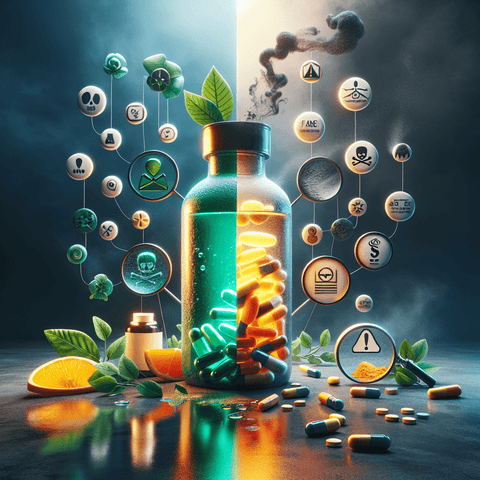
Fake supplement reviews are misleading ratings and testimonials designed to make a product appear more effective or trustworthy than it really is. This guide explains what fake supplement reviews are, why they exist, how to recognize them, and what to do instead of relying on star ratings. You will learn nine practical warning signs, how to evaluate a supplement brand independently through labels, certifications, and third-party testing, and how to weigh diet, lifestyle, and individual needs before deciding whether a supplement deserves a place in your routine. Because supplements affect your health and your budget, learning to see through manipulated reviews is a genuinely useful skill.
Exposed: The Truth Behind Fake Supplement Reviews and How to Spot Them
Why "fake supplement reviews" is a search worth your attention
Supplements are one of the largest and fastest-growing categories in online retail, and reviews are often the deciding factor between two seemingly similar products. Unfortunately, that makes the review section a prime target for manipulation. Unlike food, where quality is fairly obvious, a supplement's purity, dosage, and ingredient quality are invisible from the outside — which means a five-star rating can easily mask a poorly formulated product.
Learning to identify fake supplement reviews is not about becoming cynical. It is about shifting your trust from anonymous opinions to verifiable evidence: labels, certifications, transparent manufacturing practices, and your own nutritional needs.
What you'll learn in this guide
In the sections below, you will find a definition of fake reviews and their most common forms, nine concrete warning signs, the commercial reasons behind review manipulation, a practical detection checklist, and a framework for evaluating supplements on their merits — including label reading, bioavailability, safety, and when professional assessment is more useful than another bottle of pills.
What Are Fake Supplement Reviews? Definition and Common Types
Paid reviews, incentivized reviews, and fake five-star ratings explained
A fake review is any testimonial written by someone who has not genuinely used the product, or whose opinion was bought or incentivized. This includes outright paid five-star ratings, reviews written in exchange for free products or gift cards, and reviews written by people with no product experience at all. In the supplement world, these often contain enthusiastic but medically implausible claims, such as "cured my fatigue in two days."
Review swapping, review farms, and bot-generated feedback
Beyond individual sellers, manipulation happens at scale. Review-swapping groups trade positive reviews across unrelated products. Review farms employ people (or bots) to post large volumes of feedback. Bot-generated reviews are often detected by their formulaic structure, odd phrasing, or clusters of identical posting dates — patterns you can learn to spot with practice.
How "review gating" and suppressed negative reviews distort ratings
Some brands use email surveys to filter feedback: satisfied customers are directed to leave a public review, while dissatisfied customers are sent to a private complaint form. This practice, known as review gating, artificially inflates average ratings and hides legitimate concerns about side effects, quality control, or product consistency.
Why Fake Supplement Reviews Matter for Your Health and Wallet
The real cost of choosing supplements based on manipulated reviews
The immediate cost is financial: wasted money on products that deliver little. The deeper cost is health-related. A well-reviewed but underdosed product may lead someone to believe they are addressing a nutritional gap when they are not, potentially delaying more appropriate measures such as dietary change or a conversation with a healthcare provider.
How misleading reviews hide issues with quality, purity, and dosage
Reviews cannot tell you whether a product was third-party tested, whether the ingredient form is well absorbed, or whether the dose matches the amount used in research. Independent analysis of supplement quality, however, regularly finds products that contain less — or more — of an active ingredient than the label states, or that are contaminated with undeclared substances. No number of five-star ratings compensates for that uncertainty.
The scale of the problem: fake reviews across online marketplaces
Major marketplaces remove millions of suspected fake reviews each year, and regulators in the US and EU have begun fining companies for hosting or commissioning them. The problem spans every product category, but supplements are especially vulnerable because purchase decisions rely heavily on trust and claimed health benefits.
9 Warning Signs of a Fake Supplement Review
Overly generic or vague five-star praise
"Great product, works amazing, highly recommend!" tells you nothing about ingredients, dosage, or the reviewer's situation. Genuine reviews usually include context: why the person took the supplement, for how long, and what changed — or did not.
Repeated phrasing and suspiciously similar review patterns
If multiple reviews use identical phrases, similar sentence structures, or the same unusual vocabulary, they may originate from the same source. Searching a distinctive phrase in quotation marks can reveal copied text across listings.
Reviews that focus on shipping or packaging, not the product
When most of a review praises fast delivery or nice bottles while saying little about the supplement itself, the reviewer may not have actually used the product.
Extreme claims of "miracle" results or overnight cures
Nutrients work physiologically over weeks to months, if they are needed at all. Claims of instant transformations, dramatic cures, or effortless weight loss are red flags for both fake reviews and irresponsible marketing. No legitimate supplement treats or cures disease.
Burst of reviews in a short time period
A listing that jumps from a handful of reviews to hundreds within days has often been artificially boosted. Look at the distribution of review dates when the platform shows it.
Unverified purchases and thin reviewer histories
Check whether the platform marks reviews as verified purchases. Profiles with only one review, all five stars, or reviews posted across unrelated product categories in rapid succession warrant skepticism.
Poorly written or translated reviews
Awkward grammar, inconsistent product names, or reviews that describe a different product version entirely often indicate outsourced or translated fake feedback.
Five-star reviews with two- and three-star text (rating–text mismatch)
A five-star rating paired with "caused stomach upset" or "didn't really notice anything" is a classic sign of manipulated or careless ratings. Compare the written content against the star score, not just the average.
Reviews that never mention drawbacks or side effects
Almost every supplement has some considerations: taste, capsule size, digestive effects, or slow onset. Review sections with uniformly flawless feedback have often been filtered.
Why Fake Supplement Reviews Happen: Causes and Motivations
Competitive supplement marketplaces and seller incentives
Search rankings on marketplaces are heavily influenced by ratings and review volume. That gives sellers a direct financial incentive to manufacture social proof, and the supplement category's high margins make the investment worthwhile for unscrupulous operators.
Incentivized review programs and discount-for-review schemes
"Leave a review and get 20% off your next order" is common and, depending on the platform's rules, problematic. Reviews written under such conditions are systematically biased toward positivity, even when the reviewer genuinely tried the product.
Affiliate marketing and sponsored "reviews" disguised as opinions
Many blog posts and videos ranking the "best" supplements earn commissions on purchases. Sponsored content is not inherently dishonest, but commission-based recommendations can favor payout over product quality, and disclosure is often buried or missing.
Influencer endorsements without genuine product experience
An influencer promoting multiple competing supplement brands within a few months likely did not meaningfully test any of them. Endorsements are marketing, not evidence of effectiveness or quality.
How to Spot a Fake Supplement Review: A Practical Checklist
Free tools and browser extensions for detecting fake reviews
Several free browser tools analyze review patterns, reviewer overlap, and linguistic signals to estimate the likelihood of manipulation. These tools are imperfect but useful as a first filter, especially before an expensive purchase.
How to read the critical reviews first (and why it matters)
Start with two- and three-star reviews. They tend to be the most informative: written by actual purchasers with no incentive to exaggerate. Look for recurring complaints — a pattern of "nothing in the capsule," inconsistent quality, or digestive side effects tells you more than fifty glowing paragraphs.
Checking reviewer profiles and verified purchase badges
Click through to a few reviewers. Genuine reviewers typically have varied histories and balanced ratings across products. A profile consisting entirely of five-star reviews posted in the same week is a strong signal of coordination.
Looking for reviews that mention specific ingredients, forms, and results over time
The most credible reviews reference specifics: the form of the nutrient, the dose per serving, how long it was taken, and realistic expectations. For example, someone discussing how long they took a magnesium supplement and noting gradual effects on muscle comfort is describing plausible physiology; "instant energy boost" is not.
Beyond Reviews: How to Evaluate a Supplement Brand Independently
Third-party testing and certifications (USP, NSF, Informed Choice, GMP)
Independent certification programs verify that a product contains what the label states and is free from significant contaminants. Seals such as USP Verified, NSF Certified for Sport, Informed Choice, and evidence of GMP-compliant manufacturing provide far more assurance than any star rating. For a deeper look at quality standards across product types, a comprehensive natural supplements overview can help you compare approaches.
Transparency: ingredient sourcing, manufacturing location, and contact information
Reputable brands state where products are manufactured, identify ingredient sources, and provide reachable customer service. Vague "proprietary science" language and no physical address are warning signs.
Certificate of Analysis (COA) requests and what they show
A COA is a laboratory document confirming identity, potency, and contaminant testing for a specific batch. Brands confident in their quality publish COAs or provide them on request. If a company refuses, that refusal is informative.
Red flags on supplement websites: cure claims, fear marketing, and fake urgency
Claims that a product "reverses" disease, countdown timers paired with fear-based messaging, and before/after imagery implying guaranteed results all violate responsible-marketing norms and often legal ones. Trustworthy brands describe supportive roles, not cures.
What to Look for on a Supplement Label Before Trusting Any Review
Supplement Facts panel: serving size, active ingredients, and amounts
The Supplement Facts panel is the most reliable information on the packaging. Check the serving size — sometimes a "dose" is two or three capsules — and compare the amount per serving with reference intakes to understand what you are actually taking.
Ingredient forms and bioavailability (e.g., magnesium citrate vs. magnesium oxide)
The chemical form of a mineral meaningfully affects absorption. Magnesium oxide is inexpensive but relatively poorly absorbed, while forms such as magnesium citrate or magnesium glycinate are generally better absorbed and often gentler on digestion. Similar distinctions exist for other nutrients, and a dedicated guide on magnesium forms and their uses illustrates why the label matters more than the reviews. Where evidence comparing forms is limited, be cautious of brands claiming their form is dramatically superior.
Proprietary blends and hidden dosages
When ingredients are listed as a "proprietary blend" with only a total weight, you cannot know whether any individual ingredient is present at an effective amount. This practice often hides underdosed formulas behind impressive-sounding ingredient lists.
Added ingredients, fillers, allergens, and dietary preferences
Review the full ingredient list for allergens, unnecessary sweeteners, colors, or animal-derived capsules if those matter to you. Vegan, gluten-free, and allergen statements should be specific rather than vague.
Capsules, tablets, powders, and liquids: practical differences
Capsules are convenient and often tasteless; tablets may contain more binders; powders allow flexible dosing but require measuring; liquids may suit people who struggle to swallow capsules but can have shorter shelf life. Choose the format you will actually take consistently — adherence matters more than minor formulation differences.
Do You Even Need That Supplement? Food and Lifestyle First
Why dietary sources should come before any bottle
For most nutrients, a varied diet is the preferred source. Foods deliver nutrients alongside fiber, phytochemicals, and other compounds in forms and ratios the body handles well. Supplementation is best viewed as a targeted tool for identified gaps, not a replacement for eating well.
Common nutrient-rich foods by category (vitamins, minerals, omega-3s, probiotics)
- Fat-soluble vitamins: leafy greens, colorful vegetables, eggs, dairy, and oily fish provide vitamins A, D, E, and K in varying amounts.
- B vitamins: whole grains, legumes, meat, fish, eggs, and fortified foods.
- Minerals: nuts, seeds, dairy, legumes, seafood, and whole grains supply magnesium, zinc, iron, selenium, and more.
- Omega-3 fats: fatty fish such as salmon, sardines, and mackerel; plant sources include walnuts and flaxseed, though conversion of plant omega-3s to EPA and DHA is inefficient for many people.
- Probiotic and fermented foods: yogurt, kefir, sauerkraut, kimchi, and other fermented products contribute live cultures alongside nutrients.
Lifestyle factors that affect your nutrient needs: sleep, stress, exercise, and alcohol
Nutritional needs are not static. Intense training can increase requirements for certain nutrients, chronic alcohol intake interferes with the absorption and metabolism of several B vitamins, smoking increases vitamin C turnover, and poor sleep and psychological stress may influence appetite and food choices in ways that affect overall intake.
Absorption basics: why eating a nutrient isn't the same as absorbing it
Bioavailability depends on the nutrient's form, the food matrix, and your digestive health. Fat-soluble vitamins A, D, E, and K are absorbed better alongside dietary fat; iron from plant sources is absorbed more efficiently when consumed with vitamin C; and some minerals compete for the same absorption pathways. This is also why a laboratory-grade supplement form can outperform a poorly absorbed one, independent of dose.
When Supplementation May Genuinely Be Relevant
Life stages and situations with higher nutrient needs (pregnancy, aging, vegan diets)
Certain groups have well-recognized higher needs or lower intake: folic acid is broadly recommended before and during early pregnancy for neural tube risk reduction; vitamin D requirements may rise with age and limited sun exposure; and people following strict vegan diets may need attention to vitamin B12, iron, zinc, iodine, and omega-3 status. For a structured overview of one such nutrient, see this guide to vitamin D sources, benefits, and safety.
Dietary restrictions, absorption issues, and certain medications
Conditions affecting the gut — such as celiac disease, inflammatory bowel disease, or bariatric surgery history — can reduce absorption of multiple nutrients. Long-term use of some medications, including certain acid reducers, metformin, and diuretics, is associated with altered status of specific vitamins and minerals.
Why blood testing and professional assessment matter before supplementing
Symptoms like fatigue, poor sleep, or muscle cramps have many possible causes and cannot confirm a deficiency on their own. For nutrients with validated tests — vitamin D, vitamin B12, iron stores (ferritin), and others — a blood test plus professional interpretation is far more reliable than guessing, and it prevents unnecessary supplementation.
General nutritional support vs. treating a diagnosed deficiency
A general multivitamin or a thoughtfully chosen multivitamin may serve as nutritional insurance for people with consistently restricted diets. That is different from correcting a diagnosed deficiency, which typically requires specific doses, a defined form, and medical follow-up.
Individual Variability: Why "It Worked for Me" Reviews Can Mislead You
How genetics, diet, age, and health status change supplement responses
Two people taking the same supplement can have very different experiences. Genetics influence nutrient metabolism; baseline diet determines whether there is any gap to fill; age, sex, body size, and health conditions all alter requirements and responses.
Why a five-star review from one person tells you little about your needs
A single testimonial is an anecdote with no control group. If the reviewer's diet already covered a nutrient gap, or if placebo effects were at play, their enthusiasm says nothing about whether the product will benefit you. Conversely, a one-star review from someone who did not need the nutrient does not mean the product is poor.
Baseline nutrient status: why the same dose can help one person and do nothing for another
Someone with low vitamin D status may notice gradual improvement with supplementation, while someone with adequate levels will feel nothing measurable from the same dose. This single principle explains most of the contradictory reviews you will encounter on any given supplement listing.
How to Choose the Right Supplement When You Do Need One
Matching ingredient form and dosage to your actual needs
Once you know — ideally through testing or professional guidance — which nutrient you need, choose a product whose form and dose align with that need. More is not better: the goal is to reach adequate intake, not to maximize the number on the label.
Single-ingredient products vs. combination formulas
Single-ingredient products make it easier to adjust dose and avoid excess, which is useful when correcting a specific gap. Combination formulas can be convenient for general support but make it harder to track total intake across multiple products.
Purity, quality, and certifications worth prioritizing
Prioritize third-party tested products from transparent manufacturers over products with the most impressive review averages. Certifications, published COAs, and clear labeling are verifiable; testimonials are not. If you are comparing mineral products, resources covering iron, zinc, selenium, and other trace minerals can help you understand which forms and doses are reasonable.
Balancing price, quality, and realistic expectations
The most expensive product is not automatically the best, and the cheapest may cut corners on forms and testing. Set realistic expectations: nutrients support normal physiological function; they do not deliver dramatic transformations, and effects, when relevant, typically develop over weeks to months.
Safety, Interactions, and When to Talk to a Professional
Upper intake limits and the risks of megadosing
Every nutrient has a tolerable upper intake level above which adverse effects become more likely. Fat-soluble vitamins accumulate in the body, making chronic high-dose use riskier than occasional use. Megadosing based on forum advice or enthusiastic reviews is never a substitute for professional dosing.
Common supplement–medication interactions to be aware of
Well-known examples include vitamin K affecting blood-thinning medication such as warfarin, high-dose omega-3s having mild blood-thinning effects, and St. John's Wort interacting with numerous prescription drugs. If you take regular medication, check with a pharmacist or physician before adding supplements.
Supplement safety during pregnancy, chronic conditions, and before surgery
Pregnancy and breastfeeding change both requirements and safety thresholds; some herbal supplements are unsuitable entirely. People with kidney or liver conditions need particular caution with minerals, and certain supplements are typically paused before surgery due to bleeding or interaction risks.
Possible side effects and when to stop and consult a healthcare provider
Digestive upset, headaches, or skin changes after starting a new supplement warrant stopping and reassessing. Persistent or severe symptoms should be discussed with a healthcare provider rather than self-managed with more products.
Decision Guide: Should You Buy Based on Reviews, or Look Deeper?
When a well-reviewed product may still not be right for you
A top-rated product can still be wrong for you: wrong dose, wrong form, unnecessary ingredient, or an interaction with your medication. Reviews measure popularity, not personal fit.
A step-by-step framework: need → diet → quality → label → purchase
- Need: identify a plausible reason — dietary gap, life stage, or tested insufficiency.
- Diet: first consider whether food changes could close the gap.
- Quality: verify third-party testing, manufacturing transparency, and COA availability.
- Label: check the form, dose, serving size, and full ingredient list.
- Purchase: only then compare prices — and treat reviews as one minor input, not the deciding factor.
Questions to ask before clicking "add to cart"
Do I know why I am taking this? Has my dietary intake been considered? Is the ingredient form well absorbed? Is the dose reasonable rather than extreme? Does the brand provide verifiable quality evidence? Would a test or professional opinion be a better first step? If you cannot answer these, the product is not ready to buy.
Final Thoughts: Becoming a Review-Proof Supplement Shopper
The key takeaway: trust evidence and labels over star ratings
Fake supplement reviews thrive because star ratings feel like social proof. But a rating tells you nothing about ingredient forms, dosages, purity, or whether you need the product at all. Labels, certifications, and professional guidance — imperfect as they are — are verifiable in a way that anonymous testimonials never will be.
Making informed nutrition and supplement decisions with confidence
Needs differ between individuals, and the right approach for most people starts with food, sleep, stress, and exercise. Where a genuine gap exists, a well-chosen, quality-tested supplement can play a supportive role — ideally guided by testing or professional advice rather than a wall of five-star reviews. Shop with curiosity, skepticism, and your own biology in mind, and the manipulative tactics described here lose most of their power.
Key Takeaways
- Fake supplement reviews include paid, incentivized, bot-generated, and gated feedback — all designed to inflate perceived quality.
- Nine warning signs include vague praise, repeated phrasing, review bursts, miracle claims, and five-star ratings paired with lukewarm text.
- Reviews cannot verify purity, potency, or ingredient quality; third-party certifications and COAs can.
- Read critical reviews first — they are usually the most informative part of any listing.
- Ingredient form and bioavailability matter more than star ratings; mineral forms differ meaningfully in absorption.
- Food and lifestyle should come first; supplementation is best reserved for identified gaps or higher-need life stages.
- Individual variability means "it worked for me" testimonials say little about your own likely response.
- Symptoms alone cannot confirm a deficiency; validated blood tests and professional assessment are more reliable.
- Respect upper intake levels and check for medication interactions before adding any new supplement.
- Follow the framework need → diet → quality → label → purchase, and treat reviews as a minor input rather than the deciding factor.
Frequently Asked Questions
What are fake supplement reviews?
Fake supplement reviews are ratings or testimonials written by people who never genuinely used the product, or whose opinions were purchased or incentivized. They may also be bot-generated, swapped between sellers, or the result of review gating that hides negative feedback.
How can I tell if supplement reviews are fake?
Look for vague five-star praise, repeated phrasing across reviews, sudden bursts of ratings, unverified purchases, miracle claims, and five-star scores paired with lukewarm text. Reading the two- and three-star reviews first often reveals the most honest picture.
Are verified purchase reviews always trustworthy?
No. Verified badges confirm a purchase, not genuine product use or an unbiased opinion. Incentivized reviews are frequently verified. Verification is one useful signal, but reviewer history and content quality matter more.
Why do supplement companies post fake reviews?
Marketplace rankings and sales correlate strongly with ratings and review volume, giving sellers a direct financial incentive to manufacture social proof. The supplement category's high margins and intense competition amplify this incentive.
What should I check instead of reviews before buying a supplement?
Check the Supplement Facts panel for ingredient form and dose, look for third-party certifications such as USP, NSF, or Informed Choice, request a certificate of analysis, and evaluate the brand's transparency about manufacturing and sourcing.
Do better-absorbed ingredient forms really matter?
Yes, in many cases. For example, magnesium citrate and glycinate are generally absorbed better than magnesium oxide. The differences between forms are real, though marketing claims of dramatic superiority between similar forms often outpace the evidence.
Can I rely on reviews to know if a supplement will work for me?
No. Supplement responses depend heavily on your baseline nutrient status, diet, genetics, age, and health. A product that helped one person may do nothing for another, which is why contradictory reviews are common even for legitimate products.
How long does it take to notice effects from a supplement?
For nutrients addressing a genuine insufficiency, measurable changes in blood levels may take weeks to months, and symptom improvement varies widely. Products claiming overnight results are almost certainly exaggerating, whether in ads or in reviews.
Should I get a blood test before taking vitamins?
For nutrients with validated tests — such as vitamin D, vitamin B12, and iron stores — testing is the most reliable way to know whether supplementation is needed. Guessing based on symptoms can lead to unnecessary supplementation or missed causes.
Can you take too much of a vitamin or mineral?
Yes. Every nutrient has a tolerable upper intake level, and fat-soluble vitamins and minerals such as iron can accumulate or cause harm at chronically high doses. Megadosing should never be undertaken without professional guidance.
Do supplements interact with medications?
Some do. Vitamin K can interfere with warfarin, St. John's Wort interacts with many prescription drugs, and high-dose omega-3s have mild blood-thinning effects. Always check with a pharmacist or physician if you take regular medication.
Are affiliate "best supplements" lists trustworthy?
Not automatically. Many ranking sites earn commissions on purchases, which can bias recommendations toward payout rather than quality. Affiliate content can still be useful, but verify claims independently through labels, certifications, and neutral sources.
Related Keywords
- fake supplement reviews
- how to spot fake reviews
- incentivized reviews supplements
- supplement review red flags
- third-party tested supplements
- supplement label reading
- bioavailability of minerals
- supplement certifications USP NSF
- certificate of analysis supplements
- vitamin and mineral supplements guide
- choosing the right supplement
- supplement safety and interactions
- nutrient deficiency testing
- supplement quality vs price