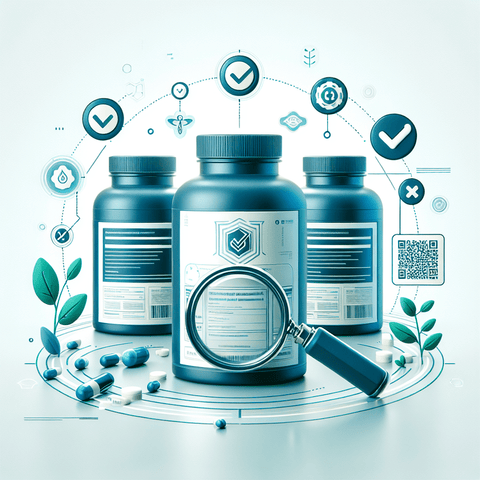
Fake supplements are a growing problem in online retail, and the consequences range from wasted money to genuine health risks. This guide explains the seven most important fake supplement warning signs — unrealistic health claims, suspiciously low prices, vague labels, hidden proprietary blends, absent third-party testing, unverified sellers, and missing lot numbers or seals. You will also learn what counterfeit, adulterated, and low-quality products actually mean, why large online marketplaces make counterfeits harder to spot, and how to verify a label, a certification, and a seller before you buy. The goal is simple: help you evaluate any supplement with informed skepticism rather than guesswork.
Introduction: The Fake Supplement Warning Signs Every Buyer Should Know
Dietary supplements are used by a large share of adults, and most purchases now happen online rather than across a pharmacy counter. That shift brings real advantages in choice and price, but it also created ideal conditions for counterfeit and adulterated products: cloned listings, anonymous third-party sellers, and supply chains that are difficult for consumers to trace. Food safety agencies in the United States and Europe routinely warn buyers about fake weight-loss, muscle-building, and sexual-health products in particular, because these categories attract adulteration with undeclared pharmaceutical ingredients.
Recognizing fake supplement warning signs is therefore a practical health skill, not a niche concern. A product that contains none of its labeled nutrient can leave a genuine shortfall unaddressed, while a product adulterated with hidden drugs can cause direct harm. The sections below cover the definitions, the seven warning signs, the origins of counterfeit products, and a practical system for choosing supplements you can trust.
What Are Fake Supplements? Definitions, Types, and Key Terms
"Fake supplement" is an umbrella term covering several distinct problems, and understanding the differences helps you judge how serious each situation is. The spectrum runs from deliberate fraud at one end to honest but poorly executed manufacturing at the other.
Counterfeit vs. Adulterated vs. Simply Low-Quality: What Counts as "Fake"?
- Counterfeit products deliberately imitate a legitimate brand. They may contain little or none of the labeled ingredient, the wrong ingredient entirely, or expired material repackaged to look new.
- Adulterated products contain undeclared substances — typically illegal or withdrawn pharmaceutical drugs, unapproved stimulants, or undisclosed fillers and contaminants.
- Low-quality products are not necessarily fraudulent, but they underdose key ingredients, hide doses behind proprietary blends, use poorly absorbed nutrient forms, or lack independent quality verification.
All three deserve scrutiny. Counterfeits and adulterated products are outright dangerous; consistently low-quality products are a slower drain on both your health goals and your wallet.
Why Fake Supplements Are a Real Risk to Your Health and Your Wallet
The most obvious risk is that a fake product simply does nothing. If you take vitamin D because a test suggested low levels, and the capsules contain no vitamin D, the shortfall continues uncorrected while you believe you are addressing it. That delay matters, because established nutritional deficiencies are associated with fatigue, impaired bone health, and reduced immune function, and they warrant proper correction rather than silent failure.
The second risk is more acute. Adulterated products can contain pharmaceutical compounds that were withdrawn from legitimate markets for safety reasons, undeclared stimulants, or contaminants such as heavy metals. Because these substances are not on the label, side effects and interactions become impossible to anticipate. The financial cost compounds both risks: money spent repeatedly on ineffective products, plus potential medical costs if something goes wrong.
The 7 Warning Signs of Fake Supplements — and How to Spot Each One
No single sign proves a product is fake, but several together should change your decision. Here is how to recognize each one and what it typically indicates.
Warning Sign 1: Health Claims That Sound Too Good to Be True
Phrases like "cures," "melts fat," "better than medication," or "guaranteed results" are red flags. In regulated markets, legitimate manufacturers make specific, authorized statements: EU products rely on EFSA-authorized health claims, while US structure-and-function claims must carry a disclaimer that the product is not intended to diagnose, treat, cure, or prevent disease. Miraculous marketing usually signals a product compensating for something — weak formulation, adulteration, or outright counterfeiting.
Warning Sign 2: Suspiciously Low Prices and Constant Discounts
Quality raw materials, testing, and compliant manufacturing cost money, so a premium brand offered 70% below its usual price is not a bargain — it is a question mark. Occasional legitimate promotions exist, including honest clearance of short-dated stock, but permanent deep discounts on premium products are classic counterfeit economics.
Warning Sign 3: Missing or Vague Label Information
A compliant label states the manufacturer or distributor, a contact route, a full ingredient list, and amounts per serving. Vague descriptions like "immune blend" or "vitamin complex" without quantities — or a label with no company details at all — make verification impossible. If you cannot identify who made a product, nobody can be held accountable for what is inside it.
Warning Sign 4: Proprietary Blends That Hide Actual Dosages
A proprietary blend lists ingredients in descending order but shows only the total blend weight, not individual amounts. That makes it impossible to know whether you are getting an effective dose of the expensive active or a gram of cheap filler. Blends are not automatically fake, but they block the label verification that quality products allow, and they are strongly associated with underdosed formulations.
Warning Sign 5: No Third-Party Testing or Quality Certifications
Independent verification — such as USP, NSF, or Informed Choice marks, or published certificates of analysis — confirms that a product contains what its label claims and is free from significant contaminants. Its absence is a warning; an unverifiable logo is worse. Counterfeiters copy certification marks, so always cross-check the product or batch on the certifying organization's own website rather than trusting the seal.
Warning Sign 6: Unverified Sellers and Unofficial Sales Channels
Social-media-only sellers, brand-new marketplace accounts, and websites with no company history deserve caution. Gray-market reselling is widespread: inventory from different sellers is sometimes stored together, so even a genuine brand listing can ship from an anonymous third party. Prefer the manufacturer's own store or authorized retailers, and be especially careful with products like herbal supplements, where sourcing and quality control matter most.
Warning Sign 7: Missing Lot Numbers, Expiry Dates, or Safety Seals
Every legitimate batch carries a lot number and an expiry date. The lot number enables recall tracing, the expiry date reflects stability testing, and the tamper-evident seal confirms the product was not opened after filling. Blurred printing, spelling errors, stickers covering printed dates, or a missing seal are small details that counterfeit packaging frequently gets wrong.
Where Fake Supplements Come From — and Why Online Marketplaces Make Them Harder to Spot
Counterfeit supplements typically originate from unlicensed manufacturers, repackaging operations that refill authentic-looking containers with cheap material, or gray imports diverted through unofficial distribution. Regulatory seizures show these operations can be sophisticated, down to copied barcodes and near-identical packaging.
Online marketplaces add a structural problem: a single listing can host many sellers, inventory is sometimes commingled in shared warehouses, and counterfeiters exploit hijacked listings that inherit the reviews of the original product. The platform you buy from is not the same as the seller you buy from. Checking the actual seller name, preferring "sold by" the brand or an authorized retailer, and reporting suspicious listings meaningfully reduce your risk.
One Size Doesn't Fit All: How Individual Factors Change Your Nutrient Needs and Your Risk
Nutrient requirements vary substantially between individuals, and so does the harm a fake product can do. Age, pregnancy and breastfeeding, dietary pattern, limited sun exposure, medication use, gastrointestinal conditions that affect absorption, smoking, and alcohol intake all influence what you actually need. A person with a documented deficiency has a practical stake in product authenticity that someone with adequate status does not. This is also why guessing is a poor strategy: symptoms such as fatigue are nonspecific, and a blood test or professional assessment tells you far more about your nutritional status than self-diagnosis ever can.
Food First: Why Whole Foods Should Anchor Your Nutrition
Nutrient-Rich Whole Foods: Your First Source of Vitamins and Minerals
For most nutrients, a varied diet can cover requirements without supplements. Vegetables, fruits, legumes, whole grains, nuts, seeds, fish, eggs, and dairy deliver vitamins and minerals within a food matrix — alongside fiber and complementary compounds — that generally supports normal absorption. Vitamin C, most B vitamins, magnesium, and potassium are reliably obtainable from food. Vitamin D and vitamin B12 are the classic exceptions, where intake or synthesis may fall short for some people depending on sun exposure and diet.
Smart Buying and Storage Habits That Reduce Your Risk
Both food and supplements degrade with poor handling. Store supplements away from heat and humidity, keep tamper seals intact until use, respect expiry dates, and discard anything with clumping, discoloration, or an off smell. Buy from the manufacturer or an authorized retailer rather than resellers, and keep the packaging with its lot number until the product is finished in case a recall is ever announced.
The Legitimate Role Quality-Verified Supplements Can Play — and What They Can't
Used appropriately, supplements serve defined purposes: correcting a documented shortfall, covering a physiologically increased requirement, or adding convenience when diet alone is impractical. Public health guidance, for example, recommends folic acid before and during early pregnancy and vitamin D for specific groups in many countries. What supplements cannot do is replace a balanced diet, compensate for an overall unhealthy lifestyle, or treat disease. A quality-verified product is a targeted tool — and no supplement can offset a fundamentally poor eating pattern.
When Supplementation May Be Worth Considering
Situations Where Diet Alone May Not Fully Cover Your Needs
Dietary surveys and nutrition research consistently identify situations where intake or status may fall short:
- Vitamin D during winter months at higher latitudes or with limited sun exposure overall
- Vitamin B12 for people following vegan diets and many older adults with reduced absorption
- Iron for menstruating women with low dietary intake — ideally confirmed by testing
- Folic acid for women planning pregnancy or in early pregnancy, per public health guidance
- Reduced absorption due to gastrointestinal conditions or certain long-term medications
For several of these, a simple blood test provides objective information that symptoms cannot — so testing or professional guidance often makes sense before supplementing.
How to Choose a Supplement You Can Actually Trust
Ingredient Forms, Bioavailability, and Sensible Dosages
Nutrients come in chemical forms that differ meaningfully in absorption and tolerability. Vitamin D3 is generally preferred over D2 for maintaining blood levels, and magnesium oxide is cheaper but less well absorbed than forms such as citrate or glycinate. Doses should stay close to physiological needs unless a professional advises otherwise: amounts far above recommended intakes do not deliver proportionally more benefit and may approach tolerable upper intake levels.
Single-Ingredient Products vs. Combination Formulas
Single-ingredient products are easier to verify, dose, and stop if needed. Combination formulas offer convenience but require arithmetic — check the totals across everything you take so you do not unknowingly double up on nutrients such as vitamin A, iron, or zinc where excess is a concern.
Purity and Quality: Third-Party Testing, Certifications, and Manufacturing Standards
Look for GMP-based manufacturing, third-party certification, and a manufacturer willing to provide batch certificates. Transparent brands explain their sourcing and verification steps openly. A guide to multivitamin ingredients, usage, and safety shows what transparent labeling looks like in practice.
Allergens, Added Ingredients, and Capsule vs. Tablet vs. Powder Formats
Check allergen declarations (gluten, soy, lactose, nuts), unnecessary colors or sweeteners, and the capsule material if you avoid gelatin. Format mainly affects convenience and tolerability — powders suit people who dislike swallowing capsules, while tablets are compact but harder for some to take. No format is universally superior; consistency of use matters more.
How to Read a Supplement Label Like an Expert
The Supplement Facts Panel: Serving Sizes, Amounts, and Percent Daily Values
Start with the serving size, because every listed amount refers to it — and it may differ from one capsule. Compare each nutrient's amount with its Percent Daily Value to judge whether the product offers a meaningful contribution or a token dose. Be wary of "concentrates" quoted without the equivalent raw amount, and of blends that hide individual quantities.
Authenticity Markers: Manufacturer Details, Lot Numbers, Expiry Dates, and Verifiable Seals
Authentic products carry a named manufacturer with contact details, a lot number, a clear expiry date, and intact tamper-evident packaging. Certifications should be verifiable on the issuing body's website. If a seller cannot say where a product was manufactured or refuses to supply batch documentation, treat that as a decisive warning sign.
Who May Benefit Most From Supplementation — and Who Should Be Extra Careful
Life Stages and Lifestyles That Increase Nutritional Demand
Pregnancy and breastfeeding, older age, restrictive diets, intense physical training, limited sun exposure, smoking, and regular alcohol consumption each shift nutrient requirements in specific directions. These groups are also attractive targets for counterfeiters, precisely because demand for quick results is high.
When Blood Testing or Professional Guidance Should Come First
Symptoms such as tiredness, poor concentration, or hair shedding are nonspecific and cannot confirm a deficiency on their own. For nutrients with validated tests — vitamin D, vitamin B12, and iron status among them — a blood test distinguishes a genuine shortfall from adequate status, which prevents both unnecessary supplementation and wasted money on fakes. Anyone who is pregnant, manages a medical condition, or takes prescription medication should involve a qualified healthcare professional before starting supplements, because dosing and interactions are individual matters.
Safety First: Side Effects, Medication Interactions, and the Hidden Dangers of Fake Products
Contamination, Incorrect Doses, and Hidden Ingredient Interactions: The Most Serious Risks
The gravest documented risks come from adulterated products: weight-loss capsules spiked with withdrawn pharmaceuticals, "herbal" remedies containing undeclared stimulants, and contamination with heavy metals. Incorrect doses are a quieter danger — excessive vitamin A during early pregnancy, for instance, is a recognized concern at intakes above the tolerated upper level. Even genuine supplements can interact with medications; the well-known example is vitamin K and anticoagulants such as warfarin, which is why your doctor or pharmacist should always know your full supplement list.
What to Do if You Suspect You've Used a Fake Supplement
Stop taking the product immediately and keep the packaging, lot number, and purchase records — they matter for any investigation. Contact the genuine manufacturer to check whether the batch is authentic, report the seller to the marketplace and to your national food or drug authority, and seek medical advice for any unusual symptoms, explicitly naming the product you used.
Making the Call: Food Changes, Supplements, or Both?
A Five-Minute Verification Checklist Before You Buy Any Supplement
- Manufacturer identity: a named company with an address and reachable customer service
- Complete label: every ingredient with its amount per serving — no hidden proprietary blends
- Batch traceability: lot number and expiry date clearly printed
- Intact packaging: tamper-evident seal present, printing sharp, no spelling errors
- Honest claims: qualified statements rather than miracle promises
- Verifiable quality: third-party certification you can confirm on the certifier's website
- Legitimate seller and price: official store or authorized retailer, with pricing in a normal range
When Dietary Changes May Be Enough — and When a Verified Supplement Makes Sense
If your diet is varied and your nutritional status is likely adequate, improving food choices is usually sufficient, and no supplement is needed. Supplementation becomes more defensible when a specific gap is documented or clearly plausible — limited sun exposure for vitamin D, a vegan diet for B12, pregnancy-related folate needs — and when the product passes the checklist above. When the situation is unclear, a blood test or a conversation with a healthcare professional is a better investment than guessing.
Key Takeaways
- Fake supplements include counterfeits (copied products), adulterated products (hidden drugs or contaminants), and low-quality products (underdosed or unverified).
- Miraculous health claims, prices far below the normal range, and anonymous sellers are the most visible fake supplement warning signs.
- Proprietary blends and incomplete labels prevent verification and are strongly associated with underdosed formulations.
- Missing lot numbers, expiry dates, or tamper seals make a product untraceable and should end the purchase.
- Online marketplaces can host counterfeit sellers even on genuine-looking listings — always check who actually sells and ships the product.
- A certification logo only counts if you can verify it on the certifying organization's own website.
- Whole foods should anchor nutrition; supplements serve specific, defined gaps such as vitamin D, B12, iron, or pregnancy-related folate needs.
- Blood testing beats symptom-guessing for nutrients with validated tests, especially during pregnancy, illness, or medication use.
- If you suspect a fake, stop the product, keep the packaging and lot number, and report it to the manufacturer and national authorities.
Frequently Asked Questions
How can I tell if a supplement is fake?
Look for the combination of red flags: unrealistic claims, unusually low prices, missing manufacturer details, hidden proprietary blends, no third-party verification, and absent lot numbers or seals. No single sign is conclusive, but several together strongly suggest you should not buy.
Are supplements bought on large online marketplaces risky?
They can be, because marketplaces host many third-party sellers and counterfeiters sometimes hijack legitimate listings. Buy directly from the brand or an authorized retailer, and check the seller name before ordering.
What does third-party testing actually verify?
It confirms, through an independent laboratory, that the product contains its labeled ingredients at the stated amounts and is free from significant contaminants. A certification only counts if the product or batch can be verified on the certifier's own website.
Can fake supplements be dangerous, or just a waste of money?
They can be genuinely dangerous. Documented cases include products adulterated with withdrawn pharmaceutical drugs, undeclared stimulants, and heavy-metal contamination, alongside failures that leave real deficiencies untreated.
What should I do if I think I have taken a fake supplement?
Stop using it, keep the packaging and lot number, contact the genuine manufacturer, and report the seller to the marketplace and your national food or drug authority. Seek medical advice for any unusual symptoms and mention the product by name.
Is a proprietary blend always a sign of a fake product?
Not always, but it prevents verification. Because individual amounts are hidden, blends are a common way to underdose expensive actives, so they are widely viewed as a quality red flag even in otherwise legitimate products.
Does a high price guarantee authenticity?
No. Price reflects branding and positioning as much as quality, and counterfeiters also sell at premium prices. Authenticity depends on label completeness, traceability, and testing — not on cost.
Can scanning a QR code or barcode confirm a supplement is genuine?
Only partially. Serial codes and QR verifications are useful when they link to the manufacturer's own verification service, but they can be copied. Treat them as one signal alongside label checks and seller verification.
Which supplements are most often counterfeited?
Products promising rapid results attract the most adulteration: weight-loss pills, muscle-building and performance products, and sexual-health supplements. Counterfeited branded vitamins and multivitamins are also reported regularly.
Do I need a supplement if I eat a balanced diet?
Often no. A varied diet covers most nutrient needs, and food should remain the foundation. Supplementation becomes more relevant for documented gaps or increased requirements, such as limited sun exposure for vitamin D or a vegan diet for vitamin B12.
Are "natural" supplements automatically safer than synthetic ones?
No. Safety depends on identity, dose, purity, and quality control — not on whether a nutrient came from a lab or a plant. "Natural" is also a frequent marketing hook that counterfeiters exploit because consumers trust it.
Does the expiry date on a supplement really matter?
Yes. Potency declines over time, which is why manufacturers print expiry dates based on stability testing. Store products cool and dry, respect the printed date, and discard anything with a missing, altered, or suspiciously applied date.
Related Keywords
- fake supplement warning signs
- counterfeit supplements
- adulterated supplements
- how to spot fake vitamins
- supplement label red flags
- proprietary blend risks
- third-party tested supplements
- supplement quality certifications
- buying supplements online safely
- supplement contamination dangers
- how to verify supplement authenticity
- choosing quality supplements
- supplement safety and interactions
Conclusion: Stay Skeptical, Verify Everything, and Let Food Lead
Protecting yourself from fake supplements comes down to three habits: letting a varied, whole-food diet anchor your nutrition; verifying labels, certifications, and sellers before any purchase; and using objective information — a blood test or professional guidance — rather than symptoms to decide whether you need a supplement at all. Nutritional needs differ from person to person, so a product that suits one individual may be unnecessary for another, and no universal recommendation exists. When supplementation is genuinely warranted, a quality-verified product with a transparent label, traceable batch, and verifiable testing is the only kind worth your money. In this market, skepticism is not cynicism — it is the healthiest way to buy.