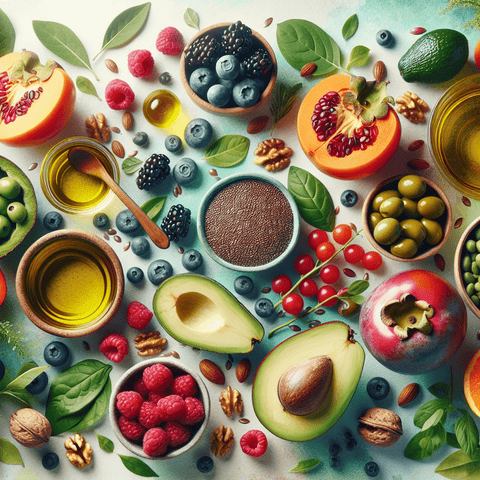
Fatty fruits rich in omega-3 are often mentioned in heart-health conversations, but few people know which fruits genuinely contain meaningful amounts of omega-3 fatty acids — and how much they actually contribute to daily needs. In this article, we examine the most relevant fatty fruits, including avocados and olives, explain how plant-based omega-3 (ALA) differs from the EPA and DHA found in fish, and place fruit sources in context alongside seeds, nuts, and oils. You will also learn how much omega-3 you may need, what the evidence says about plant omega-3 and cardiovascular health, and when diet alone may be enough — or when supplementation could be worth considering.
What Are Fatty Fruits Rich in Omega-3?
Defining Omega-3 Fatty Acids
Omega-3 fatty acids are a family of polyunsaturated fats that the body needs but cannot produce efficiently on its own. The three most nutritionally important omega-3s are alpha-linolenic acid (ALA), eicosapentaenoic acid (EPA), and docosahexaenoic acid (DHA). ALA is an essential fatty acid, meaning it must come from the diet, while EPA and DHA can be produced from ALA in the body — though this conversion is notoriously limited. These fats play structural roles in cell membranes and are involved in normal inflammatory and cardiovascular processes.
Which Fruits Actually Contain Meaningful Amounts of Omega-3?
This is where expectations need adjusting. Most sweet fruits — apples, bananas, berries — contain only trace amounts of omega-3. The fruits that genuinely qualify as "fatty" are those with a high total fat content, and within that fat, some proportion of ALA. Avocados and olives are the leading examples: their fat is predominantly monounsaturated, but small amounts of omega-3 are present. Coconut is a fatty fruit as well, although it contains almost no omega-3. In practice, fatty fruits are better viewed as contributors to an overall healthy fat pattern rather than primary omega-3 sources.
Why Plant-Based Omega-3 Differs from Fish-Based Omega-3
Plant foods supply ALA almost exclusively. Fish and seafood supply preformed EPA and DHA, which the body can use directly. When you eat ALA from plants, your body must convert it to EPA and DHA through a multi-step enzymatic process — and research indicates that only a small fraction of ALA, often estimated in the low single digits of a percentage, ends up as EPA, with DHA conversion being lower still. This does not make plant omega-3 unimportant; ALA itself has recognized nutritional value. It does, however, mean that plant omega-3 and marine omega-3 are not interchangeable in equal amounts.
Why Omega-3 Matters for Heart Health
How Omega-3 Fatty Acids Support Cardiovascular Function
Omega-3 fatty acids are incorporated into cell membranes throughout the body, including blood vessels and heart tissue. They participate in normal processes involved in maintaining healthy blood lipid levels, supporting normal blood pressure, and moderating inflammatory signalling. Authorities such as the European Food Safety Authority (EFSA) have approved the claim that ALA and EPA contribute to the maintenance of normal blood cholesterol levels, and that EPA and DHA contribute to the normal function of the heart — with beneficial effects obtained at a daily intake of 250 mg EPA and DHA combined.
The Difference Between ALA, EPA, and DHA
ALA is the parent omega-3 compound: it is essential in the diet and serves partly as a building block for the longer-chain omega-3s. EPA and DHA are the longer-chain forms most directly associated in research with cardiovascular outcomes, with DHA also being a major structural component of the brain and retina. Fatty fruits, seeds, and nuts supply ALA; fish and algae supply EPA and DHA. Understanding this distinction is essential for anyone deciding whether their plant-based diet fully covers their omega-3 needs.
What the Evidence Says About Plant Omega-3 and Heart Health
Observational research has associated higher ALA intake with cardiovascular benefits, and ALA has an established role as an essential nutrient. Evidence for ALA-specific cardiovascular effects is generally more limited than the large body of research on EPA and DHA, and results from intervention studies have been mixed. A reasonable interpretation is that adequate ALA intake is important for everyone, while increasing preformed EPA and DHA — from fish or algae — may offer additional, though not guaranteed, benefits for heart health.
Top Fatty Fruits and Plant Sources of Omega-3
Avocados: The Most Accessible Omega-3 Fruit
Avocado is the clearest example of a genuinely fatty fruit: roughly three-quarters of its calories come from fat, predominantly heart-friendly monounsaturated oleic acid. Its omega-3 content is modest — a whole avocado contributes only a small fraction of a gram of ALA — but it also contains fibre, potassium, and vitamin E. Its real value for omega-3 nutrition is as a vehicle: the fat in avocado helps you absorb fat-soluble nutrients from the rest of your meal and fits easily into an ALA-rich eating pattern.
Olives and Olive Oil: A Mediterranean Staple
Olives and extra virgin olive oil are cornerstones of the Mediterranean diet, one of the best-studied dietary patterns for cardiovascular health. Like avocado, they are dominated by monounsaturated fat rather than omega-3, with only small ALA amounts. The Mediterranean diet's heart-health reputation likely comes from the overall pattern — olive oil alongside vegetables, legumes, fish, and nuts — rather than from olives being a significant omega-3 source. They still belong in this discussion because they are fatty fruits and displace less beneficial fats in the diet.
Coconut and Coconut Products: What You Should Know
Coconut is botanically a fatty fruit, but nutritionally it is an outlier in this list. Its fat is largely saturated (medium-chain triglycerides such as lauric acid), and it contains virtually no omega-3. Coconut oil can be part of a varied diet, but it should not be counted toward your omega-3 intake. If heart health is your priority, treat coconut products as a neutral to occasional fat source rather than a core omega-3 contributor.
Other Fruits with Modest Omega-3 Content
Beyond avocados and olives, some less common fatty fruits contain trace omega-3s. Winter squash family fruits and certain wild varieties have been noted for minor ALA content, and durian provides a substantial amount of total fat with small omega-3 contributions. These sources are interesting but rarely change practical calculations: their contribution to daily ALA is small, and availability is often limited.
How These Compare to Seeds and Nuts
When it comes to plant ALA, seeds and nuts outperform fruits considerably. Flaxseed is exceptional — a tablespoon of ground flaxseed provides roughly 1.5–2 grams of ALA. Chia seeds and walnuts are also rich sources, supplying around 1–2.5 grams of ALA per serving. Hemp seeds, canola oil, and soybean oil contribute as well. Realistically, if you want to meet your ALA needs from plants, seeds and nuts will do the heavy lifting, while fatty fruits support the overall dietary pattern.
How Much Omega-3 Do You Need Daily?
Recommended Intake for ALA
Because ALA is an essential nutrient, official bodies have set adequate intake (AI) levels. In the United States, the National Institutes of Health lists an AI of 1.6 g/day of ALA for men and 1.1 g/day for women (slightly higher during pregnancy and lactation). EFSA does not set a single ALA number in the same way but advises that adult ALA intake should be around 0.5% of energy, roughly 1–2 g/day for most adults, and separately recommends 250 mg/day of EPA plus DHA for cardiovascular support. There is no widely established tolerable upper intake level (UL) for ALA from food.
Estimating Your Intake from Fruit Sources
Run the numbers and a pattern emerges: even a generous daily serving of avocado and a portion of olives might supply a fraction of a gram of ALA combined. That is meaningful but unlikely to reach the 1.1–1.6 g/day target on its own. A tablespoon of ground flaxseed or a small handful of walnuts typically contributes more ALA than several servings of fatty fruit together. Fruit is best seen as a valuable complement — adding healthy fats, fibre, and micronutrients — rather than the backbone of omega-3 intake.
When Fruit Alone May Not Meet Your Needs
If you eat very little fatty fish and rely mostly on fatty fruits for omega-3, you may meet your essential ALA requirement but fall short on preformed EPA and DHA. This is particularly relevant for vegans, vegetarians, and people who rarely eat seafood. In such cases, adding ALA-rich seeds and nuts to the diet is the first practical step, and some people may then consider algae-based EPA/DHA supplementation — a topic we return to below.
Factors That Influence Omega-3 Levels in Fruits
Ripeness and Growing Conditions
The fatty acid profile of a fruit can vary with variety, growing climate, and harvest conditions, though the overall pattern — mostly monounsaturated fat in avocado and olive — remains consistent. Ripeness primarily affects texture, flavour, and antioxidant content rather than fundamentally changing the omega-3 contribution. Practical takeaway: choose ripe, quality fruit for taste and nutrient density, but do not expect ripeness to dramatically increase ALA content.
Processing and Storage Effects
Polyunsaturated fats, including ALA, are sensitive to heat, light, and oxygen. Cold-pressed oils retain more of their original fatty acid profile than heavily refined ones, and whole fruits protect their fats naturally within the plant matrix. For products like avocado oil or flaxseed oil, cold-pressed versions stored in dark bottles and used relatively fresh best preserve the omega-3 content.
How Preparation Methods Change Omega-3 Content
Whole fruits keep their fat intact, so preparation matters more for derived products. Avoid heating delicate omega-3-rich oils at high temperatures, as this accelerates oxidation and can degrade the beneficial fats. Use flaxseed and walnut oils cold — in dressings or smoothies — while olive oil performs well at moderate cooking temperatures. Mashing avocado into guacamole or blending it into a dressing preserves its fat profile without issue.
Signs You May Not Be Getting Enough Omega-3
Common Signs of Low Omega-3 Intake
Low omega-3 intake is difficult to detect from symptoms alone. Very low intake over long periods has been associated in research with dry or rough skin, and generalised fatigue or difficulty concentrating are sometimes mentioned — but these are non-specific and can have many other causes. Symptoms should never be used to self-diagnose an omega-3 deficiency. In practice, a better indicator is a dietary review: how often do you eat fatty fish, ALA-rich seeds and nuts, and healthy oils?
Why a Doctor or Lab Test May Be Needed
Validated biomarkers exist, such as the omega-3 index (the percentage of EPA and DHA in red blood cell membranes), which can give a more reliable picture than symptoms. If you have concerns about your omega-3 status, or a condition that affects fat absorption, discussing testing with a healthcare professional is more informative than guessing. Note that a medical diagnosis always requires professional clinical assessment — nutritional status testing is different from diagnosing disease.
Who May Benefit Most from Omega-3-Rich Foods
Vegetarians and Vegans
People following plant-based diets can meet ALA needs through flaxseed, chia, walnuts, hemp seeds, and their oils, with fatty fruits playing a supporting role. However, because they consume little or no preformed EPA and DHA, vegans in particular may benefit from algae-based omega-3 sources, either as oily microalgae foods or supplements, to support EPA and DHA intake.
People with Limited Fish Consumption
Those who dislike fish, avoid it for sustainability reasons, or have limited access to quality seafood face a similar situation: adequate ALA is achievable from plants, but EPA and DHA intake depends largely on fish or algae. Regularly including seeds, nuts, and fatty fruits helps, and algae oil is the direct plant-based route to EPA and DHA.
Older Adults and Heart Health Concerns
Cardiovascular concerns become more relevant with age, and omega-3 fatty acids are part of the broader nutritional picture for heart health. Older adults should still prioritise the overall dietary pattern — vegetables, legumes, whole grains, healthy fats, and fish where accepted — rather than expecting any single food to protect the heart. Anyone with diagnosed cardiovascular disease or on medication should discuss dietary changes and supplements with their doctor.
Athletes and Active Individuals
Regular intense exercise increases oxidative stress and places demands on recovery processes. While omega-3s are involved in normal inflammatory responses, evidence that supplementation improves athletic performance is limited. For most active people, meeting ALA and general fat needs through a varied diet — including seeds, nuts, and fatty fruits — is a sensible foundation; targeted supplementation is an individual decision best discussed with a sports dietitian or physician.
Best Ways to Incorporate Omega-3 Fruits into Your Diet
Practical Serving Ideas for Avocados and Olives
Avocado is remarkably versatile: sliced on wholegrain toast, cubed into salads, blended into smoothies, or mashed as a spread. Olives work as snacks, pizza and salad toppings, or blended into tapenade. Half an avocado with lunch and a small handful of olives as a snack adds healthy monounsaturated fat, fibre, and micronutrients to the day — while your ALA needs are best met alongside them with seeds and nuts.
Pairing Fats for Better Absorption
Fat-soluble nutrients — including vitamins A, D, E, and K, and carotenoids in vegetables — are absorbed more efficiently when consumed with fat. Adding avocado or olive oil to a salad measurably increases carotenoid absorption in studies. This is a practical reason to include fatty fruits with vegetable-rich meals: they support the uptake of nutrients you are already eating.
Balancing Omega-3 with Omega-6 in Your Daily Diet
Western diets often contain far more omega-6 (from sunflower, corn, and soybean oils in processed foods) than omega-3. Both are essential, but they compete for the same metabolic enzymes, so a very high omega-6 intake may reduce ALA conversion to EPA and DHA. The practical goal is not to eliminate omega-6 but to shift the balance: use olive oil or rapeseed oil for everyday cooking, limit processed foods high in omega-6 oils, and regularly include omega-3-rich seeds, nuts, and fatty fruits.
When Omega-3 Supplementation May Be Worth Considering
Dietary Gaps That Make Supplementation Reasonable
Supplementation is not necessary for everyone. It becomes a reasonable consideration when: you eat little or no fatty fish; your ALA intake from seeds, nuts, and oils is consistently low; you follow a vegan or vegetarian diet and want EPA and DHA; or a health condition limits fat absorption. Even then, improving the diet first is usually the better starting point, with supplements filling a documented gap rather than replacing whole foods.
Algae-Based Supplements: The Plant-Based DHA Solution
Microalgae are the original source of EPA and DHA in the marine food chain — fish accumulate omega-3s by eating algae. Algae oil supplements therefore provide preformed EPA and DHA without fish, making them the most direct option for vegans and anyone avoiding fish. Algal DHA products are well established, and many also contain meaningful EPA amounts.
Flaxseed and Chia Seed Oils as Alternatives
Flaxseed oil is one of the richest ALA sources available — a single tablespoon provides several grams. It is a useful concentrated ALA option for people who struggle to eat enough seeds, but it supplies no EPA or DHA and is highly perishable: keep it refrigerated and never cook with it. Chia seed oil is similar in profile. These oils top up ALA efficiently, but do not replace marine omega-3.
Distinguishing Nutritional Support from Medical Treatment
It is important to separate two things. Nutritional supplementation supports adequate intake of essential fats in people whose diet falls short. Medical treatment — for example, high-dose prescription omega-3 used under supervision for specific cardiovascular indications — is a different matter entirely and requires a doctor. Over-the-counter supplements are not a substitute for medical care, and anyone with heart disease or on medication should involve their healthcare provider in these decisions.
How to Choose an Omega-3 Supplement
Algae Oil vs. Flaxseed Oil vs. Blended Products
Match the supplement to the gap you are filling. If the goal is preformed EPA and DHA — particularly without fish — algae oil is the most appropriate choice. If you simply need to boost ALA intake, flaxseed or chia oil is effective and typically cheaper. Blended products combining ALA sources with EPA/DHA exist, but check the label carefully: a blend is only better if it actually delivers the amounts of the specific omega-3s you need.
Understanding DHA and EPA Content per Serving
This is where labels mislead many buyers. A capsule may contain "1000 mg fish oil" but only 300 mg of combined EPA and DHA — or less. What matters is the amount of active omega-3 per serving, not the total oil. For general cardiovascular support, the EFSA-referenced benchmark of 250 mg EPA+DHA daily is a relevant reference point; higher doses are used in research and clinical contexts and should be guided by a professional.
Third-Party Testing and Purity Standards
Omega-3 oils are prone to oxidation, so quality control matters. Look for brands that publish third-party testing or hold recognised quality certifications, and check for freshness indicators such as a low peroxide or TOTOX value. Reputable manufacturers also test for heavy metals and contaminants — particularly relevant for marine-sourced products, though algae oil is naturally low on the contamination chain since it skips the fish step.
Capsules, Liquids, and Powders: Which Form Fits Your Lifestyle
Capsules and softgels are convenient, protect the oil from oxidation, and mask taste — but achieving a meaningful EPA/DHA dose may require several capsules. Liquid oils offer more flexible dosing per serving and often better value per gram of omega-3, but require refrigeration and prompt use. Powders are convenient for smoothies and mostly suit ALA-rich seed oils rather than marine omega-3. Choose the form you will actually take consistently — consistency matters more than form.
Reading Omega-3 Supplement Labels
Interpreting Fatty Acid Breakdowns
A good label states the total oil amount, then breaks down the specific fatty acids: how much EPA, how much DHA, and how much ALA. Be wary of labels that only show "omega-3 fatty acids" as a combined figure without specifying EPA and DHA — especially if your goal is the cardiovascular benefits associated with those longer-chain fats. The chemical form matters too: natural triglyceride and re-esterified triglyceride forms are common; ethyl esters are also used. Absorption differences exist between forms, particularly when taken with versus without a fatty meal, but no single form is universally superior.
Serving Size vs. Amount of Active Omega-3
Always calculate the active omega-3 per serving, not per capsule. A product suggesting three capsules daily may deliver the same EPA/DHA as a competitor's single capsule. Also check whether the serving size on the label matches the dose used in the studies you are relying on for expectations — many cardiovascular studies use doses well above the 250 mg/day maintenance level.
Identifying Unnecessary Additives and Allergens
Check for allergen information — fish, soy, and gelatin-based capsules are common considerations, and vegan users should look for plant-based capsule shells. Antioxidants such as vitamin E (tocopherols) are usually added to prevent oxidation and are generally beneficial. Flavourings, sweeteners, or large amounts of unnecessary fillers are less desirable. If you avoid specific additives, the ingredient list — not the marketing on the front — is what counts.
Safety, Side Effects, and Interactions
Upper Limits and Excessive Intake of ALA
ALA from food has no established tolerable upper intake level, and normal dietary amounts are considered safe. Very high supplemental ALA intake can cause mild digestive discomfort, and large amounts of flaxseed (whole seeds) may have laxative effects. Omega-3 supplements are also calorie-dense, so taking far more than needed adds unnecessary calories without added benefit.
Potential Interactions with Blood-Thinning Medications
High doses of omega-3 (mainly EPA and DHA) may have mild blood-thinning effects. If you take anticoagulants or antiplatelet medications such as warfarin or aspirin, or have a bleeding disorder, consult your doctor before using omega-3 supplements — especially at doses above standard nutritional amounts. This does not mean omega-3-rich foods are problematic, but supplement doses deserve professional review.
Who Should Consult a Healthcare Professional First
Seek professional advice before supplementing if you: are pregnant or breastfeeding (DHA is important during pregnancy, but dosing should be discussed); take blood thinners or have an upcoming surgery; have liver disease, type 2 diabetes with medication, or a fish or shellfish allergy; or have any diagnosed cardiovascular condition. A healthcare provider can also help determine whether testing or simply dietary adjustment is the better first step.
Making an Informed Decision: Food, Supplements, or Both?
When Whole Foods Are Sufficient
If you regularly eat fatty fish once or twice a week, use healthy oils, and include seeds, nuts, and fatty fruits, you are likely meeting both your ALA and basic EPA/DHA needs — and supplementation may be unnecessary. Whole foods deliver omega-3s alongside fibre, vitamins, minerals, and beneficial plant compounds that no capsule can replicate.
A Practical Framework for Choosing Supplementation
Work through this sequence: first, review how much fatty fish, ALA-rich seeds and nuts, and healthy oils you actually eat weekly. Second, identify the gap — is it ALA, EPA/DHA, or both? Third, close the ALA gap with foods where possible. Fourth, if EPA/DHA intake is low and dietary change is unrealistic, consider an algae-based supplement at a nutritionally sensible dose. Finally, if you have health conditions or take medications, involve a professional.
Key Questions to Ask Before Buying
- Do I need ALA, EPA, DHA, or a combination — and does the label deliver it clearly?
- How much active omega-3 is there per serving, not just per capsule?
- Is the product third-party tested, and is freshness (oxidation) data available?
- Are there allergens, animal-derived ingredients, or additives I want to avoid?
- Is the dose consistent with nutritional guidance, or is it a high-dose product that deserves medical input?
- Will this form fit my routine well enough that I take it consistently?
For readers weighing these options, browsing a curated range such as DHA and EPA omega-3 supplements can help you compare forms and labelled omega-3 content side by side before deciding what, if anything, fits your diet.
Conclusion: A Heart-Healthy Approach to Omega-3 from Plants
Key Takeaways on Fatty Fruits and Omega-3
Fatty fruits like avocado and olives genuinely earn their place in a heart-healthy diet — but mostly as providers of monounsaturated fat, fibre, and fat-soluble nutrient support, not as primary omega-3 sources. Their ALA contribution is modest; seeds, nuts, and seed oils carry the real plant-based omega-3 load, and fish or algae are the only meaningful dietary routes to preformed EPA and DHA.
Your Next Step: Pairing Whole Foods with Informed Choices
Needs vary with diet, age, and health status, so the right approach is individual. Build the foundation with whole foods: fatty fruits, olive oil, walnuts, flaxseed, and fatty fish if you eat it. Then assess honestly whether a gap remains. If it does, a quality supplement — chosen for its labelled EPA/DHA content, purity, and suitability — can fill it sensibly. And when in doubt, especially with health conditions or medications, a short conversation with a healthcare professional is the most reliable next step.
Key Takeaways
- Fatty fruits rich in omega-3 are primarily avocados and olives; most common fruits contain only trace amounts.
- Plants supply ALA; fish and algae supply preformed EPA and DHA, and the body converts only a small percentage of ALA into these longer-chain fats.
- A whole avocado or serving of olives contributes only a fraction of a gram of ALA — far below the 1.1–1.6 g/day adult ALA intake targets.
- Flaxseed, chia, and walnuts are considerably richer ALA sources than any fruit.
- EFSA recognizes that 250 mg/day of EPA+DHA supports normal heart function, and ALA contributes to normal blood cholesterol levels.
- Coconut is a fatty fruit but contains virtually no omega-3 and should not be counted toward omega-3 intake.
- Fat from fatty fruits improves absorption of fat-soluble vitamins and carotenoids in the same meal.
- Supplementation is situation-dependent: most relevant for people who eat little fish or follow vegan diets, with algae oil as the direct plant-based EPA/DHA source.
- High-dose omega-3 supplements can interact with blood-thinning medications — professional advice is warranted in such cases.
- Symptoms alone cannot establish omega-3 status; dietary review or biomarker testing is more reliable.
Frequently Asked Questions
Which fruits are highest in omega-3?
Avocados and olives are the most notable fatty fruits with small amounts of ALA omega-3, but even these contribute only a fraction of a gram per serving. No sweet fruit contains meaningful omega-3; for substantial plant-based ALA, flaxseed, chia seeds, and walnuts are far better sources.
Do avocados contain omega-3?
Yes, but in modest amounts — roughly a fraction of a gram of ALA per whole avocado, depending on size. Most of the avocado's fat is monounsaturated oleic acid, which supports overall dietary fat quality rather than serving as a primary omega-3 source.
Is olive oil rich in omega-3?
No. Olive oil is dominated by monounsaturated oleic acid, with only small amounts of ALA. Its cardiovascular reputation comes from the overall Mediterranean dietary pattern and from replacing saturated fats, not from omega-3 content.
What is the difference between ALA and DHA?
ALA is the essential plant-based omega-3 that must come from food, while DHA is a longer-chain omega-3 found in fish and algae and is a major structural fat in the brain and retina. The body converts only a small percentage of ALA into DHA, so the two are not interchangeable.
How can vegans get EPA and DHA?
The most direct route is algae oil, which provides preformed EPA and DHA without any fish. Small amounts of DHA are also found in some fortified foods. ALA from seeds and nuts supports essential omega-3 intake but does not reliably cover EPA and DHA needs.
Can coconut count as an omega-3 source?
No. Coconut fat is mostly saturated medium-chain fatty acids, particularly lauric acid, and contains virtually no omega-3. It can fit into a varied diet but should not be included when calculating omega-3 intake.
How much omega-3 do I need per day?
Official adequate intake levels for ALA are 1.6 g/day for men and 1.1 g/day for women (US), with EFSA advising roughly 0.5% of energy as ALA and an additional 250 mg/day of EPA+DHA for cardiovascular support. Individual needs vary, and pregnant or breastfeeding women have somewhat different requirements.
Should I take flaxseed oil or fish oil?
It depends on the gap you are filling. Flaxseed oil efficiently boosts ALA but provides no EPA or DHA; fish oil (or algae oil) provides preformed EPA and DHA. If you eat little fish and want the omega-3s most studied for heart health, fish or algae oil is the more direct choice.
Can you take too much omega-3?
Very high doses of EPA and DHA can have mild blood-thinning effects and may cause digestive upset. There is no established UL for ALA from food, but supplemental high doses are best avoided without professional guidance, particularly if you take anticoagulant medication.
Do omega-3 supplements interact with medications?
High-dose omega-3 supplements can interact with blood-thinning medications such as warfarin and aspirin, potentially increasing bleeding risk. If you take any anticoagulant or antiplatelet drug, consult your doctor before supplementing.
What is the omega-3 index?
The omega-3 index measures the percentage of EPA and DHA in red blood cell membranes and is a validated biomarker of long-term omega-3 status. It provides more reliable information than symptoms and can be discussed with a healthcare provider if you want to assess your status.
Are omega-3 supplements necessary if I eat a healthy diet?
Not necessarily. If you regularly eat fatty fish, ALA-rich seeds and nuts, and healthy oils, your diet may fully cover your omega-3 needs. Supplements become relevant mainly when fish intake is low, when you follow a vegan diet, or when a specific gap exists that food cannot realistically close.
Related Keywords
- fatty fruits rich in omega-3
- plant-based omega-3 sources
- ALA omega-3 foods
- avocado omega-3 content
- vegan EPA and DHA sources
- algae oil omega-3 supplement
- flaxseed oil vs fish oil
- omega-3 for heart health
- how much omega-3 per day
- omega-3 to omega-6 ratio
- best plant sources of omega-3
- omega-3 deficiency signs