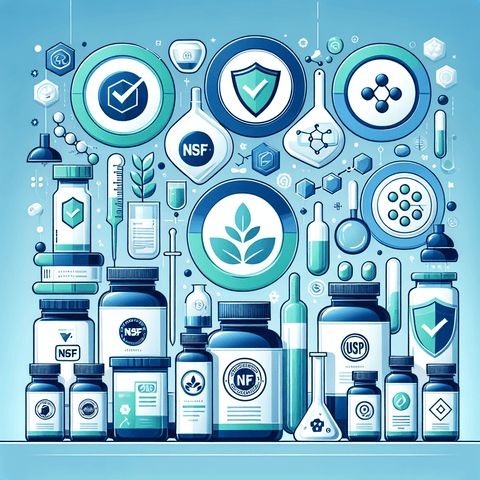
FDA verification is the process of confirming that a dietary supplement is manufactured, labeled, and marketed in line with U.S. Food and Drug Administration rules — not that the FDA has tested or endorsed the product itself. Because supplements reach shelves without pre-market approval, understanding this distinction matters to anyone comparing brands. This guide explains what verification really means, how it differs from approval and registration, how to spot non-compliant products, how to check a supplement's compliance record step by step, and how reputable brands prepare for FDA inspections.
FDA Verification: What Every Supplement Shopper Should Check Before Buying
Before a product earns a place in your routine, a few quick checks take only minutes and meaningfully reduce risk:
- A complete Supplement Facts panel with serving size, nutrient amounts, and % Daily Value
- A traceable manufacturer or distributor with a real name, address, and contact details
- Lawful claim language, including the FDA disclaimer when structure or function claims are made
- No "FDA approved" statements, which supplements legally cannot use
- Independent quality signals such as USP, NSF, or Informed Choice certification, or a batch-matched certificate of analysis
- A clean record — no active recalls, recent warning letters, or import alerts
Each section below explains what these checks mean and how to perform them quickly.
What Is FDA Verification? Definition and Key Terms
Strictly speaking, no official FDA verification program or seal exists for supplements. In everyday use, the term describes confirming that a product — and the facility producing it — complies with federal rules covering content, manufacturing conditions, labeling, and marketing claims. Three commonly confused terms form the foundation.
FDA verification vs. FDA approval vs. FDA registration: the differences that matter
- Registration is a facility requirement: manufacturers, packers, and holders of supplements sold in the U.S. must register with the FDA and renew every two years. It applies to the site, not the product.
- Approval is pre-market review reserved for drugs. Dietary supplements require no approval, so a product marketed as "FDA approved" is misleading or misbranded.
- Verification is the confirmation of compliance — through public records, documentation, and third-party testing — that the rules have actually been followed.
The regulatory backbone: DSHEA, cGMP (21 CFR Part 111), and FDA facility registration
Three frameworks shape compliance. The Dietary Supplement Health and Education Act of 1994 (DSHEA) defines supplements as a food category, permits structure and function claims with a standard disclaimer, and authorizes FDA action against adulterated or misbranded products. Current Good Manufacturing Practice (cGMP) under 21 CFR Part 111 requires firms to control identity, purity, strength, and composition through specifications, testing, and documentation. Facility registration ties it together — and notably, the FDA issues no registration certificates, so any "registration certificate" offered online is a red flag.
Why FDA Verification Matters for Your Health and Safety
What unverified products put at risk: contamination, adulteration, and mislabeling
Products made outside these rules can fail in three ways. Contamination introduces heavy metals, pesticide residues, or microbes. Adulteration is more alarming: the FDA has repeatedly found supplements marketed for weight loss, sexual enhancement, or bodybuilding spiked with hidden prescription drug ingredients. Mislabeling means the dose you take may not match the dose on the label — a real concern for nutrients with established upper intake levels and for products intended for children.
FDA oversight and third-party testing: how the two layers of assurance work together
The FDA's supplement model is largely post-market: it inspects facilities, monitors adverse event reports, tests imports, and orders recalls. It cannot screen every product on the shelf. Third-party certification — programs such as USP Verified, NSF dietary supplement certification, and Informed Choice — fills part of that gap by testing products against published standards. Together, the two layers raise confidence considerably, though neither guarantees every batch.
Warning Signs: How to Spot a Supplement That May Not Meet FDA Standards
Marketing red flags: disease claims and promises FDA rules don't permit
Lawful supplements describe structure and function — "supports bone health," "helps maintain normal energy" — not disease. Claims to treat, cure, prevent, or reverse a condition, promises of instant results, statements that a product "works like" a prescription drug, and any use of the FDA name or logo all signal non-compliance. So does a blanket guarantee of safety, since no responsible maker can honestly promise zero risk of side effects.
Label red flags: missing Supplement Facts panels, vague ingredients, and untraceable manufacturers
On the label, watch for a missing or non-standard Supplement Facts panel, doses hidden behind "proprietary blends," botanicals listed without plant part, no manufacturer or distributor address, missing allergen statements, and absent disclaimers. Ingredient names that don't match recognized nutrient nomenclature also deserve caution. If you cannot tell who actually makes the product or how to contact them, verification becomes impossible — and walking away is the safer choice.
Why Supplements Fail FDA Compliance: Common Causes
cGMP deviations: the documentation, testing, and sanitation gaps inspectors find most often
The most frequent inspection findings are unglamorous but serious: no identity testing of incoming raw materials, missing product specifications, incomplete batch records, no finished-product testing, and poorly qualified suppliers. Sanitation lapses, uncalibrated equipment, and untrained staff round out the list. Under Part 111, undocumented work does not count as performed work — so record-keeping failures alone can make even a well-made product non-compliant.
Ingredient and sourcing problems: unapproved new dietary ingredients, heavy metals, and imported raw materials
Many failures begin with raw materials. New dietary ingredients (NDIs) must be notified to the FDA before marketing, and imported botanicals, minerals, and protein powders are recurring sources of heavy-metal contamination and species misidentification. Firms that skip supplier qualification and incoming identity testing inherit those problems. Consumers evaluating botanical products can look for brands that publish sourcing and testing details, as covered in guides to herbal supplement safety and sourcing.
What FDA Verification Can — and Cannot — Guarantee
Compliance is a snapshot: how recalls, reformulations, and new batches change the picture
A clean inspection record describes one facility at one moment. Formulas are reformulated, suppliers change, and recalls are issued only after products have shipped. The reverse also holds: an old warning letter doesn't necessarily reflect current practice, so check whether cited issues were resolved. Verification is an ongoing habit, not a one-time checkbox.
Even compliant products differ: why ingredient form, dosage, and bioavailability still matter
Compliance confirms what a product contains, not whether the formula is well designed. Chemical form matters: research suggests magnesium citrate and glycinate are absorbed better than magnesium oxide, and vitamin D3 appears more effective than D2 at maintaining vitamin D status. How the dose compares with established Daily Values — and with amounts used in studies — also separates thoughtful formulas from forgettable ones.
How to Verify a Supplement's FDA Compliance: A Step-by-Step Guide
Step 1: Search FDA databases — facility registration, recall lists, and warning letters
Start with the FDA's public records: the recalls and enforcement report pages, the warning letters database, and import alert listings. The Dietary Supplement Ingredient Directory and the agency's tainted-products list are also useful. Facility registration isn't easily searchable by the public, so ask the brand to confirm it directly — and treat any "FDA registration certificate" with suspicion, since the FDA issues none.
Step 2: Confirm third-party certifications (USP, NSF, Informed Choice) and certificates of analysis
Certification marks are only meaningful when verified on the certifier's own website. A certificate of analysis (CoA) adds batch-level detail: confirm it comes from an ISO 17025–accredited laboratory, matches the batch number on your bottle, and reports identity, potency, and contaminants such as heavy metals and microbes.
Step 3: Evaluate brand transparency: the questions worth asking a manufacturer before you buy
Reputable manufacturers answer specific questions readily: Who makes the product, and where? Is every incoming ingredient lot identity-tested? How are suppliers qualified? Will you share a CoA for the batch I'd receive? How are adverse events handled? Evasive answers are themselves informative.
FDA Inspections Explained — and How Brands Prepare for Them
Types of FDA inspections: surveillance, for-cause, and follow-up visits
Surveillance inspections are routine and scheduled by risk. For-cause inspections respond to a specific trigger, such as a consumer complaint, an adverse event report, or an illness cluster. Follow-up inspections verify that a firm corrected previously cited problems. Foreign facilities exporting to the U.S. face the same framework.
What FDA inspectors evaluate: cGMP documentation, batch records, and facility standards
Inspectors trace products backward from the label: written standard operating procedures, master manufacturing records, completed batch records, testing results, equipment cleaning and calibration logs, staff training, and complaint handling. The core question is whether what the label promises matches what the records prove was made.
How inspection-ready brands prepare: SOPs, mock audits, supplier qualification, and staff training
Well-run brands prepare continuously rather than before a visit: documented SOPs for every process, internal audits and mock inspections, supplier qualification programs with incoming ingredient testing, scheduled training, corrective and preventive action systems, and occasional mock recalls to test traceability. These are the same practices a serious brand should be able to describe.
Reading inspection outcomes as a consumer: Form 483s, warning letters, and import alerts
A Form 483 lists observations an inspector raises at the end of a visit; the firm typically responds within about 15 business days, and the document is not itself an enforcement action. A warning letter follows when observations are serious or the response is inadequate. An import alert allows products from flagged firms to be detained without physical examination at the border.
Beyond Compliance: How to Choose a Quality Supplement
Comparing what compliance doesn't cover: ingredient forms, dosages, and bioavailability
Two compliant products can still differ meaningfully. Calcium carbonate requires stomach acid and is best taken with food, while calcium citrate suits people with lower stomach acid; oil-based softgels suit fat-soluble vitamins. Absorption also depends on dose size and individual factors such as age and gastrointestinal health. For some forms the evidence is strong; for others it remains limited, so be skeptical of claims that any single form is universally best.
Added ingredients, allergens, and dietary preferences: what to look for and what to question
Check the "Other Ingredients" list for allergens — milk, egg, fish, shellfish, tree nuts, peanuts, wheat, soy, and sesame must be declared — and for fillers, sweeteners, or colorants you'd rather avoid. Vegetarians and vegans should confirm capsule material, since gelatin remains common, and anyone with intolerances should rely on the allergen statement rather than assumptions.
Single-ingredient vs. combination formulas — and whether capsules, tablets, or powders suit you
Single-ingredient products make dosage control and interaction management easier; combination formulas such as multivitamins offer convenience but require checking for nutrient overlap with anything else you take. Format matters too: capsules generally disintegrate quickly, tablets are compact and stable but slower to break down, and powders allow flexible dosing at the cost of taste and scoop accuracy.
What to Look for on a Supplement Label: FDA Requirements Decoded
The Supplement Facts panel: serving size, nutrient amounts, and % Daily Value
The panel opens with the serving size — everything below refers to that amount. Nutrient quantities appear in metric units (mg, mcg), and % Daily Value shows how one serving contributes to reference intakes for adults; as a rule of thumb, 5% DV or less is considered low and 20% or more high. Botanical blends may list a total blend weight with ingredients ordered by amount rather than exact quantities.
Required elements and claim language: allergen statements, disclaimers, and what claims legally mean
A compliant label also carries the manufacturer or distributor name and address, a "dietary supplement" statement of identity, an allergen declaration, and — when structure or function claims appear — the disclaimer that the statement has not been FDA-evaluated. Nutrient content claims such as "high in" or "good source of" have legal thresholds, health claims require FDA authorization or qualification, and structure and function claims remain the least stringent category.
Who Should Verify Supplements Most Carefully — and When to Seek Professional Advice
Higher-stakes situations: pregnancy, medications, chronic conditions, and drug-tested athletes
Some situations raise the stakes considerably. In pregnancy, excess preformed vitamin A is a documented concern, and many botanicals lack safety data. Medications can interact with supplements — vitamin K with warfarin and St. John's wort with numerous prescription drugs are well-known examples — and people with kidney disease often need to limit certain minerals. Drug-tested athletes face inadvertent banned-substance contamination, which makes products carrying athlete-focused certifications, such as those common in sports supplement ranges, worth prioritizing.
Safety nets that matter: FDA adverse event reporting (MedWatch) and when to involve a professional
Manufacturers must report serious adverse events to the FDA within 15 business days, and consumers can file reports through the FDA's MedWatch program. Consult a qualified healthcare professional before supplementing if you take prescription medication, are pregnant or breastfeeding, manage a chronic condition, or have unexplained symptoms — supplements are intended to support nutrition, not replace medical evaluation or treatment.
Your Pre-Purchase Verification Checklist: Making an Informed Decision
Start with diet, lifestyle, and personal need — before evaluating any product
Food first: nutrients are generally best absorbed from a varied diet, and many people meet their needs without supplements at all. Gaps do exist and depend on individual circumstances — vitamin B12 for strict vegans, vitamin D during winter or with limited sun exposure, and iron in some women with heavy menstrual bleeding are common examples. Where validated testing exists, such as blood tests for vitamin D or B12 status, it offers more clarity than symptoms alone, which often cannot confirm a deficiency. Needs also shift with age, sex, pregnancy, medication use, and health status.
The checkpoints a supplement should pass — and when to keep looking
- The label shows a complete Supplement Facts panel, allergen statement, and traceable manufacturer
- Claims stay within structure and function language, with the required disclaimer
- The facility is FDA-registered, with no unresolved recalls or warning letters
- Third-party certification or a batch-matched CoA is available and verifiable
- The form, dose, and format fit your needs, tolerances, and daily routine
If any checkpoint fails, keep looking — in a market this crowded, there is no reason to settle for a product you cannot verify.
The Bottom Line: Make FDA Verification Part of Every Supplement Decision
FDA verification is not a seal, certificate, or approval — it is the practical work of confirming that a supplement's facility is registered, its manufacturing follows cGMP, its label meets FDA requirements, and its claims stay within the law. Compliance is the baseline every product should meet; third-party testing, ingredient form, dosage, and personal fit determine quality beyond it. Because nutritional needs differ by age, diet, health status, and lifestyle, the right decision is always individual: start with food and lifestyle, supplement identified gaps only, and involve a qualified professional whenever medications, pregnancy, or chronic conditions are involved.
Key Takeaways
- FDA verification means confirming a supplement's compliance with manufacturing, labeling, and claims rules — the FDA neither approves supplements nor issues a verification seal.
- Registration is facility-level, approval applies only to drugs, and actual compliance must be confirmed through records and third parties.
- Supplements must follow cGMP under 21 CFR Part 111, which governs identity, purity, strength, and composition.
- Disease claims, "FDA approved" statements, and missing Supplement Facts panels are the clearest warning signs of non-compliance.
- Most compliance failures trace to documentation gaps, missing identity testing, and poorly qualified ingredient suppliers.
- Compliance is a snapshot: recalls, reformulations, and new batches can change a product's status over time.
- Third-party certifications (USP, NSF, Informed Choice) and batch-matched certificates of analysis add a valuable second layer of assurance.
- Diet and lifestyle come first; supplements fill specific, identified gaps, and needs vary by age, health status, and medication use.
Frequently Asked Questions
Does the FDA approve or verify dietary supplements?
No. Supplements do not require pre-market approval, and the FDA issues no verification seal. Manufacturers are responsible for compliance, while the FDA acts after products reach the market through inspections, recalls, and enforcement. Products marketed as "FDA approved" or "FDA verified" are misleading.
Is "FDA registered" the same as "FDA approved"?
No. Registration simply means the manufacturing facility has notified the FDA of its existence, as required by law. It applies to the site rather than the product and involves no review of the supplement's safety, effectiveness, or label.
How can I check whether a supplement has been recalled?
Search the recalls section of FDA.gov and the agency's weekly enforcement reports, which list recalled supplements with reasons and classifications. Reputable brands also post recall notices on their own sites. Match your bottle's lot number against any listed batches.
What is an FDA Form 483, and should consumers worry about it?
A Form 483 lists objectionable conditions an inspector observed at the end of a facility visit. It is not itself an enforcement action, and firms can respond with corrective plans. Unresolved 483s, however, can escalate into a warning letter.
What does "cGMP certified" on a supplement mean?
There is no FDA-issued cGMP certification. Brands using the phrase are asserting compliance with 21 CFR Part 111. The strongest evidence is an FDA inspection record or an independent audit, not the claim itself.
What is a certificate of analysis, and can I trust it?
A certificate of analysis reports identity, potency, and contaminant testing for a specific production batch. Trustworthy CoAs come from ISO 17025–accredited laboratories and carry a batch number matching your bottle. Generic certificates without these details provide little assurance.
Why do supplement labels carry a disclaimer about the FDA?
The disclaimer is legally required whenever structure or function claims are made, such as "supports immune health." It signals that the claim has not been FDA-evaluated and that the product is not intended to diagnose, treat, cure, or prevent disease.
Do imported supplements follow the same FDA rules?
Yes. Foreign facilities producing supplements for the U.S. market must register with the FDA and meet the same manufacturing and labeling requirements. Imports that appear adulterated or misbranded can be detained at the border under import alerts.
Can a supplement be fully compliant yet still a poor choice?
Yes. Compliance confirms the product contains what the label states under controlled conditions. It does not address whether the ingredient form is well absorbed, the dose suits your needs, or the formula overlaps with other products you take.
How do I report a bad reaction to a supplement?
File a report through the FDA's MedWatch program, which accepts submissions from consumers and healthcare professionals. Also notify the manufacturer, which is legally required to report serious adverse events to the FDA. Seek medical care promptly for severe reactions.
Related Keywords
- FDA verification
- FDA supplement compliance
- FDA facility registration
- dietary supplement cGMP 21 CFR Part 111
- FDA warning letters database
- FDA Form 483
- Supplement Facts panel requirements
- third-party testing and certification
- certificate of analysis
- structure/function claims disclaimer
- dietary supplement recalls
- new dietary ingredient notification
- FDA inspection readiness
- adulterated supplements