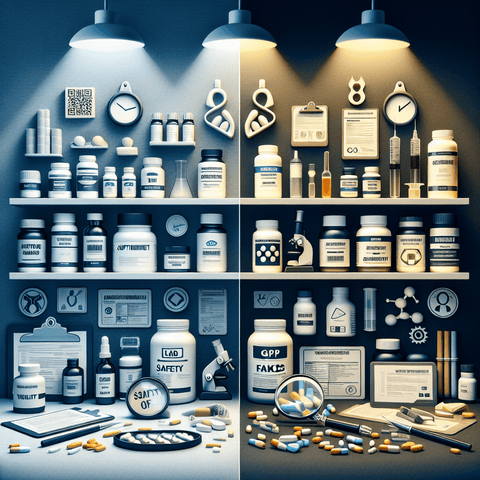
Learning to identify counterfeit supplements can protect both your health and your wallet. Fake products are increasingly common in the supplement market, and they may contain the wrong ingredients, incorrect doses, harmful contaminants, or nothing active at all. This guide explains seven quick warning signs of counterfeit supplements, how fake products differ from merely substandard ones, and the practical steps you can take to verify authenticity before buying — so you can make safer, better-informed decisions about the vitamins and minerals you use.
Introduction: Why Learning to Identify Counterfeit Supplements Matters
Supplements are largely purchased on trust. Unlike prescription medicines, they are often bought online, from marketplaces, or through third-party sellers, which creates opportunities for counterfeiters. A fake supplement is not simply an inferior product — it can pose genuine health risks if it contains undeclared substances, contaminants, or wrong doses of active ingredients.
Knowing what to look for helps you avoid waste, disappointment, and potential harm. It also helps you understand what legitimate quality actually looks like, which is useful even when a product is genuine but poorly made.
What you'll learn in this guide
- Definitions: how counterfeit, fake, and adulterated supplements differ from substandard products.
- Warning signs: seven quick visual and practical indicators that a product may be counterfeit.
- Health risks: what fake supplements may contain and why they matter.
- Verification methods: how to check authenticity before and after purchase.
- Quality literacy: how to read labels and choose well-made, verified products.
What Are Counterfeit Supplements? Definition and How They Differ From Substandard Products
A counterfeit supplement is a product deliberately designed to imitate a legitimate brand. It may copy the packaging, logo, and label of a genuine product while actually being manufactured by someone else, often with unknown ingredients and no quality controls.
A substandard supplement, by contrast, is made by the stated manufacturer but fails to meet its own quality specifications — for example, containing less of an active ingredient than the label declares. Counterfeit products are intentionally deceptive; substandard products may result from poor manufacturing practices.
Counterfeit vs. fake vs. adulterated supplements: key terms explained
- Counterfeit: a fraudulent copy of a branded product, including imitation packaging.
- Fake: a broader informal term for any product that does not contain what it claims.
- Adulterated: a product that contains undeclared substances — sometimes even pharmaceutical drugs — added illegally, which is a documented problem in some weight-loss and sports supplements.
Why the supplement market is a target for counterfeiters
Supplements are relatively easy to imitate: packaging is simple, formulations are often well known, and regulatory oversight is lighter than for medicines. High demand for popular products — multivitamins, protein powders, herbal extracts — combined with anonymous online sales channels makes counterfeiting profitable and low-risk for criminals.
7 Quick Signs a Supplement May Be Counterfeit
Sign 1: Price that seems too good to be true
Genuine supplements have real ingredient, testing, and packaging costs. If a branded product is offered at a fraction of its usual price — especially in bulk — be cautious. Deep discounts can be legitimate clearance sales, but large quantities of a top-selling brand at 70–80% below retail are a classic counterfeit signal.
Sign 2: Poor packaging quality, broken seals, or missing safety wraps
Compare the packaging with photos on the manufacturer's official website. Look for flimsy plastic, misaligned labels, faded colors, loose caps, or missing inner seals and protective wraps. Genuine products almost always have an intact tamper-evident seal; a broken or absent seal means the product should not be used.
Sign 3: Label errors — misspellings, blurry printing, or missing information
Counterfeiters often make subtle mistakes. Check the spelling of ingredient names, the brand name, contact details, and the supplements facts panel. Blurry printing, unusual fonts, and missing elements such as net weight or storage instructions all suggest a copied label.
Sign 4: Unusual pill appearance, smell, taste, or texture
If you have used the product before, compare color, size, coating, smell, and texture with your previous supply. Tablets that crumble easily, capsules that stick together, or an odd chemical odor can indicate a different (and possibly contaminated) formulation. When in doubt, stop using the product.
Sign 5: No lot number, expiry date, or manufacturer contact details
Every legitimate supplement should display a batch or lot number, an expiry or best-before date, and a way to contact the manufacturer. A missing lot number also makes recalls and traceability impossible — a serious red flag for any supplement, including well-known multivitamins and mineral formulas.
Sign 6: Seller red flags — unauthorized marketplaces and third-party resellers
Counterfeits flow most easily through unauthorized sellers. Be wary of anonymous marketplace accounts, sellers with mixed product categories, no physical address, and listings where "many sellers" ship the same branded item. Buying directly from the brand or an authorized retailer greatly reduces risk.
Sign 7: Missing verification codes, QR codes, or batch traceability
Many reputable manufacturers now print scratch codes, QR codes, or serial numbers that can be checked on their website or app. If the brand offers verification but your product's code is missing, already scratched, or fails validation, treat the product as suspect.
The Real Health Risks of Fake Supplements
What counterfeit products may actually contain (or lack)
Laboratory analyses of counterfeit supplements have found a range of problems: no active ingredient at all, far less than the labeled amount, the wrong ingredient entirely, fillers of unknown origin, heavy metals, bacteria, or undeclared pharmaceutical compounds. You cannot judge content by appearance.
Potential consequences of taking fake or contaminated supplements
Consequences range from simply wasting money to genuine harm: uncontrolled nutrient intake, allergic reactions to undeclared ingredients, interactions with medications, or exposure to illegal drug-like substances. Contaminated products have been linked to liver injury and other serious outcomes in case reports.
Why certain products — weight loss, bodybuilding, and sexual health supplements — are counterfeited most often
Counterfeiters follow demand and motivation. Products promising rapid weight loss, muscle gain, or sexual enhancement attract buyers seeking fast results, making them prime targets. Studies have repeatedly found undeclared stimulants, anabolic steroids, or prescription drugs in products in these categories — one reason caution is especially important with sports supplements.
Where Counterfeit Supplements Come From: Common Causes and Risk Factors
Unregulated online marketplaces and gray-market distribution
Open marketplaces allow third parties to list branded goods with little verification. Gray-market sellers acquire stock through unofficial channels, where products may be repackaged, diluted, or swapped. The chain of custody is lost, and with it any guarantee of authenticity.
Diverted, expired, or improperly stored genuine stock
Not all fake products are manufactured from scratch. Genuine stock that expired, was rejected, or was stored incorrectly (for example, exposed to heat and humidity) is sometimes resold with new labels. This is why checking expiry dates and storage conditions matters even for genuine brands.
Imported products that bypass quality controls
Products imported through unofficial channels skip customs inspection and local regulatory oversight. Labels may lack required local-language information, and formulations may differ from what is legally sold in your country.
How to Verify Supplement Authenticity Before You Buy
Buy from authorized retailers and official brand channels
The single most effective protection is where you buy. Purchase from the manufacturer's own website or an authorized distributor. If you buy supplements from a specialized retailer, check that the retailer is listed as an official partner on the brand's website.
Use manufacturer verification tools: serial numbers, QR codes, and authenticity apps
Many brands provide online verification: enter a code or scan a QR code to confirm your specific batch is genuine. Use these tools on first purchase, and be suspicious if a code has already been used or verified.
Check for third-party certifications (USP, NSF, Informed Choice, GMP)
Independent certifications indicate that a product has been tested for identity, purity, and label accuracy by a third party. Certification marks should be verifiable on the certifier's website — counterfeiters sometimes print fake logos, so confirm the brand is actually listed.
Research the manufacturer: transparency, location, and contactability
Legitimate manufacturers publish a physical address, functioning contact details, and information about their manufacturing standards. If you cannot find who makes a product or how to reach them, that opacity is itself a warning sign.
What to do if you suspect you've bought a fake product
- Stop using the product immediately and keep the packaging, receipt, and any correspondence.
- Contact the genuine brand — many companies actively track counterfeits.
- Report the seller to the marketplace and, in many countries, to the national medicines or food safety authority.
- If you have already taken the product and feel unwell, seek medical advice and bring the packaging with you.
How to Read a Supplement Label Like an Expert
Supplement Facts panel: serving size, amounts, and daily values
The label should state the serving size, the amount of each nutrient per serving, and — where established — a percentage of the reference intake. Amounts should be given in recognizable units (mg, µg, IU). Vague or missing quantities are a quality red flag.
Ingredient forms and bioavailability: what the ingredient list actually tells you
The chemical form of a nutrient affects how well it is absorbed. Magnesium, for example, appears in forms such as oxide, citrate, and glycinate, which differ in absorption and digestive tolerability. A quality label specifies the exact form rather than hiding behind vague terms.
Red-flag label claims: "miracle," "cure," and proprietary blend vagueness
Claims that a product cures, treats, or reverses disease are not permitted for legitimate supplements and should immediately raise doubts. Similarly, a "proprietary blend" that lists no individual amounts makes it impossible to know whether the product contains effective doses of anything.
Allergens, added ingredients, and fillers to be aware of
Check for declared allergens (gluten, soy, dairy, nuts) and added ingredients such as colors, sweeteners, or unnecessary fillers. This matters both for safety and for judging overall product quality.
Choosing a Quality Supplement: What Actually Matters
Form matters: capsules, tablets, powders, and liquids compared
Forms differ mainly in convenience, stability, and tolerability. Capsules are often easier to swallow and mask taste; tablets are compact and shelf-stable but may contain more binders; powders and liquids suit people who dislike swallowing pills and allow flexible dosing. No single form is universally superior.
Dosage and concentration: matching the label to evidence-based intakes
Compare the amount per serving with established reference intakes and safe upper limits. More is not better — several vitamins and minerals have documented toxicity risks at high doses, and very high doses do not necessarily provide additional benefit.
Single-ingredient vs. combination products
Single-ingredient products make it easier to adjust doses and avoid excess. Combination products are convenient but require checking the full label to avoid doubling up when you take several supplements.
Why third-party testing and certificates of analysis matter
A certificate of analysis (CoA) from an accredited laboratory confirms identity, purity, and content. Brands confident in their quality make CoAs available on request. This is one of the most reliable objective indicators that a supplement contains what it claims — whether it is a basic vitamin D product or a complex herbal formula.
Why Individual Needs Vary: Supplements Are Not One-Size-Fits-All
How diet, age, lifestyle, and health status affect nutritional needs
Nutritional requirements depend on age, sex, diet, pregnancy, physical activity, sun exposure, alcohol intake, smoking, and existing health conditions. Someone eating a varied, nutrient-rich diet may need nothing at all, while certain life stages or restrictive diets can increase the likelihood of low intake of specific nutrients.
Absorption and genetic differences that influence what your body needs
Absorption varies with gastrointestinal health, age, and interactions between nutrients, and genetic differences can influence how the body processes certain vitamins. This is one reason symptoms alone cannot confirm a deficiency — blood testing and professional assessment provide far more reliable information than guesswork.
When Supplementation May Be Relevant
Situations where diet alone may fall short
Dietary supplements may be relevant when intake is consistently low, when absorption is reduced, or when requirements increase — for example in pregnancy, in older adults, with restrictive diets, or where a specific nutrient is difficult to obtain from food. They are intended to complement, not replace, a balanced diet.
The role of testing and professional assessment before supplementing
Where validated testing exists — such as blood tests for vitamin D, vitamin B12, or iron status — measuring before supplementing helps avoid both unnecessary use and untreated deficiency. A doctor or registered dietitian can interpret results in context and advise on appropriate intake.
Safety First: Interactions, Upper Limits, and Special Precautions
Medication interactions and conditions that require caution
Several supplements interact with medicines: vitamin K can affect blood thinners such as warfarin, and high-dose mineral supplements can interfere with the absorption of certain medications. People with kidney or liver conditions should be especially careful with minerals and herbal products, since excess amounts can accumulate or strain these organs.
Pregnancy, children, and other groups who should consult a professional first
Pregnant or breastfeeding women, infants, young children, people with chronic conditions, and anyone taking prescription medication should consult a qualified healthcare professional before starting any supplement. Fake products carry particular risk in these groups because ingredient content is entirely unknown.
Decision Guide: Food First, Then Supplements — and Only Verified Ones
Questions to ask yourself before buying any supplement
- Is this nutrient likely to be low in my diet, and have I had my status tested where possible?
- Can I meet my needs through food or lifestyle changes first?
- Do I have a specific, evidence-based reason to take this product?
- Am I buying from an authorized source, and can I verify the batch?
A simple checklist for choosing authentic, high-quality products
- Buy from the manufacturer or an authorized retailer.
- Confirm a lot number, expiry date, and manufacturer contact details are present.
- Verify any authenticity code or QR code before use.
- Look for third-party certification or an available certificate of analysis.
- Check the label for specified nutrient forms, realistic doses, and no disease-cure claims.
- Inspect the seal, packaging quality, and product appearance on arrival.
Conclusion: Protect Your Health by Buying Smarter
Counterfeit supplements exploit trust, but they are avoidable with a few consistent habits: know the seven warning signs, buy from authorized channels, verify batch codes, and favor products with transparent labels and third-party testing. Remember that supplements are not automatically necessary — a varied diet meets most people's needs, and individual requirements vary with age, diet, health status, and absorption. Where supplementation is genuinely relevant, choose verified products, respect recommended intakes, and consult a healthcare professional when you are unsure. Informed, cautious buying is the best protection against fakes.
Key takeaways for identifying counterfeit supplements and choosing with confidence
- Counterfeit supplements imitate legitimate brands; substandard products are genuine but poorly made.
- Seven quick red flags: suspicious price, poor packaging, label errors, unusual product appearance, missing lot number or expiry date, sketchy sellers, and missing verification codes.
- Fakes may contain nothing, the wrong dose, contaminants, or undeclared drugs.
- Weight-loss, bodybuilding, and sexual health products are counterfeited most often.
- Buying from authorized retailers is the single most effective protection.
- Third-party certifications and certificates of analysis are strong quality indicators.
- Symptoms alone cannot diagnose a nutrient deficiency — testing and professional advice are more reliable.
- Food first: supplements complement a balanced diet rather than replace it.
- Respect upper intake limits and check for interactions, especially with medication, pregnancy, or chronic conditions.
- If you suspect a fake, stop using it, keep the packaging, and report the seller.
Frequently Asked Questions
What is the fastest way to spot a fake supplement?
Check for a lot number, expiry date, intact safety seal, and a verification or QR code, then compare the packaging with the manufacturer's official images. Combine this with a quick seller check — unauthorized marketplaces and unusually low prices are the most common sources of counterfeits.
Are supplements sold on large online marketplaces fake?
Not necessarily, but marketplace listings with multiple third-party sellers carry higher risk because stock can be mixed. Counterfeit seizures have repeatedly involved such channels. Buying from the brand or an authorized retailer is meaningfully safer.
Can fake supplements be dangerous, or just ineffective?
They can be genuinely dangerous. Documented cases include heavy metal contamination, bacterial contamination, and undeclared pharmaceutical ingredients — particularly in weight-loss and sports products. Ineffective is the best-case scenario.
How can I verify a supplement's authenticity with a code?
Many brands print a scratch-off code or QR code on the packaging that you enter on their website or app. The system confirms whether that specific batch is genuine and whether the code has been checked before. A used or invalid code strongly suggests a counterfeit.
What certifications should I look for on a supplement label?
Recognized third-party marks include USP, NSF, Informed Choice/Informed Sport, and evidence of GMP manufacturing. Verify that the certification body actually lists the brand, since counterfeit logos do appear on fake labels.
What should I do if I already took a fake supplement?
Stop taking it immediately, keep the packaging for identification, and contact your doctor if you experience any unusual symptoms. Report the product to the brand and to your national food or medicines safety authority so others can be warned.
Does a higher price guarantee a genuine supplement?
No. Counterfeiters can price products to look premium, and genuine brands differ in price for reasons unrelated to quality. Price alone is not a quality signal — verification tools, seller authorization, and third-party testing are more reliable.
Are herbal supplements more often counterfeited than vitamins?
Popular, expensive herbal extracts (such as curcumin or ashwagandha) are frequently adulterated or diluted because authentication requires laboratory testing. Basic vitamins and minerals are also counterfeited, but adulteration with undeclared drugs is more common in herbal and sports categories.
Can I rely on the ingredient list to know what a supplement contains?
The label is a legal declaration by the manufacturer, and reputable brands are generally accurate — but counterfeits copy labels without matching content. Independent testing, certificates of analysis, and third-party certification provide objective confirmation beyond the label.
How long does it take to notice a fake supplement isn't working?
It depends on the nutrient and why you take it. Some effects, such as correcting a low vitamin B12 status, take weeks to months, so a lack of immediate results does not prove a product is fake. Suspicious product appearance, packaging, or verification failures are more reliable indicators.
Is it safe to use a genuine product that has expired?
Expired supplements are generally not dangerous, but potency can decline over time, especially for moisture- or light-sensitive nutrients like vitamin C. For products where dose matters, replace expired stock rather than relying on reduced potency.
Do I need a supplement at all if I eat a balanced diet?
Many people do not. A varied diet typically covers most nutrient needs, and supplementation is mainly relevant where intake is consistently low, requirements are increased (for example in pregnancy), absorption is reduced, or testing confirms a low status. When in doubt, assess your diet and consider professional advice before buying.
Related Keywords
- identify counterfeit supplements
- fake supplements warning signs
- how to verify supplement authenticity
- counterfeit vitamins online
- supplement label red flags
- third-party tested supplements
- certificate of analysis supplements
- adulterated supplements risks
- supplement safety and interactions
- where to buy genuine supplements
- supplement lot number and expiry check
- supplement quality certifications USP NSF
- how to choose a quality supplement