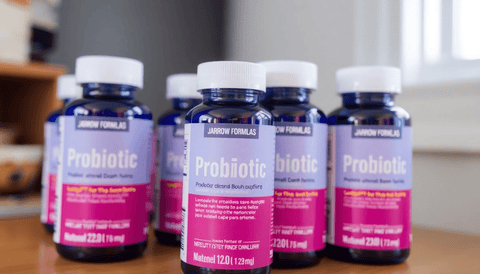
Probiotics have become one of the most widely used supplement categories, yet many shoppers do not realize that the benefits attributed to a product depend less on the brand name and more on the specific bacterial strains it contains. Jarrow Formulas is one of the best-known probiotic manufacturers, and understanding the strains used across its range can help you choose a product that matches your needs. In this guide, we explain what Jarrow probiotic strains are, why strain identity matters, which strains appear most often in Jarrow formulas, and how to compare products on CFU counts, survivability, labeling, and safety so you can make an informed decision.
What Are Jarrow Probiotic Strains?
Jarrow probiotic strains refers to the specific, identified live microorganisms used in supplements made by Jarrow Formulas, such as Lactobacillus rhamnosus GG or Saccharomyces boulardii. A strain is more specific than a species: two bacteria can belong to the same species yet behave differently, which is why reputable manufacturers identify strains at the finest level and formulate around their documented characteristics.
Understanding the Difference Between a Probiotic Brand and Its Strains
A brand describes who makes a product; strains describe what is actually inside the capsule. Jarrow Formulas is a manufacturer with a long history in probiotic production, but the health relevance of any Jarrow product ultimately comes down to its microbial content: the species, the strain designations, the number of viable organisms at expiration, and how well those organisms reach the intestine alive. This distinction matters because research on probiotics is strain-specific. A benefit demonstrated for one strain cannot automatically be generalized to another, even within the same species.
Key Bacterial Species Used in Jarrow Formulas
Most Jarrow probiotic products draw from a relatively small group of well-studied bacterial genera: Lactobacillus (including L. rhamnosus, L. plantarum, L. acidophilus), Bifidobacterium (such as B. longum and B. lactis), and occasionally Streptococcus thermophilus and Lactococcus species. Jarrow also uses the probiotic yeast Saccharomyces boulardii, which is microbiologically distinct from bacteria and behaves differently in the gut. Understanding which species and strains a formula contains is the first step in comparing products meaningfully.
Why Do Probiotic Strains Matter for Your Health?
Probiotics are defined as live microorganisms that, when administered in adequate amounts, confer a health benefit on the host. The key word is "strain-specific": the effects observed in studies are tied to the exact strain tested, not to probiotics as a general category. This is why a well-formulated product will always identify its strains rather than listing only genus and species.
How Specific Strains Target Different Parts of the Gut
Different strains vary in how well they tolerate stomach acid and bile, where along the intestinal tract they persist, and how they interact with the resident microbiota. Lactobacillus species tend to predominate in the small intestine, while Bifidobacterium species are more typical of the colon. A strain's ability to adhere to intestinal cells, survive transit, and temporarily occupy ecological niches influences whether it can exert any effect at all. These are properties of individual strains, which is why two formulas with the same species listed but different strains can perform differently.
The Role of Strain-Specific Benefits in Daily Digestion
Some strains have been studied for their association with digestive comfort, bowel regularity, or the balance of gut flora during and after antibiotic use. Others have been researched for immune-related effects, since a large proportion of the body's immune tissue resides in the gut. Importantly, these are areas of association and emerging evidence rather than guaranteed outcomes, and results vary between individuals. What is well established is that effects are strain-specific, which makes reading the label the most practical way to evaluate a product.
What Are the Most Common Jarrow Probiotic Strains?
Lactobacillus rhamnosus GG: The Research-Backed Staple
LGG is one of the most extensively studied probiotic strains in the world, with decades of research covering survival through the digestive tract, gut colonization potential, and digestive and immune-related outcomes. Jarrow Formulas offers LGG as a single-strain product and also uses it in combination formulas. Its popularity stems from the depth of its research base, which exceeds that of most other strains.
Bifidobacterium longum: Support for Gut Barrier Function
Bifidobacterium longum is a predominant organism in the human colon, particularly in early life, and is involved in fermenting dietary fibers into short-chain fatty acids that nourish the gut lining. Strains of B. longum such as BB536 have been studied for their role in supporting bowel regularity and the intestinal environment in adults and older adults. Because bifidobacteria naturally decline with age, formulas aimed at older consumers often emphasize this genus.
Saccharomyces boulardii: A Unique Yeast-Based Probiotic
Saccharomyces boulardii is a yeast rather than a bacterium, which makes it unusual among probiotics. It is not affected by antibacterial antibiotics, so it is often considered for use alongside antibiotic courses. It is also naturally resistant to stomach acid. Jarrow offers S. boulardii as a stand-alone product, frequently in a vegetarian capsule form, reflecting its distinct characteristics compared with bacterial probiotics.
Lactobacillus plantarum: Resilience and Enzyme Production
Lactobacillus plantarum is known for its robustness in varied environments and its metabolic versatility, including the production of lactic acid and other compounds that can help shape the intestinal environment. Strains of L. plantarum appear in several multi-strain Jarrow formulas, where they contribute to the diversity of the product rather than serving as a single, heavily studied stand-alone strain.
Which Jarrow Probiotic Strain Is Right for Your Needs?
Comparing Multi-Strain Formulas vs. Single-Strain Formulas
Single-strain products, such as a pure LGG or S. boulardii capsule, are useful when you want to take an approach supported by research on that specific strain, or when a healthcare professional has recommended a particular organism. Multi-strain formulas offer broader microbial diversity and are convenient for general daily gut support, though the evidence behind each individual strain may be thinner than for a hero strain like LGG. Neither approach is inherently superior; the right choice depends on your goal.
Matching Strains to Specific Digestive Concerns
Occasional bloating or irregularity may be an area where a general multi-strain formula or a specific B. longum strain is considered. Travel plans or an upcoming antibiotic course may prompt consideration of S. boulardii, which is unaffected by antibiotics. Digestive comfort in general life stages may be addressed with diversity-focused formulas. It is important to be realistic: probiotics are nutritional supports, not treatments for diagnosed medical conditions, and concerns that are persistent or severe warrant professional evaluation rather than self-treatment.
Why Your Age and Lifestyle Influence Strain Selection
The gut microbiota changes across life: bifidobacteria dominate in infancy, shift through adulthood, and often decline in older age. Diet also matters enormously; people who eat little fiber or few fermented foods tend to have less diverse gut flora. Frequent travelers, people taking antibiotics, and those with highly variable routines may have different considerations than someone with a stable, fiber-rich diet. Your age, dietary pattern, and circumstances should therefore inform which formula, if any, is most appropriate.
How Do Jarrow Probiotic Strains Survive the Digestive Tract?
The Role of CFU Counts in Viable Delivery
CFU stands for colony-forming units, a measure of viable microorganisms. Jarrow Formulas generally states CFU counts at the time of manufacture and, in many products, guarantees potency through expiration rather than merely at production. This matters because probiotics decline over their shelf life; a product labeled only "at time of manufacture" may contain far fewer live organisms by the time you take it.
Delayed-Release Capsules and Strain Survivability
Stomach acid is a significant barrier to probiotic survival. Some strains, such as S. boulardii, are naturally acid-resistant. For bacterial strains, delivery design helps: Jarrow uses delayed-release capsule technology in several products, designed to resist stomach acid and disperse lower in the digestive tract where the organisms are intended to act. Enteric or delayed-release designs can improve the proportion of organisms that arrive alive, though exact performance varies by product.
Storage Requirements for Different Jarrow Strains
Most Jarrow probiotics are shelf-stable thanks to strains selected for room-temperature stability, but they should still be kept away from heat and moisture, which accelerate the decline of live organisms. Refrigeration is not always required, but cooler, dry storage generally supports the longest viability. Always check the individual product's storage instructions, especially in warm climates.
What Are the Best Food Sources of Probiotic Strains?
Fermented Foods That Naturally Contain Similar Strains
Yogurt, kefir, sauerkraut, kimchi, miso, and other fermented foods have been part of human diets for centuries and can contribute live cultures, including Lactobacillus and related species. However, the strains in fermented foods are usually undefined and vary from batch to batch, and many commercial versions are pasteurized after fermentation, which kills the cultures. Fermented foods are valuable for dietary diversity but are not a substitute for a supplement that specifies strains and CFU counts.
Prebiotic Foods That Support Probiotic Activity
Probiotics work best in a gut environment that feeds them. Prebiotic fibers — found in garlic, onions, leeks, asparagus, bananas, oats, and legumes — serve as fuel for beneficial organisms already resident in the colon, including Bifidobacterium species. A diet rich in varied plant fibers arguably does more for long-term gut flora than any single supplement, and combining prebiotic-rich eating with a quality probiotic is a reasonable strategy for many people. For more on this pairing, see our overview of probiotics and prebiotics supplements.
When Should You Consider a Jarrow Probiotic Supplement?
Situations Where Dietary Probiotics May Fall Short
Even a diet rich in fermented foods may not provide defined strains at documented doses. If you are interested in a specific, researched strain such as LGG, a supplement is often the only reliable way to obtain it, since fermented foods rarely contain it in meaningful amounts. Supplementation is a choice, not an obligation; many people maintain healthy digestion through diet alone.
Travel, Antibiotic Use, and Temporary Gut Disruptions
Travel-related changes in diet and water, and courses of antibiotics that disrupt gut flora, are among the most common reasons people turn to probiotics. S. boulardii is frequently considered around antibiotic use because it is a yeast and therefore unaffected by antibacterial drugs. These are situations of temporary disruption rather than disease; persistent symptoms during or after such events should be discussed with a healthcare provider.
Distinguishing Everyday Support from Medical Treatment
Probiotics sold as supplements are intended for nutritional support of a healthy digestive system, not for diagnosing, treating, or curing medical conditions. Research has explored probiotics in various clinical contexts, but those applications involve medical supervision and specific products. If you have a diagnosed gastrointestinal condition, are hospitalized, or have concerning symptoms, professional care comes first; a probiotic may complement, but never replace, appropriate medical management.
How to Choose Between Jarrow Probiotic Products
Understanding CFU Potency and Serving Size on the Label
Higher CFU numbers are not automatically better. The relevant question is whether the product contains the strains you want at the doses studied for those strains. Compare the CFU count per serving (not per capsule) and whether potency is guaranteed through expiration. A well-studied strain at a moderate dose can be more meaningful than a large, undefined blend.
Evaluating the Specific Strain Names on Jarrow Labels
Look for full strain designations, such as "Bifidobacterium longum BB536" or "Lactobacillus rhamnosus GG." If a label lists only "Bifidobacterium longum" without a strain code, you cannot link the product to specific research. Jarrow is generally transparent about strain identity, which makes direct comparison between its products easier than with many competitors.
Identifying Added Ingredients, Allergens, and Dietary Suitability
Check the "other ingredients" panel for fillers, prebiotic fibers such as inulin, allergens like dairy or soy, and capsule composition. Many Jarrow probiotics are vegetarian-friendly, but a few use gelatin capsules, and S. boulardii products may contain traces of dairy-derived components — relevant for those with dairy sensitivities. Anyone following a vegan, gluten-free, or allergen-restricted diet should verify suitability on the label.
Single-Ingredient Options vs. Blended Probiotic Complexes
A single-strain product makes it easy to know exactly what you are taking and to attribute any effects to one organism. Blends offer diversity and convenience but complicate the picture if you experience a reaction or want to test one strain at a time. If you are new to probiotics, some people prefer starting with a single well-studied strain before exploring broader formulas.
How to Read a Jarrow Probiotic Label Correctly
Interpreting "Live Organisms" and Expiration Dating
A reputable label states the number of live organisms and whether that count applies at expiration or at time of manufacture. Jarrow typically guarantees CFU through the printed expiration date when stored as directed. The expiration date reflects viability under proper storage, so ignoring storage instructions can invalidate the guarantee in practice.
Decoding Strain Designations and Species Abbreviations
Labels abbreviate names for space: "L. rhamnosus GG" means Lactobacillus rhamnosus, strain GG; "B. lactis HN019" means Bifidobacterium animalis subsp. lactis, strain HN019. Note that taxonomy has shifted in recent years — some former Lactobacillus species have been reclassified into new genera such as Limosilactobacillus — so the same organism may appear under different names depending on when the label was printed. The strain code is the stable identifier.
Recognizing Quality Indicators and Third-Party Testing
Quality indicators include strain-level identification, potency guarantees through expiration, clear storage instructions, and manufacturing under recognized quality standards such as GMP. Where possible, prefer brands that document identity testing of their strains and batch-level quality control. Independent third-party certification is a useful signal when available, though it is not universal in the probiotic industry.
Who May Benefit Most from Jarrow Probiotic Strains?
Adults with Occasional Digestive Discomfort
Adults who experience occasional bloating, gas, or irregularity — without any diagnosed condition — are the most typical probiotic users. For this group, a multi-strain formula or a specific researched strain may be a reasonable option to support digestive comfort, alongside dietary improvements such as increasing fiber intake and eating more slowly.
Individuals with Limited Fermented Food Intake
People whose diets include little or no yogurt, kefir, or other fermented foods receive few live cultures from their diet. For them, a supplement can be a straightforward way to add defined strains at consistent doses — though adding fermented foods and prebiotic fibers remains worthwhile regardless.
Older Adults and Age-Related Gut Changes
The gut microbiota tends to become less diverse with age, and bifidobacteria in particular decline. Older adults often have slower gut transit and may eat less fiber. Formulas emphasizing Bifidobacterium strains may be considered in this life stage, ideally as part of broader attention to diet, hydration, and activity. Regular medication use, which is more common with age, is another reason to review supplement choices with a pharmacist or physician.
Are There Safety Considerations for Jarrow Probiotic Strains?
Potential Side Effects and Initial Digestive Adjustments
Probiotics are generally well tolerated. Some people experience temporary gas or bloating during the first days of use as the gut adjusts; this usually resolves on its own and may be reduced by starting with a lower dose or smaller serving. If digestive symptoms persist or worsen, stop use and seek professional advice.
Interactions with Medications and Immunocompromised States
Antibiotics can reduce the effectiveness of bacterial probiotics if taken simultaneously, which is why spacing doses apart (for example, a few hours) is commonly suggested; S. boulardii is unaffected. More importantly, probiotics should be used with caution or avoided in severely immunocompromised individuals, people with central venous catheters, and critically ill patients, because live microorganisms can, rarely, cause infections in vulnerable groups. Antifungal medications may reduce the effect of S. boulardii.
When to Consult a Healthcare Professional Before Use
Pregnant or breastfeeding women, people with underlying medical conditions, anyone taking prescription medications, and parents considering probiotics for infants should consult a healthcare professional before use. Professional guidance is also appropriate if you have persistent gastrointestinal symptoms such as unexplained weight loss, blood in the stool, severe pain, or prolonged diarrhea — symptoms that require medical evaluation, not self-treatment.
How to Decide If a Jarrow Probiotic Is Right for You
Assessing Your Current Diet and Digestive Health
Start with an honest look at your diet: how much fiber, how many plant varieties, how many fermented foods? If your diet is low in these, improving it may deliver benefits beyond what any supplement can offer. If your diet is already solid and you simply want defined strains at reliable doses, a supplement becomes a more reasonable consideration.
Factors That Should Influence Your Product Choice
Your goal (general support vs. a specific researched strain), the CFU count and potency guarantee, delivery format (delayed-release capsules vs. powder vs. chewables), storage requirements, allergen profile, and price per serving should all weigh into the decision. Compare these attributes across Jarrow's range and against other reputable brands before purchasing.
When Professional Guidance or Testing May Be Useful
Symptoms alone cannot establish what your gut microbiota needs, and consumer microbiome tests have limited actionable value. If you have ongoing digestive problems, a healthcare provider can investigate properly and advise whether probiotics fit into your situation. For general product browsing, our curated range of probiotic and prebiotic supplements can help you compare options, and our broader natural supplements collection provides context on how probiotics fit into an overall supplement routine.
Final Takeaway on Jarrow Probiotic Strains
The most important insight about Jarrow probiotic strains is that strain identity — not the brand name or the CFU number alone — determines what a product can realistically offer. Jarrow's range spans well-researched single strains like L. rhamnosus GG and S. boulardii, as well as multi-strain blends emphasizing Bifidobacterium and Lactobacillus diversity. For many people, a fiber-rich diet with fermented foods is the foundation, and a probiotic is a situational addition rather than a daily necessity. Choose based on strain transparency, potency through expiration, suitability for your diet and life stage, and — where you have medical considerations — guidance from a qualified professional.
Key Takeaways
- Strains matter more than brands: benefits are strain-specific, so look for full strain designations (e.g., LGG, BB536) on any probiotic label.
- Jarrow's core strains include Lactobacillus rhamnosus GG, Bifidobacterium longum, Lactobacillus plantarum, and the yeast Saccharomyces boulardii.
- CFU counts should be guaranteed through expiration, not just at time of manufacture, and compared per serving rather than per capsule.
- Higher CFU is not inherently better; a documented strain at a moderate dose can be more meaningful than a large undefined blend.
- S. boulardii is a yeast, unaffected by antibacterial antibiotics and naturally resistant to stomach acid.
- Delayed-release capsules and proper storage support probiotic survivability; heat and moisture shorten shelf life.
- Prebiotic fibers from garlic, onions, oats, and legumes feed beneficial gut organisms and amplify long-term gut health.
- Diet comes first: fermented foods and diverse plant fibers form the foundation; supplements are situational additions.
- Immunocompromised individuals and people with serious illness should consult a healthcare professional before using live microorganism supplements.
Frequently Asked Questions
What are Jarrow probiotic strains?
They are the specific, identified live microorganisms used in Jarrow Formulas products, such as Lactobacillus rhamnosus GG, Bifidobacterium longum BB536, and Saccharomyces boulardii. Each strain has distinct characteristics, which is why the strain name on the label is more meaningful than the product name itself.
Which Jarrow probiotic strain is the most researched?
Lactobacillus rhamnosus GG (LGG) is among the most studied probiotic strains worldwide, with decades of published research covering gut survival and various digestive and immune-related outcomes. S. boulardii also has a substantial research base, particularly in the context of antibiotic-associated gut disruption.
Do higher CFU counts mean a better probiotic?
No. Higher CFU counts are not automatically better; the relevant factors are the specific strains, whether the dose aligns with research on those strains, and whether potency is guaranteed through expiration. Very high counts simply add cost in many cases.
Should I refrigerate Jarrow probiotics?
Most Jarrow probiotics are shelf-stable when stored away from heat and moisture, though some products benefit from refrigeration, especially in warm climates. Always follow the storage instructions on your specific product, as viability depends on correct storage.
Can I take probiotics while on antibiotics?
Many people do, though spacing doses a few hours apart from antibiotic doses is commonly advised so the antibiotic does not reduce the probiotic's effectiveness. Saccharomyces boulardii, being a yeast, is unaffected by antibacterial antibiotics. Consult a healthcare professional for advice specific to your medication.
How long does it take to notice effects from a probiotic?
Responses vary widely. Some people report changes in digestive comfort within days to a few weeks, while for others effects are subtle or absent. Probiotics generally do not permanently colonize the gut, so any benefit typically depends on continued use alongside a supportive diet.
Are probiotics safe for everyone?
For healthy individuals, probiotics are generally well tolerated, with occasional temporary gas or bloating. However, they should be used cautiously or avoided in severely immunocompromised people, critically ill patients, and those with central venous catheters. Professional advice is essential in these situations.
Can probiotics and prebiotics be taken together?
Yes, and this combination — sometimes called synbiotic use — is logical: prebiotic fibers feed both the supplemented strains and the beneficial organisms already in your gut. Many people simply eat prebiotic-rich foods while taking a probiotic supplement.
What is the difference between a species and a strain?
A species is a broad biological classification (e.g., Bifidobacterium longum), while a strain is a specific subtype within that species (e.g., BB536). Because research findings are strain-specific, a product listing only the species cannot be reliably linked to any particular study.
Do fermented foods provide the same strains as supplements?
Usually not. Fermented foods contain undefined, variable cultures, and many commercial products are pasteurized after fermentation, eliminating live organisms. Supplements offer defined strains at stated doses, which is why they differ from dietary fermented foods.
Can children take Jarrow probiotics?
Some Jarrow products are formulated for children with age-appropriate strains and doses. However, dosing in children differs from adults, and parents should consult a pediatrician before giving any probiotic, especially to infants.
Should I take probiotics continuously or in cycles?
There is no universally established answer. Because most probiotic strains pass through the gut rather than permanently colonizing it, continued use is generally needed for continued presence. Some people use them situationally (e.g., during travel or antibiotic courses), others daily; either approach can be reasonable depending on your goals.
Related Keywords
- jarrow probiotic strains
- Jarrow Formulas probiotics
- Lactobacillus rhamnosus GG supplement
- Saccharomyces boulardii probiotic
- Bifidobacterium longum BB536
- multi-strain probiotic supplement
- probiotic CFU meaning
- delayed-release probiotic capsules
- best probiotic strains for digestion
- shelf-stable probiotics
- probiotics and antibiotics
- probiotic supplement for gut health
- prebiotic foods for probiotics
- probiotic strain list explained