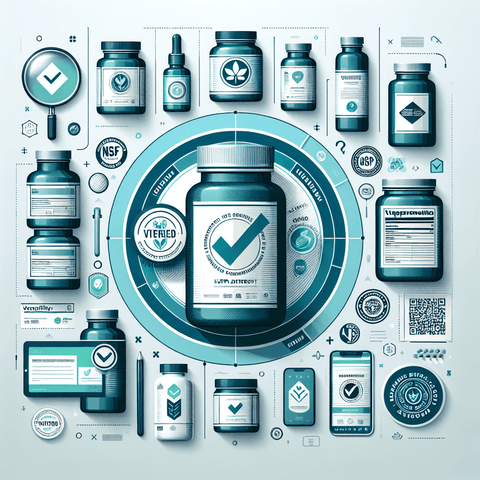
Label authenticity verification is the process of confirming that a product's label genuinely represents the contents inside the bottle — and that the product itself is not counterfeit. This guide explains what label authenticity verification involves, how to spot fake supplement labels quickly using practical checks like lot numbers, batch codes, and QR verification, and why counterfeit products pose real health risks. You'll also learn how to read an authentic label correctly, what certifications to look for, and how to use verified label information to make informed nutrition and supplement decisions.
What Is Label Authenticity Verification? Understanding the Basics
Label Authenticity Verification Definition and Why It Exists
Label authenticity verification is the practice of checking that a product label is genuine, complete, and accurate — confirming that the brand, ingredients, dosages, and manufacturing details printed on the packaging match what the manufacturer actually produced. It exists because counterfeit goods, particularly in the supplement industry, are a persistent problem. A fake label can make an unregulated, mislabeled, or even contaminated product appear to come from a trusted brand.
Verification matters because a label is the primary source of safety information for any supplement. It tells you what you're taking, how much, and what warnings apply. If the label is fraudulent, every downstream decision — dosage, stacking with other products, checking for allergens — is built on unreliable information.
Key Terms Explained: Supplement Facts Panel, Lot Numbers, and Batch Codes
Three elements appear on virtually every legitimate supplement label:
- Supplement Facts panel: A standardized table listing serving size, active ingredients, and amounts per serving, often with percent daily values. Its format is regulated, so deviations in structure or missing rows are warning signs.
- Lot number: A code identifying the specific production run. It allows manufacturers to trace products, investigate quality issues, and issue recalls.
- Batch code: Often used interchangeably with lot numbers; it links the bottle to detailed manufacturing records, including testing results and production dates.
Authentic labels also display the manufacturer's name and address, an expiry date, and — where required — allergen statements. Together, these details create a traceable record from factory to shelf.
Why Fake Product Labels Are a Growing Problem in the Supplement Industry
Supplements are attractive targets for counterfeiters because they are high-margin, frequently repurchased, and sold through complex distribution channels. Online marketplaces, in particular, can mix legitimate inventory with third-party sellers of unknown provenance. Counterfeiters can replicate logos and packaging with surprising accuracy, meaning visual appearance alone is no longer a reliable guarantee. This makes systematic label authenticity verification an essential consumer skill rather than an optional precaution.
How to Spot a Fake Label vs a Real Label: 12 Verification Checks
Typography, Colors, and Print Quality Warning Signs
Authentic manufacturers use consistent, high-quality printing. Check for:
- Blurred or pixelated text, uneven ink, or misaligned printing
- Colors that differ noticeably from the brand's usual packaging
- Spelling errors, awkward grammar, or inconsistent font sizes
- Labels that peel easily, bubble, or feel cheaply applied
- Barcodes that don't scan or don't match the stated product
Missing or Incomplete Supplement Facts Panels
A genuine supplement must include a properly formatted Supplement Facts panel with serving size, ingredient names, and amounts. Missing panels, vague "proprietary blend" listings without quantities, or panels formatted differently from regulatory standards are strong indicators of a counterfeit or non-compliant product.
Lot Number, Expiry Date, and Manufacturing Details: What Real Labels Always Include
Real labels always carry a legible lot or batch number, an expiry or best-before date, and the manufacturer or distributor's name and contact address. If any of these are absent, stamped inconsistently (for example, printed on a sticker over another date), or the expiry date seems implausibly far in the future, treat the product with suspicion.
Verifying Batch Codes and QR Codes With the Manufacturer
Many brands now print QR codes or provide online portals where you can enter a batch code to confirm authenticity. Scan the code and confirm it leads to the manufacturer's official domain — not a lookalike site. If in doubt, contact the manufacturer directly with the lot number and ask them to confirm the production run, date, and distribution channel. Legitimate companies respond to these requests.
The Risks of Counterfeit Supplement Labels for Your Health
Unverified Ingredients and Dosages: What You Might Actually Be Taking
Counterfeit supplements frequently contain none of the listed ingredient, the wrong dose, or entirely different substances. Taking a product that contains far more or less of an active nutrient than labeled can lead to ineffective supplementation or, in some cases, excessive intake. With minerals such as iron or fat-soluble vitamins, doses above recognized upper intake levels are not simply wasteful — they can be harmful.
Contamination, Fillers, and Banned Substances in Counterfeit Products
Analyses of counterfeit supplements have found undeclared pharmaceutical compounds, heavy metals, banned stimulants, and unlisted fillers. For products marketed for weight loss, energy, or sports performance, the risk of undeclared active drugs is particularly documented. These contaminants can cause side effects, interact with medications, or pose risks to people with kidney, liver, or cardiovascular conditions.
How Fake Labels Undermine Nutritional Goals and Supplement Safety
Beyond direct health risks, fake labels sabotage informed decision-making. If you're carefully managing nutrient intake — for example, combining a multivitamin with individual minerals — an unlabeled or mislabeled counterfeit makes it impossible to track total intake, check for interactions, or avoid allergens. Trust in the label is the foundation of safe supplementation.
Red Flags That Suggest a Product or Seller Isn't Legitimate
Unrealistic Claims and "Too Good to Be True" Label Promises
Legitimate supplement labels cannot legally claim to cure, treat, or prevent disease. Be skeptical of promises like "cures joint pain," "melts fat," or "replaces prescription medication." Regulated labels use structure/function language ("supports immune health") rather than medical claims — and authentic brands stay within those boundaries.
Suspicious Pricing, Packaging, and Online Marketplace Sellers
Deep discounts far below the brand's usual price, packaging that lacks tamper-evident seals, and sellers with no verifiable address or history are classic counterfeit signals. On marketplaces, check who actually sells and ships the product — "sold by" a third party rather than the brand or an authorized retailer increases risk.
Missing Certifications: GMP, Third-Party Testing, and NSF/USP Marks
Quality-focused brands highlight compliance with Good Manufacturing Practices (GMP) and often carry third-party verification marks such as USP or NSF. Counterfeit labels sometimes imitate these logos, so verify that certification marks match the certifier's official registries. Absence of any quality information — no manufacturer address, no GMP reference — is itself a red flag.
How Brands and Regulators Fight Label Fraud
The Role of FDA Labeling Requirements for Dietary Supplements
In the United States, dietary supplement labeling is regulated under FDA rules that mandate the Supplement Facts panel, ingredient declarations, net quantity, and manufacturer information. Brands must also follow adverse-event reporting requirements and avoid unauthorized disease claims. These regulations give consumers a baseline: a label that ignores them is either counterfeit or produced by a manufacturer cutting corners — both reasons to walk away.
Holograms, Tamper-Evident Seals, and Track-and-Trace Technology
Manufacturers increasingly deploy anti-counterfeiting technology: holographic seals, tamper-evident bands, serialized track-and-trace codes, and scannable QR verification. None of these is foolproof on its own, but layers of protection — a sealed bottle, a verifiable code, a traceable lot number — make counterfeiting substantially harder and give consumers multiple checkpoints.
What to Do If You Suspect You've Purchased a Counterfeit Product
- Stop using the product and keep the packaging, receipt, and any communication with the seller.
- Contact the brand directly with photos and the lot number — many companies actively investigate counterfeits.
- Report the seller to the marketplace platform and, depending on your country, to the relevant regulator (for example, the FDA's MedWatch or the FTC in the US).
- If you've experienced adverse effects, seek medical advice and mention the suspected counterfeit.
Why Authentic Labels Matter for Informed Supplement Choices
Reading an Authentic Label: Serving Sizes, Active Ingredients, and Amounts
Once you've confirmed a label is genuine, read it actively. Check the serving size (two capsules is not the same as one), the chemical form of each ingredient, and the amount per serving relative to recognized reference values. This is where verified labels become genuinely useful: they let you compare products accurately and avoid unintentionally doubling nutrients across multiple supplements.
Nutrient Forms and Bioavailability Information on Genuine Labels
Authentic labels specify the exact form of each nutrient — for example, magnesium citrate versus magnesium oxide, or vitamin D3 (cholecalciferol) versus D2 (ergocalciferol). Forms differ in absorption and tolerability, and the label is the only place this information is disclosed. A product listing only "magnesium" or "vitamin B complex" without forms provides incomplete information for an informed choice.
Allergen Statements, Added Ingredients, and Purity Disclosures
Genuine labels declare major allergens, list excipients and fillers, and indicate whether a product is suitable for vegan, vegetarian, or other dietary needs. People with allergies, intolerances, or specific dietary standards rely on these disclosures — one more reason a counterfeit label is dangerous, since fake products carry no reliable allergen information at all.
Diet First, Label Second: Matching Authentic Products to Your Nutritional Needs
Assessing Whether Food Sources Alone Meet Your Needs
For most nutrients, a varied diet is the first and best source. Leafy greens, legumes, nuts, and whole grains supply magnesium and folate; oily fish provides vitamin D and omega-3s; citrus, berries, and peppers deliver vitamin C; dairy and fortified foods contribute calcium and B12. Before considering any supplement, it makes sense to review whether your eating pattern already covers your needs. Resources on nutrient-dense foods and approved nutrition claims can help with this evaluation.
When Individual Factors — Age, Diet, Lifestyle, Absorption — Change Your Requirements
Nutritional requirements are not uniform. Age, pregnancy and breastfeeding, restrictive diets, smoking, alcohol intake, limited sun exposure, gastrointestinal conditions, and certain medications can all increase requirements or reduce absorption. An older adult, a vegan, or someone taking acid-reducing medication may have very different needs from a healthy young adult eating a varied diet — even when both read the same label.
Choosing Between Single-Ingredient and Combination Products Once You've Verified a Label
Verified labels also make it easier to choose product structure. Single-ingredient products allow precise dosing and easier tracking of total intake; combination formulas offer convenience but can complicate nutrient-nutrient interactions (for example, zinc and copper, or calcium and iron taken together). Understanding how multivitamin formulas are constructed helps you decide which structure fits your situation.
When Supplementation May Be Relevant — and How an Authentic Label Helps You Decide
Situations Where Dietary Intake May Fall Short
Supplementation becomes relevant in specific circumstances: limited sun exposure affecting vitamin D status, plant-based diets affecting vitamin B12, pregnancy increasing folate and iron requirements, or restricted diets due to allergy or illness. In these situations, a verified supplement with a clear label allows deliberate, trackable nutrient intake rather than guesswork.
Why Blood Testing and Professional Assessment Should Guide Nutrient Decisions
Symptoms alone rarely confirm a nutrient insufficiency — fatigue, for instance, has many possible causes. For nutrients with validated testing, such as vitamin D, B12, iron status, and folate, blood tests provide far more reliable information than self-assessment. A healthcare professional can interpret results in context and recommend whether supplementation, dietary change, or monitoring is appropriate.
Distinguishing General Nutritional Support From Treatment of Diagnosed Conditions
Supplements are intended to support nutritional status — they are not treatments for diagnosed diseases. If you have a medical condition, take prescription medication, or are considering higher-dose products, decisions should be made with a qualified healthcare provider. An authentic label supports this conversation by giving your provider accurate information about forms and doses.
How to Choose a Supplement You Can Trust
Certifications and Third-Party Testing to Look For
Prioritize products manufactured under GMP with third-party testing or recognized verification marks. Brands that publish certificates of analysis and maintain transparent supply chains make label authenticity verification easier for you. For example, established ranges such as third-party-focused supplement brands typically provide clearer documentation of quality controls.
Comparing Dosage, Form, and Bioavailability Across Verified Products
With authenticity confirmed, compare like with like: the same nutrient can appear in different chemical forms with different absorption characteristics, and doses should be evaluated against reference intakes and upper limits rather than assumed to be "more is better."
Capsules vs Tablets vs Powders vs Liquids: Practical Differences
Form affects convenience and tolerability more than efficacy in most cases. Capsules are often easier to swallow and may mask taste; tablets are compact and stable but sometimes harder to digest for some people; powders allow flexible dosing; liquids suit those who struggle with solid dosage forms. Choose the form you'll take consistently — adherence matters more than marginal differences between forms.
Matching Products to Allergens, Dietary Preferences, and Quality Standards
Finally, use the verified label to match products to your personal requirements: allergen declarations, vegan or vegetarian suitability, added ingredients, and storage instructions. A product that fits your diet, your absorption profile, and your quality standards is more useful than one chosen on price alone.
Your Step-by-Step Label Authenticity Verification Checklist
Before Purchase: Seller, Price, and Packaging Checks
- Buy from the brand's official store or an authorized retailer whenever possible.
- Compare the price with the brand's standard pricing — extreme discounts warrant caution.
- Check product photos against the brand's official packaging.
- Review the seller's history, address, and return policy.
After Purchase: Label, Batch Code, and Manufacturer Confirmation
- Inspect print quality, spelling, and Supplement Facts panel formatting.
- Confirm the lot number, expiry date, and manufacturer details are present and legible.
- Scan any QR code and verify it leads to the official manufacturer domain.
- Contact the manufacturer if anything looks inconsistent — legitimate brands will confirm.
Ongoing Habits: Buying Direct and Storing Products Correctly
Repeating these checks becomes fast with practice — most take under a minute. Store supplements according to label instructions (cool, dry, away from light unless otherwise stated), keep them sealed, and discard products past their expiry date, as potency degrades over time.
Frequently Asked Questions About Label Authenticity Verification
Can a QR Code Prove a Supplement Is Real?
A QR code is a strong signal but not absolute proof, since counterfeiters can print fake codes. Verify that the code leads to the manufacturer's official website and that the batch information returned matches your bottle. Combining QR verification with lot number checks and packaging inspection provides the most reliable confirmation.
What Should I Do If a Label Looks Slightly Different From a Previous Purchase?
Brands occasionally redesign packaging legitimately, so a change isn't automatically suspicious. Check the manufacturer's website or social media for announced redesigns, and verify the batch code with the company. If no redesign was announced and other warning signs are present, contact the brand before using the product.
Are Supplements Sold on Marketplaces More Likely to Be Counterfeit?
Marketplace risk depends on who sells and fulfills the order. Products sold and shipped by the brand itself or an authorized retailer carry similar risk to buying direct; third-party sellers of unknown origin carry higher risk. Checking the "sold by" details is one of the fastest risk-reduction steps available.
Does an Authentic Label Guarantee the Product Works?
No. Authenticity confirms the label accurately reflects the product's contents — not that the nutrient will produce a specific outcome for you. Effectiveness depends on your individual nutritional status, the dose and form, consistency of use, and whether you actually need the nutrient in the first place.
How Can I Tell If a Supplement Facts Panel Is Formatted Correctly?
A compliant panel lists serving size first, then nutrients with amounts and, where applicable, percent daily values, followed by other ingredients below the panel. Missing nutrient amounts, non-standard headings, or measurements in unusual units suggest a non-compliant or counterfeit label.
Why Is the Lot Number Important If the Product Isn't Expired?
The lot number links your bottle to a specific production run, which is how manufacturers trace quality issues and issue targeted recalls. Without it, a safety problem affecting one batch cannot be distinguished from safe batches — and you may miss recall notifications.
Can Counterfeit Supplements Cause Side Effects?
Yes. Because counterfeit products may contain undeclared pharmaceuticals, incorrect doses, or contaminants, they can cause side effects, interact with medications, or worsen existing health conditions. If you experience unexpected symptoms after taking a suspect product, stop using it and seek medical advice.
Is It Safe to Take Supplements Past Their Expiry Date?
Expiry dates reflect the period during which the manufacturer guarantees full potency and quality. Some nutrients degrade faster than others — for example, certain probiotics and oil-based vitamins are more sensitive to storage conditions. Using products well past expiry is not advisable, particularly when precise dosing matters.
Do All Legitimate Supplements Have Third-Party Certification?
Not all — third-party certification is voluntary and adds cost. However, its presence is a meaningful quality indicator, and its absence means you're relying more heavily on the manufacturer's own claims. For products where accuracy is critical, prioritizing certified options is a reasonable precaution.
How Do I Verify a Brand's GMP Claim?
Legitimate manufacturers state GMP compliance in their facility information and often reference the certifying body or regulator. You can check third-party certifier registries (such as NSF or USP) directly, or contact the company and ask for documentation of their manufacturing standards.
Should I Report a Suspected Counterfeit Even If I Feel Fine?
Yes. Reporting to the marketplace, the brand, and the relevant regulator helps protect other consumers and supports enforcement. You don't need to have experienced harm to file a report — the product information itself is valuable.
Can I Rely on the Brand's Website Alone for Authentication?
Brand verification tools are useful, but make sure you're on the genuine website — counterfeiters create lookalike domains. Type the URL directly rather than following links from emails or ads, and cross-check batch information with the physical packaging details.
Key Takeaways: Verify Labels Fast, Choose Supplements With Confidence
- Label authenticity verification means confirming that a product's label — ingredients, doses, lot number, and manufacturer details — is genuine and accurate.
- Counterfeit supplements can contain wrong doses, undeclared substances, or contaminants, making verification a genuine safety step, not just a consumer tip.
- Fastest checks: print quality, complete Supplement Facts panel, legible lot number and expiry date, and QR code leading to the official manufacturer site.
- Suspicious pricing, third-party marketplace sellers, and missing GMP or third-party testing marks are key red flags.
- An authentic label lets you compare nutrient forms, doses, bioavailability, and allergens accurately across products.
- Diet should come first: most nutrients are best obtained from a varied eating pattern, and individual factors — age, diet, absorption, medications — change requirements.
- Symptoms alone rarely confirm a nutrient insufficiency; blood testing and professional assessment provide more reliable guidance.
- Supplements support nutritional status; they do not treat diagnosed medical conditions, and higher doses are not automatically better.
- Buying direct from brands or authorized retailers, and storing products correctly, are the simplest long-term authenticity habits.
Related Keywords
- label authenticity verification
- how to spot fake supplement labels
- counterfeit supplements
- supplement facts panel check
- lot number and batch code verification
- QR code product authentication
- GMP certification supplements
- third-party tested supplements
- supplement label red flags
- supplement safety and quality
- nutrient bioavailability and forms
- how to choose a quality supplement
- buying supplements online safely