Label transparency supplements are products that disclose every ingredient and its exact amount on the label, allowing you to see precisely what you are buying before you purchase. This article explains what full-disclosure labeling means, why it matters for safety and informed choices, how to read a supplement facts panel step by step, and how to compare products on dosage, ingredient forms, and third-party testing. Because supplement quality varies widely between brands, understanding labels is one of the most practical skills for anyone who uses vitamins, minerals, or other nutritional products.
What Are Label Transparency Supplements? Understanding Full-Disclosure Labels
Label transparency supplements defined: what "full disclosure" actually means
Label transparency supplements disclose every ingredient in the formula together with the exact quantity of each one. Nothing is hidden behind vague groupings, and the amounts of all active compounds are stated in milligrams, micrograms, or international units as appropriate. In a fully transparent product, you can verify not only what is included but also how much of each ingredient is present per serving.
Full disclosure also tends to extend beyond the active ingredients. Transparent brands typically explain the purpose of "other ingredients" such as capsules, flow agents, or flavorings, and often share information about where ingredients are sourced and how the finished product is tested. The core principle is simple: nothing in the bottle should be a mystery to the person taking it.
Proprietary blends vs. fully disclosed formulas: the key difference
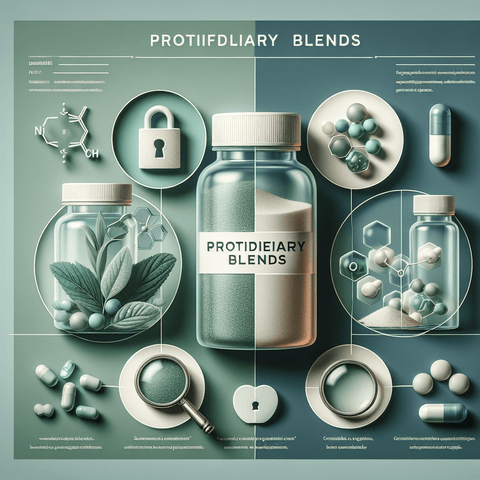
A proprietary blend is a group of ingredients listed under a single name with only the total weight of the blend disclosed. For example, a label might say "Energy Blend – 1,200 mg" followed by a list of ten ingredients without individual amounts. This means you cannot know whether a well-studied dose of any single ingredient is included, or whether it is present only in trace quantities.
Fully disclosed formulas list each ingredient with its own amount. This allows you to compare the dose against the ranges used in published research, check for overlaps with other products you take, and identify potential allergens or additives. The practical difference is significant: with a transparent label, you can make an evidence-based decision; with a proprietary blend, you largely have to trust the manufacturer's marketing.
Common label terms explained: active ingredients, other ingredients, serving size, and daily value
Understanding a few standard terms makes labels far easier to interpret:
- Active ingredients: The nutrients or compounds intended to have a physiological effect, listed with their amounts per serving.
- Other ingredients: Non-active substances such as capsule materials (gelatin or cellulose), fillers, flow agents, sweeteners, colors, or preservatives.
- Serving size: The amount the manufacturer recommends taking at one time, which may be one capsule or several. All listed amounts refer to this serving size, not the whole bottle.
- Percent Daily Value (%DV): How much one serving contributes to recommended daily intake based on reference values. A %DV of 100% means one serving provides the full reference intake for an average adult.
Note that a product providing 5,000% of the daily value is not "better" than one providing 100%; it simply contains far more than the reference intake, which may or may not be appropriate.
Why Ingredient Transparency Matters for Your Health
Hidden fillers, additives, and underdosed ingredients: what vague labels can hide
When individual amounts are not disclosed, several problems can hide behind the label. The most common is underdosing, sometimes called "fairy dusting," where a popular ingredient is added in a token amount purely so it can appear on the front of the package. Research-backed doses of many botanicals and amino acids are considerably higher than the sprinkles some blends contain.
Vague labeling can also conceal large quantities of fillers, added sugars, artificial colors, or allergens. People with sensitivities to certain excipients, or those avoiding specific additives for dietary or religious reasons, cannot make safe choices if the label does not clearly state what is inside.
How transparent labeling supports safer, more informed supplement choices
Transparent labels allow you to check three critical things: whether the dose falls within a reasonable and evidence-informed range, whether the product overlaps with other supplements you take, and whether it contains anything you need to avoid. This matters especially for fat-soluble vitamins such as vitamin D and vitamin A, where excessive intake over time can accumulate, and for minerals where upper intake limits exist.
Transparency also supports accountability. Brands that publish full formulas and testing information are easier to evaluate objectively, and easier to hold to their claims, than brands relying on front-of-package marketing alone.
The growing consumer demand for clean-label and fully disclosed products
Consumer awareness of supplement quality has grown substantially in recent years, driven partly by independent lab-testing publications that have found some products contain less (or more) of an ingredient than the label states. In response, many manufacturers have moved toward clean-label practices: shorter ingredient lists, recognizable excipients, full dose disclosure, and published certificates of analysis. This shift reflects a broader trend in the food and supplement industry toward verifiable rather than merely asserted quality.
Red Flags on a Supplement Label: Signs a Product May Not Be Fully Transparent
"Proprietary blend" and "matrix" wording without amounts
Words like "blend," "matrix," "complex," or "formula" followed by a total weight and a list of ingredients without individual amounts are the clearest sign that a product is not fully disclosed. While proprietary blends are not inherently unsafe, they prevent you from verifying doses, which is a meaningful limitation when evaluating whether a product can plausibly deliver the benefits implied by its marketing.
Vague ingredient descriptions and missing dosage information
Be cautious with labels that describe ingredients only by marketing names without standard chemical or botanical nomenclature, or that state amounts in undefined "proprietary units." Also treat with skepticism products that promise dramatic results while listing micro-doses of key ingredients, or that use phrases like "concentrated extract" without specifying the extraction ratio or standardization.
Unverifiable claims, missing manufacturer details, and absent testing information
A trustworthy product should identify the manufacturer or distributor with real contact details, state clearly what the supplement does and does not do, and ideally provide evidence of quality control. If a label or website offers no information about third-party testing, manufacturing standards, or where to ask questions, that absence is itself informative. Similarly, claims that sound too dramatic—curing diseases, guaranteeing results, or replacing medication—are inconsistent with how supplements are legally and scientifically positioned.
Why Ingredients and Dosages Vary So Much Between Products
Form differences: citrate vs. oxide, methylated vs. standard B vitamins, and why they matter
The same nutrient can exist in several chemical forms with different properties. Magnesium oxide, for example, contains a high percentage of elemental magnesium but is relatively poorly absorbed and more likely to cause digestive looseness, whereas magnesium citrate or glycinate forms are generally better tolerated and absorbed. Among B vitamins, some products use methylated forms such as methylfolate and methylcobalamin, which bypass certain conversion steps in the body; this may be relevant for people with genetic variations affecting folate metabolism, although for most people standard forms are effectively utilized as well.
Scientific evidence comparing forms is not equally strong for every nutrient, and no single form is universally best. What matters is that the label tells you which form is used, so the choice can be made deliberately rather than by accident.
Dosing practices: effective doses vs. "fairy dusting" of popular ingredients
Doses on supplement labels range from physiologically meaningful amounts to token quantities. For nutrients with established reference intakes, comparing the labeled amount to the recommended daily allowance and the tolerable upper intake level provides useful context. For botanicals and other compounds studied at specific doses, the labeled amount can be compared with the doses used in research. A product containing 50 mg of an ingredient studied at 1,000 mg may technically contain the ingredient while being unlikely to reproduce the studied effects.
How manufacturing quality, sourcing, and testing affect what ends up in the bottle
What a label states and what a bottle contains should be the same thing, but this depends on manufacturing quality. Good manufacturing practices (GMP), ingredient identity testing, and finished-product verification help ensure that the declared amounts are accurate and that products are free from significant contamination with heavy metals, microbes, or undeclared substances. Manufacturers who publish certificates of analysis or use recognized third-party certification make this verification independent rather than self-declared.
How to Read a Supplement Label Step by Step
The Supplement Facts panel: serving size, amounts, and percent daily value
Start with the serving size, because every other number on the panel refers to it. A product requiring four capsules per serving may deliver very different totals than a one-capsule product at first glance. Next, check each active ingredient's amount and %DV. Amounts well above 100% of the daily value deserve scrutiny, particularly for fat-soluble vitamins and minerals with established upper limits. Finally, note the form of each nutrient (for example, magnesium citrate versus magnesium oxide) since this affects absorption and tolerability.
The "other ingredients" list: excipients, fillers, flow agents, and allergens
The "other ingredients" section reveals everything non-active in the product. Common entries include cellulose (a plant-fiber capsule or binder), rice flour or stearates (fillers and flow agents), silicon dioxide (an anti-caking agent), and flavorings or sweeteners in chewable and powdered products. If you have allergies or intolerances, scan this list carefully for wheat, soy, dairy, egg, fish, shellfish, tree nuts, or sesame, which must be declared when present. People following vegan diets should check whether capsules are gelatin-based or plant-based.
Certifications and seals: third-party testing, NSF, USP, GMP, and what they verify
Third-party seals indicate that an independent organization has evaluated some aspect of the product:
- USP Verified: Confirms that the product contains the declared ingredients and amounts, and meets limits for contaminants.
- NSF Certified / NSF Certified for Sport: Verifies contents and contaminant testing; the Sport designation additionally screens for banned substances relevant to tested athletes.
- Informed Choice / Informed Sport: Independent batch testing for banned substances in sports products.
- GMP compliance: Indicates the product was manufactured under good manufacturing practices; note that GMP describes the production process rather than verifying the final product's contents directly.
No seal guarantees a product is right for you nutritionally, but third-party verification meaningfully reduces the risk of mislabeled or contaminated products.
How to Compare Transparent Products Before You Buy
Checking forms and bioavailability of key vitamins and minerals
Once amounts are disclosed, compare the chemical forms. For minerals, chelated and organic salt forms (citrate, glycinate, bisglycinate) are often absorbed better than oxides or carbonates, though differences vary by mineral and by person. For fat-soluble vitamins such as vitamin D, taking the product with a meal containing fat improves absorption regardless of form. For vitamin C, natural and synthetic forms are chemically identical and similarly absorbed, illustrating why "natural" on a label is not always nutritionally meaningful.
Evaluating dosage against evidence-based ranges
Compare each labeled dose with two reference points: the recommended daily intake and the tolerable upper intake level where one exists. For products targeting specific outcomes, consider whether the dose approximates the amounts used in published research. Avoid assuming that higher always means better; for many nutrients, benefits plateau and risks increase above certain intakes. Where you are unsure whether a dose is appropriate for your circumstances, a healthcare professional or registered dietitian can help interpret it against your diet and health status.
Single-ingredient supplements vs. combination formulas: which suits your needs
Single-ingredient products make it easy to control exactly what and how much you take, which is useful when addressing a specific gap identified by diet assessment or testing. Combination products, including a well-formulated multivitamin, offer convenience and broad coverage but require checking for overlaps with any other supplements you take. Transparent labels make both approaches workable; opaque labels make either risky.
Who Benefits Most From Choosing Label Transparency Supplements
People with allergies, dietary restrictions, or sensitivities to additives
Anyone managing food allergies, celiac disease, or additive sensitivities depends on accurate, complete labeling. Full disclosure of both active and inactive ingredients allows these individuals to avoid allergens, gluten cross-contact concerns, and specific excipients. Those following vegan, vegetarian, kosher, or halal diets also benefit from clear information about capsule materials and ingredient sources.
Those taking medications or managing health conditions who need to verify ingredients
Certain nutrients and botanicals can interact with medications—for example, vitamin K's relevance for people taking anticoagulants, or St. John's wort's many drug interactions. People on regular medication need complete labels to identify anything that warrants a conversation with their pharmacist or physician. A vague label makes this safety check impossible.
Athletes and tested professionals who need banned-substance screening
Competitive athletes subject to anti-doping rules face real risk from supplements contaminated with banned substances. For this group, transparency extends beyond the ingredient list to batch-level third-party screening under programs such as Informed Sport or NSF Certified for Sport. Guidance from resources covering sports supplements consistently emphasizes choosing certified products precisely because contamination has been documented across the industry.
Safety Considerations When Evaluating Supplement Labels
Upper intake limits and avoiding unintentional over supplementation from stacked products
Taking several supplements together can easily exceed safe intakes without any single product appearing excessive. This is most relevant for fat-soluble vitamins (A, D, E, K), minerals such as iron, zinc, and selenium, and vitamin B6 at high chronic intakes. Adding up the totals across all products you use—multivitamins, single nutrients, fortified foods, and drinks—is a habit worth building, and a fully transparent label is what makes it possible.
Ingredient interactions and contraindications to check on the label
Labels should flag known contraindications, such as products not recommended during pregnancy or breastfeeding, or warnings for people taking specific medications. Mineral supplements can compete for absorption when taken together in very high doses (for example, high-dose zinc affecting copper status over time), and some botanicals affect drug-metabolizing enzymes. Responsible labels disclose these considerations; their absence is another transparency signal.
When to consult a healthcare professional before choosing a product
Professional advice is particularly worthwhile if you are pregnant or breastfeeding, managing kidney, liver, or chronic disease, taking prescription medication regularly, considering high-dose nutrients, or giving supplements to children. A healthcare provider can also arrange blood testing—such as for vitamin D, B12, iron status, or folate—when a deficiency is suspected, since symptoms alone rarely confirm nutritional status reliably. Testing-based decisions generally beat guessing, both for safety and for cost-effectiveness.
Label Transparency Supplements and Informed Decision-Making: Your Practical Checklist
Questions to ask before buying any supplement
Before purchasing, run through a short list:
- Does the label disclose the exact amount of every active ingredient?
- Is the chemical form of each nutrient identified?
- Is the dose consistent with recommended intakes or research-based ranges?
- Are all "other ingredients" listed, including potential allergens?
- Is there evidence of third-party testing or certification?
- Are manufacturer contact details and appropriate warnings provided?
- Do the claims match what supplements can legally and scientifically do?
Products that answer most of these questions openly are generally more trustworthy than those that do not, regardless of packaging appeal.
Balancing diet and lifestyle first: where supplements genuinely fit
Supplements are intended to supplement a diet, not replace it. Most people can obtain the majority of their nutrients from varied food sources: leafy greens and legumes for folate and magnesium, oily fish for vitamin D and omega-3s, citrus and berries for vitamin C, dairy and fortified plant milks for calcium, and nuts, seeds, and whole grains for minerals and vitamin E. Addressing overall diet quality, sleep, and activity first usually delivers more benefit than adding products on top of an inadequate baseline.
Supplementation becomes genuinely relevant when dietary intake is persistently low (as with vitamin D in low-sunlight regions or B12 in vegan diets), when absorption is reduced, when requirements increase (pregnancy, aging, intense training), or when testing indicates a gap that food alone is not closing.
Making label transparency your default standard for every purchase
Once you know how to read labels, apply the standard consistently—to multivitamins, single nutrients, and botanicals alike. Exploring categories such as natural supplements becomes far more manageable when every product is judged by the same criteria: full disclosure, sensible doses, identified forms, and verifiable quality. Over time this habit protects both your health and your budget.
Key Takeaways
- Label transparency supplements disclose every ingredient and its exact amount, unlike proprietary blends that hide individual doses.
- Transparent labels let you compare doses against recommended intakes, upper limits, and research-based ranges.
- Ingredient form matters: mineral salts and vitamin forms differ in absorption and tolerability, so the label should name them.
- Red flags include proprietary blends, missing dosage information, vague descriptions, and absent manufacturer or testing details.
- Third-party certifications such as USP, NSF, and Informed Sport independently verify contents and screen for contaminants.
- Check the "other ingredients" list for allergens, fillers, and excipients, especially if you have sensitivities or dietary restrictions.
- Stacking multiple supplements can exceed upper intake levels for fat-soluble vitamins and certain minerals; total intake matters.
- People taking medications, managing health conditions, or subject to drug testing benefit most from fully disclosed, tested products.
- Diet and lifestyle come first; supplements are most useful for identified gaps that food cannot practically close.
- When deficiency is suspected, blood testing and professional advice are more reliable than choosing supplements based on symptoms alone.
Frequently Asked Questions
What does "label transparency" mean on a supplement?
It means the label discloses every ingredient—active and inactive—along with the exact amount of each per serving. Nothing is grouped into proprietary blends with hidden individual doses. Ideally, the brand also shares information about sourcing, manufacturing standards, and third-party testing.
Are proprietary blends always bad?
Not necessarily unsafe, but they prevent you from verifying doses. Research suggests that underdosing of key ingredients is common in blended products, so without disclosed amounts you cannot judge whether the formula is meaningful. For anyone comparing products rationally, full disclosure is the stronger option.
How can I tell if a supplement dose is appropriate?
Compare the labeled amount with the recommended daily allowance and the tolerable upper intake level for that nutrient, and for botanicals, with doses used in published research. Amounts far above 100% of the daily value are not automatically better and may increase risk, particularly for fat-soluble vitamins.
Does a higher percentage of daily value mean a better supplement?
No. The %DV simply indicates how much one serving contributes to reference intake. Very high percentages can signal a dose approaching or exceeding safe upper limits, especially when combined with other products. Appropriateness depends on your diet, age, and health status, not on a bigger number.
Which supplement form is best absorbed?
It depends on the nutrient. Chelated minerals such as magnesium glycinate or citrate are generally absorbed better than magnesium oxide, and taking fat-soluble vitamins with food improves uptake. However, evidence varies by nutrient, and no form is universally superior—what matters most is that the label identifies the form used.
Are third-party certifications worth looking for?
Yes. Seals such as USP Verified, NSF Certified, and Informed Sport indicate that an independent organization has verified contents and screened for contaminants. They do not guarantee a product suits your needs nutritionally, but they substantially reduce the risk of mislabeled or contaminated products.
Can I take too much of a vitamin by stacking supplements?
Yes. Combining a multivitamin with individual nutrient products and fortified foods can exceed upper intake levels, particularly for vitamin A, vitamin D, vitamin B6, iron, zinc, and selenium. Adding up totals across all products you use is the most reliable safeguard.
Do supplements interact with medications?
Some do. Examples include vitamin K's relevance for anticoagulant users, high-dose mineral supplements affecting absorption of certain drugs, and various botanicals affecting drug metabolism. Always check the label's warnings and consult a pharmacist or physician if you take prescription medication regularly.
Why do "other ingredients" appear on labels if they are not active?
These are excipients needed to make the product: capsule materials, binders, flow agents, sweeteners, or preservatives. Most are harmless at the quantities used, but people with allergies, intolerances, or specific dietary requirements should review them, since allergens and animal-derived materials can hide in this list.
How do I know if I actually need a supplement?
Start by assessing your diet, lifestyle, and any relevant risk factors such as restricted diets, low sun exposure, pregnancy, or older age. If a gap is suspected, blood testing can confirm nutritional status far more reliably than symptoms. Professional guidance helps translate results into appropriate action.
Is "natural" on a supplement label meaningful?
Often less than it sounds. Some nutrients, such as vitamin C, are chemically identical whether derived from natural or synthetic sources and are absorbed similarly. The term "natural" is not a reliable indicator of quality or superiority; disclosed forms, doses, and testing matter far more.
How long does it take to notice effects from a supplement?
It varies widely. Correcting a genuine nutrient deficiency may produce noticeable changes over weeks to months, while effects of nutrients on general wellbeing may be subtle or imperceptible. If no deficiency exists, additional intake may produce no noticeable effect at all—which does not necessarily mean the supplement is useless or harmful, only that more is not better.
Related Keywords
- label transparency supplements
- fully disclosed supplement labels
- proprietary blend vs full disclosure
- how to read a supplement facts panel
- third-party tested supplements
- supplement label red flags
- clean label supplements
- supplement dosage and upper intake levels
- supplement ingredient forms and bioavailability
- USP NSF GMP certification meaning
- hidden fillers in supplements
- supplement safety and interactions
- choosing quality vitamins and minerals
- fairy dusting supplements