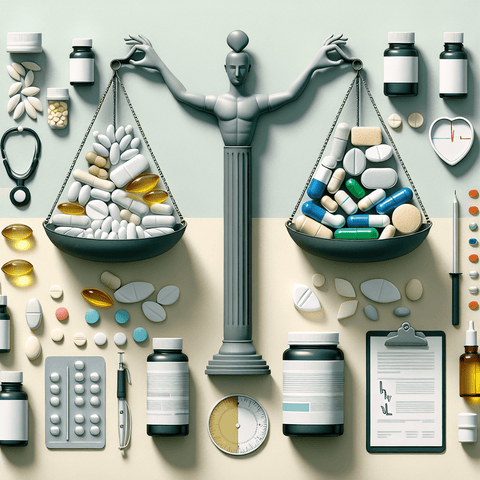
Medication and supplement safety is about understanding how the medicines you take and the vitamins, minerals, or herbal products you use can influence one another in the body. In this guide, you'll learn what drug–nutrient interactions are, which medications are most commonly involved, the warning signs that something may be going wrong, and practical steps—such as smart timing and label reading—that can help reduce your risk. Because more than half of adults use at least one supplement alongside prescription or over-the-counter medication, understanding these interactions matters for anyone trying to support their health responsibly.
Introduction: Why Medication and Supplement Safety Matters
Supplements and medications are often discussed as separate worlds, yet in the body they share the same pathways: the digestive tract, the liver, the kidneys, and transport proteins that move nutrients in and out of cells. When two substances use the same pathway, they can interfere with each other—sometimes reducing a medication's effectiveness, sometimes amplifying its effects, and sometimes changing how well your body absorbs a nutrient.
Medication and supplement safety matters because many interactions are silent. A mineral may quietly bind to an antibiotic, or an herb may speed up the breakdown of a prescription drug, with no immediate symptoms. Practical awareness—not fear—is the goal: most interactions are manageable with timing adjustments, sensible dosing, and informed conversations with a doctor or pharmacist.
What you'll learn in this guide
This article explains the key terms, the most common and clinically significant interaction patterns, individual factors that change your personal risk, and simple habits—like spacing doses and keeping an updated medication list—that reduce risk. It also covers how to evaluate supplement quality and labels, when testing and professional assessment make more sense than guessing, and answers to the questions people most frequently ask about combining supplements with medications.
What Is Medication and Supplement Safety? Key Terms Explained
Medication and supplement safety refers to the practices and knowledge that help ensure the medicines and nutritional products you use do not undermine each other. It encompasses choosing appropriate products, using sensible doses, timing intake correctly, and staying alert to changes in how you feel once a new substance enters your routine.
What are drug–nutrient interactions?
A drug–nutrient interaction occurs when a medication changes how your body absorbs, uses, stores, or eliminates a nutrient—or when a nutrient changes how your body handles a medication. For example, long-term use of the diabetes medication metformin has been associated with lower vitamin B12 status in some people, while high doses of calcium can bind to certain antibiotics in the gut and reduce their absorption.
Drug–drug vs. drug–supplement interactions: what's the difference?
Drug–drug interactions occur between two medications and are typically well documented, since both substances are studied in regulated clinical trials. Drug–supplement interactions are often less thoroughly studied because supplements are regulated differently and used in highly variable doses and combinations. That doesn't make supplement interactions less important—it simply means the evidence base can be thinner, and a cautious, informed approach becomes more valuable.
Common terms: interactions, contraindications, absorption interference, and potentiation
- Interaction: Any situation where one substance changes the effect of another.
- Contraindication: A specific circumstance—such as a condition or co-used medication—under which a substance should generally not be used.
- Absorption interference: When one substance reduces how much of another is absorbed, usually through binding in the digestive tract.
- Potentiation: When one substance amplifies the effect of another, which can be helpful in some contexts and risky in others—such as herbs that add to the blood-thinning effect of anticoagulant medication.
Why Medication and Supplement Interactions Matter for Your Health
Interactions matter because they can quietly undermine treatment or nutrition. A medication that works less effectively may leave a condition undertreated, while a nutrient that is depleted over time may contribute to fatigue, weakness, or other subtle changes that are easy to attribute to something else.
How supplements can change how medications work
Supplements can affect medications in several ways. Minerals can bind to drugs in the gut, reducing absorption. Herbs like St. John's Wort can induce liver enzymes that break certain medications down faster, potentially lowering their blood levels. Others—such as high-dose fish oil or some herbal extracts—may add to the effects of blood-thinning medication. The mechanism determines whether the result is a weaker drug effect, a stronger one, or altered nutrient status.
How medications can affect nutrient levels in the body
Some medications influence nutrient status over time. Proton pump inhibitors, which reduce stomach acid, may reduce absorption of vitamin B12 and magnesium. Diuretics can affect potassium and other electrolytes. Metformin has been associated with lower B12 levels in long-term users. These effects are not universal and often depend on dose and duration, which is why monitoring matters for people on long-term therapy.
Everyday scenarios where interactions are most likely
Common scenarios include starting a new supplement while on stable medication, taking minerals with a morning medication at breakfast, using herbal products around surgery, and gradually increasing supplement doses over time without review. Multivitamins deserve attention too, because they contain several minerals that can interact with specific medications.
Common Signs That a Medication and Supplement Interaction May Be Occurring
Symptoms that warrant attention (and why they don't confirm an interaction)
Possible signs include unusual fatigue, dizziness, digestive upset, changes in heart rhythm sensations, unusual bruising or bleeding, muscle cramps, or a medication seeming to "stop working." These symptoms are non-specific: they may stem from the underlying condition, a new medication, illness, or lifestyle factors. Symptoms alone cannot confirm an interaction, but they are a valid reason to review your routine with a healthcare professional rather than to self-adjust doses.
Situations that should prompt a review of your current stack
It's sensible to reassess your medications and supplements whenever you start a new prescription, plan surgery, experience a change in kidney or liver health, become pregnant, begin a dramatically different diet, or notice new symptoms after adding a product. An annual review of everything you take is a simple habit with real safety value.
Risk Factors: What Increases the Likelihood of Interactions
Taking multiple medications or supplements (polypharmacy)
The more substances you take, the greater the statistical chance that at least one pair interacts. People taking five or more medications—a situation called polypharmacy—are at notably higher risk. The same logic applies to supplements: a long list of capsules each individually "safe" can collectively create complexity that's hard to track without a written list.
Age, liver and kidney function, and altered metabolism
The liver and kidneys clear most drugs and their byproducts. When their function is reduced—through age, disease, or both—substances can accumulate, and interactions can become more pronounced. Older adults also tend to have slower metabolism, lower body water, and lower lean mass, all of which change how substances behave.
Timing, dosing, and taking supplements with or without food
Food can dramatically change absorption. Calcium and iron compete for absorption, minerals can bind to certain drugs, and some fat-soluble vitamins are absorbed better with a meal containing fat. Taking everything together at breakfast may be convenient, but it's also the single most common setup for absorption-based interactions that a simple timing change could avoid.
High-dose supplements and concentrated herbal extracts
Risk rises with dose. Nutrients that are unremarkable at physiological amounts—vitamin K, omega-3s, curcumin—become more relevant at concentrated doses used in extracts. Megadosing rarely adds benefit and can move a nutrient past its upper safe intake level while simultaneously increasing interaction potential.
Medications Commonly Involved in Nutrient and Supplement Interactions
Antibiotics and mineral supplements (calcium, iron, zinc, magnesium)
Certain antibiotics—particularly tetracyclines and fluoroquinolones—can bind to positively charged minerals such as calcium, iron, zinc, and magnesium in the gut, forming complexes that neither the drug nor the mineral is absorbed from. Standard guidance is to separate these minerals and such antibiotics by a substantial interval, typically several hours, as advised by a pharmacist.
Blood thinners and vitamin K, fish oil, and herbal supplements
Warfarin works by opposing vitamin K, so consistent vitamin K intake—both from food and supplements—is more important than complete avoidance; sudden changes in intake are the actual risk. Fish oil at high doses and herbs such as ginkgo, garlic extract, and turmeric extracts have been associated with added antiplatelet or anticoagulant effects in some contexts. Anyone on anticoagulants should discuss every supplement, including vitamin K products, with their prescriber.
Thyroid medication and iron, calcium, and soy
Levothyroxine is notoriously sensitive to absorption interference. Iron, calcium, and soy products taken too close to the dose can meaningfully reduce how much thyroid hormone enters the bloodstream. These are usually separated by several hours, on professional advice, while keeping timing consistent day to day.
Blood pressure, diabetes, and acid-reducing medications
Potassium supplements and salt substitutes can matter for people on certain blood pressure medications that conserve potassium. Metformin's association with lower B12 status makes periodic monitoring reasonable for long-term users. Proton pump inhibitors and H2 blockers reduce stomach acid, which can affect absorption of B12, magnesium, and iron over extended use.
Antidepressants, St. John's Wort, and serotonin-related supplements
St. John's Wort is one of the most interaction-prone herbal products available: it induces drug-metabolizing enzymes and can reduce the effectiveness of many medications, including some antidepressants, oral contraceptives, and anticoagulants. Combining it with serotonergic medications may also increase the risk of serotonin-related side effects. Anyone taking psychiatric medication should not combine it with serotonin-influencing supplements without medical guidance.
Individual Variability: Why Interaction Risk Differs From Person to Person
Genetics, health status, and metabolism
Genetic variation in liver enzymes means two people taking the same drug and supplement can experience very different blood levels. Gastrointestinal conditions such as celiac disease or inflammatory bowel disease can alter absorption of both nutrients and medications, further personalizing risk.
Diet, nutrient intake, and baseline nutritional status
A person with an already excellent, varied diet has different needs from someone with a restricted diet. Baseline status shapes whether an interaction is clinically meaningful: a mild reduction in absorption of a nutrient you already have in abundance matters far less than the same reduction in a nutrient you're already low in.
Age, pregnancy, and life stage considerations
Pregnancy changes metabolism and increases requirements for several nutrients, making both deficiencies and excesses more consequential. Infants, older adults, and people with chronic illness each have distinct risk profiles, which is why blanket advice is a poor substitute for individualized assessment.
Diet and Lifestyle Habits That Reduce Interaction Risk
Food sources of key nutrients vs. concentrated supplements
For most healthy people eating a varied diet, food comfortably covers the majority of nutrient needs, and the nutrients in whole foods arrive in matrices that rarely cause the kind of concentrated interaction risk that high-dose extracts can. Prioritizing dietary sources—leafy greens for vitamin K and folate, dairy or fortified alternatives for calcium, oily fish for omega-3s—is the safest first step. Learn more about building a nutrient-dense approach through food-first nutrition and natural supplements guidance.
Timing strategies: spacing medications and supplements safely
A practical rule of thumb is to separate minerals (calcium, iron, magnesium, zinc) from medications known to be absorption-sensitive by a few hours, unless your pharmacist advises otherwise. Taking fat-soluble vitamins with a meal containing fat, and iron away from coffee and tea, are similarly low-effort adjustments that meaningfully change absorption.
Alcohol, grapefruit, and other dietary triggers to be aware of
Grapefruit and grapefruit juice inhibit an intestinal enzyme (CYP3A4) that processes many medications, which can raise drug blood levels significantly. Alcohol affects liver metabolism and can compound drowsiness or liver strain from certain drugs. Heavy alcohol use also depletes several B vitamins over time.
Keeping an up-to-date medication and supplement list
Maintain a written or phone-based list of every prescription, over-the-counter drug, vitamin, mineral, and herb you take—including doses. Share it at every medical appointment and before surgery. Pharmacists can run interaction checks against this list in minutes, making it one of the highest-value safety habits available.
Where Supplements Fit: Nutritional Support Without Compromising Safety
Supplements with well-documented interaction considerations
Some categories carry the most interaction evidence: St. John's Wort, high-dose vitamin K, high-dose fish oil, mineral supplements taken with absorption-sensitive drugs, and concentrated herbal extracts such as turmeric and curcumin products. This doesn't make them inappropriate—it means they deserve explicit professional review when medications are involved.
Generally well-tolerated supplements and their limits
Basic multivitamins at sensible doses, vitamin D within recommended ranges, and probiotics are generally well tolerated by most people, though "generally" is doing real work in that sentence: dosage, individual health status, and concurrent medication still matter. Anyone curious about how multivitamin formulas differ can explore guidance on multivitamin ingredients, usage, and safety.
Why "natural" does not automatically mean risk-free
Plants are chemically active—that's precisely why herbal medicine exists. Concentrated natural compounds engage the same liver enzymes, transporters, and receptors that drugs do. Arsenic is natural, too. "Natural" describes origin, not safety profile, and interaction risk exists in both worlds.
When Supplementation May Be Relevant Alongside Medications
Medications known to deplete nutrients (e.g., metformin and B12, PPIs and magnesium)
For people on long-term therapy with medications that have documented nutrient effects, supplementation may be worth discussing with a prescriber. Examples include B12 for long-term metformin users and magnesium or B12 for long-term users of acid-reducing medication. These are cases where testing can clarify whether a genuine need exists before adding a product.
Diagnosed deficiencies vs. general nutritional support
A confirmed deficiency—verified by blood testing and clinical assessment—provides a clear rationale for targeted supplementation at an appropriate dose. General nutritional support, such as a basic multivitamin for someone with a variable diet, is a different, lower-intensity purpose. Confusing the two leads either to unnecessary supplementation or to under-treating a real deficiency.
When testing and professional assessment make sense
Fatigue, brittle nails, muscle cramps, and low mood are suggestive but non-specific; they cannot distinguish among dozens of causes. For nutrients like vitamin D, B12, iron, and folate, validated blood tests exist and are far more informative than symptom-based guessing. Professional assessment also establishes the right dose and recheck interval.
How to Choose a Supplement If You Take Medication
Ingredient forms and bioavailability considerations
Chemical form affects absorption and, sometimes, interaction behavior. Magnesium citrate is more bioavailable than magnesium oxide; iron bisglycinate is often gentler than ferrous sulfate. However, more bioavailable isn't automatically better when medications are involved—sometimes a well-absorbed form taken at the wrong time is worse than a less-absorbed form taken at the right time.
Sensible dosages vs. megadoses
Choose doses aligned with recommended daily intakes unless a professional has advised otherwise. Doses far above the tolerable upper intake level increase side-effect risk and interaction potential without evidence of added benefit for most nutrients.
Single ingredients vs. combination products
Single-ingredient products make it easier to control timing around medications and to identify which substance causes a reaction. Combination formulas offer convenience but reduce that control—a real consideration for anyone on absorption-sensitive medication.
Purity, third-party testing, and quality certifications
Because supplement regulation differs from pharmaceutical regulation, third-party testing and transparent labeling are meaningful quality signals. Independent verification helps ensure the product contains what the label states, at the stated amount, without significant contaminants.
Allergens, added ingredients, and dietary preferences
Check for allergens such as gluten, soy, dairy, or shellfish, and for fillers, sweeteners, or colorants if you have sensitivities. Vegan, vegetarian, and other dietary certifications matter for both ethical and tolerability reasons.
Capsules, tablets, powders, and liquids: practical differences
Capsules often dissolve reliably and mask taste; tablets are economical but vary in disintegration; powders allow flexible dosing but require accurate measuring; liquids suit people who struggle to swallow capsules. The best form is the one you'll take consistently at the right time relative to your medications.
How to Read a Supplement Label for Safety
Serving size, dosage, and active ingredients
Always check the serving size first: amounts listed are per serving, and some products require multiple capsules to reach the stated dose. Confirm which chemical form of each nutrient is used, since form affects absorption.
The Supplement Facts panel and proprietary blends
A complete Supplement Facts panel lists every nutrient with its amount. Proprietary blends that hide individual ingredient amounts behind a combined total make it impossible to know whether a dose is meaningful or safe—particularly relevant for herbal products used alongside medication.
Red flags and warning statements to look for
- Claims to cure, treat, or reverse disease
- Proprietary blends without disclosed ingredient amounts
- Missing manufacturer contact information
- "Miracle" or rapid-result language
- No listing of active ingredient forms or amounts
Who Should Be Especially Careful — and Who May Benefit Most From Supplement Support
Older adults, pregnant women, and people with chronic conditions
Older adults often take multiple medications and have altered metabolism; pregnancy raises requirements for folate, iron, iodine, and vitamin D while raising the stakes for any excess; people with kidney, liver, or gastrointestinal conditions face altered clearance and absorption. These groups benefit most from professional oversight of both medications and supplements.
People on long-term medications with known nutrient effects
Long-term users of metformin, proton pump inhibitors, diuretics, and certain anticonvulsants may have increased nutritional monitoring needs. For these individuals, periodic testing can determine whether targeted supplementation is genuinely useful rather than assumed.
Talking to Your Doctor or Pharmacist About Supplements
Questions to ask before starting a new supplement
- Does this supplement interact with any of my current medications?
- Should I separate it in time from any of my prescriptions?
- Is a test available to check whether I actually need it?
- What dose is appropriate for my situation?
- What side effects or changes should prompt me to stop?
How to safely introduce, adjust, or stop a supplement
Introduce one new supplement at a time so any reaction can be attributed. Keep the dose stable rather than escalating, and don't stop prescribed medication because a supplement "seems to be working"—nutritional support complements, never replaces, medical treatment. When stopping, tell your prescriber if the product could have affected your medication levels, as ongoing monitoring may need adjustment.
Frequently Asked Questions
How long should I wait between taking medication and supplements?
It depends on the pairing. Minerals such as calcium, iron, magnesium, and zinc are commonly separated from absorption-sensitive medications like certain antibiotics and thyroid medication by two to four hours. Your pharmacist can give specific guidance for your exact combination.
Can I take vitamins with prescription medications?
Often yes, but not always together in time, and not always without review. Standard multivitamins at sensible doses are broadly compatible with many medications, yet specific pairings—such as vitamin K with warfarin or minerals with thyroid medication—require professional input.
Which supplements should never be combined with blood thinners?
High-dose fish oil, ginkgo, garlic extract, turmeric and curcumin extracts, ginger, and vitamin E at high doses have all been associated with added bleeding risk in some contexts. Anyone on warfarin also needs consistent—not zero—vitamin K intake. Always review anticoagulants with a prescriber before adding any supplement.
Do supplements interact with all medications?
No. Most supplements are compatible with most medications, and many interactions are minor or manageable with timing. The concern is specific, well-recognized pairings, which is why a full list of everything you take checked by a pharmacist is so valuable.
Which vitamin is most affected by long-term metformin use?
Vitamin B12. Research has associated long-term metformin use with reduced B12 status in some individuals, which is why periodic B12 testing is often considered for long-term users rather than blind supplementation.
Why does grapefruit matter for medication safety?
Grapefruit inhibits the CYP3A4 enzyme in the intestinal wall, which can substantially increase blood levels of many medications—including some statins and blood pressure drugs. If your medication label or pharmacist flags grapefruit, it should be avoided entirely, not just separated in time.
Can I take iron and calcium together?
They compete for absorption, so taking them at the same time reduces how much of each you absorb. Separating them into different times of day—iron in the morning, calcium later—is a simple fix.
Are herbal supplements safer than prescription drugs?
Not inherently. Herbs contain pharmacologically active compounds that use the same metabolic pathways as drugs. St. John's Wort, for example, interacts with more medications than many prescription products. "Natural" describes source, not risk level.
How much vitamin D can I safely take with medication?
Recommended intakes for adults are generally around 15–20 micrograms (600–800 IU) daily, with tolerable upper intake levels around 100 micrograms (4,000 IU) for most adults. If you take medications such as certain diuretics or digoxin, vitamin D dosing deserves professional review because of calcium-related effects.
Should I stop supplements before surgery?
Many surgeons ask patients to stop certain supplements—especially those with blood-thinning or effects on anesthesia—one to two weeks before procedures. Never decide on your own; provide your full supplement list at the pre-surgical assessment and follow the team's instructions.
Can supplements replace a medication if I feel better?
No. Feeling better may reflect the medication working, not making it unnecessary. Stopping prescribed treatment based on supplement use can allow an underlying condition to progress. Any change to prescribed medication should be made with the prescriber.
Key Takeaways
- Medication and supplement safety means understanding how drugs and nutrients share the same absorption and metabolic pathways—and managing where they conflict.
- Interactions work in both directions: supplements can alter drug effects, and medications can deplete or block nutrients.
- Minerals such as calcium, iron, magnesium, and zinc commonly interfere with antibiotics and thyroid medication when taken at the same time.
- Blood thinners, St. John's Wort, grapefruit, and high-dose nutrients are among the most interaction-relevant considerations.
- Timing—separating minerals from sensitive medications by a few hours—resolves many absorption-based interactions.
- Long-term medications like metformin and PPIs have documented nutrient effects that may justify testing rather than blind supplementation.
- Symptoms are non-specific: blood tests and professional assessment beat symptom-based guessing.
- "Natural" does not mean risk-free; concentrated herbal extracts can be highly interaction-prone.
- An updated list of everything you take, reviewed with a pharmacist, is the single most effective safety habit.
- Choose supplements with transparent labels, sensible doses, and third-party quality verification—especially if you take medication.
Conclusion: Making Informed, Safe Choices About Medications and Supplements
Medication and supplement safety is less about avoiding supplements and more about using everything you take—food, medicines, and nutritional products—thoughtfully. A varied diet meets most nutrient needs for most people; targeted supplementation becomes relevant when diet falls short, medications affect nutrient status, or testing confirms a genuine gap. Individual needs differ widely with age, health status, genetics, and medication use, so there is no universal stack—only an informed, personal one.
Keep an updated list of everything you take, time minerals away from absorption-sensitive medications, read labels critically, and involve your doctor or pharmacist before adding anything new. With those habits in place, supplements can play a sensible supporting role in your health without compromising the treatments that matter most.
Related Keywords
- medication and supplement safety
- drug–nutrient interactions
- supplement drug interactions
- can I take vitamins with medication
- supplement safety tips
- medication interactions with herbal supplements
- nutrient depletion from medications
- how long to wait between medication and supplements
- supplements that interact with blood thinners
- calcium and antibiotic interaction
- reading supplement labels safely
- supplement timing with medications
- high-dose supplement risks
- pharmacist supplement consultation