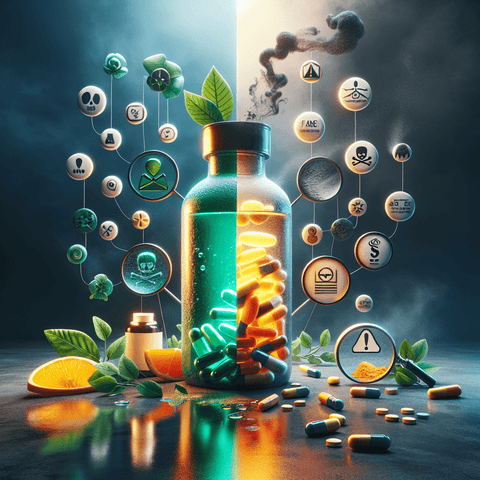
Misleading supplement labels can make a poorly formulated product look like a science-backed health solution. Because dietary supplements are regulated differently from foods and drugs, manufacturers have considerable freedom in how they describe ingredients, dosages, and benefits. In this article, you will learn how to recognize misleading supplement labels, understand which claims have legal meaning and which are pure marketing, identify red flags before you buy, and read a supplement facts panel step by step so you can protect both your health and your wallet.
Misleading Supplement Labels: What They Are and Why You're Right to Be Suspicious
What Counts as a Misleading Supplement Label?
A misleading supplement label is any label presentation that creates an inaccurate impression about what a product contains, how much of each nutrient it delivers, or what it can realistically do for your health. This includes hiding dosages behind "blends," using vague scientific-sounding buzzwords, exaggerating serving sizes, or implying benefits that the ingredients have never been shown to provide.
Misleading labeling is not always illegal. Some practices exploit gaps in how supplement regulations are written, while others simply rely on consumers not reading labels carefully. Either way, the result is the same: you may end up taking a product that is ineffective, unbalanced, or unsafe for your specific situation.
Why Supplement Labels Are Regulated Differently From Food and Drugs
In most jurisdictions, including the United States under the FDA and the European Union under EFSA frameworks, supplements are regulated as a category between foods and medicines. Manufacturers are responsible for the accuracy of their own labels and for product safety, but products generally do not require pre-market approval demonstrating effectiveness the way drugs do.
Health claims are restricted — for example, approved structure/function claims may describe how a nutrient supports normal physiological function, but cannot claim to treat or cure disease. In practice, enforcement is limited, and many exaggerated or ambiguous claims reach the market before any regulatory action is taken.
What This Article Will Teach You
You will learn the most common misleading claims, the red flags to check before purchasing, how misleading labels can affect your health, who is most at risk, and how to read a Supplement Facts panel with confidence. You will also learn which quality indicators actually matter — and why a balanced diet should always come before any supplement.
Common Misleading Claims Found on Supplement Labels
"Proprietary Blends": When Dosages Are Hidden From You
A proprietary blend lists several ingredients under one combined weight without disclosing the amount of each. This makes it impossible to know whether you are getting a meaningful dose of the key ingredients or only trace amounts padded with cheap fillers. Formulas with meaningful doses have nothing to hide; full disclosure is always the more transparent choice.
Buzzwords That Sound Scientific but Mean Little: "Clinically Proven," "Miracle," and "Detox"
Terms like "clinically proven," "miracle," "advanced," "detoxifying," and "scientifically formulated" are largely unregulated marketing language. A single small study on one ingredient at a different dose does not make a finished product "clinically proven." Genuine "detox" products are particularly misleading — your liver and kidneys handle detoxification, and no powder or capsule overrides that biology.
Exaggerated Health Claims vs. Legal Structure/Function Claims
Legally, labels may use structure/function claims such as "supports immune health" or "helps maintain normal bone density," provided they include a disclaimer stating the product is not intended to diagnose, treat, cure, or prevent disease. Claims that cross into disease territory — "lowers blood pressure," "cures joint pain," "prevents dementia" — are not permitted for supplements and are a strong indicator of a brand you cannot trust.
Serving Size Tricks: Why the Label May Not Match What You Actually Take
Some labels report nutrients per serving when a "serving" is two, three, or even six capsules. Others list amounts for a scoop of powder that most people never measure precisely. Always compare the amount per serving — not per capsule — with your actual intake, and check whether taking a full serving delivers enough of the nutrients you actually want.
"Natural" and "Pure": Marketing Terms Without a Standard Definition
"Natural" has no binding legal definition for most supplements, and "pure" can describe a product containing synthetic additives and flow agents. These words trigger positive associations but tell you nothing about ingredient quality, sourcing, or manufacturing standards.
Red Flags to Spot on a Supplement Label Before You Buy
Missing or Vague Supplement Facts Panels
A legitimate product must display a complete supplement facts panel listing each nutrient, its amount per serving, and the percentage of the daily value where one exists. Missing amounts, vague terms like "mineral complex," or absent panels are immediate red flags.
Dosages That Are Far Above or Below the Recommended Daily Value
Extremely high doses are not automatically more effective and may exceed tolerable upper intake levels — particularly for fat-soluble vitamins and minerals such as iron, zinc, and selenium. Very low doses, meanwhile, may be too small to contribute meaningfully to your intake. Both extremes deserve scrutiny.
Unclear Ingredient Forms and Hidden Additives
The chemical form of a nutrient matters for absorption and tolerability. A label that lists "magnesium" without specifying whether it is citrate, oxide, glycinate, or another form withholds information you need. Long lists of colorants, sweeteners, and coatings are also worth noting.
No Manufacturer Contact Information or Lot Number
Responsible manufacturers provide a physical address, contact details, and batch or lot numbers that enable traceability and recalls. Their absence suggests poor quality control.
Claims That Sound Too Good to Be True (and Usually Are)
Rapid weight loss, instant energy, reversing aging, or "replacing a full day of vegetables" are promises no supplement can legitimately make. If a claim sounds extraordinary, treat it as marketing rather than science.
Why Misleading Supplement Labels Can Affect Your Health
Risks of Overdosing on Vitamins and Minerals From Poorly Labeled Products
Hidden doses and overlapping products can push total intake of certain nutrients above safe upper limits. Consistently high intakes of vitamin A, vitamin D, iron, or selenium can cause real harm over time — particularly when combined with fortified foods and other supplements you may not have accounted for.
Undisclosed Ingredients, Fillers, and Contaminants
Independent analyses have occasionally found supplements containing ingredients not listed on the label, including pharmaceutical compounds in products marketed for weight loss or performance, or heavy metal contamination in poorly sourced botanicals. This is why third-party testing matters so much.
How Hidden Ingredients Can Interact With Medications
Unlisted ingredients can interact with prescription drugs. St. John's wort, vitamin K, and high-dose antioxidants are well-known examples of supplement components that can alter how medications work — a risk multiplied when labels are incomplete or inaccurate.
Wasted Money and Missed Nutritional Support
Beyond safety, misleading labels mean you may pay a premium for sub-therapeutic doses or ingredients with poor bioavailability while your actual nutritional gap remains unaddressed.
Who Is Most at Risk From Misleading Supplement Labels?
Older Adults Managing Multiple Medications
Age-related changes in absorption, kidney and liver function, and polypharmacy make older adults more vulnerable to both interactions and nutrient excess from poorly labeled products.
Pregnant or Breastfeeding Women
Nutrient needs change substantially during pregnancy and lactation, and excess vitamin A in particular can pose risks to fetal development. Accurate labeling is critical in this group.
People With Allergies, Intolerances, or Dietary Restrictions
Undeclared allergens such as gluten, soy, dairy, or shellfish-derived ingredients can cause reactions in sensitive individuals. Allergen statements should be explicit and easy to find.
Those Taking Supplements for Specific Health Goals
People seeking support for energy, bone health, or athletic performance are often targeted with exaggerated claims and are more likely to stack multiple products — increasing both cost and the risk of exceeding safe intakes.
How to Read a Supplement Facts Label Step by Step
Serving Size, Dosage, and Daily Value Explained
Start at the top: note the serving size and servings per container. Every nutrient is listed as an amount per serving plus a percentage of the Daily Value (%DV), which indicates how much of a typical adult's daily requirement one serving provides. A %DV below 5% is low; above 20% is high. Remember that DV is based on average adult needs — your own requirements may differ based on age, sex, pregnancy, and health status.
Ingredient Forms: Why "Magnesium Citrate" and "Magnesium Oxide" Are Not the Same
Nutrients exist in different chemical forms with different absorption profiles. Magnesium oxide is inexpensive but poorly absorbed, while magnesium citrate and glycinate are generally better absorbed and often better tolerated. Similar distinctions exist for calcium, vitamin D, B vitamins, and minerals. When comparing products, compare forms — not just numbers. You can explore how different forms differ in our magnesium guide.
Understanding Bioavailability Claims on Labels
Bioavailability refers to the proportion of a nutrient your body can actually absorb and use. Fat-soluble vitamins (A, D, E, K) are absorbed better with dietary fat, while some mineral forms compete for absorption. Labels emphasizing "enhanced absorption" should be backed by specific ingredient forms or credible references — not just marketing language.
Other Ingredients: What Fillers, Flow Agents, and Additives Actually Do
The "other ingredients" list includes capsule materials, fillers, anti-caking agents, and stabilizers. Most are harmless in typical amounts, but if you have sensitivities or prefer minimal formulations, this list tells you what else you are swallowing with every dose.
Allergen Statements, Certifications, and Third-Party Testing Seals
Look for clear allergen declarations, vegan or vegetarian certifications if relevant to you, and seals from independent testing organizations — the most reliable signals on any label.
What Quality Indicators Should You Look for Instead of Marketing Claims?
Third-Party Certifications: NSF, USP, and Informed Choice
Certifications from NSF International, USP, or Informed Choice/Informed Sport indicate that an independent laboratory has verified ingredient identity, amounts, and freedom from banned substances or contaminants. These seals carry far more weight than any slogan on the front of the bottle.
Transparent Labeling: Full Disclosure vs. Proprietary Blends
Preferring brands that disclose every ingredient and its exact amount is one of the simplest ways to avoid misleading labels. Transparency signals confidence in the formulation.
GMP Manufacturing and Batch Testing
Good Manufacturing Practice (GMP) compliance means the product is made under controlled, documented conditions. Brands that perform batch testing and publish certificates of analysis offer an additional layer of assurance.
Clear Expiration Dates and Storage Instructions
Potency declines over time, especially for probiotics and omega-3s. A responsible label includes a clear expiration date, storage guidance (for example, refrigeration for some probiotic products), and lot traceability.
Food First: Why a Balanced Diet Should Come Before Any Supplement
Whole Foods vs. Isolated Nutrients: What the Evidence Suggests
Research consistently suggests that diets rich in vegetables, fruits, whole grains, legumes, fish, and nuts are associated with better long-term health outcomes — a benefit that has not been reliably reproduced by isolated nutrient supplements. Whole foods deliver fiber, phytochemicals, and nutrient combinations that work together in ways a pill cannot replicate.
When Diet Alone May Not Be Enough
That said, certain situations make food alone insufficient. Vitamin D synthesis depends heavily on sun exposure and latitude; vitamin B12 is a concern for strict vegans; iron needs rise during pregnancy; and some medical conditions or medications impair absorption of specific nutrients.
How Your Actual Nutrient Needs Depend on Age, Diet, Absorption, and Lifestyle
Nutritional requirements vary widely with age, sex, body size, physical activity, alcohol intake, smoking, gastrointestinal health, genetics, and existing dietary patterns. Two people following similar diets can have very different nutrient status — which is why blanket supplement recommendations rarely fit everyone. Our multivitamin guide explains how baseline intake factors into product choices.
When Supplementation May Genuinely Be Worth Considering
Documented Deficiencies vs. General Nutritional Support
Supplements are most valuable when they address a documented or highly likely gap. A confirmed vitamin D or B12 deficiency, for example, has a clear evidence-based rationale. Taking high doses "just in case" without evidence of need carries risk without clear benefit.
Life Stages and Situations With Higher Nutrient Needs
Pregnancy and breastfeeding, older age, restrictive diets, malabsorption conditions, and intense athletic training are among the situations where nutrient requirements increase and targeted supplementation may be justified under professional guidance.
Why Blood Testing and Professional Assessment Beat Guesswork
For many nutrients — vitamin D, B12, ferritin (iron stores), and others — validated blood tests exist and can tell you far more than symptoms ever could. Fatigue or poor concentration, for instance, can stem from many causes, and symptoms alone cannot confirm a deficiency. Testing helps you supplement what you actually need, at the right dose, rather than guessing.
How to Choose a Trustworthy Supplement After Reading the Label
Single Ingredients vs. Combination Products: Which Fits Your Goal?
If you are addressing one specific, identified need — vitamin D in winter, for example — a single-ingredient product makes dosing transparent. Broad combination formulas, including well-constructed natural supplement ranges, may suit general nutritional support but require careful label review to avoid excessive doses of nutrients you do not need.
Capsules, Tablets, Powders, and Liquids: Practical Differences That Matter
Capsules often dissolve readily and mask unpleasant tastes; tablets are cost-effective but may include more binders; powders allow flexible dosing; liquids can suit people who struggle to swallow pills. Delivery format affects convenience and, in some cases, tolerability — but not every format difference translates into a meaningful health advantage.
Matching the Dose to Your Needs — Not to the Marketing
Choose the dose supported by evidence and your individual requirements, not the highest number on the shelf. More is not better, and for several nutrients it is measurably worse.
Avoiding Unnecessary Additives and Common Allergens
If you have sensitivities, scan the "other ingredients" list for allergens and unnecessary colorants. Minimal formulations reduce the chance of unwanted reactions and reflect manufacturing care.
Safety, Interactions, and When to Talk to a Professional
Upper Intake Limits: When More Is Not Better
Nutrients such as vitamin A, vitamin D, iron, zinc, selenium, and niacin have established tolerable upper intake levels. Exceeding them chronically — especially through overlapping products — can lead to toxicity, liver stress, or mineral imbalances.
Supplement–Medication Interactions You Should Not Ignore
Vitamin K can affect anticoagulants such as warfarin; high-dose antioxidants may interfere with some chemotherapy protocols; and certain herbal ingredients alter drug metabolism. If you take any prescription medication, review your supplements with a pharmacist or physician. Our resources on mineral supplements cover key interaction considerations.
Special Considerations for Pregnancy, Chronic Conditions, and Pre-Surgery
Pregnancy, kidney or liver disease, upcoming surgery, and chronic medical conditions all change what is safe. In these situations, professional guidance is not optional — it is essential before starting or changing any supplement regimen.
The Bottom Line: Protecting Yourself From Misleading Supplement Labels
Your Quick Label-Checking Checklist Before Any Purchase
- Read the Supplement Facts panel first — check serving size, doses, and %DV.
- Reject proprietary blends that hide individual ingredient amounts.
- Check ingredient forms, not just nutrient names and numbers.
- Verify the claim type — structure/function claims only; be wary of disease claims.
- Look for third-party seals (NSF, USP, Informed Choice) and GMP manufacturing.
- Confirm contact details, lot numbers, and expiration dates are present.
- Scan the other-ingredients list for allergens and unnecessary additives.
- Cross-check total intake across all products to avoid exceeding upper limits.
Making Informed, Evidence-Based Choices About Your Nutrition
Misleading supplement labels thrive on consumers who buy from the front of the bottle. Turn it over, read the facts, prioritize a nutrient-rich diet, and consider testing or professional advice to identify what you actually need. Where a genuine gap exists, a transparently labeled, third-party tested supplement at an appropriate dose can be a sensible addition — but it should always complement, never replace, good nutrition and medical care.
Frequently Asked Questions
Are Supplement Labels Legally Required to Be Accurate?
Yes — manufacturers are legally responsible for label accuracy and product safety in most jurisdictions. However, products generally do not undergo pre-market approval for effectiveness, and enforcement typically occurs only after problems are identified, which is why consumer vigilance matters.
What Does "Proprietary Blend" Really Mean?
It means the manufacturer lists a group of ingredients under one combined weight without disclosing how much of each is included. This can hide sub-effective doses of expensive ingredients padded with cheaper ones.
How Can I Verify a Supplement's Claims Independently?
Look for third-party certification seals such as USP, NSF, or Informed Choice, and check whether the brand publishes certificates of analysis. Reputable brands also provide batch testing results on request.
Do "Doctor Recommended" or "Clinically Proven" Labels Mean Anything?
Usually not much. These phrases are largely unregulated. "Clinically proven" may refer to a single ingredient in one small study at a different dose than the product contains, and "doctor recommended" rarely reflects formal consensus.
Are Expensive Supplements Always Better Quality?
No. Price reflects branding and formulation choices as much as quality. A moderately priced product with full disclosure and third-party testing is usually a better choice than an expensive one with a proprietary blend and no verification.
Can a Supplement Label Legally Claim to Cure a Disease?
No. Supplements may only use structure/function claims like "supports immune function" and must carry a disclaimer that the product does not treat, cure, or prevent disease. Any disease claim is a red flag.
What Percentage of Daily Value Should I Look for on a Label?
It depends on your goal. Around 20% DV per serving contributes meaningfully to daily intake; 100% or more may be appropriate for some nutrients but excessive for others, especially fat-soluble vitamins and minerals with low upper limits.
Why Does the Ingredient Form Matter So Much?
Different chemical forms of the same nutrient vary in absorption, tolerability, and how the body uses them. Magnesium oxide, for example, is far less bioavailable than magnesium citrate or glycinate, so equal "milligrams" do not mean equal benefit.
Can I Take Too Much of a Vitamin From Overlapping Products?
Yes. Taking a multivitamin plus individual supplements and fortified foods can push total intake above tolerable upper limits for nutrients like vitamin A, iron, and selenium. Always add up your total intake across all products.
How Do I Know if I Actually Need a Supplement?
Start with an honest review of your diet and lifestyle, and where possible use validated blood tests — such as vitamin D, B12, or ferritin — alongside professional assessment. Symptoms alone cannot reliably confirm a deficiency.
Are "Natural" Supplements Safer Than Synthetic Ones?
Not necessarily. "Natural" is largely a marketing term, and some synthetic vitamins are chemically identical to their food-derived counterparts. Safety depends on the ingredient, dose, purity, and your individual health circumstances.
Should I Stop Taking a Supplement Before Surgery?
Some supplements can affect bleeding, anesthesia, or medication metabolism. Always tell your surgical team about every supplement you take and follow their guidance on when to pause specific products before a procedure.
Related Keywords
- misleading supplement labels
- how to read supplement facts label
- proprietary blend meaning
- supplement label red flags
- structure/function claims vs health claims
- third-party tested supplements
- supplement bioavailability
- vitamin toxicity from supplements
- supplement–medication interactions
- supplement quality certifications (USP, NSF)
- daily value percentage on labels
- are supplements regulated by the FDA
- hidden ingredients in supplements
- choosing a quality supplement