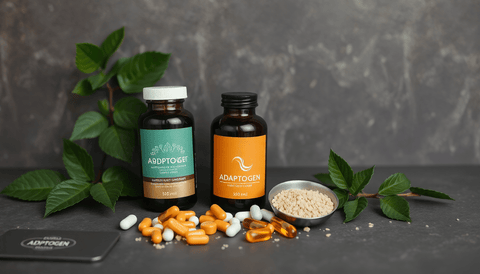
Natural adaptogens are a group of herbs and mushrooms traditionally used to help the body cope with physical and psychological stress, and interest in them has grown rapidly among people looking for sustainable energy and calmer days. In this guide, you will learn what natural adaptogens are, how they are thought to interact with the stress response, what the evidence says about popular options like ashwagandha, rhodiola and ginseng, and how adaptogens differ from stimulants such as caffeine. We also cover diet and lifestyle foundations, how to evaluate supplement quality, safety considerations, and how to decide whether an adaptogen is worth trying at all.
What Are Natural Adaptogens and How Do They Work?
A Simple Definition of Adaptogens
Adaptogens are naturally occurring substances, usually derived from plants or fungi, that are defined by three characteristics: they are generally non-specific in their action, they help the body counteract or normalize stress, and they tend to have a normalizing effect rather than pushing the body in one direction. In practical terms, an adaptogen is intended to support the body's own regulation of stress rather than forcing a particular outcome. It is worth noting that "adaptogen" is a functional and traditional category, not a strict pharmacological classification, and the strength of scientific evidence varies considerably between individual herbs.
The Historical Roots of Adaptogenic Herbs
Many adaptogenic herbs have been used for centuries in traditional medicine systems. Ashwagandha has a long history in Ayurvedic practice, where it was traditionally used as a rejuvenating tonic. Rhodiola rosea was used in Siberian and Scandinavian folk medicine, particularly to cope with harsh climates and physical demands. Ginseng holds a central place in traditional Chinese medicine as an energy-restoring root. The modern scientific concept of the "adaptogen" was formulated in the mid-twentieth century by researchers studying these traditional tonics, giving old practices a contemporary research framework.
How Adaptogens Interact with the Body's Stress Response
When you experience stress, the body activates the hypothalamic-pituitary-adrenal (HPA) axis, which triggers the release of hormones such as cortisol and adrenaline. This response is healthy in short bursts, but chronic activation is associated with fatigue, disturbed sleep and reduced resilience. Adaptogens are thought to interact with this axis, potentially moderating the hormonal stress response. Some clinical research, particularly on ashwagandha, has observed reductions in perceived stress and, in several trials, modest reductions in cortisol levels. However, mechanisms are not fully mapped, study quality varies, and effects are generally described as supportive rather than therapeutic.
The Difference Between Adaptogens and Regular Stimulants
Why Adaptogens Are Not Caffeine
Caffeine works by blocking adenosine receptors in the brain, which temporarily masks the sensation of tiredness and increases alertness. Adaptogens do not work this way. They are not stimulants in the pharmacological sense and typically do not produce a noticeable "kick," jittery energy or a crash afterwards. Effects, where they occur, tend to build gradually over days to weeks of consistent use rather than within minutes.
Stress Modulation vs. Forced Stimulation
The conceptual difference matters for expectations. Stimulants force the body to mobilize energy reserves, regardless of whether those reserves are depleted. Adaptogens, by contrast, are intended to help the body modulate its response to demand — supporting a calmer stress reaction and more stable energy over time. If your fatigue is primarily caused by insufficient sleep, poor nutrition or chronic overexertion, an adaptogen cannot compensate for the underlying deficit; it may at best provide modest additional support alongside genuine recovery habits.
Key Health Benefits Linked to Natural Adaptogens
Supporting the Body's Resilience to Stress
The most consistently studied area for adaptogens is stress perception. Randomized trials on ashwagandha root extract have reported reductions in self-reported stress and anxiety scores compared with placebo. Rhodiola has been studied for burnout-related symptoms and fatigue associated with stressful periods. These findings suggest a potential role in supporting resilience, but results are not uniform, sample sizes are often small, and individual responses differ noticeably.
Potential Effects on Energy and Fatigue
Several adaptogens have been investigated for fatigue. Rhodiola rosea in particular has been examined for physical and mental fatigue in people under demanding conditions, with some trials showing improvements in fatigue ratings. Ginseng has been studied for vitality and physical performance. The effects reported in studies are typically gradual and moderate — a shift toward feeling less depleted rather than a dramatic increase in energy. Claims of instant, powerful energy boosts are not supported by the evidence.
Adaptogens and Mental Focus
Because chronic stress can impair concentration, some of the cognitive effects attributed to adaptogens may reflect better stress regulation rather than direct cognitive enhancement. Rhodiola and ginseng have both been studied for mental performance during demanding tasks, and lion's mane mushroom has attracted research interest for potential cognitive support, though much of that research is still preliminary or conducted in specific populations.
Common Causes of Stress and Low Energy
Modern Lifestyle Pressures and Burnout
Persistent workloads, digital overstimulation, long commutes and constant availability create a form of low-grade chronic stress that many people barely notice until exhaustion sets in. Chronic stress keeps the HPA axis activated for extended periods, which is associated with disturbed sleep, irritability and reduced recovery capacity. Identifying these pressures honestly is the first step before considering any supplement.
Sleep Deprivation and Its Impact on Energy
Poor or insufficient sleep is one of the most common and most overlooked drivers of low energy and reduced stress tolerance. Even modest sleep restriction affects mood, concentration and appetite regulation. No adaptogen can substitute for restorative sleep; if sleep is the weak link, addressing it will usually yield more benefit than any herbal product.
Nutritional Gaps That Affect Stress Tolerance
Nutritional status influences how well the body copes with demand. Magnesium plays a role in nervous system function and is involved in hundreds of enzymatic processes; low intake may contribute to fatigue in some individuals. B vitamins support energy-yielding metabolism, and iron status strongly influences fatigue, particularly in menstruating women. For an overview of these foundational nutrients, see our guides on magnesium and B vitamins. Addressing genuine nutrient gaps often matters more for energy than adding adaptogens.
Why One Adaptogen Does Not Fit All
Individual Response and Body Type
People respond differently to the same adaptogen, both in effect and tolerability. Some individuals report feeling calmer with ashwagandha, while others notice little change; some find rhodiola mildly stimulating, which can be welcome in the morning but unhelpful late in the day. Traditional systems often matched herbs to individual constitution, and while that framing is not a modern scientific construct, the underlying observation — that responses vary — is well supported by clinical experience.
The Role of Lifestyle in Adaptogen Effectiveness
An adaptogen used on top of chronic sleep deprivation, irregular meals and no recovery time is unlikely to produce meaningful change. Conversely, when the basics are reasonably in place, modest additional support may become noticeable. The most sensible way to view adaptogens is as a potential supplement to — not a substitute for — a lifestyle that already supports stress regulation.
Interactions with Health Status and Medication
Health status matters. Thyroid conditions, autoimmune disorders, pregnancy and certain medications can all influence whether an adaptogen is appropriate. Ashwagandha, for example, may influence thyroid hormone levels, which is a real consideration for anyone with thyroid conditions or on thyroid medication. Anyone taking prescription medication or managing a medical condition should consult a healthcare professional before starting adaptogens.
Diet and Lifestyle: The Foundation for Stress Management
Core Nutrients That Support Adrenal Health
Although "adrenal fatigue" is not a recognized medical diagnosis, the nutrients involved in stress physiology are well established. Magnesium, B vitamins, vitamin C and adequate iron and zinc all contribute to normal energy metabolism and nervous system function. A varied whole-food diet usually covers these needs, but restricted diets, high stress and heavy alcohol use can increase the risk of shortfalls.
Everyday Habits That Moderate Stress Levels
Regular physical activity, consistent sleep and wake times, daylight exposure, brief breathing or relaxation practices and limiting late-evening caffeine and alcohol all measurably influence stress physiology. None of these requires a purchase, and their combined effect typically exceeds anything a supplement can offer on its own.
Dietary Patterns to Prioritize Before Supplementation
Steady blood glucose supports stable energy and mood. Eating regular meals with sufficient protein, fiber and healthy fats, and avoiding long gaps punctuated by sugar-heavy snacks, helps prevent the energy dips that are often mistaken for a need for stimulants. Hydration, limiting ultra-processed foods and ensuring adequate intake of vegetables, legumes and whole grains round out a baseline that any adaptogen should be built upon.
The Most Popular Natural Adaptogens
Ashwagandha and Cortisol Regulation
Ashwagandha (Withania somnifera) is among the most researched adaptogens. Several randomized, placebo-controlled trials have reported reductions in perceived stress and modest cortisol reductions with standardized root extracts. It is generally associated with a calming rather than stimulating profile. Our overview of ashwagandha supplements covers form and extract considerations in more detail.
Rhodiola Rosea for Physical and Mental Fatigue
Rhodiola is commonly studied for stress-related fatigue and mental performance under demand. Trials have examined standardized extracts (often containing the markers rosavin and salidroside) in people experiencing burnout-type exhaustion, with some showing improvements in fatigue and concentration scores. Its slightly activating character makes it more suitable for daytime use.
Holy Basil for Calm Alertness
Holy basil (Ocimum sanctum or tulsi) has a long history in Ayurveda as a daily tonic for balance. Human research is more limited than for ashwagandha or rhodiola, but traditional use and early studies suggest a gentle, calming profile, often consumed as a tea as well as in extract form.
Ginseng and Sustained Energy
Asian ginseng (Panax ginseng) and American ginseng have been studied for vitality, physical performance and, in some research, immune-related outcomes. Ginseng tends toward a mildly invigorating profile and has a long tradition of use for recovery during periods of exhaustion. Quality and ginsenoside content vary widely between products.
Lion's Mane for Cognitive Support
Lion's mane (Hericium erinaceus) is a medicinal mushroom studied primarily for potential nerve growth factor-related and cognitive effects. Much of the research is early-stage or in specific clinical populations, so claims should be interpreted cautiously. It is typically chosen for cognitive support rather than stress or energy.
When Is Supplementation with Adaptogens Worth Considering?
Signs Your Stress Management Needs Additional Support
Persistently feeling wired and tired, difficulty unwinding in the evenings, reduced resilience to everyday setbacks and ongoing fatigue despite adequate sleep may indicate that your current stress-management approach is not sufficient. These experiences do not diagnose anything on their own, but they can be a reasonable prompt to review your lifestyle and, if the basics are already in place, consider modest additional support.
Periods of High Demand or Recovery
Adaptogens are most plausibly relevant during temporary periods of high workload, intense training, exam preparation or recovery after illness — situations where demand temporarily exceeds your usual capacity. They are not designed for indefinite, indiscriminate use, and taking a break or cycling usage is a common, sensible practice.
Why Adaptogens Are Not a Replacement for Sleep or Nutrition
No adaptogen can compensate for chronic sleep debt, an inadequate diet or untreated health conditions. If your energy problems stem from these causes, correcting them will always be the higher-value intervention. Supplementation is a supporting tool, not a foundation.
How to Choose a High-Quality Adaptogen Supplement
Standardized Extracts vs. Raw Herb Powders
Most clinical research has used standardized extracts — concentrates with a guaranteed content of active marker compounds — rather than raw powdered herb. Standardization means the dose of active constituents is consistent from capsule to capsule. Raw powders may be less expensive, but their active content is unverified and typically much lower per dose.
Comparing Single-Ingredient vs. Adaptogen Blend Formulas
Single-ingredient products make it easier to identify what works for you and to assess the research behind a specific extract. Blend formulas may offer convenience and synergy as marketed, but they often contain multiple herbs at doses too low to match what research has examined, and they make it harder to trace effects or side effects to a specific ingredient.
Understanding Capsules, Tinctures and Powders
Capsules offer precise, convenient dosing and a standardized extract. Tinctures (liquid extracts) allow flexible dosing and are absorbed without needing to dissolve a capsule, though alcohol-based versions are not suitable for everyone. Powders can be mixed into drinks and suit higher doses, but taste and measuring accuracy can be drawbacks. Choose the format you will actually use consistently.
How to Read an Adaptogen Supplement Label
Interpreting Ingredient Names and Plant Parts
Quality labels specify the botanical name (for example, Withania somnifera), the plant part used (root, leaf or both) and the extract form. For ashwagandha, research has primarily involved the root, so a root-specified product generally aligns better with the evidence base than an unspecified "herbal blend."
Decoding Extract Ratios and Withanolide Content
Extracts are often labeled with a ratio (such as 10:1, meaning ten parts herb concentrated to one part extract) and sometimes with standardized marker content, such as the percentage of withanolides in ashwagandha. These figures let you compare potency meaningfully between products. A well-known example in research is a standardized root extract providing around 5% withanolides; products that do not specify standardization leave you guessing about active content.
Spotting Red Flags in Product Formulations
Red flags include proprietary blends that hide individual doses, missing botanical names or plant parts, no extract standardization, unrealistically cheap pricing for concentrated extracts, and exaggerated health claims such as "cures anxiety" or "reverses burnout." Reputable manufacturers generally list doses, standardizations and are transparent about sourcing and testing.
Who May Benefit Most from Natural Adaptogens
High-Performers and Demanding Schedules
People in temporarily demanding phases — intense work periods, competitive sports, academic pressure — represent the group where adaptogens have the most plausible supportive role, provided their sleep and nutrition are already reasonably managed.
Individuals with Recurring Stress-Related Fatigue
Those who repeatedly experience stress-related fatigue despite adequate sleep and diet may find it reasonable to trial a well-standardized adaptogen for several weeks while monitoring effects. Persistent or worsening fatigue, however, warrants medical assessment rather than self-supplementation.
When to Consider Professional Guidance and Testing
Fatigue and stress symptoms have many possible causes, including thyroid dysfunction, anemia, sleep apnea, depression and medication side effects. Blood tests and clinical evaluation can identify or rule out these causes — information that no symptom self-assessment can provide. For a broader overview of herbal options and their safety considerations, see our herbal supplements guide.
Safety, Side Effects and Interactions of Adaptogens
General Safety Profile of Common Adaptogens
Commonly studied adaptogens such as ashwagandha, rhodiola and ginseng appear generally well tolerated at typical supplement doses in healthy adults, with mild gastrointestinal upset or drowsiness occasionally reported. Long-term safety data are more limited than many consumers assume, which is another argument for moderate, purposeful use rather than indefinite high-dose consumption.
Potential Interactions with Medications
Adaptogens can interact with medications. Ashwagandha may affect thyroid hormone levels and sedative medications; ginseng may interact with anticoagulants such as warfarin and with blood-glucose-lowering drugs; rhodiola may interact with certain antidepressants in theory. Anyone on prescription medication should check with a pharmacist or physician before adding adaptogens.
Who Should Avoid or Minimize Adaptogen Use
Pregnancy and breastfeeding are common exclusion periods for most adaptogens due to insufficient safety data. People with autoimmune conditions, thyroid disorders, hormone-sensitive conditions, or those scheduled for surgery should exercise particular caution. Children should not use adaptogens without professional guidance.
Making an Informed Decision About Adaptogens
Food and Lifestyle First: When That Is Sufficient
If your stress and energy improve after fixing sleep, meals, movement and recovery time, no supplement was needed — and that is a perfectly good outcome. Diet and lifestyle interventions are the highest-value tools for stress management, and adaptogens only make sense layered on top of a reasonable foundation.
Factors That Should Guide Your Supplement Choice
When you do choose a supplement, let the research behind the specific standardized extract, the dose actually studied, product transparency and third-party quality testing guide you — not marketing language. Match the herb to your goal: calming profiles like ashwagandha for stress, more activating profiles like rhodiola or ginseng for fatigue during demanding periods.
When Consulting a Healthcare Professional Makes Sense
Seek professional advice if fatigue is persistent or severe, if you take prescription medication, if you are pregnant or managing a chronic condition, or if symptoms significantly affect your daily life. A healthcare provider can order appropriate testing and help you determine whether an adaptogen is a sensible addition or whether something else deserves attention first.
Conclusion: A Balanced Approach to Using Natural Adaptogens
Natural adaptogens occupy a genuinely interesting middle ground between nutrition and traditional herbal practice, and the best-researched options — ashwagandha and rhodiola in particular — show modest but credible evidence for supporting the body's response to stress. They are not stimulants, not miracle cures and not substitutes for sleep, nutrition or medical care where those are needed. The most effective approach is a balanced one: build a foundation of restorative sleep, nourishing food and regular movement; address any genuine nutrient gaps; and only then consider a well-standardized, transparently labeled adaptogen suited to your goal. Individual responses vary, so start conservatively, monitor effects over several weeks, and involve a healthcare professional whenever medication, health conditions or persistent symptoms are part of the picture.
Key Takeaways
- Adaptogens are herbs and mushrooms traditionally used to support the body's resilience to stress, with ashwagandha and rhodiola having the strongest human research base.
- Adaptogens are not stimulants: effects are gradual and modulating, unlike caffeine's immediate boost and crash.
- Chronic stress involves the HPA axis and cortisol; some adaptogens have been shown in trials to modestly reduce perceived stress and cortisol.
- Sleep deprivation, poor nutrition and chronic workload are more common causes of low energy than any "deficiency" an adaptogen can fix.
- Magnesium, B vitamins and iron status all influence energy and stress tolerance, and should be addressed before or alongside herbal supplementation.
- Standardized extracts with verified marker content (e.g., withanolides for ashwagandha) align better with research than raw powders or undisclosed proprietary blends.
- Responses vary individually; what helps one person may do little for another, and cycling use during high-demand periods is a sensible approach.
- Adaptogens can interact with medications, including thyroid drugs, anticoagulants and sedatives, and are generally not recommended during pregnancy or breastfeeding.
- Persistent fatigue or severe stress symptoms warrant professional assessment and testing rather than self-supplementation.
Frequently Asked Questions
What are natural adaptogens?
Natural adaptogens are plant- or mushroom-derived substances traditionally used to help the body adapt to physical and psychological stress. They are characterized by non-specific, normalizing effects rather than a single directional action. Ashwagandha, rhodiola, holy basil, ginseng and lion's mane are among the best-known examples.
Do adaptogens really work?
Some adaptogens have credible human research behind them — ashwagandha trials have shown reductions in perceived stress, and rhodiola has been studied for fatigue. However, study sizes are often small and quality varies, so effects should be viewed as modest support rather than guaranteed outcomes. Individual response varies considerably.
How long does it take for adaptogens to work?
Unlike caffeine, adaptogens typically do not produce immediate effects. Most trials run for several weeks to a few months, and noticeable changes — if any — usually emerge over two to eight weeks of consistent use.
Are adaptogens better than caffeine for energy?
They work differently rather than strictly better. Caffeine provides fast, short-lived alertness by blocking adenosine, while adaptogens aim to support stress regulation and steadier energy over time. Some people combine them strategically, while others prefer to reduce caffeine dependence with lifestyle changes plus adaptogens.
Can you take adaptogens every day?
Many people take common adaptogens daily for limited periods, and short-term use in trials has been generally well tolerated. Long-term high-dose safety data are limited, so many practitioners recommend moderate dosing, periodic breaks, and professional input for extended use.
Which adaptogen is best for stress and anxiety?
Ashwagandha has the most consistent clinical evidence for reducing perceived stress, with several randomized trials supporting standardized root extracts. Holy basil is traditionally used for a calming effect but has less human research. Choosing a standardized extract matters more than the herb's popularity.
Do adaptogens lower cortisol?
Several ashwagandha trials have reported modest reductions in cortisol levels compared with placebo, suggesting a possible effect on stress hormone output. Findings are not uniform across all adaptogens, and cortisol changes do not automatically translate into large subjective improvements for everyone.
What are the side effects of adaptogens?
Mild digestive upset, drowsiness or mild stimulation (depending on the herb) are the most commonly reported effects. More significant concerns relate to interactions — for example, ashwagandha's effect on thyroid hormones or ginseng's interaction with blood thinners. Discontinue use if unusual symptoms appear.
Can I take multiple adaptogens together?
Combining adaptogens is common in traditional practice and in blend products, but combinations reduce your ability to identify which ingredient causes benefits or side effects, and blends often contain under-dosed amounts. Starting with one well-standardized single-ingredient product is usually the more informative approach.
Who should not take ashwagandha?
Ashwagandha is generally not recommended during pregnancy or breastfeeding, and caution is advised with thyroid disorders, autoimmune conditions and hormone-sensitive conditions because of possible hormonal and immune effects. Anyone taking thyroid, sedative or immunosuppressant medications should consult a doctor first.
Do I need a test before taking adaptogens?
Testing is not required to try an adaptogen, but persistent fatigue, significant stress symptoms or suspected thyroid problems deserve proper medical evaluation first. Blood tests can identify causes such as anemia or thyroid dysfunction that supplements cannot fix — and might misdirect you for months.
Are adaptogens safe with antidepressants?
Some adaptogens, particularly rhodiola, may theoretically interact with certain antidepressants, and ashwagandha can have sedative effects. If you take antidepressants or any psychiatric medication, discuss adaptogen use with your prescribing clinician before combining them.
Related Keywords
- natural adaptogens
- adaptogenic herbs
- adaptogens for stress relief
- ashwagandha for cortisol
- rhodiola rosea fatigue
- best adaptogens for energy
- adaptogens vs caffeine
- holy basil benefits
- panax ginseng supplement
- lion's mane cognitive support
- adaptogen supplement dosage
- standardized herbal extracts
- herbs for stress and burnout
- natural stress management
- adaptogen side effects