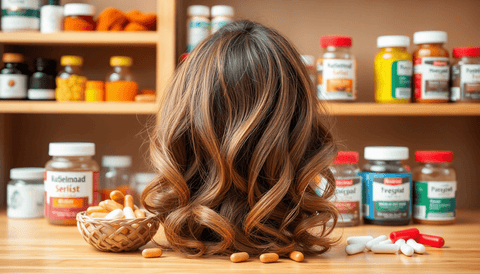
Unlock Fuller, Healthier Hair: Top Natural Hair Growth Vitamins That Really Work
Unlocking the Power of Natural Hair Growth Vitamins
Natural hair growth vitamins play a crucial role in maintaining and enhancing hair health. This comprehensive guide delves into the essential vitamins and nutrients that support hair growth, such as amino acids, vitamin D, zinc, and omega-3 fatty acids. Understanding the hair growth cycle—anagen, catagen, and telogen—helps to explain how various factors like diet, stress, and hormonal changes can affect hair vitality.
Key Nutrients for Healthy Hair
Core nutrients, including vitamins A, C, and several B vitamins, are essential for promoting hair health and vitality. A lack of these nutrients can lead to excessive shedding and dullness, indicating possible nutrient gaps. Recognizing these signs is crucial for taking appropriate action.
The Importance of a Holistic Approach
It's vital to remember that effective hair health results from a complex interplay of nutrition, hormonal balance, and overall lifestyle. Merely relying on a “miracle vitamin” often misguides individuals looking for solutions. Instead, adopting a well-rounded approach, focusing on viable supplements, such as multivitamins, can create lasting change.
Conclusion: Your Path to Fuller Hair
To nurture your hair health effectively, consider integrating high-quality natural hair growth vitamins into your routine. Regular assessments, combined with a balanced diet, can empower you to achieve vibrant, healthy locks.
Unlock the secret to fuller, healthier hair with the power of natural hair growth vitamins. In this comprehensive guide, you will learn about the essential vitamins and nutrients that support hair health, the science behind hair growth, and how to choose the best supplements for your needs. Understanding how these natural hair growth vitamins can enhance your hair can empower you to take control of your hair health and make informed decisions for vibrant, thriving locks.
Introduction: natural hair growth vitamins — a structured path from information to action
What readers will learn about natural hair growth vitamins and why they matter
This article will explore the key nutrients associated with hair growth, the biological mechanisms at play, and how dietary choices can influence the health of your hair. Additionally, you will discover practical tips for choosing effective hair growth vitamins and how they fit into a holistic approach to hair care.
Setting expectations: information, uncertainty, and the move toward nutraceutical decisions
While some natural hair growth vitamins show promising results, it’s important to recognize that individual responses can vary widely. This article aims to provide a balanced view of the science behind nutritional supplementation and hair growth, helping you navigate through the uncertainties involved.
How this article will guide you toward thoughtful supplement choices on Topvitamine.com
As you read, you will receive evidence-based information that enables you to make informed decisions when selecting hair health supplements on Topvitamine.com. Your journey toward thicker, healthier hair starts with understanding what works and why.
Core explanation of the topic: how vitamins and nutrients relate to hair biology
How hair grows: the hair growth cycle (anagen, catagen, telogen) and what can disrupt it
Understanding hair growth begins with the hair growth cycle, which consists of three phases: anagen (growth), catagen (transitional), and telogen (resting). Growth can be disrupted by factors such as nutritional deficiencies, stress, and hormonal changes, leading to conditions such as hair thinning and excess shedding.
Key nutrients that support hair follicles: proteins, minerals, vitamins, and essential fatty acids
Essential nutrients, including amino acids (building blocks of proteins), vitamins (such as A, C, D, E, and several B vitamins), minerals (like zinc and iron), and omega-3 fatty acids, play critical roles in supporting hair follicles and ensuring optimal growth. A comprehensive diet rich in these nutrients is vital for hair vitality.
Distinguishing cosmetic hair conditioning from structural hair growth and density improvements
While cosmetic products can enhance the appearance of hair, vitamins for hair growth work at a deeper level to promote structural improvements in hair density and health. Understanding this distinction is key when seeking long-term benefits.
Common misconceptions about “one miracle vitamin” for all hair issues
There is often a misconception that a single vitamin can resolve all hair issues. In reality, hair health results from a complex interplay of many nutrients and overall lifestyle factors. A holistic approach is necessary for meaningful improvements.
Why this topic matters: the broader context of hair health and nutrition
Prevalence of visible hair thinning and how diet and stress influence it
Hair thinning is a common concern affecting many individuals due to various factors, including diet and stress levels. Poor nutrition can compromise hair health, while chronic stress can disrupt the hair growth cycle, leading to increased shedding.
The rise of nutrient gaps in modern diets and lifestyle factors (aging, dieting, medical conditions)
Dietary shifts, often toward processed foods, have resulted in nutrient gaps that may detrimentally affect hair growth. Additionally, factors such as aging and certain medical conditions can exacerbate these gaps, underlining the importance of monitoring nutritional intake.
Long-term health signals connected to hair health (skin, nails, energy levels)
Hair health can be indicative of overall well-being. Issues such as brittle nails or lack of energy may signal underlying nutritional deficiencies that could also affect hair growth. Being attentive to these signs is crucial for maintaining holistic health.
Related symptoms, signals, or health implications
Common signs that may hint at nutrient gaps (excess shedding, dull or brittle hair, sparse volume)
Excessive hair shedding, dullness, and lack of volume can indicate nutrient deficiencies. Recognizing these signs can prompt individuals to explore their dietary habits and consider supplementation.
Related health indicators to watch (anemia symptoms, thyroid concerns, hormonal shifts)
Symptoms such as fatigue or changes in body weight may hint at conditions like anemia or thyroid imbalances that influence hair health. It’s essential to address these broader health issues alongside hair concerns.
When symptoms may reflect non-nutritional causes (scalp conditions, autoimmune factors, medication effects)
It’s important to remember that not all hair issues stem from nutritional deficiencies. Scalp conditions, autoimmune disorders, and side effects from medications can also impact hair health, warranting a thorough examination of potential underlying causes.
Individual variability and uncertainty
Genetic, gender, age, and lifestyle factors that influence response to vitamins
Individual responses to hair growth vitamins can vary significantly due to genetic factors, gender, age, and lifestyle choices. This variability underscores the necessity of personalized approaches to hair health.
Why responses to hair growth vitamins vary: baseline status, absorption, and adherence
Factors such as pre-existing nutrient levels, absorption efficiency, and regularity in taking supplements can greatly influence the effectiveness of hair growth vitamins. It is important to assess these personal factors when considering supplementation.
What the science does and does not show about efficacy, and why results are not uniform
Scientific studies on hair growth vitamins yield mixed results; some nutrients have substantial support for efficacy, while others show minimal impact. Understanding the existing evidence can clarify expectations and guide better choices.
The role of supplement quality, dosing, and product form in real-world results
The quality of supplements, along with proper dosing and the form of the vitamins (liquid, capsule, etc.), can significantly affect their effectiveness. Selecting high-quality products is essential for achieving desired outcomes.
Why symptoms alone do not reveal root cause
Hair health is multi-factorial: nutrition, hormones, stress, sleep, scalp health
Hair health is influenced by various factors, including nutrition, hormonal balance, psychological well-being, sleep patterns, and scalp health. A comprehensive approach is necessary to understand and address hair issues effectively.
The risk of misattributing hair changes to a single vitamin or supplement
Attributing hair changes to a single nutrient can lead to misguided treatment strategies. A thorough exploration of multiple factors is vital for identifying the root causes of hair concerns.
The value of a holistic assessment: basic labs, clinician input, and lifestyle review
Engaging with a healthcare professional to perform basic lab tests and conducting lifestyle assessments can provide valuable insights into potential deficiencies and health concerns, allowing for more targeted interventions.
The role of nutritional supplements in this topic
What supplements can reliably achieve for hair health (supportive, not curative)
Nutritional supplements for hair health primarily offer supportive roles rather than acting as curatives. They can help fill dietary gaps, particularly in cases of deficiency but should be integrated into a broader wellness strategy.
The difference between essential micronutrients and non-essential cosmetic supplements
Essential micronutrients, like vitamins and minerals, are necessary for biological functions, whereas non-essential supplements may offer superficial benefits. Understanding this distinction can aid in making informed choices.
Evidence highlights and caveats for popular nutrients (biotin, iron, zinc, vitamin D, omega-3s, B vitamins)
Biotin is commonly linked to hair health, but the evidence for its efficacy lacks consensus. Iron and zinc are essential for overall growth, while vitamin D and omega-3s may support scalp health. B vitamins play roles in cellular metabolism. It’s essential to consider the quality of supporting evidence when selecting supplements.
Safety, quality, and standard considerations when choosing a product
Choosing high-quality supplements involves evaluating their ingredient list, safety standards, and certification labels to ensure they meet safety requirements. Consideration of third-party testing can also enhance confidence in supplement quality.
How nutritional supplements could support hair health
Complementing a balanced diet and scalp care routine
A balanced diet rich in whole foods is vital, but nutritional supplements can be a helpful addition for those with dietary restrictions or gaps. When combined with a good scalp care routine, they can promote optimal hair health.
Scenarios where supplements may be especially beneficial (documented deficiency, dietary restrictions, medical conditions, post-partum, aging)
Supplements can particularly benefit individuals with documented deficiencies, specific dietary restrictions, conditions that impact nutrient absorption, or those in transitional life stages such as postpartum or aging.
Practical guidelines: dosing ranges, duration before evaluating results, and who should consider testing first
Proper dosing varies by nutrient and individual needs; typically, assessments can take several weeks to months before improvements are noticeable. Those experiencing significant hair concerns or other health indicators should consider seeking medical advice prior to starting supplements.
Realistic expectations: what kind of improvements are plausible and timelines to expect
Individuals may expect changes in hair density or volume within three to six months of consistent supplementation, but results will vary based on underlying factors and adherence to recommendations.
Potential risks and safety considerations (interactions, upper intake limits, contraindications)
It’s crucial to understand potential interactions with medications and safe upper limits for dosing. Consulting with a healthcare professional can mitigate risks and ensure safety when starting new supplements.
Decision-support section: when nutritional supplements make sense
A practical decision flow: questions to ask before starting a vitamin regimen
- What are my current dietary habits? Am I at risk for deficiencies?
- What health conditions should I consider that may influence hair health?
- Have I addressed other lifestyle factors, such as stress and sleep?
- What are the specific nutrients that are beneficial for hair growth?
When to pursue clinician guidance vs. self-directed supplementation
If significant symptoms are present or if there is uncertainty about health conditions, seeking clinician guidance is advisable. For general supplementation, well-researched vitamins may be approached individually.
How to monitor progress (shedding changes, density, strand visibility, energy levels)
Regularly tracking hair shedding, improvements in density, and overall energy can help assess the efficacy of supplements. Keeping a log of these changes can provide valuable insights.
Time horizons for evaluation (months rather than weeks) and when to reassess
Evaluation timelines should extend to several months to allow ample time for the body to respond to changes. After the designated period, consider reassessment based on observed changes and overall health status.
Practical guidance for choosing and using hair-growth vitamins
How to interpret product labels: ingredients, dosages, bioavailability, and third-party testing
When assessing product labels, pay attention to ingredient sources, dosages aligning with recommended daily allowances, and indications of third-party testing to ensure bioavailability and quality.
Form factors and consumer considerations (vegetarian/vegan, gluten-free, allergen labeling)
Choose based on personal dietary preferences and restrictions. Consider the availability of vegetarian, vegan, or allergen-free options to meet individual dietary needs.
How to balance multiple products (multivitamins vs. targeted supplements vs. specialty formulas)
Balancing between multivitamins, targeted supplements for hair, and specialty formulas should align with individual needs. Consulting a healthcare provider can help with developing a tailored approach.
Shelf life, storage, and adherence tips to maximize effectiveness
Adhering to recommended storage guidelines and being mindful of shelf life is crucial for maintaining potency. Setting reminders for daily intake can help maintain consistency.
Clear concluding section: connecting the topic to buying nutritional supplements on Topvitamine.com
Why Topvitamine.com as a source: curated options, quality signals, and product authenticity
Topvitamine.com offers carefully curated supplements known for quality and authenticity, making it a reliable source for your hair health journey. This guide has provided a roadmap to make informed choices.
How to choose a hair-growth vitamin on Topvitamine (filters for ingredients, certifications, dosage, vegan/organic options)
Use filters on Topvitamine.com to narrow down options based on ingredients, certifications, and dietary preferences. This ensures that you select products well-suited to your individual needs.
Suggested next steps: start with a signal-based approach (deficiency indicators, dietary gaps) and pair with scalp-care routines
Your hair health journey can begin by assessing your dietary gaps and recognizing any deficiency indicators. Coupling supplements with an effective scalp care routine will enhance your results.
How to evaluate results and continue learning with Topvitamine product pages and guides
Regularly assess changes in your hair and overall health. Utilize resources on Topvitamine.com for ongoing education about hair health and to find the best vitamins for hair growth tailored to your needs.
Optional (for SEO and reader value): FAQs and quick-reference
Do natural hair growth vitamins work for everyone?
No, natural hair growth vitamins may not be effective for everyone. Individual responses can vary based on genetics, existing health conditions, and nutrient absorption, among other factors.
Which vitamin is most strongly associated with hair health?
While many vitamins contribute to hair health, biotin and vitamin D are often highlighted for their roles in supporting hair growth and follicle health, though evidence for biotin’s efficacy is mixed.
How long should I try a supplement before judging effectiveness?
Generally, a minimum of three to six months is recommended to evaluate the effectiveness of hair growth supplements due to the nature of the hair growth cycle.
What signs indicate I should stop and see a clinician?
If you experience significant hair loss, changing health symptoms like fatigue, or visible changes in skin and nails, it is advisable to consult a clinician to rule out underlying health concerns.
Key Takeaways
- Natural hair growth vitamins can support hair health but are not a cure-all solution.
- Key nutrients for hair growth include proteins, vitamins, and essential fatty acids.
- Dietary gaps and lifestyle factors significantly impact hair health.
- Individual responses to supplements vary greatly based on unique biological factors.
- A holistic approach, considering multiple factors, is essential for effective hair health.
- Regular evaluation and adjustment based on observed changes are crucial for success.
- Choose high-quality supplements that align with personal health needs and lifestyle.
- Topvitamine.com provides a curated selection of trusted hair health vitamins.
Keywords
natural hair growth vitamins, vitamins for hair growth, hair growth nutrients, nutritional supplements for hair, best vitamins for hair growth, hair health supplements, hair health, nutrient deficiencies, holistic hair care, scalp health.