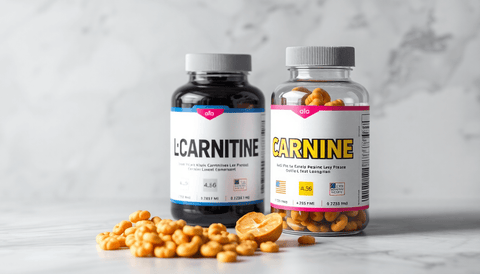
L-carnitine is a vitamin-like compound your body uses to turn fat into usable energy, and most people produce it internally while also obtaining small amounts from food. If you are searching for natural l-carnitine sources, you likely want to know which foods contain the most, how much you actually get from a typical diet, and whether that is enough for your needs. This article covers the best food sources, the factors that influence your carnitine status, the situations where dietary intake may fall short, and when a supplement might be worth considering.
What Is L-Carnitine and Why Does the Body Need It?
L-carnitine is a naturally occurring compound made from the amino acids lysine and methionine. Chemically, it is not a vitamin, mineral or amino acid in the classic sense, but it plays an essential role in metabolism. The body stores roughly 95% of its carnitine inside skeletal muscle, with the remainder found in the heart, liver and blood.
The Role of L-Carnitine in Energy Production
L-carnitine's best-understood function is transporting long-chain fatty acids into the mitochondria, the cellular structures where fat is burned for energy. Without adequate carnitine, this transport process is impaired, and cells cannot efficiently use fat as a fuel source. This is why carnitine is closely associated with energy metabolism, particularly in tissues with high energy demands such as skeletal and heart muscle.
How the Body Produces L-Carnitine Naturally
Most carnitine in the human body is not eaten; it is synthesized in the liver and kidneys from lysine and methionine, with vitamin C, iron, vitamin B6 and niacin acting as cofactors in the process. In healthy individuals, this internal production combined with dietary intake maintains stable muscle carnitine stores. This is why carnitine deficiency is rare in people eating mixed diets.
Natural L-Carnitine Sources: Where to Find It in Food
Food contributes roughly 25% of total body carnitine in people eating mixed diets, with the rest produced internally. Animal products are by far the richest dietary sources, because carnitine accumulates in animal muscle tissue. Plant foods contain only trace amounts.
Red Meat: The Most Concentrated Source
Red meat, particularly beef and lamb, contains the highest concentrations of any common food. A typical 100-gram (3.5-ounce) serving of beef provides roughly 50–80 mg of carnitine, while lamb can contain similar or slightly higher amounts. Ground beef generally offers somewhat less than lean cuts. For most people who eat red meat regularly, a single serving can meaningfully contribute to daily carnitine intake.
Poultry and Fish: Moderate but Valuable Sources
Poultry such as chicken and turkey contains noticeably less carnitine than beef—often in the range of 3–10 mg per 100 grams—yet still contributes meaningfully when eaten in standard portions. Fish is variable: cod and other lean white fish provide modest amounts, while some fattier species can contain more. For people who limit red meat, poultry and fish together form the backbone of dietary carnitine intake.
Dairy Products: Smaller Amounts, Easy to Add
Milk, cheese and yogurt contain relatively small amounts of carnitine, often in the range of 1–4 mg per 100 ml or 100 grams. Individually these amounts are modest, but because dairy is consumed frequently and in varied quantities throughout the day, regular intake can add up. Whole milk products tend to contain slightly more than skimmed versions.
Plant-Based Sources: What Vegetarians and Vegans Should Know
Plant foods such as vegetables, fruits, grains and legumes contain only trace amounts of carnitine, typically well under 1 mg per serving. Avocado, tempeh and whole wheat bread are sometimes cited as relatively better plant options, but the amounts remain small. This does not automatically make plant-based diets inadequate, since the body produces most of its own carnitine—but strict vegetarians and vegans do rely more heavily on internal synthesis.
How Much L-Carnitine Do You Get From Food?
Typical L-Carnitine Content of Common Foods
Approximate carnitine content per 100-gram serving looks like this:
- Beef: roughly 50–80 mg
- Lamb: roughly 50–80 mg
- Pork: roughly 15–25 mg
- Chicken: roughly 3–10 mg
- Fish (e.g., cod): roughly 4–7 mg
- Whole milk: roughly 2–3 mg per 100 ml
- Cheese: roughly 1–2 mg
- Plant foods: trace amounts, generally below 1 mg
For someone eating a mixed diet that includes red meat several times a week, daily dietary carnitine intake commonly falls in the range of 20–100 mg. Omnivores who avoid red meat typically consume closer to 10–30 mg per day.
Dietary Patterns That Maximize L-Carnitine Intake
A diet built around lean red meat a few times weekly, poultry or fish on other days, and regular dairy intake naturally provides the most dietary carnitine. Choosing cuts you enjoy and can sustain matters more than chasing single high-carnitine foods. Those reducing red meat for health or environmental reasons can still support carnitine status through poultry, fish and dairy, while relying on their body's own production to fill the gap.
Why Natural L-Carnitine Sources Matter for Energy
How Dietary L-Carnitine Supports Fatty Acid Metabolism
Fat is a major fuel source, especially during rest, prolonged exercise and fasting. Dietary carnitine helps maintain the body's carnitine pool, which in turn supports the transport of fatty acids into mitochondria. Research suggests that in people with adequate carnitine status, additional dietary carnitine does not automatically increase energy or performance—the system is already functioning efficiently. The benefit of food sources lies in maintaining normal status, not in exceeding it.
The Difference Between Dietary L-Carnitine and Supplementation
Food provides modest doses of carnitine alongside other nutrients, while supplements deliver doses ranging from roughly 500 mg to several grams—far beyond what any meal contains. Interestingly, absorption from food is considerably higher than from large supplemental doses: the body absorbs a large share of food carnitine, whereas a large single supplement dose may see only 14–20% absorbed, with the rest excreted. This means a beef dinner can contribute proportionally more usable carnitine than a much larger supplement dose.
Factors That Affect Your Body's L-Carnitine Status
Age and Natural Decline in Carnitine Production
Muscle carnitine content and the efficiency of internal synthesis can change with age. Some research suggests carnitine status may decline in older adults, potentially due to reduced intake of carnitine-rich foods, lower protein intake, or changes in kidney and liver function. This is one reason older adults with limited appetites or restricted diets sometimes receive individualized nutritional guidance.
Dietary Choices That Limit Intake
Long-term vegan or strict vegetarian diets, very low-protein diets, and certain restrictive eating patterns reduce dietary carnitine intake substantially. Additionally, inadequate intake of the precursor nutrients—lysine, methionine, vitamin C, iron and vitamin B6—may theoretically slow internal carnitine synthesis, although frank deficiency from this cause is uncommon in well-nourished people.
Absorption and Bioavailability of Food-Based L-Carnitine
Carnitine from food is absorbed efficiently through active transport in the intestine. At high supplemental doses, these transporters become saturated, which is why absorption efficiency drops sharply. Absorption also depends on kidney function, since the kidneys reabsorb carnitine and prevent its loss. Certain medications, notably some antibiotics, can interfere with carnitine metabolism or increase its excretion.
Who May Need More L-Carnitine Than Food Provides?
Vegetarians and Vegans: The Challenge of a Plant-Based Diet
Studies consistently show that vegetarians and vegans have lower plasma carnitine levels than omnivores, although their levels usually remain within normal ranges because internal production adapts. Muscle carnitine stores appear largely preserved. For most healthy plant-based eaters, food-based carnitine insufficiency is not a clinical problem, though it is the group most likely to consider a supplement if they want to raise intake.
Athletes and Active Individuals
Endurance athletes have high energy demands, and carnitine is central to fat oxidation. However, evidence indicates that standard muscle carnitine stores are usually adequate in well-fed athletes, and oral carnitine supplementation does not reliably increase muscle carnitine or improve performance unless taken over prolonged periods with insulin-elevating nutrients. Athletes should view carnitine as one piece of overall nutrition rather than a standalone performance lever.
Older Adults and Reduced Production
Older adults may have somewhat lower carnitine status due to reduced synthesis, lower food intake, or chronic illness. Ensuring adequate protein and including carnitine-containing foods like dairy, fish and poultry when possible is a sensible first step before considering supplements.
Conditions That Increase Nutritional Needs
People with genetic carnitine transport disorders, kidney disease requiring dialysis (which removes carnitine), certain metabolic conditions, or those using specific medications such as valproate may have genuinely increased carnitine needs that diet alone cannot meet. In these situations, supplementation is a medical matter and should be managed by a physician—these are clinical cases, not general wellness scenarios.
L-Carnitine Supplements: When They May Be Worth Considering
For most healthy omnivores, natural l-carnitine sources in food combined with internal production are fully sufficient. Supplementation becomes worth discussing when someone follows a long-term plant-based diet, has restricted dietary variety, is an older adult with low protein intake, or has a medical condition or medication affecting carnitine status—ideally with professional input first.
Comparing L-Carnitine Forms: L-Carnitine vs. Acetyl-L-Carnitine
Supplements come in several forms. Plain L-carnitine (often as L-carnitine L-tartrate) is most often used in sports and general metabolic contexts. Acetyl-L-carnitine (ALCAR) crosses the blood-brain barrier more readily and is commonly studied for cognitive applications. Propionyl-L-carnitine has been studied in circulation-related research. The evidence for meaningful differences in everyday energy among these forms is limited, and claims should be viewed cautiously.
Key Differences Between Food Intake and Supplement Doses
A typical supplement provides 500–2,000 mg daily, versus 20–100 mg from food. Because intestinal absorption saturates at high doses, only a fraction of a large supplement dose is actually absorbed. Larger doses are not necessarily better; they are simply different tools for different purposes, and food remains the most bioavailable source per milligram consumed.
How to Choose a Quality L-Carnitine Supplement
If you do decide to supplement, prioritize products that clearly state the chemical form (e.g., L-carnitine L-tartrate or acetyl-L-carnitine), the amount of active compound per serving, and any additional ingredients. Third-party testing, transparent labeling and reputable manufacturing practices are more meaningful than marketing claims. General guidance on evaluating products can be found in our multivitamins guide covering ingredients, usage and safety.
Reading L-Carnitine Labels: What to Look For
Check whether the label specifies the exact form and dose per serving rather than per capsule (some products require multiple capsules). Look for allergen information, vegan or vegetarian suitability where relevant, and the presence or absence of fillers. Products listing a standardized amount of active carnitine—rather than vague proprietary blends—make dosing easier to control.
Safety and Considerations for L-Carnitine Supplementation
Common Side Effects and Upper Limits
L-carnitine is generally well tolerated at common supplement doses. The most frequent side effects are gastrointestinal: nausea, stomach discomfort and, at higher doses, a characteristic fishy body odor caused by carnitine breakdown products. Long-term high-dose supplementation has also been associated with elevated plasma trimethylamine N-oxide (TMAO) in some research, though the clinical significance of this remains debated. No official upper intake level has been established, but doses above roughly 3,000 mg daily are more likely to cause side effects.
Who Should Exercise Caution or Seek Medical Advice
People with kidney disease, seizure disorders, thyroid conditions, or those taking thyroid medication or anticoagulants such as warfarin should consult a healthcare provider before supplementing. Pregnant and breastfeeding women should also seek professional guidance, as safety data at supplemental doses are limited. Anyone with a diagnosed carnitine metabolism disorder should follow their specialist's recommendations.
How to Decide: Food First or Supplement?
Questions to Ask Yourself About Your Diet and Lifestyle
- Do I eat red meat, poultry, fish or dairy regularly?
- Do I follow a vegan or strict vegetarian diet long-term?
- Am I an older adult with a limited appetite or low protein intake?
- Do I have a kidney condition, or take medications known to affect carnitine?
- Am I trying to solve a specific concern that a healthcare professional has actually assessed?
If your diet is varied and includes animal products, food almost certainly covers your needs. If you answer yes to several of the other questions, a conversation with a professional is a better starting point than a random supplement purchase.
When Professional Guidance May Be Useful
Blood carnitine testing exists and can be informative in clinical contexts, particularly for people on dialysis, with metabolic disorders, or on relevant medications. For the general population, routine carnitine testing is usually unnecessary. If you have persistent fatigue or unexplained symptoms, these warrant medical evaluation rather than self-treatment with carnitine, since fatigue has many possible causes unrelated to carnitine status.
Final Takeaway: Building a Balanced Approach to L-Carnitine
Natural l-carnitine sources are straightforward: red meat leads, poultry and fish provide moderate amounts, and dairy contributes small but steady quantities. Plant foods offer little, which is why the body's own synthesis does most of the heavy lifting—supported by adequate protein, vitamin C, iron and B vitamins. For most people eating a balanced diet, no special effort is needed. For those with restricted diets, advancing age, relevant medical conditions or specific medication use, the question of supplementation is worth discussing with a qualified professional rather than deciding on symptoms alone. Food first, individual assessment second, and supplements only where a genuine gap exists—that is the most reliable path to supporting your energy metabolism.
Frequently Asked Questions
What foods are the highest in natural L-carnitine?
Red meat, especially beef and lamb, is by far the richest source, providing roughly 50–80 mg per 100-gram serving. Pork contains moderate amounts, while chicken, fish and dairy provide smaller quantities. Plant foods contain only traces.
Can the body make its own L-carnitine?
Yes. The liver and kidneys synthesize the majority of the body's carnitine from the amino acids lysine and methionine, with vitamin C, iron, vitamin B6 and niacin as cofactors. Food typically supplies about a quarter of total body carnitine in people eating mixed diets.
Do vegans have L-carnitine deficiency?
Not usually. Vegans have lower blood carnitine levels than omnivores, but their bodies compensate by producing more internally and excreting less. Clinical carnitine deficiency in healthy vegans is rare, although they are the group most likely to have low dietary intake.
How much L-carnitine do you need per day?
There is no formal recommended daily allowance because the body produces most of its own. Typical dietary intake among omnivores ranges from roughly 20–100 mg daily, which is generally sufficient when combined with internal synthesis.
Is L-carnitine from food better than supplements?
Per milligram, food-based carnitine is absorbed more efficiently because high supplemental doses saturate intestinal transporters. For maintaining normal status, food is fully adequate for most people; supplements deliver much larger doses for specific situations rather than general superiority.
What is the difference between L-carnitine and acetyl-L-carnitine?
Plain L-carnitine is the form most associated with fatty acid transport and sports nutrition, while acetyl-L-carnitine crosses into the brain more readily and is studied mainly for cognitive applications. Evidence that one form clearly outperforms the other for everyday energy is limited.
When should I take an L-carnitine supplement?
If taken, carnitine supplements are often consumed with meals, as food may support absorption. Timing matters far less than whether supplementation is actually appropriate for your situation—which is best assessed based on diet, health status and professional advice.
Can L-carnitine supplements boost energy levels?
In people with adequate carnitine status, research does not show meaningful energy or performance gains from supplementation. Energy benefits are primarily seen in people with genuine carnitine depletion, such as dialysis patients or those with metabolic disorders, where it is used under medical supervision.
Are there side effects of too much L-carnitine?
Doses above roughly 3 grams daily are more likely to cause nausea, stomach upset and a fishy body odor. Long-term high-dose use has been associated with elevated TMAO levels in some studies, although the health implications are still being investigated.
Does L-carnitine interact with medications?
Carnitine may interact with thyroid hormone medication, the anticoagulant warfarin, and certain anticonvulsants such as valproate. Some antibiotics can also affect carnitine metabolism. Anyone on these medications should consult a healthcare provider before supplementing.
How long does it take to notice effects from L-carnitine supplementation?
There is no reliable timeline for healthy individuals, since effects are not clearly established in people with adequate status. In clinical settings where carnitine is prescribed for documented depletion, response is monitored by a physician rather than judged by subjective feelings.
Is it safe to take L-carnitine every day?
Daily use at common doses (500–2,000 mg) is generally well tolerated in healthy adults. However, long-term safety at high doses is less well studied, and people with kidney, thyroid or seizure conditions should seek medical advice before regular use.
Related Keywords
- natural l-carnitine sources
- foods high in l-carnitine
- l-carnitine rich foods
- l-carnitine in beef and red meat
- l-carnitine vegan sources
- l-carnitine deficiency symptoms
- l-carnitine for energy production
- l-carnitine vs acetyl-l-carnitine
- how much l-carnitine per day
- l-carnitine absorption and bioavailability
- l-carnitine supplement dosage
- l-carnitine side effects
- fatty acid metabolism and carnitine