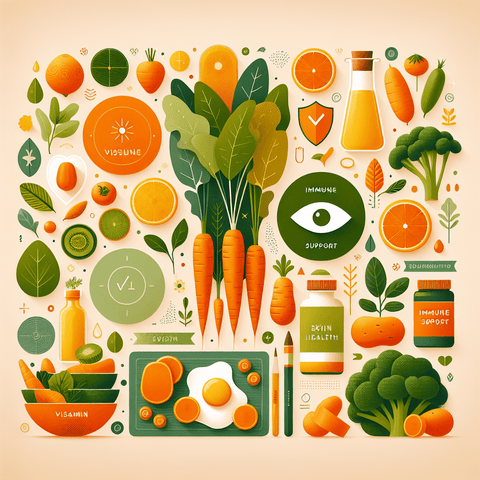
Natural vitamin A is a broad term for a group of fat-soluble compounds found in both animal and plant foods. These compounds are often grouped by their origin and structure, and they play a role in normal vision, immune function, and skin health. This page provides an overview of the main types of natural vitamin A, common food sources, how it fits into a balanced diet, and general points to consider when thinking about intake or supplements.
Because natural vitamin A comes from different sources and in different forms, it is helpful to separate the preformed vitamin A found in animal foods from the provitamin A carotenoids found in plant foods. Both can contribute to vitamin A nutrition, but they differ in how the body absorbs and uses them. The sections below introduce these differences and outline practical ways to include vitamin A-rich foods in everyday meals.
What Is Natural Vitamin A?
Natural vitamin A refers to a family of related compounds that occur naturally in foods. In animal foods, vitamin A is present mainly as preformed vitamin A, including retinol and related forms. These forms are sometimes described as already active because the body can use them relatively directly. In plant foods, vitamin A activity comes mainly from provitamin A carotenoids such as beta-carotene, which the body can convert into vitamin A to varying degrees.
The word natural is often used to distinguish these food-based forms from synthetic or isolated forms used in some supplements. However, natural vitamin A is not a single substance. It is a group of compounds with different chemical structures, different food sources, and different ways of being absorbed and converted in the body. This is why nutrition information often separates preformed vitamin A from provitamin A carotenoids rather than treating all vitamin A as one identical nutrient.
Preformed Vitamin A vs. Provitamin A Carotenoids
The two main categories of natural vitamin A differ in origin, structure, and how the body handles them. Understanding these differences can help you interpret food labels, nutrition articles, and supplement information more accurately.
Preformed Vitamin A
Preformed vitamin A is found in animal foods and includes retinol and related compounds. Because it is already in a form the body can use, it is sometimes described as more directly available than provitamin A carotenoids. Common animal sources include liver, oily fish, eggs, and dairy products. Intakes of preformed vitamin A that are very high over time can be a concern, which is one reason general guidance often emphasizes variety and moderation rather than large amounts of a single source.
Provitamin A Carotenoids
Provitamin A carotenoids are found in plant foods. Beta-carotene is the most well-known example, but other carotenoids also have provitamin A activity. The body can convert these compounds into vitamin A, though the conversion rate varies depending on the specific carotenoid, the food matrix, and individual factors. Plant sources include leafy greens, orange and yellow vegetables, and colorful fruits. Because conversion is variable, plant foods are often discussed as contributing to vitamin A intake in a more gradual and regulated way compared with preformed sources.
Natural Food Sources of Vitamin A
Natural vitamin A is present in a wide range of foods, both animal and plant-based. The list below gives an overview of common sources, but the amount and type of vitamin A activity can differ by food, variety, and preparation method.
Animal Sources
- Liver and other organ meats
- Oily fish such as salmon, mackerel, and tuna
- Eggs, particularly the yolk
- Dairy products such as milk, cheese, and butter
Plant Sources
- Leafy greens such as spinach, kale, and collard greens
- Orange vegetables such as carrots, sweet potatoes, and pumpkins
- Red and yellow fruits such as mangoes, apricots, and papayas
- Other colorful produce such as tomatoes, bell peppers, and squash
The vivid colors of many fruits and vegetables often reflect the presence of carotenoids, including provitamin A carotenoids. However, color alone is not a precise measure of vitamin A content. The specific variety, ripeness, and preparation method can all influence how much vitamin A activity a food provides.
How Natural Vitamin A Fits Into a Balanced Diet
Vitamin A is an essential nutrient, and a balanced diet typically includes a mix of animal and plant foods that provide it. Because preformed vitamin A and provitamin A carotenoids differ in how they are absorbed and converted, eating a variety of foods can help provide vitamin A in different forms. A diet that includes colorful vegetables, fruits, and appropriate portions of animal foods can contribute to vitamin A intake alongside other important nutrients.
General dietary guidance usually emphasizes overall eating patterns rather than focusing on single nutrients in isolation. For vitamin A specifically, this means that regularly including a range of vitamin A-rich foods is generally more practical than trying to rely on one food or one type of food. It also means that very high intakes from supplements or fortified foods are not automatically better and may sometimes be a concern.
If you are looking for general supplement options, you can explore our vitamin A benefits, sources and safety category for related products and information. For broader nutritional support, you may also consider our multivitamins guide.
Practical Ways to Include Natural Vitamin A in Meals
Adding natural vitamin A to meals can be simple and flexible. The ideas below focus on color, variety, and preparation methods that fit everyday cooking.
- Roast root vegetables such as carrots, sweet potatoes, and squash as a side dish.
- Mix leafy greens like spinach or kale into bowls, soups, or smoothies.
- Blend ripe fruit such as mango, apricot, or papaya into smoothies or yoghurt.
- Top dishes with shredded orange vegetables like carrots or bell peppers.
- Include eggs, dairy, or oily fish as part of balanced meals where appropriate.
Preparing ingredients in advance can help keep a variety of vitamin A-rich foods on hand during busy days. A grain bowl with roasted squash, a greens-and-vegetable bowl with a carrot topping, or a breakfast parfait with mango are simple examples of how colorful foods can be combined. Because cooking can affect the availability of some carotenoids, using a mix of raw and cooked preparations can also add variety.
Important Considerations and General Safety
Vitamin A is a nutrient that the body needs in appropriate amounts. Both low and high intakes can be a concern, so general information about vitamin A should not be taken as personalized advice. Recommended intakes and upper limits differ by age, sex, life stage, and other factors. If you are concerned about your vitamin A intake, deficiency risk, or supplement use, it is best to consult a qualified healthcare professional who can consider your individual situation.
Provitamin A carotenoids from plant foods are generally discussed differently from preformed vitamin A because the body regulates conversion to vitamin A. Very high intakes of preformed vitamin A over time can be a concern, particularly from supplements or certain animal foods. This is one reason why supplement use should be based on informed guidance rather than the assumption that more is better.
For general antioxidant-related topics, you can explore our antioxidants category. This page is intended for general information and does not replace medical advice.