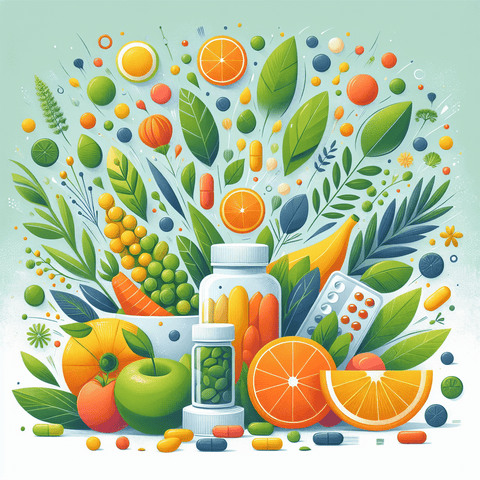
Natural vitamin options cover a broad range of choices, from everyday foods to plant-derived concentrates and supplements described as whole-food or naturally sourced. This page is a topical hub for understanding what those options mean, how they differ, and what to consider when comparing them. It is not a substitute for personalised medical advice, and individual needs vary. The aim here is to build a clear mental map of the topic so that more specific questions, such as which vitamins may be relevant for fatigue or how to compare supplements, can be explored in the associated articles.
What Are Natural Vitamin Options?
Natural vitamin options generally refer to vitamins obtained from foods or from ingredients that occur in nature, as opposed to vitamins produced synthetically. In practice, the term is broad and often used loosely. It may describe a dietary pattern rich in fruits, vegetables, legumes, nuts and seeds, or a supplement made with plant-derived ingredients, whole-food blends, or naturally sourced nutrients. Because labelling conventions differ, reading the ingredient and sourcing information is often more useful than relying on the word "natural" alone.
It is also worth clarifying that natural and synthetic vitamins can sometimes share similar chemical structures. The distinction is not always simple, and "natural" should not automatically be interpreted as safer, more effective or better suited to everyone. The most useful approach is to understand the form, the source, the overall formulation and how the product fits into a varied diet.
Why Natural Vitamin Sources Are Relevant
Vitamins are essential micronutrients that the body needs in small amounts. They contribute to normal physiological functions, and a varied diet is widely recognised as the preferred way to obtain them. Whole foods often provide vitamins alongside other nutrients, fibre and plant compounds. This broader nutritional context may be relevant when thinking about how a vitamin is delivered and used by the body.
People may explore natural vitamin options for different reasons. Some want to rely more on food sources, others are curious about plant-based or whole-food supplements, and some simply want to compare products more critically. Whatever the motivation, understanding the topic at a broad level helps readers ask better questions rather than following marketing claims.
The Main Natural Vitamin Sources
Natural vitamin sources can be grouped in several ways. The most familiar is food, but supplements also draw on plant, animal and mineral ingredients. The categories below provide a high-level overview.
- Whole foods such as fruits, vegetables, leafy greens, legumes, nuts, seeds, eggs, fish and dairy.
- Plant-derived concentrates, including extracts and powders made from fruits, vegetables, herbs or algae.
- Whole-food blends, which combine nutrients with food-based ingredients in a single formulation.
- Naturally sourced single nutrients, such as vitamin C from acerola or vitamin E from plant oils.
- Mineral-based complexes, where minerals occur in forms that may be described as naturally derived or chelated.
Each category has its own considerations. Food sources provide a broad nutritional package, while supplements offer convenience and standardisation. Understanding these differences helps readers compare options without assuming that one category is universally better.
Covering the Essential Vitamins
Natural vitamin options span the essential vitamins, each with its own typical food sources and forms. A brief map of these vitamins can help readers navigate the wider topic.
- Vitamin A: often associated with colourful vegetables, liver, eggs and dairy.
- B vitamins: found across whole grains, legumes, leafy greens, eggs, meat and fish.
- Vitamin C: widely present in fruits such as citrus, berries and kiwi, and in vegetables like peppers.
- Vitamin D: obtained partly from sunlight and from foods such as oily fish, eggs and fortified products.
- Vitamin E: found in nuts, seeds and plant oils.
- Vitamin K: present in leafy greens and some fermented foods.
This is a high-level overview rather than a detailed breakdown. Each vitamin has its own subtleties around forms, absorption and interactions, which are better explored in dedicated articles. If you want to go deeper into specific nutrients, you can browse our vitamin C category or our B vitamin collection for related topics.
Natural Sources Compared with Synthetic Supplements
A common question is how natural vitamin sources compare with synthetic supplements. The comparison is not always straightforward, because the chemical form, the dose and the overall product can matter more than the source label alone.
- Food sources provide vitamins within a broader nutritional matrix that includes fibre and other compounds.
- Plant-derived and whole-food supplements may aim to mirror that matrix, though formulations vary widely.
- Synthetic vitamins can offer precise dosing and consistency, and are widely used in fortified foods and supplements.
- Bioavailability, the proportion of a nutrient that is absorbed and available for use, can differ by form and by individual.
Rather than treating one option as universally superior, it is often more useful to consider the context. A varied diet remains the foundation, and supplements may play a supporting role depending on individual circumstances. Readers interested in broader product categories can explore our natural supplements collection for related options.
Bioavailability and Form Factors
Bioavailability describes how much of a nutrient is absorbed and available for the body to use. It is influenced by the form of the nutrient, the presence of other compounds, and individual factors. In the context of natural vitamin options, bioavailability is often mentioned in marketing, but it should be interpreted carefully.
Supplements may use various form factors, such as natural complexes, chelated minerals, or encapsulation techniques. These approaches can affect how a product behaves, but they do not guarantee a specific outcome. Comparing product details, such as the ingredient list, the stated form and any third-party testing information, is a practical way to make more informed choices.
Practical Considerations for Choosing Natural Vitamin Options
When comparing natural vitamin options, a few general considerations can help. These are not personalised recommendations, but they support more thoughtful decision-making.
- Read the label carefully, including the ingredient list, the source of the vitamin and any additional compounds.
- Look for transparent sourcing and clear disclosures about how the product is made.
- Check for independent certifications or third-party testing where available.
- Note storage and shelf-life recommendations, as these can affect product quality over time.
- Consider how the product fits into your daily routine and dietary pattern.
- Consult a healthcare professional if you have specific health concerns, take medication or are unsure about suitability.
These considerations are general and educational. They are not intended to replace personalised advice, and individual needs can vary considerably.
Safety, Regulation and Quality Signals
Natural vitamin options are subject to regulatory frameworks that vary by country. In many markets, supplements are regulated differently from medicines, and claims about benefits are restricted. This means that the word "natural" on a label does not automatically imply a health benefit or a guarantee of safety.
Quality signals can include clear labelling, a transparent manufacturing process, independent testing and responsible marketing that avoids unsubstantiated claims. Readers can also look for information from authoritative sources such as national health bodies or academic institutions. Being cautious and sceptical of exaggerated promises is a reasonable approach.
Exploring Natural Vitamin Options Further
This page provides a broad map of natural vitamin options, but it is not intended to answer every specific question. More detailed topics, such as vitamins that may be relevant for fatigue, alternatives to a multivitamin, or how to obtain vitamins naturally through diet, are better handled in dedicated articles. The tag page is designed to orient readers and connect them with those deeper resources.
If you are exploring the topic further, you may find it useful to review related categories such as multivitamins or specific nutrient guides. The goal is to support a thoughtful, label-to-product approach that respects both the potential and the limitations of natural vitamin options.