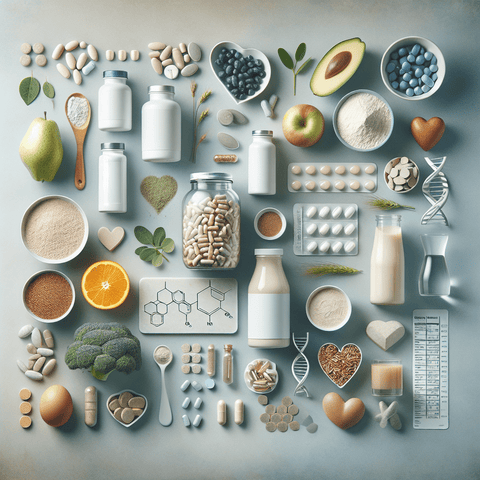
An optimal supplement routine is a personalized plan designed to fill specific nutritional gaps that your diet and lifestyle may leave open. It moves beyond the outdated idea that a generic pill can fix poor eating habits. Instead, it focuses on providing targeted support based on your individual biology, health status, and wellness goals. The goal is to build a combination of vitamins, minerals, and other bioactive compounds that works with your body to support energy, focus, and long-term health.
This guide explores the core elements of building an effective supplement routine. We will cover what it means to create a personalized stack, the foundational nutrients to consider, and the practical decisions involved in choosing and using supplements safely. You will also learn about the importance of diet, lifestyle, and professional guidance in making your routine work for you.
Understanding the Shift Toward Personalized Supplementation
Historically, the approach to supplements was often a one-size-fits-all multivitamin. However, our understanding of nutrition has evolved. We now recognize that nutrient needs are highly individual. The term "supplement stack," which originated in sports nutrition, has become mainstream because it acknowledges that different goals and lifestyles require different combinations of nutrients.
A thoughtful supplement routine acknowledges that while food should be your primary source of nutrients, modern life often creates predictable shortfalls. Factors such as dietary patterns, age, medication use, and stress levels can all increase your need for specific nutrients. The current, more scientific approach is to move away from guesswork and toward a more personalized, data-driven model.
Key Nutrients in a Daily Supplement Routine
While a diet should always come first, certain nutrients are consistently cited for general wellness support due to widespread dietary shortfalls. These foundational micronutrients often serve as a sensible starting point when building a routine.
Vitamins and Essential Minerals
Vitamins D and B12, along with minerals like magnesium and iodine, are common shortfalls in modern diets. For example, vitamin D is notoriously difficult to obtain from food alone, relying on sun exposure. Magnesium supports over 300 enzymatic reactions in the body, including energy production and muscle relaxation. The minerals family is vast, but magnesium and zinc often stand out for their roles in sleep and immune function.
Targeted Additions: Herbs and Probiotics
Beyond vitamins and minerals, you might consider probiotics for gut health or herbs like ashwagandha for stress adaptation. These additions can support the gut-brain axis, which influences mood and cognition. However, their efficacy is often more variable than micronutrients, and quality control becomes paramount when selecting these products.
Instead of trying to cover every possible nutrient, focus on your "human objective." Ask yourself, "What am I trying to achieve?" If the objective is better sleep, a specific form of magnesium may be more appropriate than a generic multivitamin. If the objective is heart health, omega-3s may be more relevant. Your routine should answer a specific question.
The Foundation: Diet and Lifestyle First
Before you open a supplement bottle, you must optimize your plate. Food is a symphony, while supplements are individual instruments. You need the whole orchestra for the best sound. Prioritize foods like leafy greens, colorful vegetables, berries, nuts, seeds, fatty fish, and lean meats. These provide not only vitamins and minerals but also fiber and antioxidants that are hard to replicate.
How you prepare food matters. Vitamin C enhances iron absorption from plant sources. Fat-soluble vitamins (A, D, E, K) require dietary fat for uptake. Cooking tomatoes increases lycopene bioavailability, while lightly cooking spinach reduces oxalate content, freeing up calcium and iron. Understanding these basics enhances your dietary intake without needing more pills.
Exercise increases the need for electrolytes and protein. Chronic stress depletes magnesium and B-vitamins. Sleep disturbances affect hormone regulation and appetite, making it harder to get nutrients from food. If you aren't managing these lifestyle pillars, your supplement stack will simply be a bandage on a deeper issue.
Determining if You Need Supplements
Adding nutrients blindly is risky. The safest approach is to test first, then target. Relying on symptoms alone is unreliable for diagnosing deficiencies. The only way to confirm a deficiency is through clinical blood testing. For example, you cannot guess your ferritin (iron storage) levels from how tired you feel. A blood test removes the guesswork and tells you exactly what is low.
Before adding supplements, consider whether your diet truly has gaps. Track your food intake for a week using an app. Check your intake of zinc, iron, magnesium, and vitamin D. If you are already hitting 100% of the RDA from food, a supplement is a no-op. If you are at 50%, a supplement makes sense.
Practical Considerations for Choosing Supplements
Once you decide to supplement, the form matters. A supplement is more than just the active ingredient; it is a delivery system.
Supplement Forms and Nutrient Types
Tablets are cheap and dense but may contain more binders. Capsules are generally easier to digest and often contain fewer filler ingredients. Powders are versatile for mixing into drinks but have a shorter shelf life once opened. Liquid drops are useful for precise dosing, particularly for vitamin D or B12 for those who have difficulty swallowing pills.
Nutrients come in various chemical forms. Magnesium oxide is cheap but poorly absorbed and often causes digestive upset. Magnesium citrate is better absorbed but has a laxative effect at high doses. Glycinate is gentler on the stomach and tends to be more calming. Some nutrients, like omega-3s, have a fishy taste; enteric coatings or citrus-flavored liquids can help mask this.
Reading Labels and Identifying Quality
Labels can be confusing, but they are your primary tool for comparison. The "% Daily Value" is based on a 2,000-calorie diet and may not reflect your specific requirement. More importantly, check the serving size—a label might say "500 mg" but require three pills per serving. Calculate the cost per actual effective dose, not just the price per bottle.
Chemical suffixes matter. Elemental magnesium vs. magnesium oxide. "Natural" vitamin E (d-alpha-tocopherol) is retained differently than synthetic (dl-alpha-tocopherol). Vitamin K2 as MK-7 is superior to MK-4 for bone health. Understanding these terminologies ensures you are getting a bioavailable form that your body can actually use.
Look for certifications like USP, NSF, or Informed Sport. These indicate third-party testing for purity and label accuracy. Scrutinize the "Other Ingredients" list. Avoid products with excessive fillers, artificial colors, or hydrogenated oils. A clean label indicates a manufacturer confident in their product.
Who May Need a More Targeted Routine?
While many can benefit from some supplementation, certain groups have higher needs that are difficult to meet through food alone.
- Individuals with restrictive diets: Vegans should supplement B12, and often vitamin D and iodine. Those on a carnivore or strict paleo diet may lack vitamin C and some B-vitamins if they don't consume organ meats.
- Busy professionals, shift workers, and new parents: High stress and poor sleep increase nutrient depletion. Shift workers often have low vitamin D due to lack of sunlight.
- Life-stage adjustments: Postmenopausal women require more calcium and vitamin D to protect bone density. Men experiencing andropause might focus on zinc and magnesium for hormonal health.
Safety, Interactions, and Overdosing Risks
Supplements are not harmless just because they are natural. They contain active compounds that can have strong effects.
Water-soluble vitamins (like B and C) are excreted in urine, making overdose less likely but still possible. Fat-soluble vitamins (A, D, E, K) are stored in adipose tissue and the liver, meaning they can accumulate to toxic levels. Exceeding the Upper Intake Level (UL) for vitamin A can cause liver damage. More is not better; it is riskier.
If you are on prescription drugs, you must cross-check every supplement you take. St. John's Wort reduces the effectiveness of birth control pills. Vitamin K counteracts warfarin. Calcium blocks the absorption of certain thyroid medications. This is a job for a pharmacist or doctor.
If a supplement does not address a specific need, it likely provides no benefit. Taking random herbs or high-dose vitamins costs money and adds metabolic load for no reason. Always ask: "What is this doing for me?" If you cannot answer, it fails the cost-benefit test.
Building Your Routine: A Practical Approach
Most people do not want to take ten pills a day. A minimal-input routine might look like: a high-quality multivitamin, a vitamin D3 supplement, and a magnesium supplement before bed. This trio covers many foundational bases without becoming a burden. Simplicity improves consistency, which is the most critical factor in seeing results.
Start small. Choose one supplement based on a confirmed or strongly suspected gap. Take it for 6–8 weeks, then reassess. Do not add five new things at once—you will have no idea what is working. This incremental approach is more scientific and cost-effective.
Key Takeaways
- An optimal supplement routine fills specific dietary and lifestyle gaps—it does not replace whole food nutrition.
- Blood testing, not guesswork, is the only reliable way to define a true nutrient deficiency.
- Dietary improvements should always come first; supplements serve as targeted support, not a solution for poor habits.
- Nutrient needs vary widely by age, sex, genetics, and medication use, so a one-size-fits-all approach is ineffective.
- Pay attention to supplement form (e.g., magnesium glycinate vs. oxide) and dosage to ensure effective absorption and tolerability.
- Always check for third-party certifications and avoid unnecessary additives to ensure product purity.
- Exceeding upper intake limits, particularly with fat-soluble vitamins, can cause harm, so more is never better.
- Consistency with a simple, well-chosen stack is more effective than periodically taking a complex mix.
- Consult a healthcare provider if you take prescription medications or have underlying medical conditions.
Frequently Asked Questions
Is it okay to take 7 different vitamins together?
Taking multiple vitamins together can be acceptable, but it depends on the specific nutrients and their dosages. Some nutrients compete for absorption, such as zinc and copper, or calcium and iron. It is generally safer to focus on a well-formulated multivitamin rather than combining many individual high-dose products without professional guidance.
What are the top 5 supplements everyone should take?
While there is no universal list, commonly suggested foundational supplements include vitamin D, magnesium, omega-3 fatty acids, vitamin B12, and a multivitamin. However, the right choice depends on your individual diet, health status, and blood test results. This is a starting point for discussion, not a definitive prescription.
What is the best time of day to take supplements?
Timing depends on the type of nutrient. Fat-soluble vitamins are best taken with meals containing fat. Some minerals, like iron, are absorbed better with vitamin C on an empty stomach, while magnesium may cause drowsiness and could be taken in the evening. B-vitamins are often recommended in the morning to support energy.
How often should you take a break from supplements?
There is no universal rule for supplement breaks. Some healthcare professionals suggest periodic evaluations to reassess whether you still need specific nutrients. For certain nutrients like iron, taking a break once levels are replete is medically important. For others like vitamin D, maintenance dosing may be needed long-term. Regular blood testing is the best way to determine if a break is appropriate.