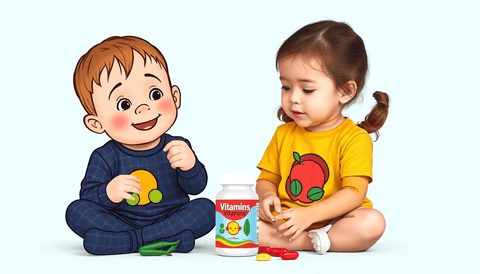
Organic kids supplements are vitamins and minerals made for children that use ingredients grown and processed without most synthetic pesticides, fertilizers or additives. Parents searching for them usually want the same two things: reassurance that a product is safe for a growing body, and clarity about whether their child actually needs one. This guide explains what organic certification really means on a supplement label, which nutrients matter most during childhood, how diet and lifestyle should come first, and how to evaluate quality, sugar content, dosing and testing when a supplement does become appropriate.
What Are Organic Kids Supplements and Do They Really Matter?
Organic children's supplements are products formulated for kids where the agricultural ingredients, such as fruit concentrates, plant powders or oils, come from certified organic farming. The appeal is understandable: parents want fewer unnecessary additives in products their children take daily. What matters more, however, is the whole picture, including the actual nutrient forms, doses, sugar content and manufacturing quality, not just the word organic on the front of the bottle.
What “Organic” Means on a Supplement Label
Organic certification primarily governs how ingredients are farmed and processed: without most synthetic pesticides, petroleum-based fertilizers, genetically modified organisms or certain processing aids. It is a production standard, not a potency, safety or efficacy guarantee. A certified organic children's vitamin is not automatically better absorbed, more nutritious or more suitable for your child than a well-made conventional alternative, although it may contain fewer synthetic fillers and colors.
How Organic Supplements Compare to Conventional Children's Vitamins
The core nutrients in organic and conventional children's vitamins are often chemically identical, because a vitamin molecule is the same whether its source is synthetic or food-derived. Differences tend to lie in the extra ingredients: organic products more often avoid artificial colors, flavors and preservatives, and may use fruit or vegetable concentrates as bases. Conventional products sometimes offer broader dose precision and lower cost. Comparing labels side by side is the most reliable way to evaluate either type.
Which Certifications Reliably Verify Organic Claims
Look for recognized third-party certification logos rather than self-declared wording. In the United States, the USDA Organic seal is the primary standard, with “made with organic ingredients” indicating a lower percentage of certified organic content. In Europe, the EU organic leaf applies. Certification logos should include a certifying body and, where applicable, a lot or batch identifier. Wording like “all natural,” “clean” or “pure” is not regulated and does not verify anything about how ingredients were produced.
Why Nutrient Needs Differ for Growing Children
Childhood is a period of rapid physical growth, brain development and immune system maturation. Because tissues, bones and neural pathways are actively being built, children's requirements per kilogram of body weight for several nutrients are proportionally higher than adults'. At the same time, children have smaller stomachs and often less varied diets, which is why nutrient adequacy in childhood deserves specific attention rather than simply scaling down adult thinking.
Key Vitamins and Minerals for Development and Immunity
Several nutrients are central to childhood development. Vitamin D supports normal bone growth and immune function, and dietary sources are limited, which is why supplementation is commonly discussed for infants and young children. Calcium contributes to normal bone development, while iron supports cognitive development and healthy blood formation; iron needs are notably higher during rapid growth phases. Zinc, iodine, B vitamins and vitamin A each play established roles in growth, energy metabolism, vision and immunity. Vitamin C supports immune function and enhances iron absorption from plant foods. You can read more in our guides to vitamin D sources and safety and minerals including iron and zinc.
How Requirements Change Across Different Age Groups
Established reference intakes are age-specific for good reason. Infants have very different needs from toddlers, and school-age children differ again from adolescents in the middle of puberty. Iron requirements rise sharply for teenage girls once menstruation begins. Vitamin D recommendations are highest in infancy and remain relevant throughout childhood. Because these numbers vary by age and sex, a product designed for a 4-year-old is not automatically appropriate for a 12-year-old, even at half the dose.
How Diet and Lifestyle Should Come First for Children
For most healthy children eating a reasonably varied diet, food can cover the majority of nutrient needs, and pediatric guidelines generally recommend food-first approaches. Supplements are designed to supplement a diet, not replace it, and whole foods deliver fiber, phytochemicals and macronutrients that no pill or gummy can replicate.
Nutrient-Dense Whole Foods That Cover the Basics
A practical foundation includes: dairy or fortified alternatives for calcium, protein and often added vitamin D; eggs and meat or legumes for iron, zinc and B vitamins; oily fish for omega-3 fats; a colorful range of fruits and vegetables for vitamin C, vitamin A precursors and folate; and whole grains for energy and B vitamins. Regular exposure matters more than perfection at any single meal.
Common Picky Eating Patterns and Practical Ways to Improve Intake
Picky eating is developmentally normal, especially between ages two and six. Practical strategies include repeated, pressure-free exposure to new foods; involving children in shopping and cooking; offering one accepted food alongside a new one; and keeping meal times consistent and calm. A child who eats only a handful of foods for weeks may temporarily fall short on some nutrients, but improvement through feeding strategies often works better than immediately reaching for a supplement.
The Role of Sleep, Hydration and Outdoor Activity in Nutrient Status
Lifestyle factors influence nutritional status in quieter ways. Sunlight on skin enables vitamin D production, though this varies hugely by latitude, season, skin tone and sunscreen use. Adequate sleep supports growth hormone release and appetite regulation, while regular physical activity supports bone development. Hydration does not directly provide nutrients but supports digestion, concentration and general wellbeing. These factors work alongside, not instead of, adequate food intake.
Individual Variability: When a Child's Needs May Be Higher
Children are not uniform; the same age can hide substantial variation in body size, growth rate, diet and health. Some children genuinely have higher requirements or lower intake for specific nutrients, and recognizing these situations helps target attention where it is most useful.
Growth Spurts and Increased Nutritional Demands
During rapid growth phases, particularly infancy, toddlerhood and puberty, demand for energy, protein, iron, calcium and zinc rises. Appetite often increases to match, but adolescents who skip meals, restrict intake or favor convenience foods may fall short during these windows even while appearing healthy.
Digestive and Absorption Considerations in Childhood
Some children have conditions that impair nutrient absorption, such as celiac disease, inflammatory bowel disease or chronic digestive issues. Others take medications that interact with nutrient absorption or metabolism. In these situations, requirements may be higher, absorption lower, or both, and a pediatrician's input is genuinely important rather than optional.
Dietary Restrictions (Vegetarian, Vegan, Allergy-Limited) and Nutrient Gaps
Well-planned vegetarian diets can meet most childhood nutrient needs, but certain nutrients require specific attention: vitamin B12 is a genuine concern in vegan diets, and iron, zinc, iodine, calcium and omega-3 fats deserve attention depending on how restrictive the diet is. Children with multiple food allergies may also avoid whole food groups. In these cases, professional dietary planning is more appropriate than generic supplement guessing.
When Supplements May Be Reasonable for Children
Supplementation is not routine for every child, but there are well-recognized situations where pediatricians commonly discuss it. The goal is to fill identified gaps, not to add insurance doses of nutrients the child is already getting adequately.
Signs That Intake May Be Short, Without Jumping to Diagnoses
Persistent fatigue, frequent illness, slow growth along the child's own growth curve, poor concentration, or an extremely restricted diet can sometimes accompany inadequate nutrient intake. However, these signs are non-specific: many causes are unrelated to nutrition, and symptoms alone cannot establish whether a child has a deficiency. They are a reason to evaluate, not to self-diagnose or start high-dose supplementation on guesswork.
Situations Where Pediatricians Often Discuss Supplementation
Vitamin D supplementation is routinely recommended for infants and often discussed for children with limited sun exposure. Iron supplementation is considered when iron status testing indicates low levels or when dietary intake is clearly inadequate. Pediatricians may also discuss B12 for vegan children, fluoride in areas without fluoridated water, and omega-3 or multivitamin products for very restricted eaters.
Why Blood Testing or Professional Assessment May Be Necessary First
For many nutrients, blood tests provide far more reliable information than symptoms ever can. Iron status, vitamin D levels and vitamin B12 status can all be measured. Testing before supplementing prevents both missing a real problem and treating one that does not exist, and it helps establish appropriate dosing. A pediatrician can also distinguish nutritional issues from medical conditions that present similarly.
Choosing a Safe and Effective Organic Supplement for Your Child
When a supplement is genuinely appropriate, the quality differences between products matter more than the organic label alone. Several practical characteristics deserve your attention.
Forms of Organic Nutrients and Their Absorption Differences
Nutrient form matters for both absorption and tolerability. Common examples include folate as folic acid versus methylfolate, vitamin B12 as cyanocobalamin versus methylcobalamin, and iron as various salts with different digestive tolerances. For most nutrients, evidence that one form is universally superior in children is limited, so treat marketing claims of dramatically better absorption with healthy skepticism unless they are backed by specific research.
Comparing Gummies, Liquids, Powders and Chewables
Format affects compliance more than nutrition. Liquids suit infants and toddlers; chewables and gummies work for children who can chew safely; powders can be mixed into food or drinks. Gummies deserve special attention: they often contain added sugar, and their candy-like appearance increases overconsumption risk. Chewable tablets typically allow more precise dosing and less sugar, at the cost of needing more swallowing maturity.
Evaluating Sugar Content, Additives and Allergens in Children's Formulas
Read added sugar content carefully, especially in gummies, where it can be several grams per serving. Check for artificial colors, sweeteners and flavors if these concern you, and for allergens including gluten, dairy, soy, nuts and gelatin. Organic certification limits some but not all additives, so the ingredient list remains your primary tool.
Single-Ingredient Versus Multi-Vitamin Formulas for Kids
A single-ingredient product allows precise, targeted dosing, which is ideal when testing has identified one specific gap, such as vitamin D or iron. A children's multivitamin covers multiple nutrients broadly, which may suit very restricted eaters, but it also risks doubling up on nutrients the child already gets adequately from fortified foods. Our multivitamin guide covers these trade-offs in more detail.
The Importance of Third-Party Testing and Transparent Labels
Supplements are less strictly regulated than medicines, so independent verification matters. Look for third-party testing seals that confirm identity, potency and contaminant screening. Transparent brands publish actual amounts per nutrient, disclose the specific chemical form of each nutrient, and provide batch-level certificates of analysis on request. Vague proprietary blends are a reasonable warning sign.
How to Read a Children's Supplement Label Like a Pro
Labels are dense, but a few specific skills make them readable. The three areas worth mastering are serving size and dosing, nutrient forms, and marketing language.
Understanding Serving Size and Age-Based Dosing
The serving size listed is not a recommendation for all children; it is the amount the label's nutrient values refer to. Legitimate children's products specify age ranges clearly and differentiate doses by age where needed. Never assume a half adult dose is suitable, and never exceed the labeled serving without professional advice, particularly for fat-soluble vitamins and iron.
Decoding Nutrient Forms Common in Organic Products
Ingredient lists reveal the exact chemical form: for example, “calcium citrate” versus “calcium carbonate,” or “magnesium citrate” versus “magnesium oxide.” Citrate forms often absorb somewhat better but require larger capsules to deliver the same elemental amount. Organic products sometimes use food-derived nutrient complexes, where the label may list nutrients alongside the foods they are derived from; doses in these products are often lower, which can be appropriate or limiting depending on need.
Spotting Misleading “Natural” or “Clean” Marketing Claims
Terms like “natural,” “clean,” “pure,” “food-based” and “immune-boosting” are largely unregulated marketing language. The most reliable information on any label is the certified organic logo with its certifying body, the nutrient amounts, the specific chemical forms, the third-party testing seals, and the full inactive ingredient list. Everything else is advertising.
Who May Most Benefit from Organic Kids Supplements
A supplement is most useful when there is a reasonable likelihood of a gap that diet is not currently closing. Certain groups of children fall into this category more often than others.
Children with Documented Nutrient Insufficiencies
Children whose blood testing or clinical assessment has identified low vitamin D, iron, B12 or another nutrient are the clearest candidates for targeted supplementation. In these cases, a specific product at an appropriate dose addresses a known problem, which is far more rational than general multivitamin use based on assumption.
Restricted Diets and Long-Term Medication Use
Children following vegan diets, managing multiple food allergies, or taking long-term medications that affect nutrient status may benefit from carefully chosen supplements as part of a professionally supervised plan. The specific nutrients, doses and forms should ideally be guided by the supervising clinician rather than by marketing.
When Food Alone Is Unlikely to Bridge the Gap
Some nutrients are simply hard to obtain from food in certain circumstances: vitamin D in winter at high latitudes, B12 in vegan diets without fortified foods, and iron in children with chronically poor iron intake. In these cases, even an otherwise excellent diet may not fully bridge the gap, and supplementation becomes a reasonable, evidence-informed tool rather than a shortcut.
Safety Considerations Parents Should Know Before Starting a Supplement
Children's smaller body size means dosing errors carry more consequence than in adults, and a few specific risks deserve genuine attention.
Appropriate Dosing and Avoiding Excess of Fat-Soluble Vitamins
Vitamins A, D, E and K are stored in body fat and can accumulate with repeated excessive intake, unlike water-soluble vitamins that are more readily excreted. Iron overdose is a leading cause of supplement-related poisoning emergencies in young children and is genuinely dangerous. Stay within the labeled dose, and do not stack multiple products containing the same nutrients without checking the totals.
Potential Interactions with Existing Medications or Medical Conditions
If your child takes any regular medication, has a chronic condition, or is scheduled for surgery, discuss supplements with their doctor or pharmacist first. Some minerals interfere with medication absorption, and certain conditions change nutrient handling in ways that make standard doses unsuitable.
Storage, Toxicity Risks and Keeping Supplements Out of Reach
Store all supplements locked away or well out of reach, ideally in childproof containers, and treat gummies with the same caution as medication since they look and taste like candy. If you suspect your child has swallowed more than the intended dose, contact a poison control center or seek medical advice promptly, even if the child seems fine.
Making the Right Decision for Your Child's Nutrition
The most confident decisions come from a structured process rather than an impulse purchase in the supplement aisle.
Steps to Take Before Choosing a Supplement
- Review your child's actual diet honestly over a typical week, not a single day
- Consider relevant factors: sun exposure, dietary restrictions, medications and growth patterns
- Discuss concerns with your pediatrician, and ask whether testing would clarify things
- If supplementing, choose a specific product matched to a specific need at an appropriate dose
Questions to Ask Your Pediatrician
- Does my child's diet or health suggest testing for any specific nutrient would be useful?
- Is supplementation appropriate, and if so, at what dose and in which form?
- How long should we supplement, and when should we reassess?
- Could any of my child's medications interact with a supplement?
Balancing Food First, Supplements Second and Quality Always
The most reliable sequence is: build the best diet you reasonably can, use supplements to fill identified gaps rather than assumed ones, and prioritize product quality over marketing claims whenever you do buy. This order protects both your child's health and your budget. For a broader overview of product categories, our natural supplements collection provides a starting point, though the decision framework matters more than any single product.
Final Takeaway: Prioritizing Whole Nutrition, Then Informed Supplementation
Organic kids supplements can be a legitimate tool when a genuine gap exists, but the organic label alone does not make a product necessary, safe or effective. Food, sunlight, sleep and activity remain the foundation of childhood nutrition, with supplementation reserved for identified needs and guided where possible by professional assessment. When you do choose a product, let the nutrient forms, doses, sugar content, allergen list and third-party testing, rather than the marketing language, drive your decision. Every child's situation differs, so individualized advice from a pediatrician or registered dietitian is the most reliable guide for your own child.
Key Takeaways
- “Organic” on a supplement label is a farming and processing standard, not a guarantee of higher potency, absorption or suitability for your child
- Look for recognized third-party certifications such as USDA Organic or the EU organic leaf, and treat unregulated terms like “natural” and “clean” as marketing
- Key nutrients for childhood growth include vitamin D, calcium, iron, zinc, iodine, B12 and vitamin A, with requirements varying by age, sex and growth phase
- Food should come first: a varied diet with dairy or fortified alternatives, protein sources, colorful produce and whole grains covers most healthy children's needs
- Supplementation is most reasonable for documented deficiencies, restricted diets, limited sun exposure and certain medical situations, ideally guided by testing and a pediatrician
- Format matters: gummies often contain added sugar and increase overconsumption risk, while liquids, chewables and powders each suit different ages and preferences
- Never exceed labeled doses; fat-soluble vitamins and iron carry real toxicity risks in children when overused
- Store all supplements out of reach and treat suspected overconsumption as a medical situation
- Choose products based on transparent labels, specific nutrient forms and third-party testing rather than front-of-pack claims
Frequently Asked Questions
What are organic kids supplements?
They are vitamins and minerals formulated for children using ingredients from certified organic agriculture. Certification governs how the ingredients were farmed and processed, not the strength or safety of the nutrients themselves, so the label still needs careful reading.
Are organic vitamins better for children than regular ones?
Not inherently. The nutrient molecules are often chemically identical in both types. Organic products may contain fewer artificial additives, while conventional products may offer more dose precision at lower cost; comparing labels matters more than the category label.
Do all children need a multivitamin?
No. Healthy children eating a reasonably varied diet generally meet their needs through food. Multivitamins are most relevant for very restricted eaters, children with limited diets due to allergies, or where a pediatrician identifies a specific gap.
Which nutrients are children most often short of?
Vitamin D is the most commonly discussed because food sources are limited and sun exposure varies widely. Iron, calcium and, in restrictive diets, vitamin B12 and omega-3 fats also deserve attention, depending on the child's age and diet.
Can I give my child a supplement without seeing a doctor?
Basic supplementation within labeled doses, such as following published vitamin D recommendations for infants, is generally low risk. However, for iron, high-dose vitamins, or any child on medication or with a health condition, professional advice first is strongly recommended.
What should I look for in an organic children's vitamin?
Check the certified organic logo with certifying body, the specific nutrient forms and amounts per serving, the age range, added sugar content, allergen list, and any third-party testing seals. Transparent labeling matters more than packaging design.
Are gummy vitamins safe for kids?
They can be appropriate for children old enough to chew safely, but they often contain added sugar and resemble candy, which raises overconsumption risk. Store them out of reach and stick strictly to the labeled serving.
How much vitamin D do children need?
Established recommendations vary by age and country, with higher amounts recommended in infancy and early childhood. Because needs differ by age, sun exposure and diet, check current local guidance or ask your pediatrician rather than assuming an adult dose.
Can my child take too much of a vitamin?
Yes. Fat-soluble vitamins (A, D, E, K) accumulate in the body, and iron overdose is dangerous for young children. Always follow the labeled dose and avoid combining multiple products containing the same nutrients without checking the totals.
Do organic supplements interact with medications?
Supplements can interact with medications regardless of whether they are organic. Minerals like calcium and iron can interfere with the absorption of certain drugs. Always check with a doctor or pharmacist if your child takes regular medication.
How long does it take to see a benefit from a supplement?
It depends on the nutrient and the starting status. Correcting a documented iron or vitamin D insufficiency typically takes weeks to months, and improvement is usually tracked through follow-up testing rather than immediate symptom change.
How should I store children's supplements?
In a cool, dry place, well out of reach, ideally in childproof containers, and with the lid tightly closed. Liquid products may need refrigeration after opening. Treat all children's supplements like medicine, not candy.
Related Keywords
- organic kids supplements
- organic children's vitamins
- natural vitamins for kids
- best organic multivitamin for children
- USDA organic kids gummy vitamins
- additive-free children's supplements
- kids vitamin D supplementation
- children's iron supplements
- vegan kids multivitamin
- sugar-free children's vitamins
- non-GMO kids supplements
- toddler vitamin supplements
- pick eater multivitamin for children
- third-party tested kids vitamins