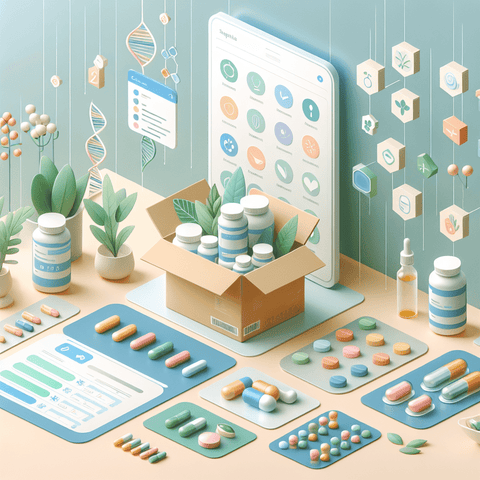
Personalized supplement subscriptions deliver vitamins and minerals tailored to your individual health profile, typically through an online quiz followed by convenient monthly shipments. This article explains how tailored vitamin plans work, why nutritional needs differ from person to person, when supplementation may be worth considering, and how to evaluate the quality and safety of any personalized supplement subscription before committing to one.
What Are Personalized Supplement Subscriptions? How Tailored Vitamins Work
Personalized supplement subscriptions explained: from quiz to monthly delivery
A personalized supplement subscription is a recurring service that matches vitamins, minerals, and other supplements to your reported lifestyle, diet, and health goals. The typical process begins with an online questionnaire covering age, sex, dietary patterns, activity levels, sleep, stress, and existing health considerations. Based on your answers, the service generates a recommended blend of nutrients, which is then packaged and shipped on a monthly or quarterly cycle.
Most services allow you to review, adjust, or skip shipments, and some integrate optional at-home testing such as vitamin D or B12 blood spot tests to refine recommendations over time. The core value proposition is convenience combined with a formula that reflects your circumstances rather than a generic, one-size-fits-all product.
Key terms to know: custom vitamin packs, health quizzes, and tailored formulations
Several terms appear frequently in this category:
- Health quiz: A lifestyle and dietary questionnaire used to generate initial supplement recommendations. It captures self-reported information, not clinical measurements.
- Custom vitamin packs: Pre-sorted daily packets combining several supplements, designed to simplify dosing.
- Tailored formulations: Blends where nutrient types and doses are adjusted based on your profile—for example, higher vitamin D in winter months or B12 for plant-based eaters.
- Adherence support: Subscription and packaging features intended to help people take supplements consistently.
How personalized vitamins differ from standard one-a-day multivitamins
A standard multivitamin contains a fixed set of nutrients at roughly similar doses for everyone. Personalized plans, by contrast, may omit nutrients you likely get from food, emphasize nutrients associated with your specific circumstances, and adjust doses within safe ranges. For a helpful comparison, see our guide to multivitamins, ingredients, and safe usage.
That said, the difference is often one of degree rather than kind. Many personalized formulas still center on the same core nutrients found in quality multivitamins—what changes is the selection logic and the flexibility to adjust.
Why Personalized Supplement Subscriptions Are Growing in Popularity
The shift toward individualized nutrition and tailored health routines
Nutrition science has increasingly recognized that nutrient requirements are not uniform. Research on vitamin D status, for example, shows wide variation between individuals living in the same region, influenced by sun exposure, body composition, skin tone, and genetics. This growing awareness of individual variability has fueled consumer interest in products that acknowledge these differences rather than ignoring them.
Advances in consumer-accessible testing and digital health tools have also made it easier for companies to offer, and for consumers to request, more individualized approaches than the traditional one-a-day model.
Convenience, consistency, and adherence: why subscription models support daily habits
A major practical challenge with supplements is not choosing them—it's taking them consistently. Studies on supplement adherence consistently show that forgetting doses and running out of product are common reasons people stop. Subscription models address this by removing the reordering step, and daily packs reduce the friction of opening multiple bottles.
Consistency matters because most vitamins and minerals support ongoing physiological functions. Irregular intake of nutrients that the body does not store well—such as vitamin C and most B vitamins—offers less potential benefit than steady, moderate intake.
Why Nutritional Needs Vary: The Science Behind Tailored Vitamins
How diet, age, lifestyle, and health status shape individual nutrient requirements
Official nutrient reference values are set for population groups, not individuals. Within those groups, actual needs can differ meaningfully. Older adults, for instance, have reduced skin capacity to synthesize vitamin D and reduced stomach acid production that can impair B12 absorption from food. Women of reproductive age have higher iron requirements due to menstrual losses. People who exercise intensively may have somewhat higher needs for certain nutrients involved in energy metabolism and recovery.
Absorption, bioavailability, and genetics: why the same dose doesn't work for everyone
Bioavailability—the proportion of an ingested nutrient the body actually absorbs and uses—varies by nutrient form, food matrix, and individual physiology. Iron from plant sources is less bioavailable than heme iron from meat. Genetic variants can affect how efficiently the body converts certain nutrient precursors into active forms, a topic studied extensively with folate metabolism.
This is one reason supplement form matters: methylated B vitamins and chelated minerals are examples of forms selected for favorable absorption or tolerability, though evidence comparing forms is not equally strong for every nutrient.
Common contributing factors: restricted diets, medications, stress, and life stages
- Restricted diets: Vegan and vegetarian diets may provide little vitamin B12, and can be lower in iron, zinc, iodine, and omega-3 EPA/DHA.
- Medications: Long-term use of proton pump inhibitors, metformin, and some other drugs can affect absorption or metabolism of specific nutrients.
- Life stages: Pregnancy, breastfeeding, and aging all shift requirements—sometimes upward, sometimes in terms of form (such as folic acid around conception).
- Limited sun exposure: Indoor lifestyles, northern latitudes, and consistent sunscreen use reduce vitamin D synthesis.
Signs Your Current Nutrient Intake May Not Match Your Needs
Common situations associated with low nutrient intake (fatigue, restricted diets, busy lifestyles)
Certain patterns are associated with a higher likelihood of nutrient gaps: persistent fatigue without an obvious cause, diets that rarely include vegetables, fruits, oily fish, or fortified foods, frequent meal skipping, and heavy reliance on processed convenience foods. These situations don't confirm a deficiency, but they signal that a closer look at intake may be worthwhile.
Why symptoms alone can't confirm a deficiency: the role of blood testing and professional assessment
Fatigue, low mood, poor sleep, and brittle hair have many possible causes—most of them unrelated to vitamins. Self-diagnosing from symptoms frequently leads to unnecessary supplementation while the actual issue goes unaddressed. For nutrients with validated tests—such as vitamin D, B12, folate, iron status, and ferritin—a blood test ordered through a healthcare provider provides far more reliable information than any quiz or symptom checklist. If you suspect a deficiency, professional assessment should come before high-dose supplementation.
Food First: Dietary and Lifestyle Strategies Before Supplementation
Nutrient-dense food sources that cover most essential vitamins and minerals
For most people eating a varied diet, food can supply the majority of essential nutrients, often in forms with excellent bioavailability and accompanied by beneficial cofactors:
- Vitamin D: Oily fish, fortified dairy and plant milks, egg yolks; plus sensible sun exposure.
- B12: Meat, fish, eggs, dairy, and fortified plant-based products.
- Magnesium: Nuts, seeds, whole grains, legumes, and leafy greens.
- Omega-3 EPA and DHA: Fatty fish such as salmon, mackerel, and sardines.
- Iron, zinc, and iodine: Meat, seafood, legumes, and iodized salt.
Dietary patterns (vegan, vegetarian, low-calorie) and the nutrients they may lack
Well-planned vegan and vegetarian diets can be nutritionally adequate, but B12 requires fortified foods or supplements. Low-calorie or highly restrictive diets can fall short across multiple nutrients simply due to total food volume. In these situations, targeted supplementation is often more relevant than for someone eating a broad, balanced diet.
Lifestyle habits that influence nutrient status: sleep, sunlight, alcohol, and activity
Sunlight exposure strongly influences vitamin D status. Regular alcohol intake can interfere with the absorption and metabolism of several B vitamins. Smoking is associated with lower vitamin C status. Chronic stress and poor sleep don't typically cause deficiencies directly, but they shape food choices and eating patterns in ways that can affect overall nutrient intake over time.
Where Personalized Supplementation May Fit: Relevant Nutrient Categories
Core vitamins and minerals commonly included in tailored formulas (vitamin D, B12, magnesium, omega-3)
Most tailored plans draw from a relatively small pool of well-studied nutrients:
Probiotics, adaptogens, and specialty ingredients: what the evidence supports
Beyond core nutrients, many personalized services add probiotics, adaptogens like ashwagandha, or botanical extracts. Evidence here is more varied. Specific probiotic strains have research supporting particular uses, while broader "gut health" claims are less well established. Ashwagandha has studies suggesting it may support stress resilience, though quality and dosing vary widely between products. Adaptogens and botanicals deserve more scrutiny than standard vitamins because the evidence base is younger and product quality varies more.
What personalization quizzes can and cannot tell you about your nutrient needs
Quizzes can reasonably flag patterns—such as a vegan diet indicating B12 relevance or limited sun exposure suggesting vitamin D may be worth considering. What they cannot do is measure your actual nutrient status, detect a deficiency, or account for absorption and genetic factors. A quiz is a screening and personalization tool, not a diagnostic one. Treat its output as a starting point for discussion, not a clinical conclusion.
When a Personalized Supplement Subscription May Be Worth Considering
Situations where dietary intake alone may fall short
Supplementation becomes genuinely relevant when food alone is unlikely to meet needs: strict plant-based diets without fortified foods, very low-calorie diets, limited sun exposure during winter, diagnosed malabsorption conditions managed under medical care, and life stages with elevated requirements such as pregnancy planning.
General nutritional support versus addressing a diagnosed deficiency
These are different situations. General nutritional support aims to help fill modest gaps in an otherwise adequate diet—moderate doses of well-chosen nutrients are appropriate. A diagnosed deficiency, such as low B12 or iron, requires professional guidance on dose, form, and duration, and often monitoring to confirm correction. A personalized subscription can support the first situation but should not replace medical treatment for the second.
When testing or professional guidance should come first
If you have persistent symptoms, a medical condition, take prescription medications, or are considering doses above standard multivitamin levels, speak with a healthcare provider first. Blood testing can identify whether a real gap exists, which is far more efficient than guessing with supplements.
How to Choose the Right Personalized Vitamin Subscription
Ingredient forms and bioavailability: methylated B vitamins, chelated minerals, and more
Forms matter for some nutrients more than others. Common examples:
- B vitamins: Methylcobalamin (B12) and methylfolate are active forms; some people absorb or metabolize them more favorably, though cyanocobalamin and folic acid remain effective and well-studied for most.
- Magnesium: Different salts (citrate, glycinate, oxide) differ in absorption and digestive tolerability; magnesium oxide is less well absorbed.
- Minerals: Chelated forms such as bisglycinates are generally well tolerated.
- Omega-3: Triglyceride-form fish oil has good bioavailability; algae oil suits vegans.
Dosage, combination products, and single-nutrient supplements: what makes sense for you
A well-designed tailored plan should not simply stack doses on top of what you already get from a multivitamin or fortified foods. Check cumulative intake across all products to avoid exceeding upper intake levels, particularly for vitamin A, vitamin D, selenium, and zinc. Combination packs suit people taking several nutrients daily; single-nutrient supplements make more sense when targeting one specific, identified gap.
Quality indicators: third-party testing, certifications, and ingredient transparency
Look for services that publish full ingredient lists with exact forms and doses, state where products are manufactured, and hold third-party testing or recognized quality certifications. Reputable brands are transparent about what's in the product and what isn't.
Allergens, dietary preferences, and added ingredients to check before subscribing
Review labels for allergens such as gluten, soy, dairy, and shellfish (relevant for omega-3 from fish), confirm vegan or vegetarian suitability where needed, and check for added sugars, fillers, and artificial colors. If you prefer clean formulations, look for minimal excipients and capsule-based rather than gummy formats when sugar content is a concern.
How to Read a Supplement Label on Personalized Vitamin Products
Serving sizes, nutrient forms, and amounts: comparing products accurately
Always compare per serving, not per capsule—some packs use two or more capsules. Check the chemical form listed (for example, "magnesium citrate" versus "magnesium oxide") and the elemental amount of minerals. Percentages based on reference intakes help you see whether doses are moderate or high relative to established recommendations.
Red flags and vague claims to watch for on tailored supplement labels
- Proprietary blends that hide individual ingredient doses.
- Claims that a product cures, treats, or prevents disease.
- "Boosts immunity" or "detoxes" language without context.
- Missing or vague ingredient forms (e.g., "B vitamin complex" without specifics).
- No manufacturer information or batch/lot details.
Who May Benefit Most from a Personalized Supplement Subscription
Groups with higher likelihood of nutrient gaps: older adults, vegans, pregnant planners, and busy professionals
Some groups have well-documented higher rates of insufficient intake or status: adults over 50 (vitamin D and B12), people following vegan or vegetarian diets (B12, iron, zinc, iodine, omega-3), women planning pregnancy (folate and iodine), and people with limited sun exposure (vitamin D). Busy professionals with irregular, convenience-food-heavy diets may also have intake gaps, though a dietary review is the sensible first step.
When a standard multivitamin may be enough instead of a tailored plan
If your diet is reasonably varied and you simply want baseline insurance, a quality standard multivitamin at moderate doses may serve you equally well at lower cost. Personalization adds most value when your circumstances clearly differ from the average—dietary restrictions, life stage, or specific lifestyle factors. For general guidance, our natural supplements overview can help you compare product categories.
Safety, Interactions, and Smart Use of Personalized Supplements
Upper intake limits: why "more" isn't better with fat-soluble vitamins and minerals
Fat-soluble vitamins (A, D, E, K) accumulate in the body, and excessive long-term intake carries real risks—vitamin A in particular has a relatively low upper limit. Minerals including selenium, iron, and zinc also have established tolerable upper intake levels. Personalized plans that combine a multivitamin with additional single-nutrient products can inadvertently push total intake above safe levels, so review cumulative doses.
Medication interactions and health conditions to discuss with a healthcare provider
Vitamin K can interfere with anticoagulants such as warfarin. High-dose omega-3s may affect bleeding time at certain intakes. Calcium and iron can reduce absorption of some medications when taken together. Kidney conditions warrant caution with certain minerals. Always disclose all supplements to your doctor or pharmacist, especially before surgery.
Pregnancy, nursing, and medical treatment: when professional advice is essential
Pregnancy and breastfeeding change requirements substantially and raise safety stakes—vitamin A in particular requires careful attention. If you are pregnant, nursing, managing a medical condition, or undergoing treatment, supplement decisions should be made with a qualified healthcare professional, not based on an online quiz.
Personalized Supplement Subscription or One-Time Purchase? How to Decide
Questions to ask before committing to a tailored vitamin plan
- Can I cancel, pause, or modify shipments easily?
- Are exact nutrient forms and doses published transparently?
- Does the recommendation account for what I already take or eat?
- Is there any option for testing-based refinement, or is it purely quiz-driven?
- Does the total dose across products stay within safe limits?
A practical checklist for evaluating diet, lifestyle, and supplement quality
- Review your typical weekly diet for gaps (fish, vegetables, fortified foods, variety).
- Note your life stage, sun exposure, activity level, and any medications.
- Consider whether symptoms warrant blood testing before supplementing.
- Identify which specific nutrients, if any, are genuinely relevant to you.
- Check product quality: forms, doses, third-party testing, allergens.
- Start conservatively, reassess after a few months, and adjust based on how you feel and any new test results.
Key Takeaways: Making an Informed Decision About Tailored Vitamins
Summary of what personalized supplement subscriptions can realistically offer
Personalized supplement subscriptions are best understood as convenience and personalization tools. They can help translate your circumstances into a sensible, consistent supplement routine—but they cannot diagnose deficiencies or replace professional assessment where real health concerns exist.
Next steps for building a nutrition routine that fits your individual needs
- Nutrient needs vary by diet, age, life stage, sun exposure, genetics, and absorption—there is no universal optimal dose.
- Food first: a varied, nutrient-dense diet covers most needs for most healthy people.
- Personalized supplement subscriptions add most value when your circumstances differ from the average—vegan diets, limited sun, older age, or restricted eating.
- Quizzes can highlight relevant nutrients but cannot measure your actual status or detect deficiencies.
- Symptoms alone cannot confirm a deficiency; blood testing offers more reliable information for nutrients like vitamin D, B12, and iron.
- Ingredient forms and bioavailability matter—compare products per serving, by exact nutrient form and dose.
- Check cumulative doses across all products to stay within upper intake limits, especially for fat-soluble vitamins and minerals.
- Third-party testing, transparent labeling, and published forms and doses are the most reliable quality indicators.
- Supplements support nutrition—they do not substitute for medical care, and pregnant or nursing individuals and those on medication should consult a healthcare professional first.
Conclusion
Tailored vitamins reflect a genuine scientific insight: nutritional needs are individual. But personalization starts with your plate, not a package. Assess your diet and lifestyle honestly, use testing or professional guidance where symptoms or risk factors justify it, and treat a personalized supplement subscription as a convenient way to fill identified gaps consistently—not as an automatic necessity. With clear expectations, quality products, and appropriate professional input where needed, a tailored approach can be a sensible part of a well-rounded nutrition routine.
Frequently Asked Questions
How do personalized supplement subscriptions work?
You typically complete an online questionnaire about your diet, lifestyle, age, and goals. The service uses your answers to generate a tailored nutrient formula, which is packaged and delivered on a recurring schedule. Many services let you adjust or cancel at any time.
Are personalized vitamins scientifically more effective than regular multivitamins?
Personalization is scientifically sound in principle—nutrient needs do vary—but the evidence for quiz-based personalization specifically is limited. The main advantage is matching relevant nutrients to your circumstances and avoiding unneeded ones, rather than proven superior health outcomes.
Can a health quiz detect vitamin deficiencies?
No. Questionnaires capture self-reported lifestyle information and can only suggest which nutrients may be relevant. Actual nutrient status requires blood testing or clinical assessment through a healthcare provider.
What nutrients do vegans most often need to supplement?
Vitamin B12 is essential, as it is found almost exclusively in animal foods without fortification. Vegan diets may also be lower in omega-3 EPA/DHA, iodine, zinc, and sometimes iron and vitamin D, depending on food choices.
Is it safe to take a multivitamin and a personalized pack together?
It depends on cumulative doses. Combining products can push intake of vitamin A, vitamin D, selenium, or zinc above upper intake levels. Check labels and add totals across all products before combining.
How long before I notice effects from tailored supplements?
It varies widely. Correcting a true deficiency, such as low B12 or vitamin D, may take weeks to months. General nutritional support without a deficiency may not produce noticeable effects at all—supplements are not quick fixes.
Should I get a blood test before starting a supplement subscription?
If you have symptoms, risk factors, or a medical condition, testing first is the more efficient approach for nutrients like vitamin D, B12, folate, and iron. For general low-dose nutritional support, testing is not always necessary but can be informative.
Are gummy vitamins as effective as capsules?
Gummies can deliver nutrients effectively, but they often contain added sugars, may omit certain minerals, and sometimes have lower doses or stability issues. Capsules and tablets generally offer more complete formulations with fewer excipients.
Can I take too much vitamin D from a personalized plan?
Yes. Vitamin D is fat-soluble and accumulates over time. Consistent intake above upper intake levels can raise blood calcium and cause harm. Keep total intake from all sources within recommended limits.
Do personalized supplements interact with medications?
Some can. Vitamin K affects warfarin, calcium and iron can interfere with certain drug absorption, and high-dose omega-3s may influence bleeding at elevated intakes. Always review your full supplement list with a doctor or pharmacist.
Are adaptogens like ashwagandha worth including in a tailored plan?
Ashwagandha has research suggesting it may support stress resilience, but evidence quality varies and product standards differ widely. It's reasonable to approach adaptogens with more scrutiny than core vitamins and minerals.
Can I pause or cancel a supplement subscription?
Most reputable services allow you to pause, skip, or cancel shipments easily. Check the cancellation policy before subscribing—flexible terms are a good indicator of a customer-focused service.
Related Keywords
- personalized supplement subscriptions
- tailored vitamins
- custom vitamin packs
- personalized vitamin quiz
- custom supplement plan
- individualized nutrition
- vitamin D supplementation
- vitamin B12 for vegans
- magnesium supplement benefits
- omega-3 fish oil supplements
- nutrient bioavailability
- supplement safety and interactions
- how to choose a supplement
- monthly vitamin delivery
- multivitamin vs personalized vitamins