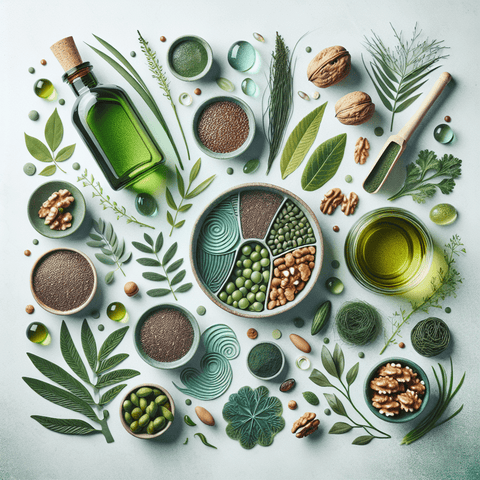
Plant-based omega-3 refers to omega-3 fatty acids obtained from plant foods and algae rather than fish or fish oil. The main plant omega-3 is alpha-linolenic acid (ALA), found in flaxseeds, chia seeds, walnuts, hemp seeds and certain oils, while algae can provide preformed DHA and EPA. This matters because omega-3 fats are involved in cell membrane structure and normal heart, brain and eye function, and because people following vegan or vegetarian diets may have lower intakes of EPA and DHA. This guide explains the different omega-3 types, easy and sustainable food sources, recommended intakes, when supplementation may be worth considering, and how to compare algae-based options sensibly.
What Is Plant-Based Omega-3 and How Does It Differ from Fish Oil?
Plant-based omega-3 is an umbrella term for omega-3 fats that come from plant or algal sources. It is not one single nutrient. Fish oil is rich in the longer-chain omega-3 fats EPA and DHA, whereas most plant foods provide ALA, which the body must convert into EPA and DHA. Algae is the exception: it naturally produces DHA and EPA, and algae oil supplements can deliver these preformed fats without using fish. This distinction matters because ALA and EPA/DHA are not interchangeable in every respect, and the body’s conversion of ALA is limited and variable.
The Three Main Types of Omega-3 Fatty Acids: ALA, EPA, and DHA
- ALA (alpha-linolenic acid): An essential omega-3 fat that must come from the diet. Rich plant sources include flaxseeds, chia seeds, walnuts, hemp seeds and flaxseed oil.
- EPA (eicosapentaenoic acid): A longer-chain omega-3 involved in producing signalling molecules that influence inflammation and blood vessel function. It can be made from ALA in the body, but only to a limited extent, and is also found in algae and oily fish.
- DHA (docosahexaenoic acid): A structural omega-3 concentrated in the brain and retina. DHA is important for normal brain and visual development and function. Like EPA, it can be made from ALA, but conversion is low and variable.
Why Conversion of ALA to EPA and DHA Matters for Plant-Based Diets
Humans can convert ALA into EPA and then DHA through a series of enzymatic steps, but this pathway is not very efficient. Research estimates vary widely, with roughly 5–10% of ALA being converted to EPA and around 0.5–5% to DHA in many studies, although individual differences are substantial. Genetics, sex, age, dietary composition and the amount of omega-6 fats in the diet can all influence conversion. This does not mean ALA-rich foods are unimportant. They are the foundation of a plant-based omega-3 intake. It does mean that eating flax or chia does not guarantee an optimal EPA and DHA status, especially for people who avoid all animal foods.
Why Do We Need Omega-3 Fatty Acids?
Omega-3 fatty acids are structural components of cell membranes and precursors to signalling molecules that help regulate inflammation, blood vessel tone and other physiological processes. They are especially concentrated in the brain and retina, where DHA contributes to membrane fluidity and normal visual and neurological function. ALA also has biological roles and can be used for energy. The evidence is strongest for EPA and DHA in relation to cardiovascular health and normal brain and eye function, but omega-3s are not a treatment for disease and should not replace medical care.
The Role of Omega-3s in Heart, Brain, and Eye Health
EPA and DHA have been associated with favourable effects on blood triglycerides and blood pressure in some contexts, and higher intakes of oily fish are linked to lower cardiovascular risk in observational studies. DHA is a major structural fat in the brain and retina, and adequate intake is particularly relevant during pregnancy and early childhood. ALA may also support heart health, although the evidence is generally less consistent than for EPA and DHA. These are nutritional support roles, not guarantees of disease prevention, and individual responses vary.
Omega-6 to Omega-3 Ratio: What It Means and Why Balance Matters
Omega-6 and omega-3 fats are both essential and compete for some of the same enzymes involved in conversion and signalling. Modern diets often contain large amounts of omega-6 from refined vegetable oils and processed foods, which can widen the omega-6 to omega-3 ratio. However, the ratio is a simplified marker and research on its clinical value is mixed. A more practical goal is to meet ALA needs, include regular sources of EPA and DHA where possible, and improve overall diet quality rather than chasing a specific ratio.
Best Vegan and Plant-Based Sources of Omega-3
Plant-based omega-3 sources are easy to include in everyday meals and are generally more sustainable than fish oil, although environmental impact still depends on farming, processing and transport. The strongest plant sources provide ALA, while algae-derived foods and supplements are the only direct vegan sources of preformed EPA and DHA. For a broader look at nutrient-dense plant foods, see this guide to superfoods and EFSA-approved nutrient claims.
Top Foods High in ALA: Flaxseeds, Chia Seeds, and Walnuts
- Ground flaxseeds: About 1.6 g of ALA per tablespoon. Grinding improves absorption, and ground flax should be stored in the refrigerator to limit oxidation.
- Chia seeds: About 5 g of ALA per ounce (28 g), or roughly 2.5 g per tablespoon. They can be used in puddings, porridge, smoothies and baking.
- Walnuts: About 2.5 g of ALA per ounce. A small handful is a practical snack or salad topping.
- Flaxseed oil: A concentrated ALA source, but it should not be heated and needs careful storage because it is prone to oxidation.
Hemp Seeds and Edamame: Overlooked Plant Sources of ALA
Hemp hearts are a convenient source of ALA and protein, with a mild nutty flavour that works well in yoghurt, salads and grain bowls. Edamame, or young soybeans, contains smaller but still useful amounts of ALA along with protein and fibre. Neither is a major source of preformed EPA or DHA, so they should be seen as part of a broader plant-based omega-3 pattern rather than a direct replacement for algae oil or oily fish.
The Algae Advantage: The Only Plant Source of Preformed EPA and DHA
Algae is the original source of the EPA and DHA found in fish. Algae oil supplements are therefore the only direct vegan source of these longer-chain omega-3s. Some plant milks, yoghurts and other fortified foods also contain algae-derived DHA. Algae can be cultivated in controlled systems, which may offer a more sustainable route than wild fish oil, although production methods and certifications vary. For people who want preformed EPA and DHA without animal products, algae is the most direct dietary strategy.
Who Might Be at Risk for Low Omega-3 Levels?
Omega-3 status is influenced by intake, absorption, conversion and overall diet. It is not reliably diagnosed from symptoms alone. Some groups are more likely to have lower intakes or blood levels of EPA and DHA, but that does not mean every person in those groups needs a supplement.
Vegans and Vegetarians: Why EPA and DHA Levels Tend to Be Lower
People who avoid fish and seafood often have lower blood levels of EPA and DHA than regular fish eaters, even when they eat plenty of ALA-rich plant foods. This is mainly because plant diets usually lack preformed EPA and DHA and because ALA conversion is limited. A well-planned vegan diet can still support health, but it is reasonable for vegans and some vegetarians to consider algae-derived DHA and EPA, especially during pregnancy, breastfeeding or later life. A clinician or registered dietitian can help assess whether this is appropriate.
Other Factors That Affect Omega-3 Status: Age, Digestion, and Medication Use
Older adults may have higher needs or lower intakes, and pregnancy and breastfeeding increase demands for DHA. Fat malabsorption, gastrointestinal conditions, bariatric surgery and some medications can reduce absorption of dietary fats, including omega-3s. Genetics also influence how efficiently ALA is converted. Alcohol intake, smoking and a diet high in processed foods may further affect overall nutritional status. These factors are reasons to discuss individual needs with a qualified professional rather than to self-diagnose a deficiency.
How to Increase Omega-3 Intake Through Diet Alone
Most people can improve their plant-based omega-3 intake by making a few regular food choices. The aim is to include ALA-rich foods most days and, where relevant, choose algae-fortified foods or discuss an algae supplement. Diet alone can be sufficient for ALA, but it may not provide much preformed EPA and DHA.
Simple Ways to Incorporate Flax, Chia, and Walnuts into Daily Meals
- Stir a tablespoon of ground flaxseed into porridge, smoothies or plant-based yoghurt.
- Make a simple chia pudding with chia seeds, plant milk and fruit for breakfast or dessert.
- Add walnuts to salads, roasted vegetables or homemade granola.
- Sprinkle hemp hearts over soups, grain bowls or avocado toast.
- Use flaxseed oil in salad dressings rather than for cooking, and keep it refrigerated.
- Choose plant milks or yoghurts fortified with algae-derived DHA when available.
How Much ALA Do You Actually Need Per Day?
Recognised adequate intake levels for ALA are about 1.1 g per day for adult women and 1.6 g per day for adult men. One tablespoon of ground flaxseed, a small handful of walnuts or a spoonful of chia can make a meaningful contribution. General guidance for EPA and DHA is around 250 mg per day for adults, with additional DHA suggested during pregnancy and breastfeeding in some European recommendations. These are population-level reference values, not individual prescriptions, and people with higher needs should seek personalised advice.
When Should You Consider a Plant-Based Omega-3 Supplement?
A supplement is not automatically necessary. It may be worth considering if your diet provides little ALA, if you avoid fish and want a direct source of preformed EPA and DHA, or if a clinician has advised it because of pregnancy, older age, malabsorption or other health considerations. The goal is to fill a genuine gap, not to take omega-3s simply because they are popular.
Algae Oil vs. Flaxseed Oil: Which is the Better Plant-Based Option?
Algae oil and flaxseed oil serve different purposes. Flaxseed oil is a concentrated source of ALA and can help meet ALA requirements, but it does not supply preformed EPA or DHA. Algae oil provides DHA and sometimes EPA directly, making it the more targeted choice if the aim is to increase EPA and DHA intake. Neither is universally “better”; the right option depends on dietary patterns, goals and whether ALA or longer-chain omega-3s are the priority.
How to Read a Plant-Based Omega-3 Supplement Label
Look beyond the front label and check the supplement facts panel. It should state the amount of ALA, EPA and DHA per serving, not just “total omega-3.” Check whether a serving is one capsule or several, and compare products on the amount of DHA and EPA actually delivered. Also look for the source of the oil, expiration date, storage instructions and any third-party testing or quality certifications. If comparing products, this DHA and EPA omega-3 supplement collection can help you review available options.
Understanding DHA Content and Dosage on Algae-Based Labels
Algae-based products vary widely in DHA content. Some provide 100–200 mg of DHA per capsule, while others require two or more capsules to reach the stated serving. A label may highlight “500 mg algae oil” but contain much less DHA, so the DHA figure is the one to compare. There is no single universal dose for everyone; general adult intakes of around 250 mg EPA plus DHA per day are often used as a reference, while higher amounts should be discussed with a healthcare professional.
How to Choose a High-Quality Plant-Based Omega-3 Supplement
Quality matters because omega-3 oils can oxidise and because purity and accurate labelling affect what you actually get. A well-made supplement should be transparent about its source, its fatty acid content and its testing. It should also be stored and used according to the manufacturer’s instructions.
Why to Look for DHA Over ALA in a Supplement
If the reason for supplementing is to increase preformed EPA and DHA, choose a product that clearly states DHA and, where relevant, EPA. An ALA-only supplement may help meet ALA needs, but it does not bypass the body’s limited conversion pathway. This does not make ALA supplements useless; they are simply a different nutritional tool. Match the supplement to the goal rather than assuming all omega-3 products are equivalent.
Key Quality Indicators: Purity, Third-Party Testing, and Certifications
Look for third-party testing for heavy metals, oxidation markers and label accuracy. Certifications from recognised organisations can add assurance, but they are not a guarantee of effectiveness. Check for a clear expiry date, a sensible serving size and transparent sourcing. Avoid products with vague “omega-3 blend” claims that do not specify how much DHA and EPA are present. Proper storage away from heat and light also helps protect oil quality.
Capsules vs. Liquid: Which Delivery Form Suits Your Needs?
Capsules are convenient, portable and easy to dose, but some people need several large capsules to reach the desired amount. Liquids can be more flexible and may suit people who dislike swallowing capsules, but they require careful measuring and refrigeration after opening. Softgels, capsules and liquids can all be appropriate; the better choice is the one you will use consistently and that provides a clearly stated amount of DHA and EPA.
Safety, Side Effects, and Interactions of Omega-3 Supplements
Omega-3 supplements are generally well tolerated, but they are not risk-free at high doses. Gastrointestinal upset, loose stools, nausea and a fishy aftertaste are possible, especially with large servings. People with medical conditions or those taking prescription medicines should seek advice before starting a supplement.
Is There Such a Thing as Too Much Omega-3?
There is no established upper intake level for ALA, but very high intakes of EPA and DHA may increase bleeding time and should not be undertaken casually. Supplemental EPA and DHA intakes up to about 3 g per day have generally been considered safe for healthy adults in many regulatory contexts, but higher doses should be supervised by a clinician. More is not automatically better, and the optimal intake depends on diet, health status and individual circumstances.
Blood Thinners, Surgery, and Other Medication Interactions to Consider
High-dose omega-3 supplements may interact with anticoagulant or antiplatelet medicines, increasing bleeding risk. People preparing for surgery are often advised to stop high-dose omega-3 supplements beforehand, depending on the clinician’s advice. Pregnancy, breastfeeding, kidney or liver conditions and the use of multiple supplements are other reasons to seek professional guidance. Do not stop or change prescribed medication without medical advice.
Making an Informed Decision: Diet, Supplement, or Both?
For many people, regular ALA-rich foods are a sensible first step. If you avoid fish and want preformed EPA and DHA, algae-derived foods or supplements may be a reasonable addition. If your diet is already varied and provides enough ALA, a supplement may not be necessary. If you have symptoms, a medical condition or concerns about nutrient status, testing and professional assessment may be more useful than guessing from symptoms alone.
Blood Testing for Omega-3 Levels: Is It Worth It?
Blood tests such as the omega-3 index or red blood cell fatty acid analysis can estimate EPA and DHA status, but they are not routine for most healthy people. They may be useful in research settings or when a clinician wants to assess nutritional status in someone with specific concerns. A test result should be interpreted alongside diet, health history and other clinical information. Symptoms alone cannot reliably establish an omega-3 deficiency.
Final Takeaway: Practical Ways to Boost Your Plant-Based Omega-3 Intake
Plant-based omega-3 intake is most sustainable when it is built on regular ALA-rich foods such as ground flaxseed, chia seeds, walnuts and hemp hearts, with algae-derived DHA and EPA added when there is a clear dietary gap or increased need. Diet and supplements are not competing strategies; they are tools that should match the individual. People who eat plenty of ALA foods and feel well may not need a supplement, while vegans, pregnant or breastfeeding women, older adults and people with absorption issues may benefit from professional advice about algae-based DHA and EPA. Choose foods and products that are transparent, well tolerated and consistent with your overall diet.
Key Takeaways
- Plant-based omega-3 usually means ALA from flax, chia, walnuts and hemp, while algae provides preformed DHA and EPA.
- ALA is essential, but conversion to EPA and DHA is limited and varies widely between people.
- DHA is a structural fat in the brain and retina, and EPA is involved in cardiovascular and inflammatory signalling.
- Ground flaxseed, chia seeds and walnuts are practical, easy-to-use ALA sources.
- Algae oil is the only direct vegan source of preformed DHA and EPA.
- Vegans and vegetarians often have lower EPA and DHA intakes, but not everyone needs a supplement.
- Check supplement labels for the amount of DHA and EPA per serving, not just total omega-3.
- High-dose omega-3 supplements may increase bleeding risk and can interact with blood thinners.
- Blood testing can assess omega-3 status, but it is not necessary for most healthy people.
Frequently Asked Questions
What is plant-based omega-3?
Plant-based omega-3 refers to omega-3 fatty acids from plant or algal sources. Most plant foods provide ALA, while algae can provide preformed DHA and EPA. These fats support cell membrane structure and normal heart, brain and eye function.
What are the best plant sources of omega-3?
Flaxseeds, chia seeds, walnuts and hemp seeds are among the best ALA sources. Algae oil and algae-fortified foods are the best direct vegan sources of DHA and EPA. A varied diet should include several of these rather than relying on one food.
Can the body convert ALA to EPA and DHA?
Yes, but the conversion is limited. Estimates suggest only a small percentage of ALA becomes EPA and an even smaller amount becomes DHA. Genetics, diet and other factors influence this, so ALA-rich foods are important but may not fully meet EPA and DHA needs.
Do vegans need an omega-3 supplement?
Not all vegans need one, but many have lower EPA and DHA intakes because they avoid fish and conversion from ALA is limited. Algae oil is a reasonable option for those who want preformed DHA and EPA. A dietitian or clinician can help decide whether it is appropriate.
How much ALA do I need per day?
Adequate intake is about 1.1 g per day for adult women and 1.6 g per day for adult men. One tablespoon of ground flaxseed or a small handful of walnuts can make a useful contribution. Individual needs may differ.
Is algae oil better than flaxseed oil?
Algae oil provides preformed DHA and sometimes EPA, while flaxseed oil provides ALA. If the goal is to increase DHA and EPA intake, algae oil is more direct. Flaxseed oil can still help meet ALA needs, but it is not a direct substitute.
What should I look for on a plant-based omega-3 label?
Check the amount of DHA and EPA per serving, the serving size, the algae source and the expiry date. Look for third-party testing and clear labelling of total fatty acids. Avoid products that do not state how much DHA and EPA they contain.
Can you take too much omega-3?
High doses of EPA and DHA may increase bleeding risk and cause digestive upset. Supplemental intakes up to about 3 g per day have generally been considered safe for healthy adults, but higher doses should be discussed with a clinician. More is not automatically better.
Does omega-3 interact with blood thinners?
High-dose omega-3 supplements may interact with anticoagulant or antiplatelet medicines and increase bleeding risk. People taking these medicines, or preparing for surgery, should seek medical advice before using high-dose omega-3 supplements.
When should I take omega-3 supplements?
Omega-3 supplements are often taken with a meal containing fat to improve absorption and reduce digestive discomfort. Follow the product label and any advice from your healthcare professional. Consistency matters more than a specific time of day.
How long does it take for omega-3 supplements to work?
Blood levels of EPA and DHA can rise within weeks of regular supplementation, but the time course varies with dose, baseline status and individual factors. Effects on health markers are not immediate. Consistency and appropriate dosing are more important than expecting rapid results.
Is blood testing for omega-3 worth it?
Blood testing can estimate EPA and DHA status, but it is not routine for most healthy people. It may be useful when a clinician needs to assess nutritional status in someone with specific concerns. Symptoms alone cannot reliably diagnose low omega-3 levels.
Related Keywords
- plant-based omega-3 sources
- vegan omega-3
- algae omega-3 DHA EPA
- ALA EPA DHA conversion
- flaxseed omega-3
- chia seeds omega-3
- walnuts omega-3
- hemp seeds omega-3
- algae oil DHA supplement
- vegan DHA supplement
- plant omega-3 supplement
- omega-3 for vegetarians
- sustainable omega-3 sources