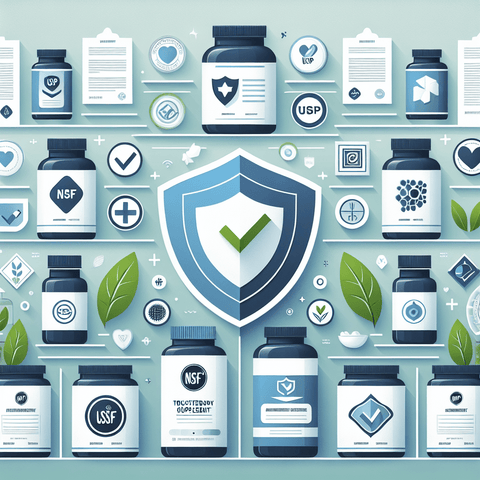
Quality-tested supplement labels tell you far more than what a product contains — they reveal how much of each nutrient you get per serving, in which chemical form, and whether the product has been verified by independent testing. Learning to read these labels accurately helps you compare products fairly, avoid misleading marketing claims, and choose supplements that match your actual nutritional needs. This guide explains how supplement labels are regulated, what third-party testing and Certificates of Analysis mean, which red flags to watch for, and how to evaluate any supplement label step by step with confidence.
How to Read Quality-Tested Supplement Labels: What This Guide Covers
Supplement labels are the primary — and often the only — source of objective information about what is actually in a product. Yet many shoppers skip straight to the front of the bottle, where marketing language dominates. This guide takes a structured approach: first explaining what a Supplement Facts panel contains and what "quality-tested" actually means, then covering why labels can be misleading, how nutritional needs differ between people, and finally how to evaluate ingredient forms, dosages, certifications, and safety warnings before making a purchase decision.
What Are Quality-Tested Supplement Labels? Definition and Key Terms
A quality-tested supplement label is a product label whose contents have been verified through independent analysis rather than taken on faith from the manufacturer. The term combines two elements: the regulated Supplement Facts panel, which lists nutrients and amounts, and quality verification, which confirms that the product actually contains what the label states, at the listed potency, without harmful contaminants.
The Anatomy of a Supplement Facts Panel: What Each Section Tells You
A standard Supplement Facts panel contains several fixed components:
- Serving size — the amount the manufacturer considers one dose. All listed amounts refer to this serving, not to the whole bottle.
- Servings per container — helps you calculate true cost per dose and how long the product lasts.
- Nutrient amounts and % Daily Value (%DV) — shows how much of each nutrient one serving provides relative to reference intake values for adults.
- Proprietary blend (if present) — a combined total weight of multiple ingredients without individual amounts.
- Other ingredients — fillers, binders, capsule materials, sweeteners, and allergens.
What "Quality-Tested" Means: Third-Party Testing, Certificates of Analysis, and cGMP Manufacturing
Quality testing typically takes three forms. Third-party testing means an independent laboratory — not the manufacturer — has analyzed the product for identity, potency, and contaminants such as heavy metals, microbes, or pesticides. A Certificate of Analysis (CoA) is the laboratory document showing those results, ideally for the specific batch you are buying. cGMP compliance (current Good Manufacturing Practices) refers to FDA-enforced manufacturing standards that all U.S. supplement makers must legally follow. Reputable brands publish CoAs or display third-party certification seals; if a company cannot produce testing documentation on request, that is itself informative.
Why Quality-Tested Supplement Labels Matter for Your Health and Safety
Accurate labels are the foundation of safe supplementation. If a label understates or overstates nutrient content, you cannot manage your total intake — including intake from fortified foods and other supplements. Independent studies have repeatedly found products sold without verification that contain dramatically more or less of the labeled ingredient than stated, or that include undeclared substances. Verified labels protect against three concrete risks: taking too little of a nutrient you actually need, exceeding safe upper limits, and unknowingly consuming contaminants or allergens.
Why Supplement Labels Can Be Misleading — and How to Spot It
Why Labels Aren't Pre-Approved: How Supplement Labeling Is Actually Regulated
A common misconception is that the FDA approves supplements before they reach the market. It does not. Under current U.S. law, manufacturers are responsible for their own label accuracy and safety, and the FDA acts largely after products are sold. Structure/function claims — phrases like "supports immune health" — do not require pre-market proof, which is why they must legally carry a disclaimer stating the claim has not been evaluated by the FDA. This regulatory structure places the burden of verification on the buyer, making third-party testing genuinely important rather than a marketing nicety.
Supply Chain Gaps, Adulteration, and Ingredient Substitution
Supplement ingredients often pass through multiple suppliers and countries before reaching a finished product. At each step, problems can occur: raw materials may be diluted, a cheaper botanical may be substituted for an expensive one, or active compounds may be added synthetically to spike test results. Analytical surveys of herbal products have occasionally found products containing none of the advertised plant species. These problems are not universal, but they explain why ingredient sourcing transparency and batch-level testing matter.
Label Red Flags: Proprietary Blends, Overhyped Claims, and Missing Details
- Proprietary blends that hide individual ingredient doses — you cannot know whether a meaningful dose of any component is included.
- Cure, treat, or disease claims, which are not legally permitted for supplements and signal a brand ignoring regulations.
- Missing lot number or expiration date, which makes traceability and potency verification impossible.
- Miraculous or time-limited language ("breakthrough," "doctors hate this") that substitutes hype for evidence.
- No manufacturer contact information, which prevents you from requesting a Certificate of Analysis.
Why Nutrient Needs Differ: The Same Label Doesn't Fit Everyone
Age, Life Stage, Diet, and Activity Level
Daily Values on labels are based on general adult reference intakes, but actual needs vary considerably. Vitamin D requirements rise with age and depend heavily on sun exposure; iron needs are higher for menstruating women and drop after menopause; vitamin B12 needs do not increase with age, but absorption often declines. People following vegan or restrictive diets may have lower intake of B12, iron, zinc, iodine, and omega-3 fats, while athletes may have higher overall energy and some micronutrient turnover. A label's %DV is a reference point, not a personalized prescription.
Absorption, Genetics, Medications, and Health Conditions
Two people taking identical doses can end up with different nutritional status. Stomach acid production, gastrointestinal conditions such as celiac or inflammatory bowel disease, genetic variants affecting folate metabolism, and common medications — including metformin, proton pump inhibitors, and certain diuretics — can all influence nutrient absorption or loss. This is why symptoms alone are an unreliable guide to deficiency, and why blood testing or professional assessment is often more informative than self-directed dose escalation.
Food First: Why Your Diet Comes Before Any Supplement Label
How Whole Foods and Fortified Foods Count Toward Your Daily Values
Before evaluating any supplement, it helps to account for what your diet already provides. Whole foods supply nutrients in forms the body has evolved to absorb, alongside fiber, beneficial plant compounds, and nutrient interactions that supplements cannot replicate. Fortified foods — such as vitamin D-fortified dairy, iodized salt, folic acid–fortified grains, and plant milks fortified with B12 and calcium — can contribute substantially to daily intake. Fatty fish provides vitamin D and omega-3s; leafy greens supply folate, vitamin K, and magnesium; nuts, seeds, and legumes are rich in minerals. When you read a supplement label, the relevant question is not "how much does this contain?" but "how much does this add to what I already get?" You can explore the broader role of whole-food nutrition in our superfoods guide.
What Quality Looks Like on Different Types of Supplement Labels
Vitamins and Minerals: Elemental Amounts and Compound Forms
Mineral labels list the elemental amount — the actual mineral content — but sometimes also name the compound, such as magnesium citrate or magnesium oxide. Different forms can differ meaningfully in absorption and digestive tolerability; magnesium oxide, for example, is inexpensive but poorly absorbed compared with citrate or glycinate. For vitamins, the chemical form matters too: vitamin D3 (cholecalciferol) versus D2 (ergocalciferol), or methylfolate versus folic acid, can have different biological behavior. A trustworthy label specifies the exact form rather than hiding behind a generic name. For a deeper dive, see our magnesium guide or mineral supplements overview.
Herbal Supplements: Standardized Extracts, Ratios, and Plant Parts
Quality herbal labels specify the plant part used (root, leaf, bark), the extraction ratio (for example 10:1, meaning ten parts raw plant concentrated into one part extract), and — critically — standardization. A standardized ashwagandha extract, for instance, declares a fixed percentage of withanolides, ensuring consistent potency from batch to batch. Labels that name only the plant without specifying extract ratio or standardization leave potency uncertain, even if the plant species itself is correctly identified.
Probiotics: CFU Counts, Strain Names, and Viability Through Expiration
Credible probiotic labels list three things: total CFU (colony-forming units) at expiration rather than "at time of manufacture," the full strain designation (genus, species, and alphanumeric strain code such as Lactobacillus rhamnosus GG), and storage requirements. Strain-specific information matters because effects are often strain-dependent, not species-dependent. A label showing only "Lactobacillus blend, 50 billion CFU" without strain codes provides far less useful information. Our probiotics and prebiotics collection provides examples of strain-transparent labeling.
When Supplementation May Be Relevant — and for Whom
Situations Where Diet Alone May Not Be Enough
For most healthy adults eating a varied diet, food can meet the majority of nutrient needs. Supplementation becomes more relevant in specific circumstances: limited sun exposure for vitamin D, strict vegan diets for B12, restricted diets or low appetites, increased losses or demands during illness recovery, and diagnosed deficiencies identified through testing. In these situations, supplements serve a targeted purpose — filling identified gaps rather than "boosting health" generally.
Groups Who Should Read Labels Extra Closely: Older Adults, Vegans, Pregnant Women, and Athletes
- Older adults — reduced B12 absorption, higher vitamin D and calcium needs, and greater medication use all increase the importance of label accuracy.
- Vegans and vegetarians — B12 is essentially absent from plant foods; iron, zinc, iodine, and omega-3 intake also warrant attention.
- Pregnant women — folic acid, iodine, iron, and vitamin D needs change, and safety thresholds matter more than ever; supplement choices should involve a healthcare provider.
- Athletes — higher energy turnover, iron losses in some populations, and increased scrutiny of products for banned substances (making certifications like Informed Choice especially relevant).
General Nutritional Support vs. Addressing a Diagnosed Deficiency
These are fundamentally different use cases. General support involves modest doses near the Daily Value, typically from a balanced multivitamin or targeted single nutrient. Addressing a diagnosed deficiency — such as confirmed low vitamin D or iron — involves specific doses and durations determined by a clinician, often with follow-up testing. Reading labels for both cases follows the same logic, but dose expectations and oversight differ substantially.
How to Choose a Quality-Tested Supplement: 5 Criteria That Matter
Ingredient Form and Bioavailability: Why the Chemical Form on the Label Matters
Bioavailability — the proportion of a nutrient your body can actually absorb and use — varies by chemical form. Well-documented examples include the superior absorption of magnesium in citrate or glycinate forms versus oxide, and the better bioavailability of vitamin D3 versus D2 in most studies. However, evidence is not settled for every form comparison, and some differences are modest. The practical takeaway is simpler: choose products that clearly identify the form, so you can make an informed comparison rather than guessing.
Dosage and Product Type: Single-Ingredient vs. Combination Formulas
Single-ingredient products make it easy to control exact doses and avoid redundancies — important if you take multiple supplements. Combination formulas add convenience and can reduce the number of products, but they require careful label reading to avoid exceeding upper limits for any one nutrient, particularly vitamin A, iron, and zinc. Always total your intake across all products and fortified foods.
Third-Party Certifications and Quality Seals: USP, NSF, Informed Choice, and More
Certification seals are among the most reliable signals on a label because the certifying bodies audit manufacturing and test products independently:
- USP Verified — confirms identity, potency, and contaminant testing.
- NSF Certified — similar scope, widely used for sports products.
- Informed Choice / Informed Sport — screens for banned substances, relevant for competitive athletes.
- NSF for Sport — combines general certification with athletic banned-substance screening.
Allergens, Added Ingredients, and Dietary Preferences
The "Other Ingredients" section reveals allergens (milk, soy, wheat, shellfish, fish), capsule origin (gelatin versus cellulose), sweeteners, colors, and fillers. U.S. law requires declaration of the nine major allergens, but cross-contamination practices vary, so people with severe allergies should look for explicit allergen-control statements. Vegetarian, vegan, gluten-free, and non-GMO claims vary in how they are verified, so certification from a third party adds weight.
Capsules, Tablets, Powders, and Liquids: Practical Format Differences
Format affects more than preference. Tablets may contain more binders and can be harder to dissolve; capsules dissolve quickly and often suit sensitive stomachs; powders allow flexible dosing but require accurate measuring and may degrade faster once opened; liquids can be easier to swallow and dose but sometimes have shorter shelf lives and need refrigeration. Choose the format you will take consistently — adherence matters more than minor format differences.
How to Read a Supplement Label Step by Step
Step 1: Check the Serving Size and % Daily Value First
Everything on the panel refers to one serving. A bottle listing three capsules per serving may deliver less of a key nutrient per capsule than a competitor's one-capsule product, and the cost comparison changes accordingly. Use %DV to judge whether a serving is trivial, moderate, or generous relative to general adult needs — and whether it risks exceeding safe upper limits when combined with other products.
Step 2: Review Active Ingredients and "Other Ingredients"
Check the chemical form of each active ingredient and confirm the doses match evidence-based ranges rather than marketing-driven megadoses. Then scan the "Other Ingredients" list for allergens, unnecessary additives, and capsule materials relevant to your dietary preferences. If a proprietary blend is listed, treat the product with extra caution since individual doses are undisclosed.
Step 3: Look for Proof of Quality: Certification Marks, Lot Numbers, and Expiration Dates
Verify that a recognizable third-party seal appears on the packaging, that a lot number is present (enabling batch-specific traceability), and that an expiration date is printed. Reputable manufacturers will supply a Certificate of Analysis on request; a company that refuses or ignores such requests has effectively answered your quality question.
Step 4: Read the Directions, Warnings, and Allergen Statements
Directions indicate when and how to take the product — with food or without, morning or evening — which often reflects absorption characteristics or tolerability. Warnings identify populations who should avoid the product, potential interactions, and maximum daily intake. These sections are legally required to appear, and their presence (or absence) is itself a quality signal.
Safety Considerations: Upper Limits, Interactions, and Label Warnings
When More Isn't Better: Upper Intake Levels and Megadoses
Every nutrient has a Tolerable Upper Intake Level (UL) — the maximum daily amount considered safe for nearly all adults. Fat-soluble vitamins (A, D, E, and K) accumulate in the body, making chronic high doses riskier than water-soluble ones. Excess vitamin A has been associated with liver and bone concerns; high-dose vitamin D over long periods can raise blood calcium; iron overload is dangerous, particularly for people with hemochromatosis. Megadose products marketed for dramatic effects deserve special scrutiny against these limits.
Medication Interactions, Health Conditions, and Pregnancy Considerations
Nutrient–drug interactions are real and sometimes clinically significant: vitamin K can reduce the effectiveness of warfarin; St. John's wort interacts with numerous medications; high-dose vitamin E may increase bleeding risk when combined with anticoagulants. People with kidney or liver disease, those scheduled for surgery, and anyone pregnant or breastfeeding should review supplement choices with a healthcare professional, since both safety thresholds and nutrient needs shift in these situations.
Diet Changes or a Supplement? How to Make the Right Call
When Adjusting Your Diet Is Likely Enough
If your intake of a nutrient is simply low because of food choices — few leafy greens, little fish, minimal dairy — improving the diet first is usually the more effective and sustainable option. Food provides nutrient combinations and cofactors that enhance absorption, and dietary changes carry essentially no risk of exceeding upper limits. A one-week food inventory often reveals gaps that are straightforward to close with meals and fortified foods.
When a Quality-Tested Supplement May Reasonably Help
Supplementation becomes reasonable when diet genuinely cannot cover a gap — such as B12 for vegans, vitamin D in winter months or for people with limited sun exposure, or iron when menstruation increases losses. It is also appropriate when a healthcare provider has confirmed a deficiency and prescribed corrective dosing. In every case, once you have decided a supplement may be useful, quality-tested supplement labels become your main tool for choosing between products. Our multivitamin guide and natural supplements collection illustrate how this information appears on verified products.
Frequently Asked Questions About Supplement Labels
Is Third-Party Testing the Same as FDA Approval?
No. The FDA does not approve dietary supplements before sale; it regulates them post-market and enforces manufacturing standards. Third-party testing is performed by independent organizations such as USP, NSF, or ISO-accredited laboratories, and it often provides more direct evidence of product quality than any regulatory claim.
Do Supplements Expire? How to Read Expiration and Potency Dates
Most supplements do degrade over time, so manufacturers print expiration dates through which potency is guaranteed. "Best by" dates are quality estimates rather than safety cutoffs, but taking degraded products means getting less of the nutrient than labeled. Store supplements according to the label — typically cool, dry places away from light — and discard products well past their date.
Does a Higher Price Always Mean Better Quality?
No. Price reflects branding, packaging, and marketing as well as ingredient cost. A moderately priced product with third-party certification and transparent labeling is often a better choice than a premium product with neither. Use certifications, CoAs, and label clarity as your quality criteria, not the price tag.
What Is a Certificate of Analysis and How Do I Get One?
A Certificate of Analysis is a laboratory document confirming what a specific product batch contains, including potency results and contaminant screening. Reputable brands publish CoAs on their websites or provide them via customer service. If a company cannot or will not supply one, consider that a significant warning sign.
What Does % Daily Value Actually Mean on a Supplement Label?
%DV shows how much one serving contributes to recommended daily intake for a typical adult, based on FDA reference values. It is a general benchmark, not a personal recommendation. A %DV near 100% is generally appropriate for everyday support; several hundred percent deserves scrutiny against upper limits.
Why Do Some Labels List a Proprietary Blend?
Proprietary blends let manufacturers combine ingredients under one total weight without disclosing individual amounts, often to protect formulations from imitation or to hide underdosed ingredients. Because you cannot verify whether any component reaches an evidence-based dose, blends make label evaluation substantially harder.
Which Magnesium Form Should I Look For on a Label?
Citrate, glycinate (bisglycinate), and malate are generally better absorbed than oxide and often gentler on digestion. Evidence comparing forms is still developing, but oxide's poor bioavailability is well established, making it a form worth avoiding when absorption is the goal.
Are "At Time of Manufacture" CFU Counts on Probiotics Misleading?
They can be. Probiotic populations decline during storage, so a product guaranteed at manufacture may contain far fewer viable organisms by expiration. Labels guaranteeing CFU "through expiration" offer a more accurate picture of what you will actually consume.
Can I Trust a Supplement Labeled "FDA Approved"?
Such a claim is a red flag, because the FDA does not approve dietary supplements. Legitimate labels carry the FDA-mandated structure/function disclaimer instead. Products claiming FDA approval are misrepresenting their regulatory status and warrant skepticism about other label claims.
How Do I Check if a Supplement Interacts With My Medication?
Read the label's warning section first, then consult a pharmacist or your prescribing physician before combining any supplement with prescription medication. Pharmacists have access to interaction databases and can flag clinically relevant combinations quickly.
What Should I Do if a Supplement Label Makes a Disease-Cure Claim?
Avoid the product. Claims that a supplement treats, cures, or prevents disease are not legally permitted, and a brand making them is disregarding labeling regulations — a poor indicator of overall quality practices.
Is It Safe to Take Several Supplements Whose Labels Each Show 100% DV?
Not automatically. Amounts add up across products and fortified foods, and for nutrients with low upper limits — vitamin A, iron, zinc, selenium, and vitamin D — stacking multiple products can exceed safe levels. Total your intake across everything you take and keep combined doses within upper limits.
The Bottom Line: Making Informed Choices With Quality-Tested Supplement Labels
A supplement label is a contract, and quality testing is what makes that contract enforceable. Start with your diet, since food remains the best source of most nutrients, and account for fortified foods before adding anything. When a genuine gap exists — whether from life stage, diet, absorption, or a confirmed deficiency — use labels systematically: verify the serving size and %DV, check the chemical form of each ingredient, confirm third-party certification and batch traceability, and respect upper limits and warnings. Needs differ from person to person, and symptoms alone rarely establish nutritional status; when in doubt, blood testing or guidance from a qualified healthcare professional is a better starting point than guesswork. Read the label first, verify the quality second, and let your individual circumstances — not marketing — make the final call.
Key Takeaways
- Supplement labels are not pre-approved by the FDA, so independent verification is the buyer's main quality safeguard.
- Third-party testing, Certificates of Analysis, and cGMP manufacturing are the three core pillars of a quality-tested supplement.
- Always read the serving size first — all amounts and %DV values refer to a single serving, not the whole bottle.
- The chemical form of a nutrient (for example, magnesium citrate vs. oxide, or D3 vs. D2) can meaningfully affect absorption.
- Herbal labels should specify plant part, extraction ratio, and standardization; probiotic labels should list strain names and CFU through expiration.
- Proprietary blends, disease-cure claims, and missing lot numbers or expiration dates are clear label red flags.
- Certification seals such as USP, NSF, and Informed Choice provide independent confirmation of identity, potency, and purity.
- Total intake matters: amounts from multiple supplements plus fortified foods can exceed Tolerable Upper Intake Levels.
- Food and fortified foods should generally come first; supplements fill specific, identified gaps rather than replacing a balanced diet.
- Blood testing and professional guidance are more reliable than symptoms for confirming a deficiency or setting appropriate doses.
Related Keywords
- quality-tested supplement labels
- how to read a supplement facts label
- third-party tested supplements
- Certificate of Analysis supplements
- USP verified supplements
- supplement label red flags
- daily value percentage meaning
- supplement bioavailability and ingredient forms
- standardized herbal extracts
- probiotic CFU count label
- tolerable upper intake level supplements
- supplement safety and drug interactions
- cGMP supplement manufacturing
- choosing a quality supplement