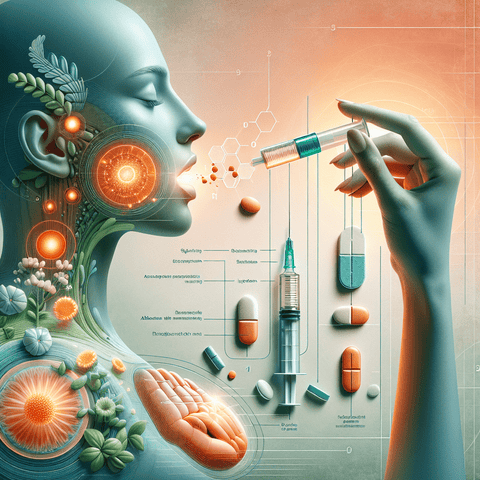
When it comes to nutrient supplementation, the route of administration can be just as important as the nutrient itself. The sublingual vs injectable absorption rate is a key consideration for anyone looking to address a deficiency or optimize their health. This guide provides a clear, broad overview of these two methods, explaining how they work, their key differences, and what factors to consider when exploring your options.
What Does Absorption Rate Mean for Supplements?
In the context of nutrition, absorption rate refers to how quickly and efficiently a nutrient enters your bloodstream after it is administered. It's a broad concept that encompasses several specific parameters:
- Bioavailability: The proportion of the nutrient that actually reaches systemic circulation and is available for the body to use.
- Onset Time: How quickly a measurable effect or elevated blood level is achieved after administration.
- Peak Concentration: The highest level of the nutrient achieved in the bloodstream after a dose.
- Duration of Action: How long the nutrient remains at an effective level in the body.
Different routes of administration, like sublingual and injectable, use different physiological pathways and therefore influence these parameters in different ways.
How Sublingual Absorption Works
Sublingual delivery involves placing a tablet, liquid, or spray under the tongue. The nutrient is absorbed directly into the bloodstream through the thin, highly vascularized mucous membranes in that area. This method's main advantage is that it bypasses the gastrointestinal tract and the liver's first-pass metabolism, which can break down or reduce the effectiveness of many orally ingested nutrients. As a result, sublingual absorption can be faster than swallowing a pill, with onset times often ranging from a few minutes up to half an hour.
Certain nutrients are well-suited for this route. Vitamin B12 is a common example, often formulated as a sublingual tablet. However, the effectiveness of sublingual absorption can vary based on the nutrient's molecular size, the specific formulation, and even individual factors like saliva production and hydration levels.
How Injectable Absorption Works
Injectable nutrients are delivered directly into the body, bypassing all absorption barriers. There are two primary methods: intramuscular (IM) injection, which delivers the nutrient into a muscle, and subcutaneous (SC) injection, which delivers it into the layer of tissue just beneath the skin. Both routes provide direct access to systemic circulation, leading to near-immediate availability and highly predictable absorption.
This method is often used in clinical settings when rapid correction of a severe deficiency is necessary. While injection allows for precise dosing and complete bioavailability, it requires training and proper technique. Risks include potential discomfort, infection at the injection site, and the need for sterile equipment, which is why professional administration or thorough instruction is generally recommended.
Bioavailability, Speed, and Nutrient-Specific Nuances
A common assumption is that a faster absorption rate is always better. While speed is critical in some situations, the ideal route depends heavily on the specific nutrient and the individual's health context. For example, some research suggests that sublingual vitamin B12 can be effective, but an injection might be the preferred route for rapidly correcting a severe deficiency causing neurological symptoms.
It's also helpful to understand that injectable forms are not universally superior. Injectable nutrients are typically reserved for specific clinical situations due to the need for supervision. Sublingual forms offer a more practical, at-home alternative, especially for ongoing support. The concept of "faster" should be balanced with considerations of safety, practicality, and the nutrient's characteristics.
Furthermore, individual variability plays a large role. Factors like age, genetics, gut health, co-existing medical conditions, and the use of certain medications can all influence how effectively a nutrient is absorbed through any route. For this reason, what works well for one person may not be the optimal choice for another. This is why a discussion with a healthcare professional is valuable for determining the best approach based on your specific needs and health history.
Why the Route of Administration Matters in Practice
The choice between sublingual and injectable routes isn't just academic; it has real-world implications for health outcomes. Understanding the practical reasons for choosing one route over another can help you make a more informed decision.
When Faster Absorption is Critical
In cases of acute nutrient deficiency, prompt correction is essential to avoid adverse health effects. For instance, severe iron or B12 deficiency can lead to anemia and neurological issues, respectively, where rapid intervention is necessary. Similarly, patients with malabsorption syndromes, such as those associated with Crohn's disease or after bariatric surgery, may not effectively absorb oral supplements. In these scenarios, injectable routes are often clinically indicated to ensure nutrients are delivered directly into circulation.
Bypassing the Gut and First-Pass Metabolism
Oral nutrients must pass through the stomach and intestines, where they may be poorly absorbed due to gut health issues, interactions with food, or other digestive variability. They also face first-pass metabolism in the liver, which can significantly reduce the amount that reaches systemic circulation. Both sublingual and injectable routes bypass the GI tract. If you have digestive conditions that impair absorption, these alternative routes can be a more effective way to deliver nutrients.
Balancing Practicality, Safety, and Convenience
For many people, sublingual supplements are a practical, non-invasive option for daily use. They are easy to administer without specialized training. Injectable nutrients, on the other hand, are a more involved process. They require proper technique, sterile supplies, and often a healthcare provider for administration. This makes them less convenient for routine at-home use and carries inherent risks like infection or injection site reactions. Weighing these factors is crucial.
Recognizing Signs of Poor Nutrient Absorption
While symptoms alone cannot provide a diagnosis, being aware of potential indicators of poor absorption can help you decide when to seek professional advice. It is important to remember that many of these symptoms are non-specific and can be caused by many other health conditions.
- Unexplained and persistent fatigue or weakness
- Neurological issues such as tingling, numbness, or cognitive difficulties
- Digestive discomfort, including bloating, diarrhea, or constipation
- Pale skin or easy bruising
- Hair thinning or brittle nails
Laboratory testing, rather than symptom tracking alone, is essential for pinpointing specific nutrient deficiencies. If you experience these issues, discussing your symptoms and getting a blood panel done with a healthcare provider is the recommended first step.
Individual Variability: Why There's No One-Size-Fits-All Answer
Predicting exactly how your body will absorb a nutrient is difficult. Several factors contribute to individual variability and make the choice between routes highly personal.
- Genetic differences that influence enzyme activity and transporter proteins.
- Age-related changes in digestive function and metabolic rate.
- Co-existing conditions like diabetes, renal disease, or gastrointestinal disorders.
- Medication use, as many drugs can interfere with nutrient absorption.
Given this complexity, a personalized approach guided by testing and professional input is the safest and most effective way to manage your nutritional status. Self-diagnosing and self-treating can be risky, especially when considering a more invasive route like injection.
Exploring Supplement Options on Topvitamine.com
For those exploring their options, beginning with a high-quality supplement is important. On Topvitamine.com, you can browse a range of products, including sublingual forms of vitamins. Paying close attention to the specific form of the nutrient is key. For example, with B12, you might see methylcobalamin or cyanocobalamin. Other specific nutrients that are often available in alternative formats can be found within our vitamin B collection.
Remember that product quality varies. Look for supplements that have transparent labeling, clearly list dosages, and indicate that they have been third-party tested for purity. Choosing reputable brands with good manufacturing practices is a crucial step in safe supplementation. You may also want to review our broader guide to multivitamin safety and usage for more general guidance.
Key Takeaways and Next Steps
Understanding the differences between sublingual and injectable absorption is a key step in making informed decisions about your health.
- Absorption rate is a multi-faceted concept involving bioavailability, onset time, and peak concentration.
- Sublingual and injectable routes offer different advantages in terms of speed, convenience, and clinical necessity.
- The optimal route depends on the specific nutrient, your individual physiology, and the urgency of the situation.
- Symptoms alone are not a reliable indicator of nutrient absorption problems; blood testing is essential.
- Always consult a healthcare professional to confirm a deficiency and determine the most appropriate and safe treatment plan.
We encourage you to explore the range of sublingual vitamins and other supplements available at Topvitamine.com. Use the website’s filters to find products that match your specific needs and always discuss any supplementation changes with a healthcare provider, who can provide personalized advice based on your health profile and lab results.