```html
Counterfeit dietary supplements are a growing concern for anyone shopping for vitamins, minerals, or herbal products. The rise of online marketplaces and complex global supply chains has made it easier for fake or adulterated products to reach consumers. This guide provides a practical framework for supplement authenticity verification, helping you understand the risks, identify red flags, and use reliable checks before making a purchase. You will learn how to distinguish between counterfeit, substandard, and verified products, and how to protect your health by making informed choices.
Supplement Authenticity Verification: Why It Matters Before You Swallow
What Does Supplement Authenticity Verification Mean?
Supplement authenticity verification is the process of confirming that a dietary supplement is exactly what it claims to be. This involves checking that the product contains the stated active ingredients in the declared amounts, is free from harmful contaminants or undisclosed substances, and is manufactured by a legitimate company under quality-controlled conditions. For consumers, this means moving beyond the marketing claims on a label and taking deliberate steps to ensure the product's integrity, from the packaging to the batch number.
The Real Cost of Counterfeit Vitamins and Supplements
The financial cost of a fake vitamin might be low, but the potential health cost is high. Counterfeit supplements may contain zero active ingredients, incorrect dosages, or harmful fillers like plaster, talc, or toxic heavy metals. In worst-case scenarios, they contain undeclared pharmaceutical drugs that can cause dangerous side effects or interactions with medications. Consuming these products means you are not getting the nutritional support you paid for, and you are exposing your body to unpredictable and potentially harmful substances.
What You Will Learn in This Guide to Spotting Fakes
This guide will equip you with a practical, step-by-step approach to supplement authenticity verification. You will learn about the common tactics used by counterfeiters, the visual and physical signs of fake products, and the most reliable methods for verification, including third-party testing seals and batch number checks. By the end, you will have a clear checklist to apply before every supplement purchase, helping you navigate the market with greater confidence and safety.
The Rising Threat of Counterfeit Supplements in the Modern Market
How Counterfeiters Operate: Where Fakes Enter the Supply Chain
Counterfeit supplements can enter the legitimate supply chain at various points. The most common entry points are unauthorized online marketplaces, third-party sellers on large e-commerce platforms, and discount or liquidation stores. Counterfeiters often create convincing replicas of well-known brands, copying packaging designs and logos. They may also sell products under their own brand names that mimic the appearance of established supplements, making it difficult for consumers to distinguish between genuine and fake items.
The Difference Between Counterfeit, Adulterated, and Substandard Products
Understanding these terms is crucial for supplement authenticity verification. A counterfeit product is an unauthorized imitation of a genuine brand, often made to look like the original. An adulterated product contains undisclosed ingredients, such as prescription drugs or synthetic compounds, that are not listed on the label. A substandard product may be genuine but fails to meet quality standards, such as containing less of the active ingredient than declared. All three pose significant health risks, but they require different detection methods.
Why Online Marketplaces Are the Primary Target for Fake Vitamins
Online marketplaces offer counterfeiters anonymity, a broad reach, and the ability to create and remove seller accounts quickly. Unlike physical retail stores, which have direct relationships with manufacturers, online platforms often aggregate products from numerous third-party sellers. This makes it difficult to verify the authenticity of each item. The lack of physical inspection and the ease of creating professional-looking product listings make these platforms the primary channel for distributing fake vitamins.
Why Supplement Authenticity Matters for Your Health and Wellbeing
The Physiological Risks of Unknown Ingredients and Contaminants
When you consume a counterfeit supplement, you are ingesting a cocktail of unknown substances. These can range from inert fillers like sawdust or flour to toxic compounds like lead, arsenic, or mercury. Some counterfeit products have been found to contain dangerous levels of heavy metals or even industrial plastics. Your body cannot process these materials safely, leading to potential toxicity, allergic reactions, or long-term organ damage.
How Inactive or Incorrect Doses Impact Nutritional Outcomes
Even if a counterfeit supplement is not toxic, it is unlikely to contain the correct dose of the active ingredient. If the product has less than the declared amount, you will not receive the intended nutritional support, and any potential benefit is lost. If it contains more, you risk consuming excessive amounts of certain vitamins or minerals, which can lead to adverse effects. This variability makes it impossible to manage your nutritional intake effectively.
The Hidden Danger of Adulterated "Hidden Drug" Ingredients
One of the most serious risks of counterfeit supplements is adulteration with pharmaceutical drugs. This is particularly common in products marketed for weight loss, sexual enhancement, or sports performance. These hidden ingredients, such as sibutramine or sildenafil, can have powerful effects on the body and interact dangerously with other medications you may be taking. They are present without your knowledge or consent, turning a simple supplement into an unregulated drug.
Common Signs Your Vitamins Might Be Counterfeit
Visual Red Flags: Packaging, Labeling, and Pill Appearance
Start your supplement authenticity verification by examining the product closely. Look for misspelled words, blurry printing, or a logo that is slightly off in color or proportion. The bottle or box may feel flimsy, or the label may be misaligned. Check the pills themselves; they should be uniform in size, shape, and color. Any significant variation could indicate a counterfeit product.
Texture, Taste, and Smell: Organoleptic Clues of Fake Supplements
Your senses can be valuable tools. A genuine vitamin tablet often has a slightly bitter or specific taste, while a counterfeit may taste chalky, sweet, or have an unusual chemical flavor. The smell can also be a giveaway; authentic products typically have a mild, recognizable odor. Powders should have a consistent texture, and capsules should not feel overly sticky or brittle. If something seems off, trust your instincts.
Suspect Pricing and Deals That Are Too Good to Be True
If a deal seems too good to be true, it probably is. Counterfeiters often price their products significantly below the market rate to attract buyers. Be wary of deep discounts, especially on premium brands. While sales and promotions are normal, a price that is 50-70% lower than the manufacturer's suggested retail price is a major red flag. Legitimate retailers do not typically sell authentic products at such steep losses.
Why Missing or Smudged Batch Numbers and Expiration Dates Are Warning Signs
Legitimate manufacturers print clear, consistent batch numbers and expiration dates on their packaging. These codes are used for quality control and traceability. If the batch number is missing, smudged, or difficult to read, it suggests the packaging was not produced under standard quality controls. A missing expiration date is a clear sign that the product is not authentic or has been tampered with.
How to Perform Supplement Authenticity Verification
Step 1: Scrutinize the Outer Packaging and Tamper-Evident Seals
Before opening any supplement, inspect the outer packaging. The cellophane wrap should be tight and intact. The bottle should have a tamper-evident seal under the cap that is securely attached and shows no signs of being broken or re-glued. Any damage or inconsistency in the packaging is a reason to be suspicious and return the product.
Step 2: Check the Label for Regulatory Compliance and Language
In many regions, supplement labels must include specific information, such as a "Supplement Facts" panel, a list of ingredients, the net quantity, and the name and address of the manufacturer or distributor. Check for this information. Also, look for any disclaimers required by law, such as "This statement has not been evaluated by the Food and Drug Administration." A lack of these standard elements is a red flag.
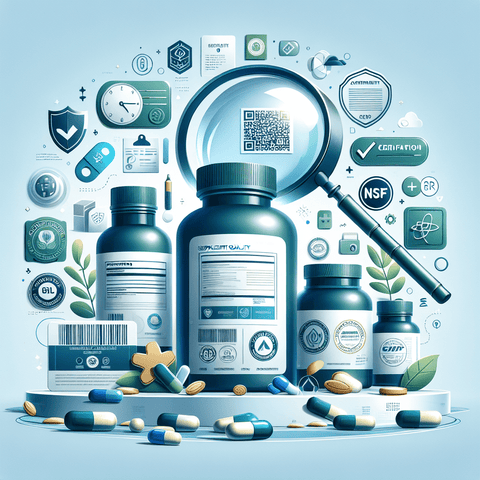
Step 3: Look for Third-Party Testing Seals and Certifications
One of the most reliable indicators of authenticity is a seal from an independent third-party testing organization. These seals, such as NSF International, USP, or ConsumerLab, indicate that the product has been tested for quality, purity, and accurate labeling. While the absence of a seal does not automatically mean a product is fake, the presence of a legitimate seal is a strong indicator of authenticity.
Step 4: The "Dissolve Test" and Other Home-Based Checks
There are some simple home tests you can perform, though they are not definitive. For example, a standard vitamin tablet should dissolve in a glass of vinegar or water within a certain time frame. If it remains hard for hours, it may not break down properly in your body. However, this test is not reliable for all supplement forms, such as time-release capsules or softgels, and should be used with caution.
Step 5: Cross-Reference the Batch Number with the Manufacturer
If you have a batch number, you can often contact the manufacturer directly to verify the product's authenticity. Many brands have a customer service line or a verification page on their website where you can enter the batch number. This is one of the most definitive checks you can perform, as only the manufacturer can confirm whether a specific batch was produced by them.
Understanding Third-Party Testing and Quality Certifications
What Does NSF International Certification Mean for Supplements?
NSF International is a global public health organization that tests and certifies products. For supplements, NSF certification means the product has been tested to ensure it contains only the ingredients listed on the label, in the declared amounts, and is free from harmful levels of contaminants. This certification provides a high level of assurance about the product's authenticity and quality.
USP Verification vs. GMP Compliance: What Is the Difference?
USP (United States Pharmacopeia) verification is a voluntary program where a supplement is tested for purity, potency, and consistency. A USP-verified product meets strict standards for ingredient identity and label accuracy. GMP (Good Manufacturing Practices) compliance, on the other hand, refers to the manufacturing process itself. While GMP compliance is required by law in the U.S., it does not guarantee the final product's accuracy. USP verification goes a step further by testing the finished product.
ConsumerLab, Informed Choice, and Other Independent Verification Programs
ConsumerLab is an independent testing company that evaluates supplements and publishes its findings. Informed Choice is a certification program specifically for sports supplements, testing for banned substances. These programs provide valuable information to consumers, but it is important to check the specific product on their websites, as not all products from a brand may be tested.
How to Verify a Company's Claims of "Third-Party Tested"
Many brands claim to be "third-party tested," but this claim can be vague. To verify, look for a specific seal from a recognized organization like NSF or USP. If a company says they test their products but do not display a seal, you can check their website for certificates of analysis (COAs). A COA is a document from an independent lab that confirms the product's contents. If you cannot find this information, the claim may be unsubstantiated.
The Link Between Supplement Solutions and Counterfeit Risk
Why Complex Supplement Blends Are Harder to Verify than Single Ingredients
Multi-ingredient blends, such as multivitamins or proprietary blends, are more challenging to verify than single-ingredient products. With a single ingredient, you can more easily test for its presence and quantity. With a blend, you have to test for multiple components, which is more complex and expensive. This complexity makes it easier for counterfeiters to substitute cheaper ingredients or omit expensive ones, as it is harder to detect.
Comparing Capsules, Tablets, Powders, and Liquids in Authenticity Checks
The form of a supplement can affect how you verify its authenticity. Tablets and capsules can be visually inspected and weighed, and you can perform a dissolution test. Powders are harder to verify visually, but you can check their color, smell, and solubility. Liquids can be checked for clarity, color, and consistency, but are more difficult to test for active ingredients at home. Always rely on third-party testing for definitive verification.
How Packaging Formats (Bottles, Blister Packs, Sachets) Differ in Counterfeit Risk
Blister packs and individual sachets are generally considered more tamper-evident than bottles because they are sealed at the point of manufacture. However, counterfeiters can also replicate these formats. Bottles are more common and easier to refill or reseal, making them a higher risk for tampering. Regardless of the format, you should always check the packaging for quality and the presence of authentication features.
The Role of Nutritional Support: From Verification to Informed Choice
Why Quality Assurance Is the Foundation of Any Supplement Regimen
Before you can consider the benefits of any supplement, you must first ensure its quality and authenticity. Taking a verified product is the only way to ensure you are getting the nutrients you intend to take. Quality assurance is the foundation upon which any safe and effective supplement regimen is built. Without it, you are essentially taking a gamble with your health.
How Bioavailability Influences Product Selection
Bioavailability refers to the amount of a nutrient that is absorbed and used by your body. Even if a supplement is authentic, its form can affect how well you absorb it. For example, some minerals are better absorbed in certain chelated forms, and some vitamins are fat-soluble and require dietary fat for absorption. When selecting a supplement, it is wise to consider the bioavailability of the specific nutrient form.
Lipid-Based Formulas, Chelated Minerals, and Other Bioavailable Forms
Some supplement forms are designed to enhance absorption. Lipid-based formulas, such as those using liposomes or emulsions, can improve the absorption of certain nutrients. Chelated minerals, where a mineral is bound to an amino acid, are often better absorbed than inorganic forms. These advanced forms can be more effective, but they are also more expensive and may be more attractive targets for counterfeiters due to their higher value.
What to Look for on a Supplement Label of a Verified Product
Ensuring Active Ingredients Are Listed in Standardized Units (mg, mcg, IU)
A credible supplement label will list the amount of each active ingredient in standardized units such as milligrams (mg), micrograms (mcg), or International Units (IU). This allows you to compare products and understand the dosage. If a label uses vague terms like "proprietary blend" without specifying individual amounts, it is harder to assess what you are actually consuming.
Reading the Supplement Facts Panel vs. the Marketing Claims
Focus on the "Supplement Facts" panel, which is the regulatory standard for listing ingredients and their amounts. This panel provides factual information, whereas the marketing claims on the front of the bottle are often promotional. By learning to read this panel, you can make a more informed decision about the product's actual contents, regardless of the marketing language.
Spotting Proprietary Blends and the "Other Ingredients" Trap
Proprietary blends are mixtures of ingredients where the exact amounts of each are not disclosed. While this is legal, it makes it difficult to know if you are getting an effective dose of each component. Also, pay attention to the "Other Ingredients" section, which lists fillers, binders, and excipients. A long list of artificial additives or allergens may be a reason to choose a different product.
Identifying Allergens, Fillers, and Artificial Additives
If you have allergies or sensitivities, always check the label for common allergens like soy, gluten, dairy, or shellfish. Also, be aware of artificial colors, flavors, and preservatives. A cleaner label with fewer additives is often a sign of a higher-quality product, though it is not a guarantee of authenticity. Always cross-reference with third-party testing.
Practical Steps to Protect Yourself When Buying Vitamins
The Safest Retail Channels: Direct from Manufacturers vs. Third-Party Sellers
Purchasing directly from a manufacturer's website or from a trusted, authorized retailer is the safest way to ensure authenticity. Buying from third-party sellers on large marketplaces introduces a higher risk of counterfeit products. When you buy directly, you are eliminating the intermediary and reducing the chance of receiving a fake item.
Why You Should Avoid Deep-Discount Clearance Sites for Supplements
Websites that specialize in deep discounts or clearance sales for supplements are often a haven for counterfeit goods. These sites may source products from liquidators who buy unsold or expired stock, which can include fakes. The low prices are a primary attraction for counterfeiters. It is generally safer to pay a standard price for a supplement from a reputable source than to risk a deep discount on a fake.
How to Use the Manufacturer's Website for Authenticity Verification
Many reputable brands have dedicated sections on their websites for authenticity verification. This may include a tool to enter the batch number, a list of authorized retailers, or images of the official packaging. Before purchasing, check the manufacturer's website to see if the retailer you are using is listed as an authorized seller. This is a simple and effective way to protect yourself.
The Importance of the "Consumer Complaint" or "Contact Us" Feature
A legitimate company will have a clear and accessible way for consumers to contact them with questions or complaints. If you are unsure about a product's authenticity, you can reach out to the manufacturer directly. A lack of contact information or a non-responsive customer service team is a significant red flag. A reputable company will stand behind its products and be willing to address your concerns.
When High-Quality Supplementation May Be Worth Considering
Addressing Potential Gaps in a Restricted or Poor-Quality Diet
Even with a balanced diet, some individuals may have nutritional gaps. This is particularly true for those following restrictive diets, such as vegan or elimination diets, or those who have a poor-quality diet high in processed foods. In these cases, a verified supplement may help address specific deficiencies. However, the first step should always be to improve dietary quality.
Supporting Elevated Requirements During Life Stages (Aging, Pregnancy, or Stress)
Certain life stages can increase your nutritional needs. For example, pregnant women need more folic acid and iron, older adults may need more vitamin D and calcium, and individuals under high stress may have increased requirements for B-vitamins. In these situations, a supplement can be a useful tool to support health. Always consult with a healthcare professional to determine your specific needs.
The Role of Supplements in Addressing Known Dietary Insufficiencies
In some cases, supplements are recommended to address specific dietary insufficiencies, such as vitamin D deficiency in regions with low sunlight or iron deficiency anemia. These are medical situations that should be diagnosed and managed by a healthcare professional. Self-supplementing without a confirmed deficiency is not recommended and could lead to excessive intake.
Safety, Interactions, and Professional Guidance
Why Counterfeit Products Pose a Higher Risk of Negative Interactions
Because counterfeit products can contain undeclared drugs or incorrect doses, they pose a significantly higher risk of negative interactions with your medications or other supplements. You cannot predict how an unknown substance will react in your body. This unpredictability makes it even more critical to ensure the authenticity of any supplement you take, especially if you are on medication.
Medication Interactions and Pre-Existing Conditions
Even authentic supplements can interact with medications or affect pre-existing health conditions. For example, vitamin K can interfere with blood thinners, and St. John's Wort can reduce the effectiveness of many drugs. It is essential to discuss all supplements you are taking with your physician or pharmacist to avoid adverse interactions, especially if you have a chronic health condition.
When to Consult a Physician or Registered Dietitian Before Supplementing
If you are considering taking a supplement for a specific health concern, or if you have a pre-existing medical condition, it is always best to consult a physician or a registered dietitian. They can help you assess your dietary intake, determine if you have a genuine need for supplementation, and guide you toward safe and effective products. This is a crucial step in making an informed decision.
Decision-Support Framework for Informed Supplement Selection
Assessing Your Dietary Intake Before Buying Supplements
Before purchasing any supplement, take a critical look at your diet. Track your food intake for a few days and compare it to recommended dietary guidelines. This will help you identify potential gaps. In many cases, you can address these gaps by making simple dietary changes, such as eating more fruits, vegetables, or whole grains, rather than turning to a supplement.
Matching the Supplement Format to Your Lifestyle and Needs
Consider which supplement format fits your lifestyle. If you have difficulty swallowing pills, a powder or liquid might be more suitable. If you travel frequently, individual sachets or blister packs are more convenient. The format you choose should be one that you will consistently use and that fits your daily routine. This is an important factor for long-term adherence.
Balancing Cost vs. Quality: When to Invest in Verified Brands
While price is a consideration, it should not be the primary factor. Investing in a verified brand with third-party testing is worth the extra cost for the peace of mind and safety it provides. The potential health risks and lack of efficacy associated with cheap, counterfeit products far outweigh the savings. Think of it as an investment in your health.
How to Use the Supplement Authenticity Verification Checklist Before Purchasing
Create a simple checklist based on the steps in this guide. Before you buy, ask yourself: Is the packaging high quality? Does the label have a Supplement Facts panel? Is there a third-party testing seal? Is the price reasonable? Can I verify the batch number? By running through this checklist, you can systematically reduce your risk of purchasing a counterfeit product.
Final Takeaway: Empowering Your Health with Informed Choices
The Bottom Line on Supplement Authenticity Verification
Supplement authenticity verification is not just about avoiding fakes; it is about taking control of your health and ensuring that the products you consume are safe and effective. By being vigilant and informed, you can navigate the complex supplement market with confidence. This process empowers you to make choices that genuinely support your wellbeing, rather than putting your health at risk.
Integrating Safe, Verified Supplements into a Balanced Lifestyle
Supplements are meant to complement, not replace, a healthy diet and lifestyle. Once you have verified the authenticity of a product, you can integrate it into a broader approach to health that includes balanced nutrition, regular physical activity, and adequate sleep. This holistic perspective ensures that you are not relying on supplements as a quick fix, but rather using them as one component of a comprehensive wellness strategy. For more information on specific nutrients, you can explore our guides on Vitamin D, Magnesium, or Multivitamins.
Key Takeaways
- Supplement authenticity verification is essential for ensuring you receive the intended nutrients and avoid harmful contaminants.
- Counterfeit supplements are most commonly found on online marketplaces and through unauthorized third-party sellers.
- Visual red flags include poor packaging quality, misspellings, smudged batch numbers, and inconsistent pill appearance.
- Third-party testing seals from organizations like NSF, USP, and ConsumerLab are strong indicators of product authenticity.
- You can verify a product by cross-referencing its batch number directly with the manufacturer.
- Complex blends and high-value products are more likely to be targeted by counterfeiters.
- Always prioritize dietary improvement before considering supplementation, and consult a healthcare professional when in doubt.
- Investing in verified brands is a worthwhile cost for the safety and efficacy it provides.
Frequently Asked Questions
What is the most reliable way to verify a supplement's authenticity?
The most reliable method is to purchase directly from the manufacturer or an authorized retailer and then cross-reference the product's batch number on the manufacturer's official website. Additionally, looking for a third-party testing seal from a recognized organization like NSF or USP provides a high level of assurance.
Are there any home tests to check if vitamins are real?
Some simple tests, like the vinegar dissolution test for tablets, can give you an idea of whether a product might break down properly. However, these tests are not definitive and cannot confirm the presence or quantity of active ingredients. They should not be used as a substitute for third-party verification.
What does a third-party testing seal mean for a supplement?
A third-party testing seal means that an independent organization has tested the product to verify that it contains the ingredients listed on the label, in the declared amounts, and is free from harmful contaminants. It is a strong indicator of quality and authenticity.
Can counterfeit supplements be dangerous?
Yes, counterfeit supplements can be very dangerous. They may contain toxic substances like heavy metals, or undeclared pharmaceutical drugs that can cause severe side effects or dangerous interactions with your medications. They may also contain no active ingredients, meaning you are not getting the intended nutritional support.
Why are supplements sold on online marketplaces more likely to be fake?
Online marketplaces allow third-party sellers to list products without rigorous verification. This anonymity and ease of access make it easier for counterfeiters to distribute fake products to a wide audience. The lack of physical inspection and the ability to create professional-looking listings contribute to the higher risk.
What should I do if I suspect I bought a counterfeit supplement?
Stop taking the product immediately. Contact the manufacturer to report your suspicion and verify the batch number. You should also report the seller to the platform where you made the purchase and consider reporting the incident to the relevant health authority, such as the FDA in the US.
Is it safe to buy supplements from discount or clearance websites?
Buying supplements from deep-discount or clearance websites carries a higher risk of receiving counterfeit products. These sites often source from liquidators who may handle unsold or expired stock, which can include fakes. It is generally safer to purchase from reputable, authorized retailers.
Does the absence of a third-party seal mean a supplement is fake?
No, the absence of a third-party seal does not automatically mean a product is fake. Many legitimate manufacturers do not seek third-party certification. However, the presence of a seal is a strong indicator of quality and authenticity, and its absence should prompt you to do more research.
Can a supplement be authentic but still contain the wrong amount of an ingredient?
Yes, this is possible. A product could be a genuine brand but be substandard due to manufacturing errors or poor quality control. This is why third-party testing is valuable, as it checks for accurate labeling and potency, ensuring that the product contains what it claims to contain.
What are the signs of an adulterated supplement?
Adulterated supplements often have an unusually strong or quick effect, which is a sign they may contain hidden pharmaceutical drugs. They may also cause unexpected side effects. If a product's effects seem more like a drug than a nutrient, it is a major red flag for adulteration.
How can I check if a brand is reputable?
Research the brand's history, look for transparent information about their manufacturing processes, and check if they have third-party testing seals. You can also look for reviews from independent sources and see if they have a responsive customer service team that can answer questions about their products.
Is it necessary to consult a doctor before taking any supplement?
While not necessary for all supplements, it is wise to consult a healthcare professional before starting any new supplement, especially if you have a pre-existing medical condition, are taking medications, are pregnant or breastfeeding, or are considering high doses. They can help you determine if a supplement is safe and appropriate for you.
Related Keywords
- supplement authenticity verification
- counterfeit vitamins
- fake supplements
- third-party testing supplements
- NSF certified supplements
- USP verified supplements
- spot fake vitamins
- supplement quality control
- verify supplement batch number
- adulterated supplements
- safe supplement buying