The Supplement Facts panel is a cornerstone of informed supplement use. It is the standardized label required on all dietary supplements sold in the United States, providing a snapshot of what is inside the bottle. For anyone looking to incorporate vitamins, minerals, or other supplements into their routine, knowing how to read this panel is an essential skill. It empowers you to understand exactly what you are consuming, compare products effectively, and make choices that align with your nutritional goals.
What Is the Supplement Facts Panel?
The Supplement Facts panel is the informational label mandated by the U.S. Food and Drug Administration (FDA) for dietary supplements. It is the equivalent of the Nutrition Facts label found on food products, but it is tailored specifically to the unique format of supplements such as vitamins, minerals, herbs, and other botanicals. The purpose of the panel is to provide consistent and reliable information about the product's contents, enabling consumers to make educated decisions about their health.
The panel is required to appear on the product label and must include specific information in a set order. It is not merely a suggestion but a legal requirement for any product marketed as a dietary supplement. Understanding the different sections of the panel is the first step in using it effectively. This is the primary reference point for determining the actual contents of a supplement, separate from any marketing claims made on the front of the bottle.
How to Read the Core Sections of the Label
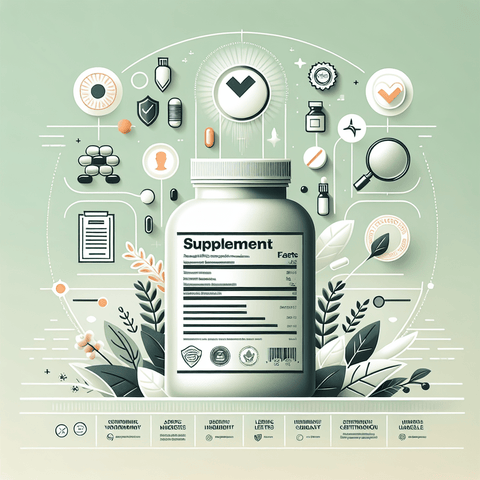
The Supplement Facts panel is divided into clear sections, each serving a distinct purpose. By understanding each part, you can quickly assess any supplement. The core components include the serving size, calorie information, a list of nutrients with their amounts, the percent daily value, and the ingredient list.
Serving Size and Servings Per Container
The 'Serving Size' is the first piece of information on the panel. It tells you the quantity of the product that constitutes a single dose, such as one capsule, one tablet, one scoop, or one gummy. It is crucial to note the unit of measurement (e.g., 2 capsules) to understand how many you need to take at a time. The 'Servings Per Container' figure then tells you how many of those serving sizes are in the entire package. This helps you calculate how long the product will last if you follow the recommended serving.
Amount Per Serving and Percent Daily Value (%DV)
Following the serving size, the panel lists nutrients. For each nutrient, it provides the 'Amount Per Serving' in a metric unit such as milligrams (mg), micrograms (mcg), or International Units (IU). Next to this is the 'Percent Daily Value' (%DV). The %DV indicates how much a single serving of the nutrient contributes to a standard daily diet, which is generally based on a 2,000-calorie intake. A %DV of 20% or more is considered a high amount, while 5% or less is considered low. For nutrients without an established Daily Value, the %DV will be listed as 'N/A' or may be absent.
Ingredients and Other Components
Below the nutrient list, the panel identifies the ingredients used in the product. This includes the active ingredients that are listed in the nutrient section, as well as 'Other Ingredients'. Other ingredients are inactive components such as binders, fillers, coatings, and natural flavors. These are not necessarily bad, but they are important for people with allergies or sensitivities. The panel also lists the total weight of any 'Proprietary Blend', which is a mixture of ingredients where only the total amount is disclosed, not the amount of each specific ingredient within that blend.
Key Differences from the Nutrition Facts Panel
While both labels provide nutritional information, the Supplement Facts panel and the Nutrition Facts panel on conventional foods serve different purposes. The Nutrition Facts panel is for foods and beverages, with a standard set of nutrients that are required to be listed. It leads with calories, total fat, cholesterol, and sodium.
In contrast, the Supplement Facts panel is for dietary supplements and does not have a standard nutrient list. Instead, it lists the nutrients and botanical or herbal ingredients that are present in the product. It also does not typically lead with calories unless the product contains significant calories. A critical difference is the inclusion of 'Other Ingredients' in the supplement label, which is not a standard feature of the Nutrition Facts panel. Understanding these differences is key to not confusing the two labels.
Why This Information Matters for Your Supplement Choices
The Supplement Facts panel is a powerful tool for comparing products and making smart choices. Without it, you would have no reliable way to know how much of a particular nutrient you are getting from a supplement. The panel allows you to compare the potency of different brands, ensuring you are getting an appropriate dose. It also helps you avoid an excessive intake of certain nutrients if you are already consuming them through other supplements or fortified foods.
Comparing Different Supplements
When comparing two similar products, start by checking the serving size. One brand may list a serving as one tablet, while another may list it as two. This will change the comparison. Next, look at the 'Amount Per Serving' for the nutrients you care about. If one product provides 100mg of a nutrient and another provides 200mg, they are not equivalent doses. Finally, check the %DV to understand the relative contribution of that serving to your daily needs. This approach is far more reliable than comparing based on price per bottle alone.
Checking for Allergens and Unnecessary Additives
Reviewing the 'Other Ingredients' list is essential for individuals with allergies or dietary restrictions. It can disclose the presence of common allergens like soy, milk, egg, fish, or shellfish, which are often used as fillers or binding agents. It also lets you see if the product contains artificial colors, sweeteners, or preservatives that you may prefer to avoid. By scanning this section, you can make a more informed decision about whether a supplement fits your personal dietary needs.
Understanding the FDA Disclaimer and Safety Considerations
Most supplement labels will include the statement: 'This statement has not been evaluated by the Food and Drug Administration. This product is not intended to diagnose, treat, cure, or prevent any disease.' It's important to understand what this means. It does not imply the product is unsafe, but rather that the manufacturer has not submitted the product for FDA approval to treat a specific condition. Dietary supplements generally do not require pre-market approval from the FDA, so this disclaimer is standard practice.
Safety is a primary consideration when selecting a supplement. Always follow the recommended serving size listed on the panel, and be mindful of the total amount of nutrients you are consuming from all sources. The panel can help you ensure you are not exceeding tolerable upper intake levels for certain vitamins and minerals. Pay attention to warnings on the label, which may indicate that the product is not intended for use by children or pregnant women, or that you should consult a healthcare professional before use.
Important Considerations When Using Supplements
The Supplement Facts panel is your first source of truth, but it's not the only thing to consider. Beyond the label, think about the overall quality and manufacturing practices of the brand. Third-party testing, such as USP or NSF certification, can provide an additional layer of confidence in the product's purity and potency. The label may also include information about the country of origin and batch codes, which can be useful for traceability.
- Always review the serving size to understand how many tablets or capsules you need to take.
- Use the %DV to determine if a nutrient is present in a significant or negligible amount.
- Check 'Other Ingredients' to avoid potential allergens and unnecessary additives.
- Look for contact information and batch numbers to verify product transparency.
Exploring Supplement Categories at Topvitamine
To apply what you have learned, exploring a range of products can be helpful. At Topvitamine, we offer a wide variety of supplements to support different health and wellness goals. Whether you are looking for a daily multivitamin or a specific nutrient like vitamin D, understanding the Supplement Facts panel will help you choose the right product. You can browse our selection of natural supplements and multivitamin guides to see how different products meet various nutritional needs. Remember that this guide is for educational purposes and is not a substitute for professional medical advice.