Why Supplement Regulation Matters More Than You Think
Walk into any pharmacy, grocery store, or online marketplace, and you’ll find aisle after aisle of vitamins, minerals, herbal remedies, and specialty formulas. Each bottle promises better energy, improved digestion, stronger immunity, or enhanced performance. But how much do you really know about what’s inside that capsule you’re about to swallow? The answer lies in understanding supplement regulation—a topic that rarely crosses the average consumer’s mind but deserves far greater attention.
What “Regulation” Actually Means for the Products You Buy
Regulation, in the context of dietary supplements, refers to the laws, rules, and standards that govern how these products are manufactured, labeled, marketed, and sold. It determines who is responsible for ensuring safety, what quality standards must be met, and what information must be put on a label. Regulation exists to create a baseline of accountability between the manufacturer and the consumer, even if the specifics vary significantly from one country to another.
The Core Difference Between Dietary Supplements and Pharmaceuticals
A fundamental distinction lies in how these two categories are treated by authorities. Pharmaceuticals—medications that treat or manage disease—must undergo rigorous clinical trials and receive explicit approval from a regulatory body before hitting the market. They are designed to act on the body in a potent, targeted way. Dietary supplements, on the other hand, are categorized as food products. They are intended to support or contribute to overall health, not to cure, treat, or prevent any specific disease. This means their regulatory pathway is fundamentally different and places significantly more responsibility on the manufacturer.
What This Article Will Clarify About Your Supplement Choices
By the end of this article, you will have a clear understanding of how the supplement industry is actually regulated, where the gaps in that system lie, and why it matters for your decision-making. You’ll learn what “FDA-approved” really does and doesn’t mean, how regulatory standards differ around the world, and why third-party testing is one of your most valuable tools. Most importantly, you’ll discover the practical steps you can take to identify safe, trustworthy products that align with your needs — without relying on misleading marketing claims.
How Dietary Supplements Are Regulated in the United States
To understand what is in your supplements, you must first know who is watching over them. The United States has a unique system that places a high level of trust in the manufacturer, which has both strengths and significant implications for consumers.
The Role of the FDA and the Dietary Supplement Health and Education Act (DSHEA)
The regulatory framework for dietary supplements in the U.S. is built around the Diet Supplement Health and Education Act passed in 1994. This law defines specifically what a supplement is, establishes a new category for these products distinct from conventional food and drugs, and sets the ground rules for how they are treated by the Food and Drug Administration (FDA). Under DSHEA, supplements are regulated as food, but with a crucial caveat: they bypass the pre-market safety review that is required for pharmaceutical drugs.
What “FDA-Approved” Does and Does Not Mean for Supplements
It’s common to see marketing materials that tout “FDA-approved” as a badge of validation. When it comes to supplements, you should know that the FDA does not approve dietary supplements in the way it approves new medications. In fact, under the current legal framework, supplement manufacturers are responsible for substantiating the safety and accuracy of their products before they even bring them to market. They don’t submit the formula for review by the FDA prior to distribution. This means that “FDA-approved” is generally either a misunderstanding or a marketing tactic that can be misleading. The FDA’s publicly available compliance data showed that its authority over supplements is largely retrospective. If and when the agency discovers that a product proves unsafe, contains undeclared ingredients, or has misleading labeling, they have the legal power to act, but they operate best after the fact rather than before.
The Manufacturer’s Responsibility for Safety and Labeling
This legal framework puts a high degree of responsibility squarely on the shoulders of the manufacturer. You are entrusted with the duty to safely evaluate ingredients, create formulations, ensure correct labeling, and comply with all applicable quality standards. This self-regulation is a double-edged sword. It can promote innovation and speed, but it also creates room for inconsistency and dishonesty. The FDA does mandate that the products are labeled properly and cut with standardized “Supplement Facts” panels, but the burden of proving the truthfulness of those claims sits with the company that made them, not with the government. The agency can step in if a product is found to be adulterated or misbranded, but this often occurs in reply to reports, not routine inspection.
Post-Market Surveillance: What Happens When Problems Arise
Because there is no pre-approval stage, supplement “policing” happens after the product is already for sale. The FDA relies on post-market surveillance mechanisms such as consumer complaints, inspections, and the review of the research and clinical trials that requires most companies to file their own new products. If a serious health risk emerges — like a spike in adverse events, a contamination issue, or a label that would clearly mislead consumers — the FDA can take action. That may include issuing a recall, issuing a warning letter, or seeking to have the product removed from shelves. The key takeaway is that this happens reactively. That means you can potentially be exposed to an unsafe or mislabeled product for weeks or months before anything is done about it on a larger scale.
A Brief Look at Supplement Regulation Around the World
The United States is just one part of the global picture, and regulations can vary dramatically from country to country, which becomes particularly important when buying imported products.
The European Union operates under a more precautionary framework. The European Food Safety Authority (EFSA) plays a significant role in reviewing the science behind ingredients and in establishing allowed maximum amounts. Many categories of ingredients, especially vitamins and minerals, may be placed on the market and can be subject to more proactive notification. The situation in the United States is a broadly different approach, with more emphasis on precautionary and principle, where the manufacturer holds more primary responsibility for safety. This is not to say that one system is better than the other, but important to understand the differences.
Why Regulatory Standards Differ and What That Means for Imports
For the consumer, this difference is particularly relevant when ordering supplements from other parts of the world. A product manufactured in Europe has gone through a different evaluation pathway with different criteria and legal standards than one made in the United States. When you purchase an imported supplement, you may be relying on the regulatory standards of a country you know little about. While many international brands have their own rigorous quality control and respect a high bar, you also have to consider that importing a product from a region with less stringent enforcement into a country with post-market surveillance could potentially leave some gaps in overall safety and oversight.
What “Good Manufacturing Practices” (GMPs) Really Involve
Beyond the broader legal framework, the more detailed protection from manufacturer transparency comes from specific production protocols.
Quality Control in Sourcing, Production, and Testing
Good Manufacturing Practices, or GMPs, are a set of detailed standards that companies are expected to implement in their facility. These standards cover everything from the quality of the raw ingredients they source from their suppliers to hygiene in their facilities, traceability of batch numbers, and how products are tested at the end of the line. Think of GMPs as the system that ensures a supplement is produced within a consistent, clean, and containable environment. It is the difference between a company that carefully tests its raw materials for heavy metals or contaminants and one that simply blends ingredients based on a software formula. Regular inspection programs, both government-run and private-company led, are designed to ensure that the manufacturer follows these established, scientifically-based protocols.
How GMPs and Third-Party Testing Can Help Close Compliance Gaps
While GMPs set an operating standard, they don’t guarantee that every single claim is independently verified. This is where third-party testing comes in. These organizations are independent of the supplement industry and that run their own protocols to check that the product actually contains the labeled ingredients in the correct amounts, and that it is free from heavy metals, pesticides, and other contaminants. They also often check that the product doesn’t have any hidden substitution somewhere between the raw material and the final capsule. This is an important step because it provides an extra layer of assurance beyond the manufacturer’s own internal inspection. If a company applies for the stamp of a certified independent organization, it signals a commitment to being transparent and to adhering to objective, external standards. For consumers, this is often the most reliable way to verify that what is on the bottle is what is in the capsule.
Why These Regulatory Gaps Matter for Your Health
All this talk about laws and standards isn’t just technical jargon — it has direct implications for your health and well-being.
Potential Risks of Poorly Regulated or Mislabeled Products
A supplement might be contaminated with heavy metals, it might contain a different botanical entirely than what is listed on the label, or it might have a fraction of the active ingredient that the label claims. In some cases, products have been found to contain undisclosed pharmaceutical ingredients such as steroids, prescription antidepressants, or stimulants that can be dangerous when taken in unregulated amounts. These are not theoretical risks but have been documented violations with a considerable public health concern, particularly in products marketed for weight loss, bodybuilding, or sexual performance. The gap in the regulatory standards is that it makes it possible, although not reasonable for every scammer to slip through the cracks. While most dietary supplement manufacturers are responsible and honest, the potential for a problem patient gap is real.
The Problem with Proprietary Blends and Misleading Labels
Another area of concern is a specific and legally accepted practice called a “proprietary blend”. This is allowed on a Supplement Facts panel, where a manufacturer lists the total weight of a mixture of ingredients without breaking down the precise amount of each one. While it protects the manufacturer’s trade secret formula, it can also be a way to hide a low dose of a more expensive or essential ingredient behind a heavier dose of a cheaper fillers. A label might claim “Joint Support Blend – 500mg” but not tell you that 400mg of that is a common filler, and only 100mg is a specific compound that is linked to the benefits. This limits your ability to make an informed decision about the effectiveness of the dose.
How to Separate Legitimate Products from Potential Health Risks
Using the regulatory information is key to spotting a trustworthy product from a risky based on a label. A product that is willing to disclose the individual doses of its ingredients, is transparent about its sourcing and manufacturing, and has gone through the institution of third-party testing is showing you that it has a high level of quality control. On the other hand, a product with a large proprietary blend, a list of overly bold promises, and no mention of testing or manufacturing partners should be treated with more hesitation. This isn’t a guarantee that doesn’t exist along with a product, but it’s the first and most important filter you can use to make a decision.
Recognizing the Signs of a Substandard or Higher-Risk Supplement
The ability to survey and identify a supplement’s list of “red flags” is a core skill for anyone wanting to take charge. Fortunately, some warning signs are relatively easy to spot.
Red Flags in Labeling and Marketing Claims
Language that is absolute, revolutionary, or miraculous should be your first cue to be suspicious. Phrases like “clinically proven cure,” “immediate results,” “100% guaranteed,” or “cures all types of...” are usually alarm. Legitimate supplements are more likely to use science-backed, nuanced language rather than a language that promises an outcome that sounds too good to be true. Also, be wary of powerful personal testimonials that are, especially if they sound medical advice. Additionally, a lack of a clear company name, address, or contact information can suggest that the business is not being fully transparent.
When Ingredient Lists Don’t Add Up
Take a look at the supplement facts panel. Does it list all of the active ingredients? Are the doses listed in clinically relevant amounts and not hidden within a proprietary blend? Compare it to what you know from reliable scientific literature. You often see the key players in different promises with no dosage or a tiny amount that you know is too low to have a meaningful effect. It’s also worth checking for the absence of an excipients list. If you notice allergens that aren’t clearly labeled, or if the label seems vague about what inactive ingredients are, you might want to investigate a little further.
Why “Natural” and “Pure” Are Not Regulated Claims
Terms like “natural,” “pure,” and “clean” are not legally defined for dietary supplements. They are marketing softeners meant to create a sense of safety that may not be actually in the product. A bacteria farm could use the same amount of pesticides and other chemicals as a regular crop, and “natural” does not automatically mean safe, tested, or free from contamination. Similarly, “pure” is not a strictly validated claim. You should always evaluate a product by its third-party certifications, testing, and specific ingredient list rather than the banner of a general category on the bottle.
Who Should Be Especially Careful with Supplements?
While regulatory gaps can affect anyone, some groups of people are more vulnerable to the negative effects of a poorly formulated or mismanaged supplement.
Interactions with Prescription Medications
Your prescription medication is not just about using it alongside another drug—it also can be about how supplements interact with your body. For example, St. John’s Wort can metabolize certain medications, reducing their effectiveness. If take high doses of Vitamin K and you are on a blood thinner like Warfarin, you can reduce the effectiveness of a drug. That means the risk is not just about the supplement not working, it’s also about altering the positive effect of your prescribed medication and potentially leading to serious health consequences.
Considerations for Pregnancy, Children, and Specific Health Conditions
If you are pregnant, you need to be extra careful with some botanical ingredients, and also the dosage of many vitamins must be carefully balanced. A multipurpose herb that may be harmless for an adult can cause adverse reactions or be dangerous for a developing baby. Similarly, children’s immune systems and growth are more sensitive. Their bodies are not scales of your adult, and a supplement that is safe for an adult is not necessarily safe for a child. You also need to consider specific health conditions. If you have kidney or liver issues, certain compounds that you should avoid might have a higher risk of building up in the body creating toxicity problems, so the regulatory nuances become even more important, and the dose must be extremely precise.
The Importance of Discussing Supplements with a Healthcare Provider
For anyone in a high-risk category, the most vital step is to have an honest conversation with your doctor before adding a new supplement to your routine. They can assess your medical history, and your current medications, and help determine whether a supplement is necessary at all, or if it might pose a risk. This is not a bureaucratic hurdle but a medical intervention. A qualified healthcare professional can also help you navigate product labels and make a more informed decision that aligns with your specific individual needs.
How to Choose a Supplement You Can Trust
Once you’ve made an informed decision that you want a supplement, you don’t have to navigate the market blindly. There are reliable strategies to help you choose a product that is more likely to contain what it says and to be free from harmful substances.
Looking for Third-Party Certifications and Independent Verification
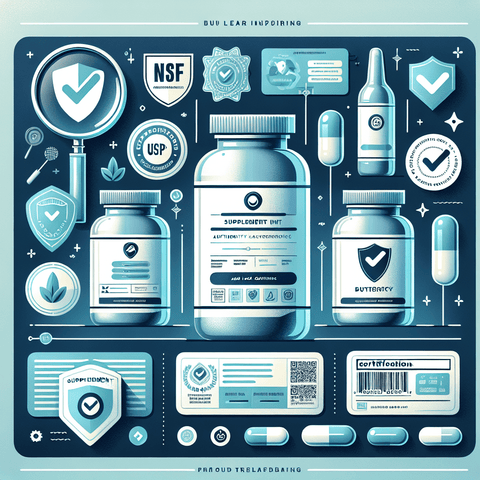
Look for seals on the packaging from independent organizations like USP (U.S. Pharmacopeia), NSF International, or Informed Choice. These bodies audit the manufacturer’s facility and run their own tests to ensure that the product contains the correct ingredients and is free from a list of banned substances and contaminants. These aren’t just translated results, but they are proof of a slightly more rigorous process that goes beyond basic GMPs. You can also look up the supplement’s certificate of analysis or batch-specific test results that some companies have published on their website and that provide an extra layer of confidence.
How to Read a Supplement Label for Form, Dosage, and Bioavailability
Reading a dietary supplement label is about more than just checking that the ingredient is there. You need to understand the form.
- Form: Behind each nutrient, there are several forms to choose from. For example, magnesium can come as magnesium citrate, magnesium oxide, glycinate, or chloride. Each of these forms can have a different absorption rate and effectiveness. In a product label, you should see the actual form of the ingredient, not just a generic name.
- Dosage: See how the dosage is expressed and how it relates to the mineral’s elemental amount.
- Bioavailability: Some ingredients are best absorbed in an empty stomach, while others if taken with food. You should also consider whether it is better absorbed in a capsule, or capsule that has a delayed release.
For any supplement, you should look at the “Supplement Facts” panel to see the exact active amounts and check whether there are any allergens listed.
Capsules, Tablets, Powders, and Liquids: Practical Differences
The way a supplement is delivered can be a functional-application factor. For instance, capsules are convenient and easy to take, but they’re not ideal for anyone who has difficulty swallowing. Tablets can be more compact but may also contain binders and fillers that you don’t need. Powders can be easily mixed into a drink and often contain extra flavorings or sweeteners. Liquid may be more quickly absorbed but also may have a more limited ingredient to be shelf-stable or can have a less pleasant taste. Consider your dietary preference, lifestyle, and any sensitivities such as common fillers or allergens. If you’re interested in regular and quality control, you might prefer a capsule or a tablet from a company that has clear transparency and standards, over a bulk powder that you have no way to have precise control over for your intake.
Why You Should Avoid Certain Proprietary Blends
As a general rule, it is best to look for formulations that you can see in full transparency. A formula that lists every ingredient and its exact dose gives you the ability to assess the concentration and evaluate whether clinical research supports the dose. A proprietary blend that hides amounts makes it impossible for you as a consumer to verify if you’re paying the correct amount of the active compounds. The best approach may be to choose supplements that either provide a single high-quality ingredient (such as that, nurcurcumen/curcumin) or a combination formula that shows transparency and effective evidence. For your own good, using supplements that completely obscure their formula is a red flag.
The Value of Single-Ingredient vs. Combination Formulas
Single-ingredient supplements have a clear advantage: you know exactly what you are getting and you can assess the dose and any evidence-based research. If you simply deficient in a nutrient like vitamin D, a single-ingredient product gives you all the control and the least amount of room for error. It is a very clean way to build your health. Combination formulas can be convenient, because you can take one product to cover several bases. However, a combination means that you need to look more carefully at the potential interactions between the ingredients, and it can be less transparent about the dosage of each. You might end up taking a very low dose of a key nutrient and a high amount of something that is unnecessary for your body. For many people, a high-quality multivitamin or a targeted combination can be beneficial, but it is the practical approach to perform your research and understand the role (and the dose) of every ingredient in the mix.
Practical Steps for Making an Informed Decision
The reality is that your health is highly personal, and the decision to take a supplement should not be taken lightly. Here are the practical steps to think about.
When Dietary Changes Should Come First
Before you consider a supplement, step back and evaluate your diet. Most nutrients are best absorbed from a whole food matrix. For example, your body often has different absorption and efficiency when you get calcium from leafy greens, dairy, and phosphatidylcholine as opposed to a supplement pill. If your breakfast is not balanced, a supplement will not be a substitute. If you have a specific, e.g., low vitamin C ideally, you can ask about increasing your citrus, berries, and peppers. The cornerstone of a healthy keystone is a balanced diet over a supplement routine.
How to Identify a Genuine Nutritional Gap
There is a difference between fearing a possible nutritional gap and identifying a real one. If you are feeling tired often, it could be due to a host of issues, not always but perhaps a vitamin or mineral. The safest, most time-efficient way is to get a blood test. Testing your B12, iron, and vitamin D levels can reveal a specific genuine deficiency. If you aren’t getting enough animal proteins, or your gut health is impaired, you might be benefitting from supplementation. But absent a concrete reason to suspect suitability, such as a specific condition or dietary restriction, it’s better to work with a professional to understand your unique fields.
Questions to Ask Before Adding Any Supplement
- Does my diet need to be adjusted first? Before you take an extra pill, it might be more effective to eat the foods that naturally contain the necessary nutrients.
- Is this additional supplement necessary? Will you have the same a result with a diet or lifestyle adjustment?
- What is this specific in dose and form? Is the amount on the label likely to produce the expected effect for you, or is it just a marketing gesture?
- Have I looked at the third-party testing? Are the labels investigated by an independent agency to show they meet the same quality standards?
Building a Simple Checklist for Evaluating Any Product
Your checklist should be your best friend.
- Look for the “Supplement Facts” panel. If it’s a large list of blend but no exact amounts of key parts, that should be a no.
- Check for third-party seals. That is the most reliable signal for production quality.
- Read beyond the logo. Research the ingredient and compare it to established evidence.
- See if it fits in your food lifestyle. If you avoid gelatin, check the capsule source.
- Consider your medication. Check if any known interaction exists with the supplement you are considering.
Key Takeaways
- Dietary supplements are regulated by the FDA under the DSHEA, but they are not approved for safety or efficacy before they hit the market.
- The manufacturer holds the legal responsibility for a product’s safety, label accuracy, and ingredient quality.
- The term “FDA-approved” is misleading in the context of dietary supplements; the FDA generally acts after a product has been sold, not before.
- “Natural” and “pure” are not regulated terms. Third-party testing and certifications by USP, NSF, or Informed are more reliable markers of quality.
- Proprietary blends can hide ingredient doses, making it difficult to gauge whether a product is effective and safe.
- Your diet should be the primary focus for nutritional health, take supplements only if you have a genuine gap.
- Ask your healthcare provider about interactions with your prescription medications and your specific health status.
- Always look for third-party seals and the completed ingredient list to build your trust in a product before you take it.
Frequently Asked Questions
Are dietary supplements regulated by the FDA?
The FDA regulates dietary supplements as a category of food, but not in the same way it regulates drugs. It does not review a product for safety or efficacy before it appears on the market. The FDA enforces its rules post-market.
What does FDA-approved mean for a supplement?
It does not mean the FDA has independently verified the safety or effectiveness for that product. It could mean that the manufacturer has, or it might be an omission that isn’t backed by actual evidence.
What is a proprietary blend and why is it a problem?
A proprietary blend is a combination that shows the total weight of the blend but not the amount of each individual ingredient. It means you can’t know if a key ingredient is actually dosed at a useful level, which can be a way for a company to hide a small amount of expensive ingredient.
How can I know if a supplement is safe and safe?
Look for third-party product certifications from organizations like USP, NSF, or Informed Choice. These groups test the content for accurate labeling and check for contaminants, which provides an additional layer of assurance.
Are “natural” supplements safer than “synthetic” ones?
Natural doesn’t always mean safe or better. The not all “natural” ingredients are safe, and some can be highly toxic or interact poorly with medications. The same standard, form, and testing requirements should be applied to all, regardless of whether the product comes from a plant or is synthesized.
Can I take a supplement if I take prescription medications?
You should always check with your healthcare provider first. Some supplements can affect how your body processes medication, making drugs less effective or increasing the risk of side effects.
Is it safe to take a high dose of a vitamin?
Very high doses of any nutrient can be harmful, including fat-soluble vitamins like A, D, E, and K, which can build up in your body to toxic levels. Stick to recommended doses and consult a doctor to determine if your situation has a different need based on an objective measurement.
Do I need a supplement if I eat a healthy diet?
A diet and healthy lifestyle may be enough to meet all your nutritional needs for most people. A supplement is not a replacement for a good diet. You only might need to add a higher dose of a particular nutrient to fill a proven deficiency you or your doctor has identified.
What is the difference between a supplement and a pharmaceutical drug?
Supplements are meant to support health and are treated more like food. Drugs are used to treat, prevent, or cure a disease. Drugs must undergo a stringent drug approval process and laboratory testing, while supplements do not. It is important not to mix a drug’s effect and a supplement’s support.
How do I read a label to find the correct dose?
Always look for the amount of each ingredient in regular units. In a supplement that uses a proprietary blend, or if the ingredients list doesn’t specify the dose within a blend, you cannot evaluate it. A good label lists all active ingredients, the form they are in, and the specific amount per serving.
Are hybrid supplements from Europe better and safer than products from the U.S.?
Regulatory pathways are different in Europe, with different systems for approval and pre-market. However, this doesn’t mean all products from there are more reliable or that all U.S. products are not. The quality of any source should be verified through the same channels: third-party testing and GMP certification.
Related Keywords
- supplement regulation
- dietary supplement
- FDA approval
- supplement safety
- good manufacturing practices
- third-party testing
- proprietary blends
- natural supplements
- vitamin safety
- manufacturer
- supplement label
- quality control
- DSHEA
- safety
- supplement claims