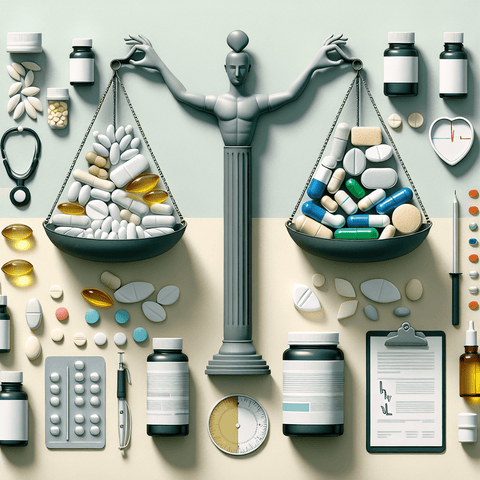
Supplements and prescription medications can affect each other in ways that change how well a drug works or how you feel. This guide explains supplement side effects with prescriptions, how interactions occur in the body, which medications and supplements carry the highest risk, and the practical steps — timing, testing, and product selection — that can help you use nutritional support more safely. If you take any prescription, understanding these basics before starting a supplement is one of the simplest ways to protect your health.
Introduction: Why Supplement Side Effects With Prescriptions Deserve Your Attention
Many people take at least one supplement alongside a prescription medication, often without realizing the two can interact. Some combinations reduce a drug's effectiveness, others amplify its effects, and a few create entirely new side effects. Because supplements are widely perceived as "natural" and harmless, these risks are frequently overlooked.
Understanding supplement side effects with prescriptions is not about avoiding supplements altogether. It is about knowing which combinations deserve caution, which symptoms may signal a problem, and when a conversation with your doctor or pharmacist is essential.
What you'll learn in this guide
- What interactions are: How supplements and medications interfere with each other in the gut, liver, and kidneys.
- Which combinations are highest risk: Common medications and supplements known to interact.
- Warning signs: Symptoms that may suggest something is not working as it should.
- Practical strategies: Timing, food, and lifestyle approaches that lower risk.
- How to choose wisely: What to look for on a label and in a product if you do decide to supplement.
What Are Supplement–Prescription Interactions? Key Terms Explained
Side effects vs. interactions vs. contraindications
These terms are often used interchangeably, but they mean different things. Side effects are unwanted effects a substance can cause on its own — for example, iron supplements commonly cause constipation. An interaction occurs when a supplement changes how a medication behaves, or vice versa. A contraindication is a situation where a combination should generally be avoided because the risk outweighs the benefit.
How supplements and medications can interact: absorption, metabolism, and amplified effects
Interactions generally happen through three main mechanisms:
- Absorption interference: Minerals such as calcium, magnesium, and iron can bind to certain medications — including some antibiotics and thyroid medication — in the digestive tract, reducing how much of the drug is absorbed.
- Metabolism changes: The liver uses enzyme systems (notably the CYP450 family) to break down many drugs. Some herbs, most famously St. John's Wort, can speed up or slow down these enzymes, altering drug levels in the blood.
- Amplified effects: When a supplement and a medication work in the same direction, their effects can add up. Omega-3 fatty acids and high-dose vitamin E, for instance, both have mild blood-thinning properties, which may compound the effect of anticoagulant medication.
Common supplement categories involved in drug interactions
A few categories account for a large share of clinically relevant interactions. Vitamin K directly opposes blood thinners such as warfarin. St. John's Wort affects dozens of medications through liver enzyme induction. Minerals — calcium, magnesium, iron, zinc — compete with certain drugs for absorption. And some supplements, like high-dose vitamin E, influence bleeding risk. Our guides to vitamin K and herbal supplements cover these topics in more depth.
Why Supplement Side Effects With Prescriptions Matter for Your Health
How the body processes supplements and medications together
Both supplements and drugs travel through the same processing pathways. They are absorbed in the gut, metabolized largely in the liver, and cleared primarily by the kidneys. Because these pathways are shared, whatever you take — food, supplements, medications — competes for the same resources. A supplement that occupies the same transporter or enzyme as a drug can raise or lower that drug's effective dose without you changing a single prescription.
Real-world risks: reduced drug effectiveness, enhanced drug effects, and unexpected side effects
The practical consequences fall into three patterns. First, a supplement can render a medication less effective — the classic example is taking calcium with a thyroid medication and ending up with under-treated hypothyroidism. Second, a supplement can intensify a drug's effect, as when herbal products raise the blood levels of antidepressants or statins. Third, new side effects can appear that neither substance would cause alone. All three scenarios matter, and none are always obvious from the outside.
Common Signs That a Supplement May Be Interacting With Your Medication
Digestive symptoms, unusual fatigue, and changes in how your medication feels
Possible signs include nausea, stomach upset, or constipation that begins after starting a supplement; unusual tiredness or dizziness; a return of symptoms the medication previously controlled; or side effects from the medication that suddenly feel stronger. Unexplained bruising or bleeding is a particularly important sign if you take any blood-thinning medication.
Why symptoms alone can't confirm an interaction — and when to seek professional assessment
Symptoms are useful clues but poor evidence. Fatigue, for example, has dozens of possible causes, and digestive upset may stem from the supplement itself rather than an interaction. Only a clinician can connect the dots — sometimes with blood tests that measure drug levels, thyroid function, or nutrient status. If you suspect an interaction, don't stop your prescription on your own; speak to your doctor or pharmacist first.
Risk Factors: Which Supplements and Prescriptions Are Most Often Involved
High-risk medications: blood thinners, thyroid medication, antibiotics, antidepressants, blood pressure drugs
- Blood thinners (e.g., warfarin, DOACs): Sensitive to vitamin K, omega-3s, vitamin E, ginkgo, and several herbs.
- Thyroid medication (levothyroxine): Absorption is reduced by calcium, magnesium, and iron taken too close together.
- Certain antibiotics: Minerals can bind to tetracyclines and fluoroquinolones, cutting absorption substantially.
- Antidepressants: St. John's Wort in particular can raise serotonin-related risks and alter drug metabolism.
- Blood pressure medications: Potassium-containing salt substitutes and some supplements can shift electrolyte balance.
High-risk supplements worth knowing
Beyond those already mentioned, ginkgo biloba has been associated with increased bleeding risk, and licorice-root products can affect blood pressure and potassium levels. Even basic minerals matter: our guides to calcium and magnesium explain both their benefits and their timing requirements around medication.
Personal factors that raise interaction risk: age, kidney and liver function, multiple prescriptions, and polypharmacy
Older adults clear drugs more slowly, and reduced kidney or liver function amplifies this. The more prescriptions you take — a situation called polypharmacy — the more opportunities exist for a supplement to insert itself into an already complex picture. People with five or more medications are generally considered at heightened risk.
Why Interaction Risk Differs From Person to Person
Dosage, timing, supplement form, and individual metabolism
A low-dose supplement taken hours away from a medication may pose little risk, while the same product taken at high dose and swallowed simultaneously with a pill could interfere meaningfully. Genetic differences in liver enzyme activity also mean two people taking the identical combination can experience very different outcomes.
Diet, existing nutrient status, genetics, and overall health status
Someone with an already adequate diet has less to gain from a supplement — and possibly more to lose from an interaction. Gut health, alcohol intake, smoking, pregnancy, and chronic conditions all shift the equation. This is a core reason blanket advice about supplements is rarely appropriate.
Food, Lifestyle, and Timing Strategies to Reduce Interaction Risk
Why food-first approaches and spacing doses matter
Meeting nutrient needs through food first remains the safest strategy: nutrients in whole foods arrive in smaller amounts, accompanied by other food components, and rarely reach the concentrations that interfere with drug absorption. When supplements are used, spacing them at least two hours (and for thyroid medication, commonly four hours) away from interacting medications can dramatically reduce absorption interference — a detail your pharmacist can confirm for your specific prescription.
Timing your supplements and prescriptions: which combinations need separation
Mineral supplements (calcium, magnesium, iron, zinc) and thyroid medication, certain antibiotics, and some osteoporosis drugs generally require separation. Fat-soluble vitamins (A, D, E, K) absorb better with a meal containing fat, which may also influence timing decisions. Keep a simple written schedule of everything you take and when — it makes pharmacist consultations far more productive.
Lifestyle factors that influence both medication and supplement effects
Alcohol can stress the same liver enzymes that metabolize many drugs and can worsen some supplement side effects. Caffeine can amplify stimulant-like effects of certain medications. Dehydration affects kidney clearance of both drugs and minerals. Consistent habits — taking medications at the same times daily, with consistent food patterns — make interactions easier to predict and detect.
Where Supplements Fit: Nutritional Support Without Compromising Your Medication
Common clinically relevant situations: nutrient depletion from long-term medications
Some medications genuinely affect nutrient status over time. Long-term metformin use has been associated with reduced vitamin B12 absorption, and proton pump inhibitors (PPIs) have been linked to lower magnesium and B12 status with prolonged use. In these cases, supplementation may be reasonable — but ideally guided by blood testing rather than guesswork. Our overview of B vitamins covers food sources and safe-use considerations.
Why correcting a nutrient gap differs from treating a medical condition
Supplements can help restore nutritional adequacy, but they are not substitutes for prescribed treatment. Correcting a documented low B12 level is a nutritional intervention; adjusting an antidepressant dose is medical care. Keeping these roles distinct protects both your safety and the effectiveness of your prescriptions.
When Supplementation May Be Relevant
Situations where diet alone may fall short
Supplementation becomes more relevant in specific circumstances: restricted diets (vegan, elimination diets), malabsorption conditions such as celiac disease or Crohn's disease, older age (reduced absorption and lower vitamin D synthesis from sun exposure), pregnancy (increased folate, iron, and iodine needs), and documented medication-related nutrient depletion. In these groups, food-first doesn't always mean food-only.
The role of blood testing and professional assessment before supplementing
Symptoms rarely identify a deficiency reliably — fatigue alone could reflect low iron, low B12, low vitamin D, poor sleep, or an underlying condition. For nutrients with validated tests (B12, ferritin, vitamin D, magnesium status in some cases), a blood test tells you whether supplementation is needed at all, and gives you a baseline to measure against. This is particularly important if you take medications, because it prevents unnecessary supplementation and its associated interaction risks.
How to Choose a Quality Supplement If You Take Prescription Medication
Ingredient form and bioavailability: why form matters
Nutrient forms differ in absorption and tolerability — for example, magnesium citrate is generally better absorbed but more laxative than magnesium oxide, and chelated minerals may be gentler on the stomach. Better absorption can also mean a lower dose is needed, which may itself reduce interaction risk. Evidence comparing some newer forms (such as certain B12 or mineral chelates) remains limited, so be wary of absolute claims.
Dosage: why "more" isn't better when medications are involved
Higher doses increase both side-effect risk and interaction potential. Staying near recommended daily intakes — unless a clinician has specifically identified a need for more — is a sensible default. Pay attention to upper intake levels, particularly for fat-soluble vitamins and minerals.
Single ingredients vs. combination formulas: reading between the lines
Single-ingredient products make it easy to know exactly what you're taking and to spot potential interactions. Combination formulas and multivitamins are convenient but require reading the full ingredient list — sometimes a "multimineral" contains iron or iodine you didn't intend to take. If you prefer a multi, our multivitamin guide explains how to evaluate ingredients and dosages.
Purity, third-party testing, and certifications to look for
Look for products manufactured under recognized quality standards (such as GMP) and, where available, third-party testing for identity and purity. Herbal supplements deserve extra scrutiny, since misidentified or adulterated botanicals are a documented source of unexpected interactions.
Allergens, fillers, and added ingredients to check
Check labels for allergens (gluten, soy, dairy, nuts), unnecessary sweeteners or colorants, and — if relevant to you — vegan or vegetarian suitability. These details don't usually affect interactions but do affect long-term tolerability.
Capsules, tablets, powders, and liquids: practical differences
Capsules often dissolve predictably and mask taste; tablets may contain more binders; powders allow flexible dosing but require accurate measuring; liquids absorb quickly but may be less stable. Choose the form you will actually take consistently — a supplement that sits in the cupboard benefits no one.
How to Read a Supplement Label When You're on Prescription Medication
Serving size, active ingredient amounts, and forms of nutrients
Start with the serving size — nutrient amounts are listed per serving, not per capsule. Note the chemical form of each nutrient (e.g., magnesium oxide vs. magnesium citrate) and the total across all products you take, so you don't accidentally double up on the same nutrient from a multivitamin plus a single-ingredient product.
Proprietary blends, warnings, and interaction statements on labels
Proprietary blends list ingredients without individual amounts, making dose assessment difficult — treat these with caution. Reputable labels include warnings such as "consult your doctor if you are taking anticoagulants." Take these statements seriously; they exist because real interactions have been documented.
Who Should Be Especially Careful — and Who May Benefit Most From Nutritional Support
Older adults, people on multiple medications, and those with chronic conditions
These groups face the highest interaction risk but may also have the greatest genuine need for nutritional support — a real tension best resolved with professional input. Kidney and liver conditions deserve particular caution, as they alter the clearance of both drugs and supplements.
Pregnant or breastfeeding individuals: special considerations
Pregnancy raises requirements for several nutrients (folate, iron, iodine, vitamin D) while narrowing the safety margin for others — high-dose vitamin A, for example, is not advised in pregnancy. Herbal supplements require special caution during pregnancy and breastfeeding due to limited safety data. Always coordinate supplements and prescriptions with your prenatal care provider.
Safety First: When to Talk to Your Doctor or Pharmacist
Questions to ask before starting any supplement with a prescription
- Does this supplement interact with any of my current medications?
- Should I take it at a different time of day than my prescription?
- Is there a test that would tell me whether I actually need it?
- What dose is appropriate — and what would be too much?
- What symptoms should prompt me to stop and call you?
Red-flag symptoms that warrant prompt medical attention
Seek prompt medical advice for unexplained bruising or bleeding, black or bloody stools, severe dizziness or fainting, a racing or irregular heartbeat, sudden confusion, yellowing of the skin or eyes, or a rapid return of symptoms your medication had controlled. These can indicate a serious interaction or an unrelated problem that needs evaluation.
Decision Guide: Diet, Timing, or Supplementation — What's Right for You?
When dietary changes and timing adjustments may be enough
If your diet is varied and your nutrient status is unknown, improving food intake (leafy greens, legumes, oily fish, nuts, dairy or fortified alternatives) is usually the first and safest step. If a known absorption interaction exists, simply separating doses in time may resolve it without any product change.
When additional nutritional support may reasonably be considered
Supplementation may be worth discussing when blood testing shows a genuine gap, when your diet or health condition makes sufficiency unlikely, or when a medication is known to deplete a specific nutrient. Even then, moderate doses close to recommended intakes are generally preferable to high doses.
Key factors to weigh before choosing a product
Consider whether you actually need it (ideally confirmed by testing), whether it interacts with your prescriptions, the nutrient form and dose, product quality signals, and whether the format fits your routine. When in doubt, a short conversation with your pharmacist costs nothing and often settles the question.
Key Takeaways: Managing Supplement Side Effects With Prescriptions Safely
- Supplements can reduce, amplify, or alter the effects of prescription medications through absorption, liver metabolism, or additive effects.
- High-risk medications include blood thinners, thyroid medication, certain antibiotics, antidepressants, and blood pressure drugs.
- High-risk supplements include vitamin K, St. John's Wort, ginkgo, high-dose vitamin E, omega-3s, and mineral supplements taken too close to certain drugs.
- Spacing interacting supplements and medications apart in time is one of the most effective, simplest risk-reduction steps.
- Food-first nutrition carries the lowest interaction risk; supplements fill specific gaps rather than replace good eating patterns.
- Symptoms alone cannot confirm an interaction or a deficiency — testing and professional assessment are more reliable.
- Long-term medications such as metformin and PPIs have been associated with specific nutrient depletions that may warrant monitored supplementation.
- Older adults, people on multiple medications, and pregnant or breastfeeding individuals should always consult a healthcare professional before combining supplements with prescriptions.
- Choose products with transparent labels, sensible doses, known nutrient forms, and quality manufacturing.
Frequently Asked Questions
Can I take vitamins with my prescription medication?
Often yes, but it depends on the specific combination. Some vitamins and minerals are harmless alongside most drugs, while others — such as vitamin K with warfarin or minerals with thyroid medication — require care. Check with your pharmacist before adding anything new.
How long should I wait between a supplement and my medication?
For supplements that interfere with absorption, such as calcium, magnesium, or iron, a common guideline is at least two hours, and often four hours with levothyroxine. The right interval depends on your specific medication, so confirm with your pharmacist.
What supplements should never be taken with blood thinners?
Supplements that affect bleeding — including high-dose vitamin E, omega-3s at high doses, ginkgo, and St. John's Wort — warrant caution with anticoagulants, and vitamin K intake should remain consistent with warfarin. Always consult your prescriber before combining anything with a blood thinner.
Does St. John's Wort really interact with medications?
Yes. St. John's Wort induces liver enzymes that speed the breakdown of many drugs, including some antidepressants, oral contraceptives, and immunosuppressants, potentially reducing their effectiveness. It is one of the most interaction-prone herbal supplements on the market.
Can metformin cause vitamin B12 deficiency?
Long-term metformin use has been associated with reduced B12 absorption in some people. Many clinicians periodically check B12 levels in long-term metformin users and recommend supplementation if levels are low.
Why can't I take calcium with my thyroid medication?
Calcium binds to levothyroxine in the digestive tract, significantly reducing absorption and potentially leaving hypothyroidism under-treated. Separating them by about four hours largely avoids the problem.
What are the signs of a supplement–drug interaction?
Possible signs include new digestive upset, unusual fatigue or dizziness, stronger-than-usual medication side effects, the return of symptoms your medication had controlled, or unexplained bruising. Any of these should prompt a conversation with your doctor or pharmacist.
Are "natural" supplements always safer with prescriptions?
No. Natural does not mean interaction-free. Some of the most clinically significant drug interactions involve herbal products, precisely because plant compounds can be potent modulators of liver enzymes.
Should I get a blood test before taking supplements?
For nutrients with validated tests — vitamin D, B12, ferritin (iron stores) — testing is often more useful than guessing, particularly if you take medications. It prevents both unnecessary supplementation and missed deficiencies.
Can I take a multivitamin with multiple prescriptions?
It's often possible, but a multivitamin's mineral content can interact with certain drugs, and doses vary widely between products. Bring the full label to your pharmacist to review against your medication list.
Is it safe to take magnesium with antibiotics?
Magnesium can bind to certain antibiotics — notably tetracyclines and fluoroquinolones — and reduce their absorption. Timing them several hours apart usually resolves the issue; your pharmacist can advise on the exact interval.
Do omega-3 supplements interact with blood pressure medication?
Omega-3 fatty acids may have a modest blood-pressure-lowering effect and mild anticoagulant properties. At typical doses this is usually not a problem, but high doses combined with blood pressure or anticoagulant medication warrant a discussion with your doctor.
Related Keywords
- supplement side effects with prescriptions
- supplement drug interactions
- vitamin interactions with medications
- herbal supplements and prescription drugs
- St. John's Wort drug interactions
- medication nutrient depletion
- how to take supplements with medication safely
- calcium and levothyroxine interaction
- supplements that interact with blood thinners
- polypharmacy and supplement safety
- supplement timing with medication
- metformin vitamin B12 deficiency
- supplement label reading guide
- third-party tested supplements