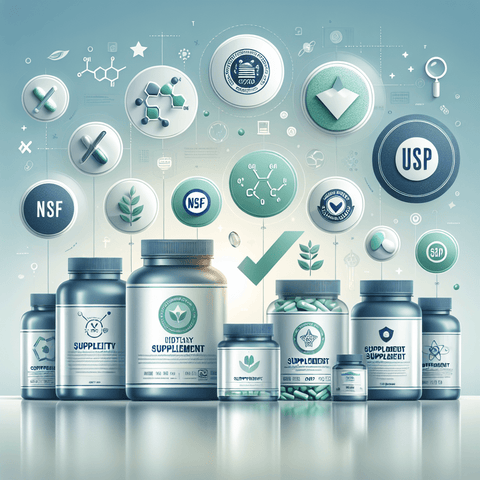
Supplement testing standards are the benchmarks used to confirm that a dietary supplement contains what its label promises—in the correct amount, free from harmful contaminants, and made under controlled conditions. Because supplements generally reach shelves without pre-market approval from regulators, these standards are the main safeguard against mislabeled or contaminated products. This guide explains what supplement testing actually checks, how certifications such as USP and NSF work, how to read a Certificate of Analysis, which red flags suggest a product may fall short, and who benefits most from independently tested supplements—so you can evaluate any product with confidence rather than guesswork.
Introduction: Why Supplement Testing Standards Matter
The supplement market is enormous and lightly gated. In the United States, products can legally be sold without evidence of effectiveness or pre-market safety review, and regulators typically act only after problems surface. Independent laboratory surveys have repeatedly found products containing far less—or more—of an ingredient than labeled, and others contaminated with heavy metals, undeclared pharmaceuticals, or substituted plant material. Supplement testing standards exist to close this gap. Understanding them turns label claims from marketing language into verifiable information, whether you take a simple vitamin D capsule or a complex botanical formula.
What Are Supplement Testing Standards?
Supplement testing standards are the scientific benchmarks used to confirm three things about a finished product: that it contains the ingredients listed, at the stated amounts, and free from harmful levels of contaminants. They span the entire production chain—from raw material verification to finished-product analysis—and underpin both legal manufacturing requirements and voluntary certification programs.
Identity, Potency, and Purity: What Supplement Testing Actually Checks
Quality testing rests on three pillars:
- Identity: confirming the ingredient is genuinely what the label names—the correct plant species, bacterial strain, or chemical form, not a cheaper substitute.
- Potency: verifying that the amount per serving matches the label and holds up through the product's shelf life, not just on the day it was made.
- Purity: screening for contaminants such as heavy metals, microorganisms, pesticide residues, and residual solvents.
A product can pass one pillar and fail another, which is why meaningful testing evaluates all three.
Key Terms Explained: cGMP, Certificates of Analysis, and Third-Party Testing
cGMP (current Good Manufacturing Practice) refers to regulations U.S. supplement manufacturers must legally follow, covering facility hygiene, equipment, record-keeping, and testing of ingredients and finished products. A Certificate of Analysis (CoA) is a laboratory report showing test results for one specific batch—ideally matching the lot number on your bottle. Third-party testing means an independent laboratory, rather than the seller, performed the analysis; labs accredited to ISO/IEC 17025 use internationally recognized methods, adding a further layer of credibility.
Why Supplement Testing Standards Matter for Your Health and Safety
Poor quality has real consequences. An underdosed product delivers no benefit while you pay for it; an overdosed one raises toxicity risk, particularly for nutrients with established upper intake levels such as vitamin A, vitamin D, iron, and zinc. Contaminated products add exposures your body would not otherwise encounter, and unpredictable potency makes interactions harder to manage for anyone taking supplements alongside medication. Consistent testing is what allows a label to function as a reliable guide to what you are actually consuming.
What Testing Is Designed to Catch: Heavy Metals, Microbes, and Mislabeling
- Heavy metals such as lead, arsenic, cadmium, and mercury, which can enter through plant material or marine-derived ingredients.
- Microbial contamination, including Salmonella, E. coli, and excess mold or yeast.
- Adulterants—notably undeclared pharmaceutical compounds, a documented problem in products marketed for weight loss and sexual enhancement.
- Mislabeling, from missing ingredients to amounts inconsistent with the Supplement Facts panel.
- Degradation, such as oxidized fish oil or probiotics that no longer contain the stated live cultures.
Red Flags and Warning Signs of Supplements That May Not Meet Testing Standards
Label, Marketing, and Product Red Flags to Watch For
No single signal proves a product is poor quality, but these warning signs consistently correlate with higher risk—and all can be spotted before you buy:
- Claims to cure, treat, or prevent disease, which supplements cannot legally make.
- Promises of "miraculous" or unusually rapid results, especially from weight-loss and bodybuilding products.
- Proprietary blends that hide individual ingredient amounts behind a total weight.
- A missing lot number, expiration date, or identifiable manufacturer address.
- No published CoA, no third-party seal, and vague answers when testing documentation is requested.
- Suspicious "purity" marketing—flow agents and stabilizers are normal, functional components, not automatically quality flaws.
Why Quality Problems Happen: Causes and Contributing Factors
Most quality failures are economic before they are scientific. Botanical raw materials can be stretched with cheaper plant parts or species, supply chains frequently cross several countries, and brands that own no manufacturing facility may never independently verify what their contract producer ships. Weak oversight of imported ingredients, pricing pressure, and the absence of pre-market approval all raise the odds that lapses go undetected until an independent laboratory or a regulator finds them.
Why Supplements Aren't FDA-Approved Before They're Sold
Under the U.S. Dietary Supplement Health and Education Act of 1994 (DSHEA), supplements are regulated as a subcategory of food. Manufacturers are legally responsible for safety and accurate labeling; the FDA intervenes mainly after marketing if problems emerge. Products may carry structure or function claims—such as "supports immune health"—accompanied by a required disclaimer, but not disease claims. This framework makes voluntary testing and certification especially important, because the pre-market safety net applying to prescription drugs does not exist here.
Why Supplement Quality Needs Vary From Person to Person
Not every purchase warrants the same scrutiny. A low-dose, single-ingredient product from a transparent manufacturer carries different stakes than a high-potency botanical blend taken daily for a year. Personal circumstances matter too: someone who is pregnant, managing a medical condition, or taking interacting medication has far less tolerance for dosing errors or contaminants than a healthy adult using a product occasionally. Matching your vigilance to the actual risk is more sustainable than treating every bottle identically.
Everyday Habits That Protect Supplement Quality
Testing happens in the laboratory, but quality can still be lost in your kitchen cabinet. How you buy and store products determines whether a well-made supplement stays that way.
Where You Buy and How You Store: Habits That Preserve Potency
- Buy from retailers with fast turnover and proper storage conditions, not anonymous third-party marketplace sellers.
- Store supplements in a cool, dry, dark place; bathrooms and hot cars accelerate degradation.
- Refrigerate products that specify it, such as certain probiotics and liquid formulas.
- Keep the original container with its desiccant, and close lids tightly.
- Discard products past expiration or with noticeable changes in color, smell, or texture.
- Keep all supplements—especially those containing iron—out of children's reach.
How Testing Standards Apply to Different Types of Supplements
The same standards apply across categories, but the risks—and therefore the most important tests—differ by product type.
Herbal Supplements and Botanicals: Identity Testing and Adulteration Risks
Botanicals are the hardest category to verify. Identity testing must confirm the correct plant species and often the plant part, because active compounds vary enormously between them. Laboratories have found herbal products containing substituted species, fillers, and—in the worst cases—undisclosed pharmaceutical ingredients. Techniques such as chromatographic fingerprinting and DNA-based methods help confirm what is actually in the bottle, and anyone evaluating botanicals should prioritize third-party verification and transparent sourcing, as outlined further in our guide to herbal supplement quality and safety.
Probiotics, Fish Oil, and Other Products That Need Specialized Testing
Probiotic quality depends on strain identity and on how many organisms survive to the end of shelf life—not just at production—so credible probiotic and prebiotic supplements state colony-forming units (CFU) through expiration, and testing screens for microbial contamination. Fish oil faces a different enemy: oxidation. Quality testing of omega-3 fish oil products measures oxidation values alongside mercury and PCB screening, which separates a fresh, stable product from a rancid one.
When Is Third-Party Testing Most Important?
Independent verification adds the most value when the stakes are highest:
- High-dose products, where a labeling error could push intake above established upper limits.
- Botanical and multi-ingredient formulas, where adulteration risk is greatest.
- Products used during pregnancy, by children, or alongside medication.
- Anything taken by competitive athletes subject to anti-doping rules.
- Products from new brands or supply chains spanning multiple countries.
How to Choose a Supplement That Meets Strong Testing Standards
Once you know what to look for, evaluating a product takes minutes. Three tools do most of the work: certification seals, certificates of analysis, and the label itself.
Third-Party Certification Seals Explained: USP, NSF, Informed Sport, and ConsumerLab
- USP Verified: confirms identity, potency, purity, and manufacturing quality through testing and facility audits.
- NSF (including NSF Certified for Sport): tests for contaminants and, in the sport variant, screens against banned substances on athletic prohibited lists.
- Informed Sport / Informed Choice: tests production batches for substances on the World Anti-Doping Agency prohibited list.
- ConsumerLab.com: an independent laboratory that purchases products at retail and publishes pass/fail results for the specific batches tested.
A seal means the tested product met the program's criteria; it is not an endorsement of effectiveness.
How to Request and Read a Certificate of Analysis (CoA)
Many brands publish CoAs on their websites; if not, customer service should provide one on request—and reluctance is itself a signal. When reading one, check that the lot number matches your bottle, the testing date is recent, the laboratory is named and ideally ISO 17025 accredited, results are compared against specifications, and identity, potency, and contaminant results all pass or fall within accepted limits.
Form, Dosage, and Bioavailability: Which Product Format Is Right for You?
Testing confirms that a product contains what it claims, but not which form suits you. Chemical form influences absorption: magnesium oxide delivers a high amount of elemental magnesium yet is absorbed less efficiently than magnesium citrate or glycinate, and fat-soluble vitamins A, D, E, and K are generally better absorbed with a meal containing fat. Form also affects tolerability, dosing frequency, and suitability for vegetarians or people with allergies. Because comparative evidence varies by nutrient, there is rarely one "best" form—only one that fits your dose, diet, and digestion.
How to Read a Supplement Label Like a Quality Expert
The label is where quality documentation and marketing meet, and separating the two is a skill worth a few minutes of practice.
The Supplement Facts Panel: Serving Sizes, Dosages, and Proprietary Blends
The panel lists serving size, each ingredient's amount, and the percentage of the Daily Value (%DV). Quality-focused readers check whether the dose is reasonable relative to the %DV, which chemical form each ingredient uses—the form appears in parentheses and genuinely affects absorption—and whether ingredients hide behind a proprietary blend, whose total weight tells you nothing about whether a key ingredient is dosed meaningfully.
Lot Numbers, Expiration Dates, and Allergen Statements: Details That Signal Quality
Lot numbers enable traceability if a recall occurs; expiration dates define the period through which potency is guaranteed. Allergen statements disclose major allergens such as milk, soy, wheat, and nuts, with "may contain" warnings reflecting shared equipment. Legible manufacturer contact details and storage instructions round out a label that behaves like a quality document rather than a brochure.
Who Should Be Most Selective About Supplement Testing?
Everyone benefits from verified products, but for some groups independent testing is close to non-negotiable.
Athletes and Competitive Sports: Avoiding Banned Substances
Anti-doping rules hold athletes responsible for everything they consume, and contamination with prohibited stimulants or hormones has ended careers. Ingredients can pick up banned compounds during manufacturing even when none are added deliberately, which is why batch-tested certification is the practical safeguard when comparing sports supplements.
Pregnancy, Children, Older Adults, and People With Medical Conditions
During pregnancy, nutrients such as folic acid and iron carry established recommendations—and established upper limits—so labeling accuracy is critical. Children's lower body weight makes them more sensitive to dosing errors and contaminants. Older adults often take medications that interact with nutrients, and people with kidney, liver, or gastrointestinal conditions may absorb or clear nutrients differently. In these situations, independently tested products and coordination with a healthcare professional are complementary steps, not alternatives.
What Supplement Testing Can—and Can't—Guarantee
Certification answers a narrow question with high confidence: does this bottle contain what it claims, made safely? It deliberately leaves other questions unanswered.
What Certifications Don't Tell You: Necessity, Efficacy, and Personal Fit
A verified seal says nothing about whether you need the product, whether the dose is meaningful for your goals, or whether it fits your diet, medications, or health status. It also does not confirm effectiveness—quality control and clinical evidence are separate matters. A perfectly tested supplement can still be an unnecessary one, which is why deciding what to take should come before deciding which brand to buy.
Interactions, Upper Intake Levels, and When to Talk to a Professional
Nutrients have upper intake levels set by scientific bodies, and chronic intake above them can cause harm—excess vitamin A during pregnancy and prolonged high-dose vitamin B6 with nerve symptoms are well-documented examples. Supplements also interact with medications: vitamin K can reduce the effect of warfarin, and concentrated herbal extracts can alter how drugs are metabolized. If you take prescription medication, are pregnant or breastfeeding, or manage a chronic condition, discuss any supplement—regardless of certification—with a qualified healthcare professional.
Do You Need a Certified Supplement? A Practical Decision Guide
"Which brand?" is the final question, not the first. Working through your needs and diet before comparing products usually saves money and improves outcomes.
Step One: Could Food and Lifestyle Meet Your Needs?
For most nutrients, a varied diet remains the best first source: oily fish provides omega-3s, legumes and whole grains supply magnesium, and dairy or fortified foods contribute calcium and often vitamin D. Supplementation becomes genuinely relevant where intake is reliably hard to achieve—vitamin B12 for people following vegan diets, vitamin D during low-sunlight months, folic acid before and during early pregnancy, or iron when blood tests indicate low stores. If your diet already covers a nutrient comfortably, a certified product adds assurance without adding need.
A Five-Step Checklist for Verifying a Product Before You Buy
- 1. Clarify the goal: identify the nutrient and why food alone may not cover it.
- 2. Check the label: confirm the ingredient form, dose, %DV, and the absence of red flags.
- 3. Verify testing: look for a third-party seal or a batch-specific CoA.
- 4. Confirm traceability: lot number, expiration date, and a reachable manufacturer.
- 5. Screen for safety: compare the dose with upper intake levels and possible medication interactions, and ask a professional if unsure.
Supplement Testing Standards: Frequently Asked Questions
Are Third-Party Tested Supplements Worth the Extra Cost?
Usually yes for high-dose products, botanicals, sports supplements, and anything used in pregnancy or alongside medication, where the premium buys meaningful risk reduction. For simple, low-dose products from brands that publish batch-specific CoAs, transparency may matter more than a seal.
Can You Verify a Supplement's Quality at Home?
Only partially. You can assess label completeness, lot and expiry details, seals, and storage, but confirming identity, potency, and contaminants requires laboratory analysis. Home checks can flag obvious problems but cannot replace accredited testing.
What Does cGMP Compliance Actually Mean?
It means the product was made under legally required Good Manufacturing Practice regulations covering hygiene, equipment, records, and testing. It is a foundational requirement rather than a guarantee of perfection, which is why additional third-party verification remains valuable.
Do Supplements Need FDA Approval Before Being Sold?
No. Manufacturers are responsible for safety and labeling before marketing, and the FDA primarily enforces after problems appear. This regulatory structure is precisely why voluntary testing and certification carry so much weight.
Which Heavy Metals Are Tested in Supplements?
Lead, arsenic, cadmium, and mercury are the standard targets because they can enter products through soil, plant material, or marine ingredients. Credible CoAs report these against accepted limits rather than omitting them.
What Does the USP Verified Mark Confirm?
It confirms that a product contains the listed ingredients at stated amounts, meets contaminant limits, and is manufactured under audited quality processes. It does not confirm that the supplement is effective or necessary for you.
How Do NSF Certified for Sport and Informed Sport Differ?
Both test for banned substances. NSF Certified for Sport screens against prohibited-substance lists used widely in North American sports, while Informed Sport tests batches against the WADA prohibited list. Either offers practical protection for tested athletes.
Why Are Proprietary Blends Considered a Quality Concern?
A blend lists only a total weight, so you cannot verify whether individual ingredients are present at meaningful doses. The opacity also makes products difficult to compare and can mask underdosing of the ingredient you are paying for.
How Can I Check Whether a Supplement Has Been Recalled?
Regulators such as the FDA publish recall notices searchable by brand and product. Keeping your packaging with the lot number makes it simple to check whether your specific batch is affected.
Does Third-Party Testing Prove a Supplement Works?
No. Testing confirms identity, potency, and purity. Whether an ingredient is effective for a given purpose depends on clinical evidence, dose, and individual circumstances—entirely separate questions from manufacturing quality.
Do Certification Seals Apply to Every Batch?
Not always. Programs such as Informed Sport test individual batches, and ongoing certification depends on continued audits. A seal from an old package does not automatically apply to a new bottle, which is why batch-specific documentation is the strongest evidence.
The Bottom Line: Using Supplement Testing Standards to Choose With Confidence
Supplement testing standards exist because the supplement market asks you to trust—and testing converts that trust into evidence. A sensible hierarchy works for nearly everyone: build nutritional foundations through food and lifestyle first, identify specific gaps where supplementation is genuinely relevant, then apply quality criteria—cGMP compliance, transparent labeling, third-party verification—to the products that survive that filter. Nutritional needs differ by age, diet, health status, and medication use, so the right product varies from person to person even when the quality bar does not. Match your level of scrutiny to your level of risk, involve a healthcare professional where the stakes are personal, and you can choose supplements with far more confidence than marketing alone will ever provide.
Key Takeaways
- Supplement testing standards verify identity, potency, and purity—the three pillars of product quality.
- Supplements are not FDA-approved before sale; manufacturers bear legal responsibility for safety and labeling.
- Third-party seals from USP, NSF, Informed Sport, and ConsumerLab provide independent confirmation of defined quality criteria.
- A batch-specific Certificate of Analysis matching your lot number is the most direct quality documentation.
- Testing is designed to catch heavy metals, microbial contamination, adulterants, and mislabeling.
- Proprietary blends, missing lot numbers, and disease claims are classic warning signs.
- Athletes, pregnant women, children, older adults, and people on medication benefit most from independently tested products.
- Certification confirms quality—not necessity, efficacy, or personal fit; those require dietary assessment and, where relevant, professional advice.
- Proper storage and buying from reputable sources protect quality after purchase.
Related Keywords
- supplement testing standards
- third-party tested supplements
- certificate of analysis supplement
- cGMP supplement manufacturing
- USP verified vs NSF certified
- supplement heavy metal testing
- supplement purity and potency testing
- how to read a supplement label
- supplement red flags
- Informed Sport certified supplements
- supplement quality control
- supplement safety verification