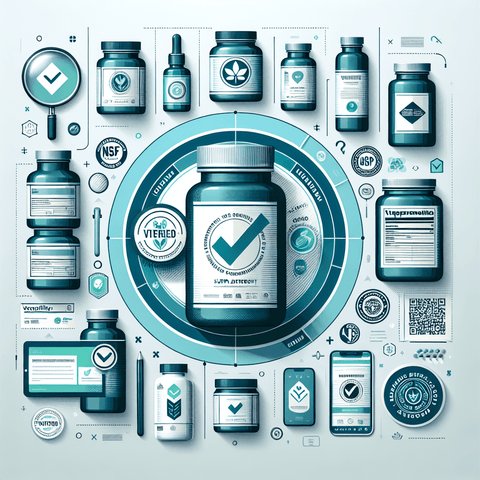
Supplement transparency means knowing exactly what is in a vitamin or dietary supplement: every active ingredient, its precise dose, every inactive ingredient, and verification through independent testing. This article explains what supplement transparency actually involves, why it matters for safety and effectiveness, the red flags that suggest a brand may be hiding something, and a practical framework for reading labels, checking certifications, and choosing products that align with your individual needs.
What Is Supplement Transparency? A Clear Definition
Supplement transparency meaning: what it actually covers
Supplement transparency refers to a brand's willingness to disclose complete, verifiable information about its products. That includes the exact amount of each active ingredient (not just what is listed "per blend"), the chemical form of each nutrient, all inactive ingredients such as fillers and coatings, the origin of raw materials, and access to independent lab results. A transparent company treats its label as a factual document rather than a marketing surface.
Related terms: full-dose disclosure, third-party testing, and clean labels
Several related concepts often appear alongside supplement transparency. Full-dose disclosure means listing the milligram or microgram amount of every ingredient individually. Third-party testing means an accredited laboratory—not the manufacturer—verifies identity, purity, and potency. A clean label typically indicates minimal additives and no unnecessary excipients, though the term itself is unregulated and can vary widely in meaning between brands.
How supplement transparency differs from marketing claims
Phrases like "premium quality," "clinically backed," or "scientifically formulated" are marketing language, not verifiable disclosures. Transparency is demonstrated through specifics: named ingredient forms, exact doses, batch numbers, and published certificates of analysis. If a claim cannot be traced to a document, a certification, or a specific dose, it is advertising rather than evidence.
Why Supplement Transparency Matters for Your Health
The hidden risks of undisclosed ingredients and fillers
Undisclosed ingredients are more than an inconvenience. Independent analyses of supplements have occasionally found products containing substances not listed on the label, including pharmaceutical adulterants in some categories, or significantly more or less of an active ingredient than declared. For people with allergies, intolerances, or those taking medications, hidden fillers, allergens, or unlisted actives can pose genuine health risks.
How opaque labeling affects dosage accuracy and safety
Without exact doses, you cannot track your total intake across multiple products, which matters because several nutrients have established upper intake limits. Fat-soluble vitamins like A, D, E, and K, along with minerals such as iron, selenium, and zinc, can accumulate or cause adverse effects at high intakes. If a label hides amounts inside a proprietary blend, safe, consistent dosing becomes guesswork.
The link between transparency and consumer trust in the supplement industry
Dietary supplements are regulated differently from pharmaceuticals in most jurisdictions; manufacturers are largely responsible for their own safety and labeling accuracy. In that environment, transparency functions as a proxy for accountability. Brands that publish testing data and disclose sourcing are, in effect, volunteering for scrutiny—which historically correlates with better quality control.
Red Flags: Signs a Supplement Brand May Not Be Transparent
Vague "proprietary blends" without ingredient amounts
A proprietary blend lists ingredients in descending order but only shows the total weight of the blend. This makes it impossible to know whether an ingredient is present at a meaningful dose or a token amount—a practice sometimes called "fairy dusting." Blends can be legitimate for protecting formulations, but when they hide doses of nutrients with known upper limits, they prevent informed use.
Missing certifications, batch testing, or traceable sourcing
If a brand cannot tell you where ingredients come from, whether its facility follows good manufacturing practices (GMP), or whether finished batches are tested for identity and contaminants, there is no independent way to confirm what is in the bottle. Some reputable brands simply have not invested in certification yet—but the absence of any verifiable quality information is a legitimate concern.
Overstated health claims and unverifiable promises
Claims that a product cures disease, "detoxifies" organs, or guarantees rapid results fall outside what evidence and regulation support. In the EU, permitted health claims are tightly controlled; in the US, structure-function claims must be accompanied by disclaimers. Exaggerated promises often signal a brand prioritizing sales accuracy over labeling accuracy.
Why Low-Transparency Products Exist: Contributing Factors
Cost-cutting through fillers and underdosed formulas
Quality ingredients—chelated minerals, standardized herbal extracts, active vitamin forms—cost more than commodity alternatives. Some manufacturers reduce costs by using cheap salts, bulking agents, or doses below the levels associated with benefits in research. These choices are easier to conceal behind vague labeling.
Weak regulatory oversight and label loopholes
Because pre-market approval is not required for supplements in many countries, enforcement is largely reactive. Loopholes—such as blend labeling, unregulated "clean label" language, and claims phrased carefully to avoid classification as drug claims—allow low-transparency products to remain on shelves.
Marketing pressure and trend-driven formulations
Fast-moving trends encourage brands to launch products around fashionable ingredients quickly, sometimes at doses or in forms not supported by evidence. Speed-to-market and transparency often work against each other, since rigorous testing takes time and money.
Individual Variability: Why Transparent Labels Still Require Personal Context
How diet, age, and health status change what you actually need
Even a perfectly transparent label tells you what is in the product—not what you need. Nutrient requirements vary with age, sex, pregnancy, dietary pattern, sun exposure, activity level, and health conditions. A vegan may need attention to vitamin B12; someone with limited sun exposure may have different vitamin D considerations; pregnant women have specific folate and iron requirements.
Absorption differences: bioavailability matters as much as the label
Two products with identical declared doses can deliver different amounts of absorbable nutrient. Magnesium oxide, for example, is less bioavailable than magnesium glycinate or citrate. Mineral chelates, active B vitamin forms such as methylcobalamin, and fat-soluble vitamins taken with dietary fat all influence how much of a dose your body actually uses.
Why a transparent label doesn't mean the product fits everyone
A transparent, high-quality product can still be inappropriate for you—too high a dose, an ingredient you should avoid with a medication, or a nutrient you already obtain sufficiently from food. Transparency enables informed evaluation; it does not replace it.
Start With Food and Lifestyle Before Supplements
Why food-first nutrition should guide your supplement decisions
Whole foods provide nutrients in forms and combinations the body is well adapted to absorb, alongside fiber and beneficial compounds. For most healthy adults eating a varied diet, a supplement adds little beyond what food already provides. Before buying anything, it is worth assessing whether your diet genuinely leaves a gap. You can explore the evidence on individual nutrients in resources like this guide to vitamin D sources, benefits, and safety.
Everyday habits that influence nutrient status
Sleep, chronic stress, alcohol intake, smoking, and physical activity all influence nutrient needs and utilization. Alcohol affects B vitamin status; smoking increases vitamin C requirements; restrictive dieting can reduce intake of multiple nutrients simultaneously. Addressing these habits often matters as much as any product choice.
When dietary patterns may leave gaps worth evaluating
Certain patterns reliably create risk of insufficient intake: vegan and vegetarian diets (B12, iron, zinc, iodine, omega-3), dairy-free diets (calcium, vitamin D), and very low-calorie or elimination diets. These are situations where supplementation may be worth considering—ideally with professional input or testing. For broader context, see this overview of multivitamin ingredients, usage, and safety.
Where Supplements Fit: Nutritional Support With Transparent Labels
Common supplement categories and what transparent labels should disclose
Across categories—vitamins, minerals, omega-3s, probiotics, herbal extracts—a transparent label should show: the exact dose per serving, the chemical form of each nutrient, the standardization of herbal extracts (for example, curcumin content), all inactive ingredients, allergen declarations, and batch-level testing information.
Forms and bioavailability: why the ingredient form on the label matters
The form listed on the label is not trivial. Magnesium oxide, citrate, and glycinate differ in absorption and tolerability; folate as folic acid versus methylfolate matters for some individuals; herbal extracts without standardization can vary dramatically in active content. A transparent label names the specific form so you can evaluate it.
When supplementation may reasonably be considered
Supplements may make sense when a specific gap is identified—through dietary assessment or testing—or when needs are demonstrably elevated, such as folic acid before and during early pregnancy, vitamin B12 for vegans, or vitamin D in populations with limited sun exposure. General nutritional support, such as a well-formulated multivitamin or magnesium supplements for muscle and energy support, differs from addressing a diagnosed deficiency, which should be guided by a healthcare professional.
General nutritional support versus addressing a diagnosed deficiency
A diagnosed deficiency requires a defined dose, duration, and monitoring plan—decisions that belong with a clinician. Over-the-counter supplementation for general support should stay within recommended intakes and never substitute for medical assessment when symptoms suggest a real problem.
How to Read a Supplement Label Like an Expert
Supplement Facts panel explained
Start with the serving size—many products list doses "per two capsules," which changes the math. Compare each dose to the daily value (%DV) to gauge how much of your requirement one serving covers. Note whether amounts are per serving or per capsule, and check for multiple servings per day.
Ingredient forms: chelated minerals, active B vitamins, and standardized extracts
Look for specifics: "magnesium bisglycinate" rather than "magnesium," "methylcobalamin" rather than "vitamin B12," "standardized to 95% curcuminoids" rather than "turmeric." For more on mineral forms, this guide to iron, zinc, selenium, and other mineral supplements covers what to look for.
Inactive ingredients: fillers, flow agents, allergens, and coatings
Excipients like stearates, silicon dioxide, and titanium dioxide are common and generally used at low levels, but transparency about them matters—especially for people with sensitivities or those who prefer minimal formulations. Allergen statements (soy, gluten, shellfish, dairy) should always be checked.
Capsules, tablets, powders, and liquids
Delivery form affects practicality more than inherent quality. Tablets allow higher doses but may include more binders; capsules are often easier to swallow but fit less; powders offer flexible dosing but require accurate measuring; some nutrients (like certain probiotics or liquid omega-3s) have specific storage requirements to maintain stability.
Certifications and Testing: How to Verify Supplement Quality
Third-party testing seals
Recognized seals include USP Verified, NSF Certified for Sport, and Informed Choice/Informed Sport. These programs independently verify that the product contains what the label states and is free from specified contaminants—and, for sport certifications, banned substances.
Certificates of analysis and batch verification
A certificate of analysis (CoA) documents lab testing of a specific batch for identity, potency, heavy metals, and microbial contamination. Transparent brands publish CoAs by batch number or provide them on request. If you cannot obtain one, that itself is informative.
GMP manufacturing and what "quality assured" really means
Good Manufacturing Practice (GMP) certification means the facility follows documented processes for identity, purity, and consistency. "Quality assured" on its own means little—look for the underlying certification body and audit trail rather than the slogan.
How to Choose a Transparent Supplement: A Practical Checklist
- Full-dose disclosure: every active ingredient shows an exact amount, with no hidden proprietary blends for nutrients with safety limits.
- Named forms: specific chemical forms of vitamins and minerals are listed, not generic names.
- Third-party verification: a recognized seal, or accessible CoAs by batch.
- GMP manufacturing: stated clearly, ideally with the certifying body.
- Complete inactive ingredient list: including allergens and excipients.
- Realistic claims: aligned with permitted health claims, no promises to cure or treat disease.
- Traceable sourcing: the brand can tell you where key ingredients originate.
Single-ingredient products make it easier to control dose and avoid interactions; combination formulas offer convenience but require checking that doses of each component remain sensible. Match the product to your diet (vegan capsules, allergen-free), compare bioavailable forms against price rather than assuming the most expensive is best, and remember that a modest, well-absorbed dose often serves you better than a large, poorly absorbed one.
Who May Benefit Most From Choosing Transparent Supplements
People with dietary restrictions, pregnancy considerations, or higher needs
Vegans, pregnant or breastfeeding women, older adults with reduced absorption, and people with restrictive diets benefit most from knowing exact doses and forms—because their margin for error is smaller. Athletes subject to drug testing additionally need certified products free of banned substances.
Those taking medications
If you take prescription medication, full ingredient disclosure is a safety issue, not a preference. Interactions—vitamin K with warfarin, St. John's wort with numerous drugs, high-dose antioxidants around certain chemotherapy regimens—depend on knowing precisely what you are taking. Interaction awareness starts with disclosure.
When to involve a healthcare professional or request testing
Symptoms such as fatigue, hair thinning, or low mood are nonspecific and cannot confirm a nutrient deficiency. Blood tests for iron status, vitamin D, or B12 often provide far more useful information than symptom-based guessing, and a healthcare professional can interpret results in context.
Safety, Interactions, and Upper Intake Limits
Why knowing exact doses protects you from exceeding safe limits
Nutrients like vitamin A, vitamin D, selenium, and iron have established tolerable upper intake levels (ULs). If you take a multivitamin plus individual products, hidden doses in proprietary blends can push cumulative intake past safe thresholds without your knowledge.
Common interactions with medications
Notable examples include vitamin K and anticoagulants, magnesium and certain antibiotics (taken at the same time), zinc and copper balance at high intakes, and several herbs affecting drug-metabolizing enzymes. High-dose, long-term use of any single nutrient warrants professional review.
Situations that always warrant professional guidance
Pregnancy and breastfeeding, kidney or liver disease, upcoming surgery, prescription medications, and any plan involving doses above recommended intakes should always involve a qualified healthcare provider before starting.
Diet Changes or Supplements? A Decision Framework
Questions to ask before buying any supplement
- Have I evaluated my actual dietary intake, or am I guessing?
- Is there a specific, identified reason for this supplement—or is it "just in case"?
- Do I know the dose and form, and is the dose supported by evidence?
- Could this interact with medications, other supplements, or my total nutrient intake?
- Can I verify the product's contents through testing or certification?
How to use transparent labeling to compare products
With full disclosure, you can compare products objectively: same nutrient, same form, same dose—which offers better verification and cleaner ingredients at a fairer price? Without transparency, comparison is impossible, which is precisely why it matters.
Building your short list
Your final choice should include: full-dose disclosure, a bioavailable form appropriate to your goal, third-party verification or accessible CoAs, GMP manufacturing, and an ingredient list compatible with your diet and medications. If you cannot confirm even two of these, keep looking.
The Bottom Line: Informed Choices Start With Seeing What's Inside
Supplement transparency is not a luxury feature—it is the foundation of safe, evidence-aligned supplementation. You cannot evaluate a dose you cannot see, avoid interactions with ingredients that are hidden, or compare products that disclose only marketing language. Start with diet and lifestyle, identify genuine gaps, involve testing or professional advice where appropriate, and when you do supplement, choose products that show you exactly what is inside. Your needs are individual, and the right decision is one made with full information—not one sold to you.
Key Takeaways
- Supplement transparency means full disclosure of active doses, ingredient forms, inactive ingredients, sourcing, and independent test results.
- Opaque labeling prevents accurate dosing and can hide allergens, fillers, or ingredients that interact with medications.
- Proprietary blends that hide individual doses are a significant red flag, especially for nutrients with upper intake limits.
- Third-party seals (USP, NSF, Informed Choice) and batch certificates of analysis are the most reliable verification tools available to consumers.
- The specific chemical form of a nutrient affects bioavailability as much as the stated dose.
- Food-first nutrition and lifestyle habits should guide supplementation decisions; most people with varied diets need less than the market suggests.
- Symptoms alone cannot confirm a deficiency—validated blood tests and professional assessment are more reliable.
- Transparent labels enable comparison, but individual factors still determine whether a product is right for you.
- Pregnancy, medication use, and high-dose or long-term supplementation always warrant professional guidance.
Frequently Asked Questions
What does supplement transparency actually mean?
It means a brand discloses the exact dose and chemical form of every active ingredient, lists all inactive ingredients, identifies sourcing, and provides verifiable quality data such as third-party lab results or certificates of analysis for each production batch.
Why are proprietary blends considered a red flag?
A proprietary blend shows only the total weight of combined ingredients, not individual amounts. This makes it impossible to know whether an ingredient is dosed meaningfully or included in trace amounts, and it prevents you from tracking total intake against safe upper limits.
How can I verify that a supplement contains what the label says?
Look for third-party certification seals such as USP Verified, NSF, or Informed Choice, or request a certificate of analysis (CoA) for the specific batch number printed on your product. Transparent brands publish CoAs or provide them on request.
Does a more expensive supplement always mean better quality?
No. Price reflects branding, form, and margin as much as quality. A moderately priced product with full-dose disclosure, a bioavailable ingredient form, and third-party testing is usually a better choice than an expensive product with vague labeling.
What is bioavailability, and why does it matter on a label?
Bioavailability is the proportion of an ingested nutrient your body actually absorbs and uses. Different chemical forms of the same nutrient—such as magnesium oxide versus magnesium glycinate—differ substantially in absorption, so the form listed on the label matters as much as the dose.
Can I take too much of a vitamin or mineral?
Yes. Fat-soluble vitamins (A, D, E, K) and minerals like iron, selenium, and zinc have established tolerable upper intake levels, and high intakes over time can cause adverse effects. This is why knowing exact doses across all products you take is important.
Do supplements interact with medications?
Some do. Examples include vitamin K with anticoagulants like warfarin, St. John's wort with many prescription drugs, and minerals binding certain antibiotics when taken together. If you take prescription medication, review any supplement with your pharmacist or doctor first.
Should I get blood tests before taking supplements?
For nutrients with validated tests—such as vitamin D, vitamin B12, and iron status—testing is generally more reliable than guessing based on symptoms, which are often nonspecific. Testing is especially worthwhile before high-dose or long-term supplementation.
Are "clean label" products automatically safer?
Not necessarily. "Clean label" is an unregulated marketing term. A product can use the phrase while still hiding doses in blends or lacking quality testing. Judge transparency by disclosures and certifications, not by label slogans.
Who regulates dietary supplements?
In the US, the FDA regulates supplements under DSHEA but does not approve products before sale—manufacturers are responsible for safety and label accuracy. In the EU, food supplements are regulated under food law with harmonized rules on permitted claims. In both systems, third-party testing fills an important verification gap.
Is a multivitamin a substitute for a healthy diet?
No. Multivitamins may help fill modest gaps in some people, but they do not replicate the fiber, phytochemicals, and nutrient complexity of whole foods. They work best as support for an already varied diet, not a replacement for one.
How do I compare two transparent products side by side?
Match them on nutrient form first, then dose per serving, then verification (seal or CoA availability), then inactive ingredients and allergens, and finally price per effective dose. A transparent label makes every one of these comparisons possible; an opaque one makes none of them possible.
Related Keywords
- supplement transparency
- transparent supplement labels
- full-dose disclosure
- proprietary blends explained
- third-party tested supplements
- certificate of analysis (CoA)
- USP verified supplements
- NSF certified supplements
- supplement label reading guide
- bioavailability of vitamins and minerals
- supplement quality and GMP manufacturing
- nutrient upper intake limits
- supplement interactions with medications
- how to choose a quality supplement