When you hold a bottle of vitamins in your hands, you rarely see the journey that brought it to the shelf. You see a label with promises, potency claims, and ingredient lists. But what actually guarantees that the contents match the marketing? For dietary supplements, the answer often lies in third-party testing, a process where an independent organization verifies that the product contains exactly what the manufacturer says it does.
What Is Third-Party Testing for Supplements?
Third-party testing refers to the evaluation of a supplement by a laboratory or certification body that is completely independent of the manufacturer, distributor, or retailer. This independence helps eliminate conflicts of interest. The testing process typically involves analyzing samples of the finished product to verify its chemical composition, check for contaminants, and confirm that no undeclared substances are present. This independence is what gives the testing its credibility, as the lab has no incentive to report favorable results.
Third-Party Testing vs. In-House Quality Control
Nearly every reputable manufacturer conducts in-house quality control at some stage of production. This is a necessary baseline, but in-house testing has inherent limitations. The manufacturer controls how tests are conducted, what parameters are measured, and how results are interpreted. Third-party testing removes this control and introduces an external set of eyes with no vested interest in the outcome. The distinction matters because an independent lab evaluates the product against established standards rather than internal benchmarks that may be flexible or incomplete.
Why Third-Party Testing Matters for Quality and Safety
The supplement market presents a unique challenge to consumers: products fall under dietary supplement regulations rather than pharmaceutical approval processes. This regulatory framework places responsibility on manufacturers to ensure safety, but enforcement and oversight vary significantly. Third-party testing acts as a filter, helping separate products that meet rigorous standards from those that fall short. For those looking to support their health with vitamins and minerals, this filter carries profound practical importance.
Verifying Purity and Label Accuracy
Purity testing determines whether the active ingredient in a supplement is the only thing occupying the capsule. Contaminants, heavy metals, pesticides, mold, and bacteria can find their way into products through poor sourcing or manufacturing practices. Independent labs test for these unwanted substances using methods such as mass spectrometry and chromatography. A product that passes these tests provides better assurance that you are consuming exactly what you intend to consume.
Label accuracy extends beyond merely checking that an ingredient is present. It involves verifying the quantity of that ingredient. A product may list 1,000 mg of vitamin C on the label, but if the actual content falls significantly below that number, the product fails to deliver the expected dose. Third-party testing measures actual concentrations and compares them to label claims. This verification is essential because supplement effectiveness depends on consuming an appropriate amount.
Screening for Prohibited and Harmful Substances
For athletes and competitive sports participants, the threat of prohibited substances holds particular relevance. Contaminants such as steroids, stimulants, or masking agents may appear in supplements without being listed on the label. Informed Choice and similar programs screen for these compounds, providing athletes with confidence that their supplement will not trigger a positive doping test. For the general population, screening for common contaminants like lead, arsenic, mercury, and cadmium remains equally important, as chronic exposure to these heavy metals poses genuine health risks.
Key Certification Programs and What They Mean
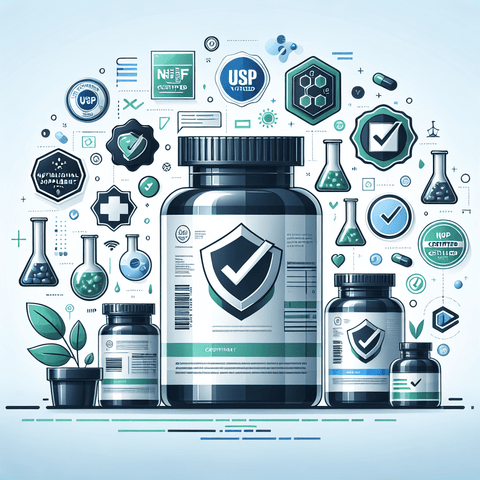
Several recognized organizations provide third-party testing and certification for dietary supplements. Each program has its own standards, testing protocols, and levels of rigor. Understanding these differences helps consumers interpret seals and claims more accurately.
- NSF International: Verifies that products meet strict safety and quality standards, including the absence of undeclared ingredients and contaminants.
- USP (U.S. Pharmacopeia): Sets standards for purity, potency, and dissolution, confirming that a product meets recognized quality benchmarks.
- ConsumerLab.com: Independently tests popular supplement brands and publishes results, often uncovering discrepancies between label claims and actual contents.
- Informed Choice: Specializes in screening for banned substances, providing athletes with confidence that their supplements are safe for competition.
Each seal offers different levels of assurance. USP verification, for example, includes testing for dissolution—whether a tablet or capsule actually breaks down properly for absorption. This parameter is crucial for real-world effectiveness. Informed Choice focuses specifically on athletic safety. Understanding what each seal covers helps you choose products aligned with your needs.
The Role of GMP Regulations in Supplement Manufacturing
Good Manufacturing Practices, or GMPs, establish baseline requirements for supplement production. These regulations mandate proper facility conditions, employee training, record-keeping, and quality control procedures. While GMP compliance is essential, it does not guarantee that every batch meets its label claims. The regulatory system relies on periodic inspections rather than continuous monitoring of every product that reaches the market.
GMP forms the foundation upon which third-party testing builds. While testing verifies the final product, GMP governs the entire manufacturing process, including facility cleanliness, equipment calibration, personnel training, and raw material handling. A facility that follows strict GMP guidelines reduces the likelihood of contamination and errors in the first place, while third-party testing provides the final confirmation that those procedures worked as intended.
How to Verify if a Supplement Is Third-Party Tested
Making a confident supplement selection becomes simpler when you know what evidence to look for. Start by checking a brand's website for published test results. Look for brands that use accredited laboratories and issue certificates of analysis for each batch, not just for initial product development. Scrutinize certification seals carefully, since some seal programs permit self-testing that does not carry the same weight as genuinely independent analysis.
How to Read a Certificate of Analysis
A certificate of analysis, or COA, is the standard document that summarizes testing outcomes. A COA typically contains sections for the test name, specification, result, and method used. The specification column shows the range or limit the product must meet, while the result column shows what the lab actually found. When the result falls within the specification range, the product passes that particular test. Pay attention to the batch number and production date to ensure the COA corresponds to the product you are actually holding.
What to Look for on a Supplement Label
Look for terms such as 'third-party tested,' 'independently verified,' or 'certified by.' These phrases, combined with recognizable seal icons, carry more weight when accompanied by batch numbers and references to published COAs. Phrases such as 'manufactured in an FDA-registered facility' indicate basic regulatory compliance but do not provide the same assurance as verifiable independent testing.
Examine the serving size carefully. A product might list an impressive amount of a nutrient, but that amount could apply to a serving of four capsules rather than a single capsule. Also, be cautious with proprietary blends, where the label reveals the total blend weight but conceals individual ingredient amounts. While lawful, this practice prevents you from evaluating whether each ingredient appears at a meaningful dose. Opt for products that disclose the precise amount of each ingredient.
The Cost and Practical Realities of Independent Testing
Third-party testing involves real costs, which are typically absorbed by the manufacturers who choose to pursue certification. This can influence product pricing, but it does not mean that expensive supplements are always tested or that affordable ones are not. The cost of testing varies depending on the number of analytes, the complexity of the matrix, and the frequency of testing. Brands that test every batch spend more than those that test only raw ingredients or occasional samples.
For consumers, the practical question is not necessarily 'how much does testing cost?' but rather 'does this brand invest in independent verification?' A brand that publishes detailed testing documentation demonstrates accountability. Even if testing increases the final price slightly, it provides value in the form of reduced uncertainty about what you are consuming.
Limitations: What Third-Party Testing Does Not Guarantee
Third-party testing confirms that a supplement contains what its label claims, but it does not rank products by quality or effectiveness. A passing test result indicates that a product meets established standards, providing a foundation of trust. The 'best' supplement for you may include factors that no lab test can measure, such as your unique nutritional status, dietary preferences, and health objectives.
Testing also cannot guarantee that a supplement will work for you personally. Bioavailability—the portion of a nutrient that actually reaches circulation—depends on the form of the nutrient, the quality of the formulation, and your individual digestive health. Third-party testing ensures quality, not universal efficacy.
How Third-Party Testing Supports Informed Supplement Choices
Supplement marketing language often obscures rather than clarifies. Claims like 'premium quality,' 'maximum potency,' or 'clinically proven' appear frequently without supporting documentation. Third-party testing functions as a decoding tool that strips away marketing noise and reveals the underlying facts. When you read a COA, you are looking directly at the data that supports—or contradicts—the claims on the label. This transparency transforms the decision-making process from faith-based to evidence-based.
The clearest view of supplements regards them as complements to nutritious food, not substitutes for it. Whole foods provide a matrix of nutrients, fiber, and phytonutrients that work together in ways that isolated supplements cannot fully replicate. Before reaching for a supplement bottle, establishing a firm nutritional foundation through food should always come first.
Key Takeaways
- Third-party testing provides independent verification that a supplement contains what its label claims, including the correct active ingredients at the stated dosages.
- In-house quality control, while necessary, cannot replace the objective accountability offered by an independent laboratory.
- Certification seals from organizations such as NSF, USP, ConsumerLab, and Informed Choice signal varying levels of quality assurance.
- Contaminant screening for heavy metals, pesticides, and microbes protects consumers from invisible threats that cannot be detected by taste, smell, or appearance.
- Good Manufacturing Practices serve as the production foundation, while third-party testing provides final confirmation of finished product quality.
- Not all testing programs are equal: testing finished batches rather than raw ingredients offers stronger assurance.
- A whole-food, nutrient-dense diet remains the primary route to meeting most nutritional needs, with supplements playing an adjunct role.
Frequently Asked Questions
What exactly does third-party testing detect?
Third-party testing detects the identity and quantity of active ingredients, presence of contaminants such as heavy metals and pesticides, microbial content, and in some cases whether the supplement dissolves and releases its contents properly. The analysis compares actual measurements against label claims and established safety limits.
Is third-party testing legally required for supplements?
It is not legally required. Supplement manufacturers are responsible for product safety and label accuracy under GMP regulations, but they are not mandated to seek independent testing. Third-party testing is voluntary, which is why its presence provides meaningful evidence of a brand's commitment to quality.
What is the difference between a certification seal and a company's own tests?
A certification seal comes from an independent organization that has conducted its own evaluation or audit, while company tests are conducted internally and may lack objective oversight. Seals from organizations such as USP or NSF typically involve ongoing compliance checks and unannounced audits, providing stronger assurance than a brand's internal quality reports.
How often should supplements be tested?
The ideal standard involves testing every batch of finished product before it is released for sale. This approach catches batch-to-batch variability. Some brands test only raw ingredients or test infrequent samples, which provides less comprehensive assurance of consistency.
Can a supplement pass third-party testing but still be ineffective?
Yes. Testing confirms the right ingredients are present in the right amounts, but it does not guarantee that the supplement will work for you. Bioavailability, your individual nutritional status, and overall diet all influence whether a supplement provides measurable benefit. Testing ensures quality, not universal efficacy.
Are expensive supplements more likely to be third-party tested?
No necessary correlation exists between price and testing. Some affordable brands invest heavily in independent verification, while some premium-priced products rely solely on marketing. Always confirm testing directly rather than inferring quality from cost.
Where can I find the results of third-party tests?
Many reputable brands publish certificates of analysis on their websites, often searchable by batch number. ConsumerLab.com provides independent results of its own testing programs, while certification organizations such as USP maintain directories of certified products.