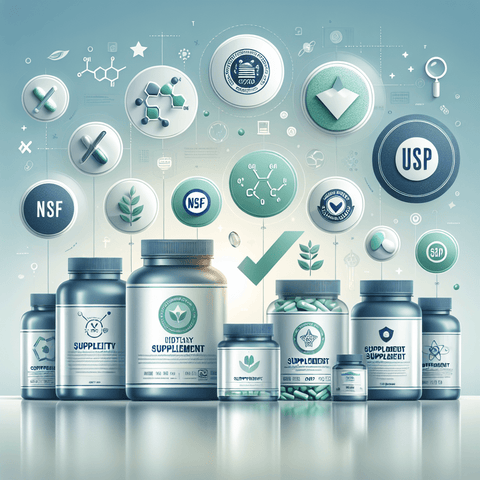
Third-party verification means an independent laboratory or certification organization — not the manufacturer — tests a supplement to confirm that what is on the label matches what is in the bottle. Because dietary supplements are regulated differently from medicines, quality can vary considerably between brands and even between production batches. This guide explains how third-party verification works, what certificates of analysis and certification seals actually tell you, why unverified and counterfeit products exist, and how to read labels and choose supplements with confidence. You will also learn where diet fits in, when supplementation is reasonably considered, and when professional advice matters more than any seal.
Introduction: Why Third-Party Verification Matters Before You Buy Any Supplement
Unlike prescription medicines, dietary supplements generally do not require pre-market approval by regulators before they are sold. In the United States, the manufacturer is legally responsible for safety and labeling, with oversight applied largely after products reach the market; in the European Union, supplements are governed as foods. This means two products with identical-looking labels can differ dramatically in actual content. Third-party verification exists to close that gap: it is the most practical tool a consumer has to confirm that a supplement is genuine, accurately dosed, and free of common contaminants before it is swallowed — not after.
What Is Third-Party Verification? Definition and How It Works
Third-party verification is the process by which an independent organization with no financial stake in the product's sales tests a supplement against defined quality standards. Typically, samples are either submitted by the brand or purchased anonymously at retail, analyzed in an accredited laboratory, and compared against the label and purity specifications. Certification programs go further by auditing manufacturing facilities, reviewing formulations, and repeating testing on an ongoing basis.
Third-party verification vs. self-declared quality claims: who actually runs the tests
Every reputable manufacturer performs some quality control, but in-house testing is self-declared: the company checks its own work. Phrases like "lab tested" or "quality assured" on a label can refer to a single internal test or a check performed years ago, and there is no outside party verifying the claim. Genuine third-party verification involves a separate organization whose reputation depends on getting the answer right, which makes the results meaningfully harder to manipulate.
Key terms explained: certificate of analysis (CoA), ISO 17025-accredited labs, and batch testing
A certificate of analysis (CoA) is a laboratory document listing which tests were performed, the methods used, and the results for one specific production batch. ISO 17025 accreditation signals that the testing laboratory itself meets internationally recognized competence standards, including validated methods and calibrated equipment — a CoA from an unaccredited lab carries far less weight. Batch testing matters because every production run has its own batch number, and quality can shift between runs; a CoA is only truly useful when it corresponds to the batch you are holding.
The major certification programs at a glance: NSF, USP Verified, Informed Choice, and ConsumerLab
Several established programs operate in this space. NSF International certifies supplements to NSF/ANSI 173 and offers "Certified for Sport" for banned-substance screening. USP Verified confirms identity, potency, purity, and good manufacturing practices. Informed Choice and Informed Sport, run with LGC's accredited laboratories, focus on screening for banned substances relevant to athletes. ConsumerLab.com independently purchases products at retail and publishes pass/fail reviews. Note that these programs differ in scope: they confirm product quality and label accuracy, not whether a supplement is clinically effective for your personal situation.
How Third-Party Verification Protects Your Health, Not Just Your Wallet
The financial cost of a bad supplement is trivial compared with the potential health consequences, which is why independent testing is fundamentally a safety measure rather than a value guarantee.
What independent investigations have repeatedly found in unverified products
Independent testing initiatives have repeatedly uncovered quality failures. A widely reported 2015 investigation in the United States used DNA barcoding and found that many store-brand herbal products contained little or none of the advertised plant. Consumer testing organizations regularly report products containing substantially less — or sometimes far more — of an active ingredient than the label states. Regulators have also repeatedly warned about supplements adulterated with undisclosed pharmaceutical ingredients, particularly in weight-loss, bodybuilding, and sexual-health categories.
From mislabeled doses to contaminated capsules: why quality gaps are a genuine health concern
Underdosing may simply mean the product does nothing, which matters if you are relying on it to correct a genuine shortfall. Overdosing is more dangerous: excess vitamin A, iron, or selenium can cause real harm. Documented problems also include heavy-metal contamination (lead, cadmium, arsenic, mercury), microbial contamination, pesticide residues, and undeclared allergens such as gluten or peanut. None of these issues is visible from the outside of the capsule — which is precisely the problem independent testing addresses.
Red Flags: Situations Where Unverified or Counterfeit Products Are More Likely
Product-level warning signs: miracle claims, deals that look too good, and missing basics
Be skeptical of products promising to cure, reverse, or dramatically transform health outcomes; no verified supplement is marketed that way. Prices dramatically below the normal market rate, packaging without a named manufacturer and address, a missing batch number or best-before date, and "proprietary blends" that hide individual doses are all warning signs that quality control may be weak.
Website warning signs: cloned shops, insecure checkout, and unverifiable reviews
Counterfeiters clone legitimate webshops, sometimes with only a slightly altered domain name. Check that the site uses secure checkout (HTTPS), lists genuine contact details and a returns policy, and displays reviews that can be verified on independent platforms. Countdown timers and aggressive pop-ups pushing immediate purchase are more typical of low-trust sellers than of established retailers.
High-risk buying situations: marketplace sellers, cross-border parcels, and gray-market imports
Third-party marketplace sellers, cross-border parcels from unknown origins, and gray-market imports — genuine products diverted from their intended distribution channels — carry elevated risk. Diverted stock may have been stored incorrectly, relabeled after expiry, or mixed with counterfeits. Buying from authorized retailers or the brand itself substantially reduces exposure to these problems.
Why Unverified and Counterfeit Supplements Exist: Causes and Contributing Factors
The regulatory reality: what authorities require before supplements reach the shelf — and what they don't
In most jurisdictions, no regulator tests every supplement batch before sale. The United States requires manufacturers to follow good manufacturing practices and ensure truthful labeling, but enforcement is largely post-market. The EU treats supplements as foods with permitted-ingredient lists and health-claim rules, again without individual product approval. Because quality ultimately depends on each company's internal standards, cost-cutting anywhere in the chain shows up as consumer risk.
Complex supply chains: raw-material suppliers, contract manufacturers, and repackagers
A single supplement may pass through raw-material brokers, contract manufacturers, blending facilities, and repackagers before reaching a shelf. Each handoff introduces opportunities for ingredient substitution, dilution, or mislabeling. Botanical ingredients are especially vulnerable, since confirming plant identity requires chemical or DNA analysis rather than visual inspection.
Counterfeiting and inventory mixing: how fake products enter seemingly legitimate channels
Sophisticated counterfeiters copy packaging, logos, and even certification seals, then introduce fake stock through discount sellers or mixed warehouse inventory. This is why legitimate certifiers maintain public databases: verifying that a seal corresponds to a real, currently certified product is the consumer's main defense against decorative imitations.
Risk Is Not One-Size-Fits-All: Why Your Verification Priorities Depend on You
Life stages and health situations that raise the stakes of product quality
A 10 percent dosing error in a general wellness product may be inconsequential; the same error in a product used during pregnancy, in infancy, in childhood, or by someone with kidney or liver disease can matter considerably. People taking daily medication, managing chronic conditions, or consuming supplements long-term at higher doses all have stronger reasons to prioritize independently verified products.
What even a genuine verification seal cannot tell you
Certification confirms the product contains what it claims, at stated purity. It cannot tell you whether you need the supplement at all, whether the dose suits your individual requirements, whether it interacts with your medication, or whether another formulation would suit you better. Verification answers a manufacturing question — not a personal health question.
Food First: Why Diet and Daily Habits Should Come Before Any Bottle
How a varied, nutrient-rich diet reduces how much you need from supplements
Nutrients in food arrive alongside fiber, protein, and cofactors that support absorption and overall dietary quality. For most people, a varied diet built on vegetables, fruit, whole grains, legumes, fish or other protein sources, and dairy or fortified alternatives covers the majority of vitamin and mineral needs. Well-known gaps — vitamin D with limited sun exposure, vitamin B12 on a strict vegan diet, iodine and iron in certain groups — are best identified specifically rather than covered generically with high-dose products.
At-home habits that keep supplements safer: proper storage, expiry checks, and avoiding double-dosing
Quality does not end at purchase. Store supplements cool, dry, and dark; refrigerate products such as fish oils, liquid formulas, and many probiotics if the label directs it. Potency declines over time — oxidized fish oil, for example, loses both quality and palatability — so respect best-before dates. Finally, audit everything you take: a multivitamin plus individual products plus fortified foods can quietly duplicate nutrients. Reviewing your routine against labels, or consolidating with a single well-chosen multivitamin rather than stacked products, reduces accidental over-intake.
Supplements and Third-Party Verification: What Independent Testing Actually Covers
Identity and potency: confirming the product matches the label, milligram by milligram
Core testing verifies two things: that the ingredient is what the label says (the correct compound, and for botanicals the correct plant species and plant part) and that the amount per serving matches the declared dose, usually within accepted tolerance ranges. This includes confirming the specific chemical form, such as distinguishing magnesium oxide from magnesium citrate.
Contaminant screening: heavy metals, microbes, pesticide residues, and undeclared allergens
Quality programs screen for lead, cadmium, arsenic, and mercury; microbiological hazards such as Salmonella, E. coli, and mold; residual pesticides and solvents; and undeclared major allergens including gluten, soy, milk, and shellfish. Sports-oriented programs additionally screen large panels of substances banned in competitive athletics.
Category-specific checks: fish oil oxidation, probiotic CFU counts, and herbal authentication
Certain categories require specialized tests. For omega-3 (DHA/EPA) supplements, laboratories measure oxidation markers such as peroxide values, since rancid oils are both unpleasant and of reduced quality. For probiotics and prebiotics, testing confirms viable colony-forming units (CFU) at the end of shelf life and verifies strain identity. Herbal products require species authentication and quantification of characteristic marker compounds, because adulteration and substitution are documented in this category.
When Supplementation Is Reasonably Considered
Situations where diet alone may not fully meet nutrient needs
Supplementation becomes genuinely relevant in specific, identifiable situations: confirmed or suspected deficiency supported by blood testing; pregnancy and preconception, where public health bodies recommend folic acid and often vitamin D; strict vegan diets (vitamin B12); limited sun exposure (vitamin D); malabsorption conditions; and older adults, whose absorption and skin synthesis of some nutrients decline with age.
Why accurately dosed, verified products matter most when real gaps exist
If you are correcting an actual shortfall, label accuracy determines whether the product can work at all. An underdosed product means the gap persists while you believe you are addressing it — potentially for months. This is where third-party verification shifts from a nice-to-have to a functional requirement.
General nutritional support vs. use alongside a diagnosed medical condition
Using a basic multivitamin as low-level nutritional support is a relatively low-stakes personal choice. Using supplements alongside a diagnosed condition or prescribed treatment is a different matter entirely: nutrient–drug interactions are real (vitamin K and warfarin being a classic example), and such decisions should involve a physician or pharmacist rather than label-reading alone.
How to Choose a Supplement Backed by Genuine Third-Party Verification
Recognized certification seals — and how to confirm they are real rather than decorative
Look for seals from recognized programs (NSF, USP Verified, Informed Choice/Informed Sport, or a published ConsumerLab approval), then confirm the product appears in the certifier's public directory. Counterfeit seals exist; a logo that cannot be matched to the certifier's own database should be treated as decoration, not verification.
Finding and reading the certificate of analysis: matching it to your batch number
Transparent brands publish CoAs on their websites or provide them on request. Check that the document names the product, matches your batch or lot number and best-before date, comes from a named (ideally ISO 17025-accredited) laboratory, and reports actual results for identity, potency, and contaminants — not just a pass/fail stamp. A generic, undated CoA unlinked to any batch tells you almost nothing.
Nutrient form, dose, and bioavailability: why "tested" is not the same as "right for you"
Verification confirms content, not personal suitability. Chemical forms differ in absorption and tolerability — magnesium oxide is inexpensive but less well absorbed than citrate or glycinate forms; vitamin D3 is generally preferred over D2 — though the evidence comparing some forms is limited or mixed. Choose a dose aligned with labeled guidance and, where relevant, professional advice; higher doses are not automatically more effective and carry more risk.
Combination products, added ingredients, and allergen considerations
Multi-ingredient formulas increase the surface area for interactions, exceedances of upper intake levels, and contamination risk. Scrutinize allergen declarations (gluten, soy, dairy, shellfish — relevant, for instance, to glucosamine from marine sources), the excipient and filler list, and suitability markers such as vegan capsules versus gelatin.
Capsules, tablets, powders, and liquids: stability, shelf life, and practical differences
Capsules and tablets are stable, portable, and tasteless; powders allow flexible dosing but are vulnerable to moisture; liquids are easier to swallow and dose-flexible but typically have shorter shelf lives and greater storage demands; softgels protect oxidation-sensitive oils. The "best" format depends on the ingredient, your routine, and storage realities rather than on any universal rule.
How to Read a Supplement Label Like an Independent Auditor
The Supplement Facts or nutrition declaration panel: serving size, ingredient forms, and amounts
Read the serving size first — every listed amount refers to it, and "per container" math can be misleading. Note the specific chemical form of each nutrient, since this affects bioavailability, and check percentages against the daily value or nutrient reference value to understand how the product fits your total intake.
Traceability essentials: batch number, best-before date, and a named manufacturer
A legitimate product identifies its manufacturer or distributor with a real address, prints a batch or lot number, and carries a best-before date. These details enable CoA matching, recall notifications, and accountability — their absence should end the evaluation immediately.
Label language that deserves skepticism: proprietary blends, filler-heavy lists, and vague "tested" claims
Treat proprietary blends (which hide individual doses), "clinically proven" claims without a reference, and unspecified "lab tested" badges with caution. Lists beginning with multiple fillers and flow agents before the active ingredient, or vague promises that the product "supports" everything from energy to immunity, suggest marketing priorities rather than quality priorities.
Who Benefits Most From Choosing Third-Party Verified Products
Athletes and drug-tested professionals: why banned-substance screening matters
Studies of sports supplements have repeatedly found products contaminated with anabolic steroids, stimulants, or other prohibited substances — sometimes incidentally, sometimes deliberately. For competitive athletes, one contaminated batch can end a career. Programs such as NSF Certified for Sport and Informed Sport exist precisely for this, and anyone selecting sports supplements under anti-doping rules should treat such screening as essential, not optional.
Pregnancy, infants, and young children: when dosing accuracy is non-negotiable
During pregnancy, some nutrients have narrow safety margins — excess preformed vitamin A (retinol), for example, is a documented concern — and fetal development depends on adequate folate, iodine, vitamin D, and DHA at accurate levels. For infants and children, dosing is weight-based and errors compound. Independently verified products plus professional guidance are the sensible baseline in these groups.
People with allergies, celiac disease, or daily medication: why contaminant control counts double
If you have celiac disease or a serious allergy, an undeclared trace of gluten or an allergen is not an inconvenience but a medical event. If you take daily medication, accurate doses matter because interactions are dose-dependent. For all three groups, verified contaminant screening and allergen control provide protection that unverified products simply cannot promise.
Safety, Interactions, and When to Seek Professional Advice
Verified does not mean risk-free: possible side effects and medication interactions
A verified product is pure and accurately labeled — not automatically free of side effects. Nausea, digestive upset, and headaches occur with many supplements at higher doses, and interactions with medicines are well documented for products ranging from St John's Wort to high-dose omega-3s in people using anticoagulants. Purity does not remove pharmacology.
Upper intake levels and accidental double-dosing when stacking multiple products
Nutrients including vitamin A, vitamin D, vitamin B6, iron, and selenium have established tolerable upper intake levels, and exceeding them chronically carries health risks. Total intake includes fortified foods and every product in your routine, so sum your sources before adding anything new — particularly fat-soluble vitamins and minerals that accumulate.
Situations where professional advice or blood testing should come first
Symptoms alone rarely confirm a nutrient deficiency; fatigue, for instance, has many causes, several unrelated to nutrition. Before supplementing iron, testing ferritin first is important because unnecessary iron accumulates in the body. Pregnancy, kidney or liver disease, anticoagulant use, and any planned high-dose regimen are all situations where a healthcare professional should weigh in before a purchase, not after a problem.
A Practical Decision Framework: Diet First, Verified Supplements When Needed
When dietary changes and daily habits are likely enough on their own
If you eat a varied diet, have no diagnosed deficiency or restrictive eating pattern, and your goal is general wellness, improving food quality, meal regularity, sleep, and sun exposure will usually do more for your nutritional status than any capsule — and costs nothing to test first.
When adding a supplement is a reasonable, evidence-aligned next step
A supplement becomes reasonable when a specific, plausible gap exists: a confirmed low blood level, a life stage with increased requirements (pregnancy, older age), a diet that excludes an entire nutrient source, or reduced absorption. In these cases, choose a dose supported by labeled guidance and, ideally, verified by an independent program.
Your 60-second pre-purchase checklist: seal, CoA, label, and seller
- Seal: A recognized certification mark is present and findable in the certifier's public database.
- CoA: A certificate of analysis is available and matches the batch number on the product you will receive.
- Label: Full doses and chemical forms are disclosed, with a named manufacturer, batch number, and best-before date.
- Seller: The retailer is authorized, checkout is secure, the price is realistic, and reviews are verifiable.
- Math: The product does not duplicate nutrients you already obtain from other supplements or fortified foods.
Key Takeaways
- Third-party verification means an independent, financially uninvolved organization tests a supplement — the most reliable quality signal available to consumers.
- A genuine CoA is batch-specific, comes from an accredited laboratory, and reports actual results rather than a bare "passed" statement.
- Recognized programs (NSF, USP Verified, Informed Choice/Sport, ConsumerLab) differ in scope and confirm label accuracy and purity — not personal effectiveness.
- Independent investigations have repeatedly found mislabeled doses, heavy metals, microbes, undeclared allergens, and even undisclosed pharmaceutical ingredients in unverified products.
- Regulators generally do not approve supplements before sale, which is why supply-chain quality control and independent testing matter.
- Verification cannot tell you whether you need a supplement, which dose suits you, or whether it interacts with your medication.
- Diet, storage habits, expiry checks, and avoiding accidental double-dosing should come before and alongside any supplement.
- Athletes, pregnant women, infants and children, allergy sufferers, and daily medication users benefit most from verified, contaminant-screened products.
- Verify every seal against the certifier's own database, match the CoA to your batch number, and read labels for hidden doses and vague claims.
- Symptoms are a poor diagnostic tool: blood testing or professional advice beats guesswork before starting any new supplement.
Frequently Asked Questions About Third-Party Verification
Is third-party testing legally required for supplements?
No. In most jurisdictions, manufacturers must follow good manufacturing practices and ensure accurate labels, but independent testing of finished products is voluntary. Third-party verification is a quality commitment a brand chooses to make, not a regulatory obligation.
Do certification programs test every batch a brand produces?
It varies. Certification typically involves annual facility audits plus ongoing or annual product testing of representative samples, rather than testing of every single production run. Brands that publish batch-specific certificates of analysis go further, and that transparency is worth looking for.
Does third-party verification guarantee a supplement is safe and effective for me?
No. Verification confirms the product contains what the label claims, at the stated purity. Whether the ingredient, dose, and formulation suit your individual needs, health status, and medications is a separate question that may require professional input.
Can I verify a supplement myself after buying it?
You can verify its credentials: match the batch number to a published CoA, check any seal against the certifier's database, and confirm the manufacturer's details. Home testing of potency or contaminants is not practical for consumers, which is why documentation matters at the point of purchase.
What does a certificate of analysis (CoA) actually show?
A CoA lists the product and batch tested, the laboratory and date, the test methods used, and the measured results for identity, potency, and often contaminants, compared against specifications. A useful CoA is specific to your batch and issued by a named, ideally ISO 17025-accredited, laboratory.
What is the difference between NSF, USP Verified, and Informed Choice?
All three confirm label accuracy and purity, but their focus differs: NSF includes dietary supplement certification and a sport-specific program, USP emphasizes standards and manufacturing audits, and Informed Choice/Sport centers on banned-substance screening for athletes. Your priorities — general quality versus anti-doping assurance — determine which is most relevant.
Why doesn't every supplement brand invest in third-party testing?
Independent testing and certification are expensive and ongoing, and they expose quality problems that a brand would otherwise control privately. Some manufacturers rely solely on internal quality control, which can be adequate — but it cannot be independently confirmed by the consumer.
Which contaminants does third-party testing screen for?
Typical panels cover heavy metals (lead, cadmium, arsenic, mercury), microorganisms such as Salmonella and E. coli, pesticide and solvent residues, and undeclared major allergens. Sports-oriented programs additionally screen hundreds of substances prohibited in competitive athletics.
How can I tell if a certification seal is fake?
Look the product up in the certifier's own online directory rather than trusting the logo. Counterfeit packaging sometimes imitates seals with slight misspellings or for products the program never certified; if the database lookup fails, treat the mark as decorative.
Does a certification or CoA expire?
Yes. Certifications are tied to specific products, formulas, and manufacturing sites and require periodic renewal, while a CoA describes one batch at one point in time. A CoA from an old formulation or a different batch says little about the product in your hand.
Does third-party verification include screening for banned substances?
Only in programs designed for it, such as NSF Certified for Sport and Informed Sport/Choice, which test against prohibited-substance lists used in competitive sport. General quality certification does not automatically include banned-substance screening.
Where do I find the batch number to match a CoA?
It is printed on the packaging — usually on the bottom of the bottle, the carton flap, or the sachet — often near or as part of the best-before date. Reputable brands publish CoAs by batch number so you can match them directly to the unit you receive.
Related Keywords
- third-party verification
- third-party tested supplements
- certificate of analysis (CoA)
- ISO 17025 accredited laboratory
- batch testing
- USP Verified
- NSF Certified for Sport
- Informed Choice certification
- supplement quality testing
- heavy metals in supplements
- counterfeit supplements
- supplement label reading
- banned substance screening
- supplement safety and purity