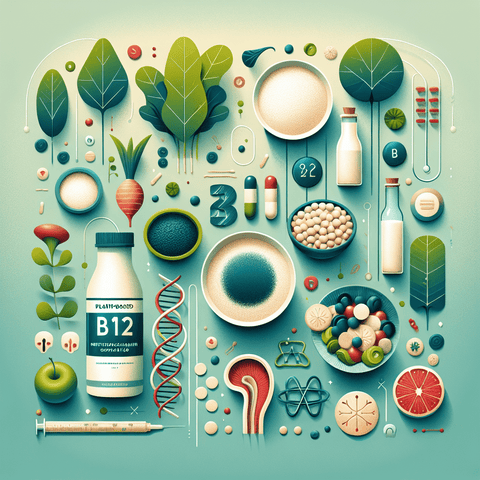
Why Vitamin B12 Demands Attention on a Vegan Diet
Vitamin B12 is a crucial nutrient that supports nerve function, red blood cell production, and DNA synthesis. Unlike most vitamins, B12 is naturally found almost exclusively in animal products. For this reason, vegan b12 supplementation is not merely a convenience but a genuine nutritional necessity for those following a plant-based lifestyle.
This guide explains why B12 is critical for vegans, how to identify deficiency risks, what dietary and supplemental options exist, and how to choose a high-quality product that supports long-term health.
What Is Vitamin B12 and Why Does the Body Need It?
Vitamin B12, also called cobalamin, is a water-soluble vitamin that plays several essential roles in the body. It supports the normal function of the nervous system, contributes to red blood cell formation, and helps reduce tiredness and fatigue. B12 is also involved in DNA synthesis and the metabolism of homocysteine, an amino acid linked to cardiovascular health when present at high levels.
The human body cannot produce B12 on its own. It must come from diet or supplementation. For vegans, who consume no animal products, relying on fortified foods and supplements is essential to meet their physiological requirements.
Because the body can store B12 in the liver for years, deficiency symptoms may take a long time to appear. However, once stores are depleted, neurological and hematological consequences can be severe if left untreated.
Understanding the science behind B12 absorption and dietary adequacy will help you make informed decisions. This article supports that understanding by explaining the nutrient's role, the best sources for vegans, supplementation options, and testing recommendations.
What Is Vitamin B12 and Why Is It Essential?
Vitamin B12, also called cobalamin, is a water-soluble vitamin that plays several indispensable roles in the human body. It is required for normal red blood cell formation, neurological function, and DNA synthesis. Without adequate B12, cells cannot divide properly, and the nervous system may become impaired.
Structurally, B12 is unique among vitamins because it contains the mineral cobalt, which sits at the center of its molecular structure. This is why the term "cobalamin" is used to describe the family of compounds with vitamin B12 activity. The two forms most relevant to human health and supplementation are methylcobalamin and cyanocobalamin.
B12 also works alongside other nutrients, particularly folate (vitamin B9), in a biochemical pathway that regulates homocysteine levels. Elevated homocysteine is associated with cardiovascular risk, although the clinical significance of this association continues to be studied. B12 also requires intrinsic factor, a protein produced in the stomach, to be absorbed efficiently in the small intestine. Understanding these basics helps clarify why deficiency can develop even in those who consume adequate amounts.
Why B12 Deficiency Is Common Among Vegans
B12 is synthesized by certain bacteria and archaea, not by plants or animals. Historically, humans obtained B12 from soil contaminants or from eating animal tissues. Modern hygiene, intensive farming practices, and food processing have dramatically reduced the presence of B12 in soil and drinking water. As a result, plant foods no longer provide reliable amounts of this vitamin.
For vegans, the situation is particularly significant. Since no unfortified plant foods contain meaningful amounts of active B12, a vegan diet without fortified foods or supplements will almost certainly lead to deficiency over time. This is not a matter of opinion but a well-documented nutritional reality. The body can store B12 for several years, which is why symptoms may not appear immediately after adopting a vegan diet, but long-term intake is essential.
Some plant-based foods such as spirulina, nori, and fermented products are sometimes marketed as B12 sources. However, these foods often contain B12 analogs—compounds that resemble B12 structurally but are not biologically active in humans and may even interfere with B12 metabolism. Relying on these foods instead of fortified foods or supplements is therefore considered unreliable.
Common Signs and Symptoms of Low B12 Status
The symptoms of B12 deficiency develop gradually and often mimic other conditions, which can delay diagnosis. Early signs frequently include persistent fatigue, weakness, and low energy. Some people experience shortness of breath, pale skin, or heart palpitations due to impaired red blood cell production, which can progress to megaloblastic anemia.
Neurological symptoms are also common and can include tingling or numbness in the hands and feet, difficulty walking, balance problems, and memory difficulties. Some individuals report mood changes, irritability, or depression. Because the nervous system relies on B12 for myelin sheath maintenance, prolonged deficiency can lead to irreversible neurological damage if left untreated.
Importantly, symptoms alone cannot reliably confirm or rule out deficiency. Many symptoms overlap with other conditions, including folate deficiency, thyroid disorders, or general fatigue. This is why blood testing is essential if you suspect your B12 status may be compromised, especially if you follow a vegan diet without supplementation.
Who Is at Highest Risk for B12 Deficiency?
While vegans are at notable risk for B12 deficiency, certain groups within the vegan population face greater challenges. Pregnant and breastfeeding individuals, for example, have increased B12 requirements because the developing fetus and infant rely entirely on maternal stores. Inadequate maternal B12 status may be associated with developmental concerns, which makes supplementation during pregnancy and lactation especially important on a vegan diet.
Older adults are another high-risk group. As we age, the stomach produces less gastric acid, and this can impair the release of B12 from food proteins. While this primarily affects food-bound B12, it can also reduce absorption of certain supplemental forms. Individuals with digestive conditions like Crohn’s disease, celiac disease, or atrophic gastritis may similarly struggle to absorb B12 effectively.
Additionally, people who have undergone bariatric surgery or ileal resection may require lifelong B12 monitoring. Long-term users of metformin or proton pump inhibitors may also experience reduced B12 status. In all these scenarios, deficiency can progress even when dietary intake appears adequate, which is why blood testing is often recommended.
Recognizing the Signs of B12 Deficiency
B12 deficiency can develop gradually, and early symptoms are often subtle. Fatigue, weakness, and lightheadedness are among the most commonly reported early signs. Some people may notice pale skin, shortness of breath, or heart palpitations due to anemia, because B12 is essential for producing healthy red blood cells.
Neurological symptoms can include tingling or a "pins and needles" sensation in the hands and feet, numbness, balance problems, and cognitive difficulties such as poor memory or concentration. In more advanced cases, mood changes, depression, and vision disturbances may appear. Interestingly, some people develop these neurological symptoms without obvious anemia, which makes reliance on symptoms alone unreliable.
Because B12 deficiency symptoms overlap with many other conditions, they cannot be used alone to diagnose deficiency. Blood testing is the only reliable way to assess B12 status. If you are vegan and experience any combination of these symptoms, especially after months or years of a plant-based diet, it is sensible to discuss testing with a healthcare professional.
How Much B12 Do You Need?
The recommended dietary allowance (RDA) for B12 in adults is 2.4 micrograms per day. During pregnancy and lactation, requirements increase to 2.6 and 2.8 micrograms per day respectively. However, these values assume normal absorption, which is not always the case. Because synthetic cyanocobalamin is absorbed at a rate of approximately 1% to 2% when taken in large doses, supplement labels often contain vastly higher amounts than the RDA to compensate for this limited absorption.
For vegans, several supplementation strategies are considered adequate. One common approach is taking a daily supplement containing at least 25–100 micrograms of cyanocobalamin. Alternatively, a dosage of 2,000 micrograms taken once per week is sometimes recommended. Higher doses like 500 micrograms daily or 1,000 micrograms on alternate days are also frequently used under medical supervision. The key principle is consistency, because B12 cannot be stored indefinitely, and regular intake is needed to maintain healthy status.
It is worth noting that the upper intake level for B12 has not been established because no adverse effects have been observed at high doses in healthy individuals. However, more is not automatically better, and routine high-dose supplementation should be justified by individual need or risk rather than habit. If you are uncertain about your dosage, a healthcare provider can offer guidance based on your personal health profile.
Food Sources and Fortified Foods for Vegans
For vegans, food sources of B12 are limited to fortified products. These may include nutritional yeast, plant milks, breakfast cereals, meat substitutes, and certain types of algae. However, it is important to understand that not all fortified foods provide reliable amounts of active B12, and the bioavailability of B12 from some algae or fermented foods is questionable.
Some plant-based foods are marketed as containing B12, but the form present may be an inactive analog that does not support human metabolism. Chlorella, spirulina, and certain seaweeds contain compounds that test as B12 but are not biologically active in humans. Relying on these foods for B12 is not evidence-based and may lead to deficiency.
For this reason, fortified foods and supplements are considered the only reliable sources of vitamin B12 for vegans. Fortified plant milks, breakfast cereals, and nutritional yeast can contribute to intake, but they vary in amount and may not provide enough if consumed irregularly. A daily supplement is generally the simplest and most dependable strategy for vegans.
Choosing a B12 Supplement: Forms and Dosage
When selecting a B12 supplement, you will typically encounter two main forms: cyanocobalamin and methylcobalamin. Cyanocobalamin is a synthetic form that contains a cyanide molecule, which is converted in the body to an active form. Despite concerns some people express about the cyanide component, the amount is minuscule and not considered harmful. Cyanocobalamin is highly stable, inexpensive, and the most extensively studied form.
Methylcobalamin is the naturally occurring active form in the body and is often preferred in supplements marketed as "natural" or "active." While it is a legitimate form of B12, research does not clearly show that methylcobalamin supplements are more effective than cyanocobalamin for correcting deficiency in most people. The most important factor is total intake and consistent supplementation, not the specific form used.
Dosage is another important consideration. Because intestinal absorption is limited by the availability of intrinsic factor, oral doses of 500 to 1,000 micrograms are often used in supplements to ensure adequate absorption through passive diffusion. This explains why supplement labels frequently contain doses far above the RDA; most of the excess is simply not absorbed.
Dietary Sources of B12 for Vegans
Naturally occurring B12 is essentially absent from plant foods. Some algae, such as chlorella, and certain fermented foods have been reported to contain B12-like compounds. However, these may be analogs, which are forms of B12 that are structurally similar but biologically inactive. For this reason, relying on spirulina, nori, or fermented plant foods as primary B12 sources is not considered evidence-based.
The most reliable dietary sources for vegans are fortified foods. Many plant milks, breakfast cereals, nutritional yeast products, and meat substitutes are fortified with cyanocobalamin. However, the B12 content in fortified foods can vary, and some products are not reliably fortified. Regular consumption of multiple fortified foods throughout the day may help, but it cannot guarantee consistent intake.
For this reason, most vegan health organizations recommend using a dedicated B12 supplement. Either cyanocobalamin or methylcobalamin in tablet, sublingual, or spray form is generally regarded as effective, provided it is taken consistently. Methylcobalamin is sometimes marketed as superior, but comparative research does not currently support that claim in the context of preventing or correcting deficiency.
Choosing Between B12 Supplement Forms
When you decide to supplement B12, you will most commonly encounter two forms: cyanocobalamin and methylcobalamin. Cyanocobalamin is the synthetic form used in most research trials and is highly stable. It is converted in the body into the active forms methylcobalamin and adenosylcobalamin, which are needed for cellular function.
Methylcobalamin is the form already present in the body and is sometimes marketed as being more "natural" or directly usable. However, differences in absorption and clinical effectiveness have not been convincingly demonstrated. Most clinical guidelines do not prefer one form over the other for general supplementation. If you prefer methylcobalamin for personal reasons, it is a legitimate choice.
Sublingual tablets, sprays, drops, and chewable tablets are all effective options. The key is not the delivery method but whether you take it regularly. Because B12 absorption is limited by intrinsic factor, higher oral doses compensate because a small percentage of the dose is absorbed through passive diffusion. This is why many vegan B12 supplements contain doses between 250 and 1,000 micrograms or more.
How to Choose a Quality B12 Supplement
When selecting a B12 supplement, it is important to look for products that clearly list the active ingredient, dosage, and form on the label. A high-quality supplement should specify whether it contains cyanocobalamin or methylcobalamin)Skip the vague language: "B12 from algae" or "plant-based B12" is often just cyanocobalamin that happens to be produced via fermentation. This is perfectly acceptable, but it should be labeled accurately.
Dosage is another factor. For prevention in healthy vegans, a daily dose of at least 25–100 micrograms is often considered adequatehol; however, many products contain far higher amounts. Weekly dosing at higher levels, such as 2,000 micrograms once per week, is also a recognized and effective approach in some populations. What matters is consistency. Missing doses for several weeks will eventually deplete tissue stores.
Third-party testing and certification are worth looking for. While supplements are regulated as foods in many countries rather than as drugs, reputable manufacturers voluntarily submit their products to independent testing for purity and potency. Look for third-party seals from organizations such as USP, NSF, or Informed Choice if product quality is a priority for you. This is especially important if you have ethical preferences or allergies, because you want a clean and reliable formulation.
What to Know About B12 Blood Testing
If you are vegan and supplementing regularly, routine B12 testing is not always necessary, but it may be useful in certain situations. That said, having your B12 status measured after several months of supplementation can confirm that your chosen dose and frequency are working. This is particularly relevant for people who earlier had a deficiency or who have symptoms that concern them.
A standard serum B12 test is the most common measure, but it does not always reflect functional B12 status at the tissue level. More sensitive markers include methylmalonic acid and homocysteine. These are functional markers that rise when B12 activity is insufficient at the cellular levelholistic view. If you present with persistent fatigue or neurological symptoms, you should ask your doctor to run these tests rather than relying solely on serum B12.
For most healthy vegans who supplement regularly, an annual blood test is reasonable. You may not need to test every few months if you have no symptoms and your intake is consistent. However, if you have digestive concerns, are older, or take medications that interfere with B12 absorption, testing is more compelling.
How to Take B12 and Who Should Consider It
Most adults following a vegan or predominantly plant-based diet should take a B12 supplement. The same applies to vegetarians who consume limited amounts of dairy or eggs. Pregnant, breastfeeding, or older individuals, and those with malabsorption conditions, may need higher doses or closer monitoring.
Common supplement protocols include a daily dose of 25 to 100 micrograms of cyanocobalamin, or 250 to 1,000 micrograms taken one to several times per week. Because absorption is limited by intrinsic factor, higher doses are used to compensate for the passive absorption pathway. There is no benefit to extremely high daily mega-doses for healthy individuals; consistent moderate amounts are sufficient.
B12 is water-soluble, and the body stores it in the liver. This means it is possible to skip a day occasionally, but regular intake remains important. Some people prefer weekly high-dose supplementation, but this should be weighed against the practical simplicity of taking a daily tablet. Consistency matters more than perfect dosing, and establishing a routine that you can maintain long term is the most realistic approach.
Can You Take Too Much B12?
Vitamin B12 is generally considered safe, even at high doses. Since it is water-soluble, excess amounts are largely excreted in urine. There is no established upper intake level for B12 because toxicity has not been observed from dietary or supplemental sources. This is unlike fat-soluble vitamins such as A or D, which can accumulate to harmful levels.
That said, taking excessively high doses is not necessarily more effective and may be a waste of money. Doses above 1,000 micrograms are common in some supplements and are generally tolerated wellikuha. However, in very rare cases, some people experience mild acne-like skin reactions or digestive discomfort. If this occurs, adjusting the dose or switching from cyanocobalamin to methylcobalamin may resolve the issue.
More important than avoiding harm is ensuring that your B12 supplement is being absorbed. Some people suffer from malabsorption due to gastrointestinal conditions or medication use shells. For these individuals, even high oral doses may be insufficient, and healthcare providers might recommend intramuscular injections or high-dose oral formulations under professional supervision.
Interpreting B12 Blood Tests
If you decide to have your B12 status tested, it helps to understand what the results mean. A serum B12 level above 300 pg/mL is generally considered normal in many labs. However, some experts argue that levels between 200 and 300 pg/mL may still be associated with mild deficiency symptoms, particularly if MMA is elevated. As such, some practitioners aim for more optimal levels rather than merely avoiding deficiency.
If you are already supplementing, your serum B12 may appear normal even if you recently took a dose. For this reason, some doctors recommend measuring active B12 and MMA. When evaluating your results, remember that what matters is what is normal to you, combined with relevant clinical symptoms. If your results suggest potential deficiency, your healthcare provider may advise adjusting your supplement dosage or frequency.
If you are vegan and have never supplemented, it is advisable to test your B12 status before starting supplementationtoknow your baseline. This is particularly useful if you experience any symptoms that could point to anemia or neuropathy. Testing every one to two years is reasonable for individuals with stable dietary habits.
B12 in the Context of Overall Vegan Nutrition
B12 is not the only nutrient that deserves attention on a vegan diet. Iodine, iron, zinc, calcium, omega-3 fatty acids, and vitamin D also require consideration. However, B12 is arguably the one nutrient for which a poorly planned vegan diet carries the highest risk of deficiency. Because no unfortified plant food reliably provides active B12, routine supplementation is considered a standard recommendation, not an optional measure.
While fortified foods can contribute to B12 intake, trying to meet your needs through fortified foods alone can be inconsistent. For example, fortified plant milks may contain 1 microgram per glass, but quantities in cereal products can vary widely. A supplement provides a consistent and measurable dose, which is especially important for children, pregnant women, and anyone who eats out often or lacks access to reliable fortified products.
B12 supplementation also becomes relevant if you train intensely, follow a low-calorie diet, or simply find it challenging to eat fortified foods every day. Since deficiency develops gradually, you may not notice a problem until it is advanced. Taking a supplement is a low-cost, low-risk strategy that effectively resolves this common gap in plant-based nutrition.
Potential Side Effects and Interactions
B12 supplements are well-tolerated in virtually all people. The most common side effects are mild and rare, including slight nausea, digestive upset, or diarrhea. These effects are more often associated with very high injection doses or unusual oral doses. Most people tolerate daily oral B12 at standard supplemental doses without any problems.
The safety of cyanocobalamin deserves special mention because of the word cyanide. The cyanocobalamin molecule contains a cyanide group, but it is not the same as free cyanide and does not accumulate. The amount of cyanide is pharmacologically insignificant and does not pose a health risk at typical supplement doses. Still, some individuals prefer methylcobalamin out of theoretical concern, which is an acceptable choice.
In terms of drug interactions, B12 is unlikely to cause serious concerns. However, medications like metformin, proton pump inhibitors, and certain antibiotics may reduce B12 status over time. If you take any of these medications long-term, regular monitoring is wise. Likewise, high-dose folic acid can mask a B12 deficiency on blood tests, so it is best not to rely on folic acid supplementation to resolve anemia without also addressing B12.
Methylmalonic Acid and the Problem of Early Deficiency
One of the most reliable markers of functional B12 deficiency is methylmalonic acid (MMA), which rises when B12 is insufficient for normal metabolism. MMA is often more accurate than serum B12, especially when B12 levels are borderline. For this reason, many experts recommend measuring both serum B12 and MMA when deficiency is suspected.
The reason MMA is so useful is that it directly reflects B12 function inside cells. When B12 is unavailable, the conversion of methylmalonyl-CoA to succinyl-CoA becomes impaired, and MMA accumulates. Elevated MMA is therefore a sign that B12 status is inadequate, even when serum levels look acceptable.
If you are vegan and have taken B12 supplements for several years, routine MMA testing is unlikely to be necessary. However, if you have persistent fatigue, neurological symptoms, or are planning to become pregnant, testing MMA alongside serum B12 and homocysteine can provide a more complete picture of what is happening at the cellular level.
What to Look For on a Supplement Label
Reading the label of a B12 supplement can be confusing because of varying terminology. First, check that the ingredient list clearly states the form of B12 being used, such as cyanocobalamin or methylcobalamin. The total amount should be expressed in micrograms, not milligrams. Common dosages in vegan supplements range from 25 to 1,000 micrograms per serving.
In many countries, the label also states the Daily Value (DV) percentage. This can be misleading for B12 because the DV is based on 2.4 micrograms per serving. A supplement providing 1000 micrograms would therefore say 41,667% DV, which looks odd but simply reflects that high oral doses are common and safe. What matters is whether the dose aligns with dietary recommendations for vegans and your individual absorption needs.
You should also check whether B12 is coming from a genuine biological source or if an analog is listed. Some supplements list "cobalamin from algae" or similar terms. These are not necessarily equivalent to the yeast-derived forms used in most supplements. Look for clearly stated active B12 compounds rather than vague botanical names.
The label should also include a clear serving size. Some products contain B12 in a lozenge meant to be chewed, while others are sublingual drops. All can work, but consistency is important. Finally, look for a vegan certification if that matters to you, and be aware that not all B12 supplements are vegan-friendly. Checking for a certified vegan seal can help avoid gelatin-based capsules or ingredients of animal origin.
Safety and Interactions
B12 supplements are considered extremely safe. There is no established upper intake limit for B12 because the body does not store excessive amounts in a toxic way. Even at high doses, B12 is largely excreted via the kidneys. In clinical practice, B12 injections of 1,000 micrograms or more are routinely given without significant concern.
Cyanocobalamin contains a cyanide molecule, which some people find concerning. However, the amount is tiny, and the body metabolizes it into a harmless compound called thiocyanate, which is also found in normal metabolism and in foods like cabbage and almonds. The safety profile of cyanocobalamin is well established, and it is considered safe for adults, children, and during pregnancy when used at appropriate doses.
That said, individuals with Leber’s disease, a rare optic nerve disorder, are sometimes advised to avoid cyanocobalamin due to a theoretical risk involving impaired cyanide detoxification. In such cases, methylcobalamin may be preferableholistic. If you have kidney disease or are undergoing hemodialysis, B12 supplementation can generally continue, but it is best to coordinate with your healthcare team.
B12 does not have major interactions with other vitamins, but it does work closely with folate and vitamin B6. High-dose folic acid can mask a B12 deficiency by correcting anemia while allowing neurological damage to progress. This is why many countries fortify flour with folic acid while also monitoring B12 status in the population.
Final Thoughts
For anyone following a vegan or largely plant-based diet, B12 is not optional—it is essential. Because natural food sources are limited to animal products and fortified foods, supplementation is the most practical and reliable strategy for maintaining adequate status. Whether you choose cyanocobalamin or methylcobalamin, the most important factor is consistency.
If you have been vegan for several years and have never tested your B12 status, consider discussing a blood test with your doctor. If you are already supplementing, continue with your routine, but be aware that average absorption rates mean that regular daily or weekly dosing is generally more effective than occasional high doses. The choice of supplement form is less important than whether you take it consistently over many years.
Finally, remember that B12 status is a lifelong concern for vegansites. Being proactive with fortified foods, supplements, and occasional testing will protect you from the potentially serious consequences of deficiency. These include anemia, nerve damage, and cognitive decline, all of which are reversible when caught early.
B12 for Specific Populations
Certain groups require special attention regarding B12. Pregnant and breastfeeding women who follow a vegan diet need reliable B12 intake because the developing fetus and nursing infant depend entirely on maternal stores. Vegan mothers who do not supplement may pass on low B12 levels to their infants, which can affect growth and neurologic development.
Vegan children are also at risk if their diets are not carefully supplemented. Because B12 deficiency can present with nonspecific symptoms like fatigue, poor appetite, and irritability, it can be overlooked. Parents should ensure that fortified formulas or supplements are used appropriately, always under pediatric guidance.
Finally, older adults may have reduced absorption capacity due to decreased stomach acid and a higher prevalence of atrophic gastritis. Even if they consume fortified foods or supplements, their ability to absorb protein-bound B12 from meat and dairy may be lower. Many older individuals benefit from regular supplementation or injections, regardless of whether they consume animal products.
Frequently Asked Questions
Do vegans need to take B12 supplements?
Yes. B12 is not present in meaningful amounts in commonly consumed plant foods, except when fortified. To prevent deficiency, vegans are generally advised to take a daily supplement or eat fortified foods consistently and verify their status with regular testing if uncertainty remains.
Can I get enough B12 from vegan foods?
It is theoretically possible if you consume fortified foods in sufficient quantity on a daily basis. However, relying on fortified foods alone can be impractical and unreliable. A dedicated B12 supplement is the simplest and most evidence-based way to ensure long-term adequacy on a vegan diet.
What is the best form of B12 supplement for vegans?
Both cyanocobalamin and methylcobalamin are considered effective for preventing and correcting deficiency in most people. Cyanocobalamin is the most widely researched and is more stable. Methylcobalamin is the active coenzyme form and is often preferred in natural health circles. For most adults, either form is acceptable.
How much B12 should vegans take daily?
General recommendations from vegan health organizations suggest around 25 to 100 micrograms per day of cyanocobalamin for healthy vegan adults. Alternatively, a weekly dose of 2,000 micrograms can be used, though daily intake is generally easier to maintain as a habit. Your needs may vary with age, pregnancy, or digestive health, so individual adjustments are reasonable.
These doses are higher than the RDA of 2.4 micrograms because absorption is limited. When you take a high dose, most of the vitamin is absorbed through passive diffusion, which compensates for the inefficiency of the intrinsic factor mechanism. In practice, this means that a supplement containing 1,000 micrograms taken weekly can be sufficient for many people, but daily lower doses may offer steadier statuses over time.
Vegan Health Claims and the Importance of Regular Supplementation
Vegan diets that are well planned and rely on fortified foods or supplements are considered nutritionally adequate by major health organizations worldwide. However, B12 is one nutrient where supplementation is nearly always necessary for vegans who do not regularly consume reliable fortified sources. This is not a flaw of the vegan diet; it simply reflects the fact that B12 is naturally found in animal-derived foods.
It takes months, sometimes years, for B12 deficiency to become clinically obvious. Because the liver stores relatively large amounts of B12, symptoms may not appear until after several years of inadequate intake. By that time, neurological damage may already be present. Some neurological symptoms of B12 deficiency are potentially irreversible, which is why prevention through regular supplementation is far better than treating established deficiency.
If you follow a vegan diet, you should assume that you need a B12 supplement unless your diet is very deliberately fortified with reliable sources. The evidence is clear that plant-based diets without B12 fortification or supplementation carry a high risk of deficiency. Fortunately, B12 is inexpensive, widely available, and extremely safe, making it one of the easiest deficiencies to prevent.
Frequently Asked Questions
What are the first signs of B12 deficiency?
Early signs often include fatigue, weakness, and mild cognitive symptoms such as difficulty concentrating. As deficiency progresses, neurological symptoms such as tingling or numbness in the hands and feet can emerge, along with anemia symptoms like pale skin and shortness of breath.
How long does it take for B12 deficiency to develop on a vegan diet?
The body stores B12 in the liver, and stores can last anywhere from three to five years. This means a vegan who stops consuming B12 sources entirely may not show signs of deficiency for several years. However, once stores are depleted, symptoms can develop relatively quickly, so regular supplementation or consumption of fortified foods is essential.
Can I get enough B12 from food alone on a vegan diet?
It is very difficult to meet B12 needs through food alone without fortified products. While fortified plant milks, breakfast cereals, and nutritional yeast can contribute, they are not always consumed consistently enough to ensure adequate intake. Most experts recommend that vegans use a daily supplement or consume fortified foods at every meal.
What is the best time to take B12?
B12 is absorbed best on an empty stomach for some people, but taking it with meals is also acceptable and often improves adherence. The most important aspect is consistency. Since B12 is water-soluble, splitting the dose may be recommended if you take high doses, but that is not essential for most people.
B12 does not compete with other vitamins for absorption in a clinically significant way, so it can be taken alongside other supplements. However, some evidence suggests at low stomach acidity may reduce absorption, which is one reason chewable or sublingual formulations are popular among older adults and people taking acid-reducing medications.
For most vegans, a daily supplement containing 25 to 100 micrograms of cyanocobalamin, or a weekly dose of 2,000 micrograms, is enough to maintain normal B12 status. The European Food Safety Authority and other bodies recognize that higher doses are sometimes needed in certain populations, but more is not automatically better. Consistency and regular dietary practice matter more than occasional very high intake.
The Role of Fortified Foods in a Vegan Diet
Fortified foods are often the first line of defense for vegans who prefer not to take supplements. Plant milks, breakfast cereals, meat alternatives, and some nutritional yeasts are routinely fortified with B12. However, the amount of B12 in these products varies widely, and not all brands fortify their products with individually tested amounts.
The main limitation of relying solely on fortified foods is that you have no way of knowing whether the vitamin remains stable over time, whether the product was evenly fortified during production, or whether you will consume these foods every day. For this reason, fortified foods can complement but generally should not replace a dedicated B12 supplement for anyone following a fully plant-based diet.
If you choose to rely on fortified foods, make sure to read each label carefully. Look for "cyanocobalamin" in the ingredient list, and calculate your estimated daily intake. In practice, most nutrition experts recommend a daily B12 supplement as the simplest and most reliable strategy, with fortified foods viewed as a bonus rather than a primary source.
When to Start Supplementing and Why
Ideally, anyone on a fully plant-based diet should begin B12 supplementation before deficiency symptoms appear. Since vegan diets contain essentially no natural B12 apart from fortified foods, waiting for symptoms is not a wise strategy. Starting a supplement as soon as you adopt a vegan lifestyle is the most straightforward approach.
Children raised on vegan or vegetarian diets also require reliable B12 sources. Plant-based milks, breakfast cereals, and nutritional yeast can help, but they are not always sufficient, especially for young children with higher relative needs. Vegan children should receive individualized guidance to ensure their B12 intake meets the needs of growth and development.
For pregnant and breastfeeding women, B12 requirements increase because the developing fetus and infant rely entirely on maternal B12status. Low maternal B12 has been linked to developmental risks and neurological problems in the child. Therefore, ensuring adequate B12 intake before, during, and after pregnancy is critical for vegan mothers.
Testing, Monitoring, and Adjusting Your Intake
If you are just starting a vegan diet or have been on one for years without supplementing, it is wise to ask your doctor for B12 testing. A simple serum B12 test can serve as a baseline. For a more functional assessment, MMA is the better indicator. If you have been supplementing regularly, a baseline test can still be useful for peace of mind and for helping you determine the right maintenance dose.
The most common approach is to supplement with 25 to 100 micrograms of cyanocobalamin daily, or 1,000 to 2,000 micrograms twice per week. Some research suggests that daily dosing is more reliable than larger weekly doses, because it maintains a more stable concentration of B12 in the blood. However, the best method is the one you can maintain consistently.
If your diet is not consistently fortified and you are not taking a supplement, your B12 level will likely decline over months to years. Deficiency does not appear overnight. It develops gradually, which is why symptoms may be subtle at first. By the time neurological symptoms like numbness or memory issues appear, deficiency has often been present for some time. Testing on a regular basis, such as annually or every two years, is a practical safeguard for vegans.
Frequently Asked Questions
Can you get enough B12 from plant foods alone?
No. Unfortified plant foods do not contain reliable amounts of active B12. Seaweed, spirulina, and fermented foods may contain B12 analogs that are not biologically active for humans. Fortified foods and supplements are therefore essential for vegans.
How long does it take for B12 deficiency symptoms to improve?
Once treatment begins, symptoms can improve within days to weeks, depending on the severity of the deficiency. Hematological symptoms like anemia may improve within weeks, while neurological symptoms can take longer and may not fully resolve if they were severe.
Can B12 supplements cause acne or skin issues?
Some case reports link high-dose B12 injections with acne-like eruptions in certain individuals. This is not common at standard supplement dosesable and does not mean you should avoid B12. If skin issues occur, adjusting the dose or switching the form under medical supervision may help.
Is cyanocobalamin safe?
Yes. Cyanocobalamin is the most thoroughly studied form of B12 and has a strong safety record. The cyanide component is metabolized into thiocyanatey, a harmless compound freely excreted in urine. It is widely used in research and clinical practice.
Can you have too much B12?
B12 is water-soluble, which means excess is excreted in urine rather than stored in large amounts. There is no established upper limit for B12, and toxicity is extremely rare. High-dose B12 supplements are routinely used in clinical settings without serious adverse effects.
Is methylcobalamin better than cyanocobalamin?
Not necessarily. Both forms are well absorbed and effective at raising B12 levels. Methylcobalamin is a naturally occurring coenzyme form, while cyanocobalamin is synthetic and more stable. For most people, cyanocobalamin is perfectly effective and often more affordable.
What are the neurological symptoms of B12 deficiency?
Deficiency can cause numbness, tingling in the hands or feet, balance problems, memory issues, and difficulty concentrating. These symptoms can progress to more serious neurological impairment if untreated. Neurological symptoms may appear even without obvious anemia.
How much B12 should a vegan take daily?
General recommendations for vegans suggest at least 25 to 100 micrograms of cyanocobalamin daily, or 1,000 micrograms twice a week. Some guidelines recommend as high as 2,000 micrograms weekly. Your specific needs depend on age, pregnancy status, and how consistently you supplement.
Is methylcobalamin better than cyanocobalamin?
Neither form is definitively superior in healthy individuals. Methylcobalamin is biologically active in the body, but cyanocobalamin is more stable and has been used successfully for decades in research and clinical treatment. Both forms are effective at correcting and preventing deficiency.
What is the best time to take B12?
B12 is water-soluble, so the timing does not significantly affect absorption. Taking it with a meal may reduce digestive discomfort in some people. Consistency matters more than timing.
Can vitamin B12 help with energy?
B12 is involved in red blood cell production and energy metabolism. If your B12 level is already normal, taking extra B12 is unlikely to boost energy. However, if you are deficient, correcting it may resolve symptoms of fatigue and weakness.
Is it safe to take 1,000 micrograms of B12 daily?
Yes. No upper intake level has been established for B12 because the body does not appear to be harmed by high intakes. Doses up to 2,000 micrograms per day are commonly used in research, and even higher doses are used clinically without concern.
What is the difference between B12 and B complex supplements?
B12 is a single vitamin, while a B-complex supplement contains several B vitamins together, including B1, B2, B3, B5, B6, B7, B9, and B12. A B-complex may be useful if your diet lacks several B vitamins, but for B12 specifically, a standalone supplement is usually sufficient for vegan needs.
Are B12 injections better than oral supplements?
For most people, oral supplements are equally effective at maintaining B12 status when taken consistently. Injections are commonly used in cases of severe deficiency or malabsorption but are not generally necessary for otherwise healthy vegans.
Should I take B12 with food?
B12 supplements can be taken with or without food. Taking them with meals may improve absorption slightly because the presence of food stimulates gastric acid production, which can help release B12 from the supplement matrix.
Is methylcobalamin better than cyanocobalamin?
Both are effective. Methylcobalamin circulates directly in the bloodstream, while cyanocobalamin must be converted. However, cyanocobalamin is more stable and has more extensive research supporting its use. Neither is clinically "better." Choosing between them often comes down to personal preference and budget.
Can you overdose on B12?
B12 is water-soluble, and excess amounts are not stored in significant quantities. No toxic upper level has been defined. Even high doses are considered safe, although massive doses are unnecessary for most individuals.
How do I know if I am truly deficient?
A blood test measuring serum B12 is the first step. If your levels are below 200 pg/mL or if you have symptoms despite normal serum B12, your doctor may also test MMA and homocysteine to determine whether functional deficiency exists.
What B12 level should vegans aim for?
Most labs consider serum B12 above 300 pg/mL to be adequate, but some experts recommend levels above 400 pg/mL for vegans to provide a safety margin. MMA is the more accurate marker, and levels should stay within the normal reference range.
Do fortified foods count the same as supplements?
Fortified foods can contribute to B12 intake where it is consistently available. However, relying only on fortified foods is less reliable for meeting your daily requirement than taking a supplement. Fortification levels vary by brand and may not be consistent across batches.
Related Keywords
- Vitamin B12 deficiency
- Vegan B12 sources
- B12 supplements for vegans
- Cyanocobalamin vs methylcobalamin
- Vegan nutrition plan
- B12 blood test
- MMA test
- B12 fortified foods
- Neurological symptoms B12 deficiency
- B12 dosage for vegans
- Vitamin B12 absorption