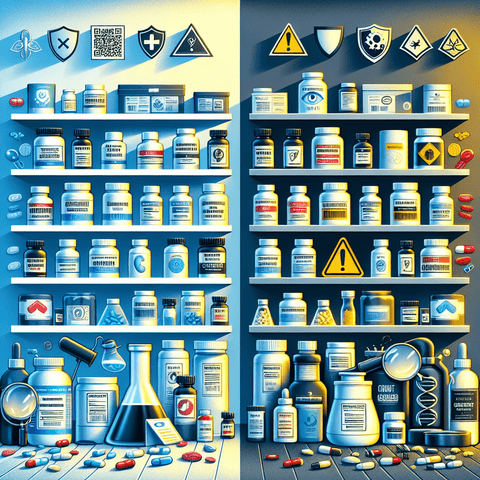
Verifying supplement labels means checking a product's Supplement Facts panel, ingredient forms, doses, certifications, and claims before buying, so you can confirm safety, potency, and honest labeling. This guide explains what each part of a label means, the red flags that suggest a misleading product, how to check quality and third-party testing step by step, and how to use that information to decide whether a supplement fits your needs. Because supplement labels are not pre-approved by regulators in the same way medicines are, learning to read them yourself is one of the most effective ways to make safer, more informed choices.
How to Verify Supplement Labels: Why It Matters Before You Buy
What verifying supplement labels actually means
Verifying a supplement label goes far beyond glancing at the front of the bottle. It means systematically reviewing the Supplement Facts panel, the ingredient list, the nutrient forms and doses, the manufacturing details, and the claims being made. The goal is to confirm that the product contains what it says it contains, in amounts that are meaningful and safe, and that the manufacturer is being transparent about both.
In practice, this also involves checking for third-party certifications, a lot number, an expiry date, and manufacturer contact information. These details tell you whether the product was produced under recognized quality standards and whether it can be traced if a problem arises.
What you'll learn in this guide
This guide walks you through each section of a supplement label in plain language, highlights the most common warning signs of misleading labeling, and provides a practical step-by-step method for assessing quality and potency. You'll also learn how honest labeling relates to your safety, which groups should read labels with extra care, and how to weigh supplementation against diet and lifestyle first.
What Is on a Supplement Label? Key Parts Explained
Supplement Facts panel: serving size, doses, and % Daily Value
The Supplement Facts panel is the core of any label. It lists the serving size, the amount of each nutrient per serving, and, where a Daily Value has been established, the percentage of that value the serving provides. The % Daily Value tells you how much of a typical adult's daily requirement one serving contributes, but it does not tell you whether that amount is appropriate for you specifically.
Pay close attention to serving size. A product that looks well-dosed may actually list two or three capsules as a single serving, which changes the real amounts you're taking. Also note whether amounts are listed as elemental mineral content (the amount of actual mineral, which is what matters) or as the weight of a compound.
Proprietary blends and why they hide ingredient amounts
A proprietary blend is a list of ingredients grouped under a single name with only a total weight given. Individual amounts are not disclosed. This makes it impossible to know whether an ingredient is present at a dose supported by research or included only in token amounts for marketing purposes.
Transparency-minded manufacturers list each ingredient with its own amount. When you can't verify individual doses, you can't verify potency, which is one of the main reasons blends are considered a labeling red flag.
Other ingredients: fillers, binders, allergens, and additives
Beyond active nutrients, labels list "other ingredients": capsules materials, fillers, flow agents, sweeteners, colors, and flavorings. Most are harmless, but some matter for specific people. Allergens such as soy, dairy, gluten, shellfish, or gelatin must be considered if you have an allergy, intolerance, or restricted diet.
Regulations typically require major allergens to be clearly declared, so their presence on the label is actually a sign of compliance. What you want to avoid is vague wording like "natural flavors" with no further detail when you have a known sensitivity.
Structure/function claims vs. health claims: what labels can legally say
Supplement labels may legally carry structure/function claims, such as "supports immune health" or "contributes to normal energy metabolism," which describe a nutrient's general role in the body. These are not the same as health claims, which link a substance to reducing disease risk and require far stronger scientific substantiation.
Crucially, all supplements must carry a disclaimer stating that the product is not intended to diagnose, treat, cure, or prevent any disease. Any wording that crosses into disease treatment territory is a signal that the manufacturer may not be following labeling rules.
Red Flags That a Supplement Label May Be Misleading
Vague claims like "miracle," "cure," or "clinically proven" without citations
Words such as "miracle," "cure," "breakthrough," or "clinically proven" without any reference to published research are strong warning signs. Legitimate structure/function claims are measured and specific. Dramatic language often substitutes for substance and may indicate a product that relies on marketing rather than formulation quality.
Missing third-party testing seals (USP, NSF, Informed Choice)
Third-party certification means an independent organization has verified that the product contains what the label says and is free from harmful levels of contaminants. Seals such as USP Verified, NSF Certified, and Informed Choice (for sports products) provide an extra layer of assurance because they are not controlled by the manufacturer.
Their absence doesn't automatically mean a product is poor quality, but their presence makes verification much easier. If a brand claims to be "third-party tested" but provides no certification, certificate of analysis, or named testing organization, treat that claim skeptically.
Unrealistic potency claims and "mega-dose" marketing
Marketing that implies more is always better ignores how nutrition actually works. Nutrients have upper intake levels, and exceeding them regularly can cause side effects or imbalances. Very high doses of fat-soluble vitamins, for example, can accumulate in the body over time.
At the other extreme, "fairy dust" formulations list research-supported ingredients at trivial amounts, well below doses used in studies. Both patterns suggest the formulation was designed for label appeal rather than nutritional logic.
No manufacturer contact information, lot number, or expiry date
A responsible label includes the manufacturer's name and address, a lot or batch number, and a best-before or expiry date. The lot number allows products to be traced and recalled if a problem is identified. Expiry dates reflect stability testing of the nutrients. If any of these are missing, the product falls short of basic manufacturing transparency, and quality cannot be verified.
How to Check Supplement Quality and Potency Step by Step
Match the labeled dose to evidence-based amounts
Once you know the actual dose per serving, compare it with recognized reference values, such as the Recommended Daily Amounts or Safe Upper Levels published by public health authorities. A useful dose generally sits between meaningful nutritional support and the established upper limit. If a label lists a dose far above these references, or so low it contributes almost nothing, question its purpose.
Check the nutrient form (e.g., magnesium citrate vs. oxide)
The chemical form of a nutrient affects how well it is absorbed and tolerated. For example, magnesium oxide has a relatively low absorption rate and is often used for its laxative effect, while forms such as citrate or bisglycinate are generally better absorbed. Similar form differences exist for many minerals and some vitamins.
A quality label names the exact form, not just the nutrient. If a label says only "magnesium" without specifying the compound, you can't evaluate bioavailability. You can read more about form differences in our guide to magnesium supplements.
Verify third-party certifications and Good Manufacturing Practices (GMP)
Look for certification seals on the packaging and, ideally, verification on the certifying body's own website. Also check whether the product is manufactured under GMP (Good Manufacturing Practices), which govern cleanliness, consistency, and quality control during production. In many regions, GMP compliance is required for supplement manufacturing, but third-party verification confirms it independently.
Look up brands using databases like the FDA warnings and NSF Certified listings
Before buying, search public databases for the brand and product. The FDA maintains lists of warning letters and recalled supplements, often involving products found to contain undeclared or adulterated ingredients. NSF International publishes a searchable list of certified products. A quick search takes minutes and can reveal issues that no label would disclose.
Why Honest Labels Matter for Your Health and Safety
Risks of underdosed, overdosed, or contaminated supplements
An underdosed product wastes money and may leave a genuine nutritional gap unaddressed. An overdosed product can cause side effects or push intake above safe upper limits, particularly with fat-soluble vitamins, iron, selenium, and zinc. Independent testing of supplements has occasionally found contamination with heavy metals, bacteria, or even undeclared pharmaceutical compounds, especially in products marketed for weight loss, energy, or sports performance.
Hidden ingredients and undeclared allergens
Some products, particularly those sold for rapid results, have been found to contain prescription drug ingredients not listed anywhere on the label. For anyone with allergies, taking medications, or managing a health condition, this is a serious safety risk. This is why third-party testing and avoiding unverified sources matter so much.
How inaccurate labels can contribute to nutrient imbalances
Nutrients interact. High zinc intake over time can reduce copper status; excessive vitamin intake can interfere with the absorption or function of other nutrients. If a label overstates or understates content, you may unintentionally disrupt this balance, especially when combining a multivitamin with individual supplements. Our guide to multivitamin ingredients and usage covers how combined formulas should be evaluated.
Who Should Pay Extra Attention to Supplement Labels
People taking medications with known supplement interactions
Several supplements interact with common medications. Vitamin K affects blood-thinning medicines such as warfarin; high-dose vitamin E may increase bleeding risk; St. John's Wort interacts with numerous drugs. If you take prescription medication, checking labels for dose and form, and discussing use with a pharmacist or doctor, is essential rather than optional.
Pregnant or breastfeeding women
Nutritional needs change during pregnancy and lactation, and some nutrients have lower upper limits for pregnant women. Vitamin A in particular requires care, as excessive retinol intake is linked to fetal risk. This group benefits from choosing products clearly labeled for pregnancy and reviewed by a healthcare professional. See our overview of vitamin A safety for more detail.
Older adults and those with absorption issues
Aging, gastrointestinal conditions, and certain medications can reduce absorption of nutrients such as vitamin B12, vitamin D, and calcium. Older adults may also have different dose requirements. Labels that clearly state the nutrient form and elemental amounts are especially valuable when absorption is a concern.
People with allergies, intolerances, or restricted diets
Those following vegan, gluten-free, or allergen-restricted diets should scan the "other ingredients" section carefully. Gelatin capsules, soy-derived additives, wheat-based fillers, and shellfish-derived glucosamine are common. Certifications such as vegan or gluten-free, when independently verified, simplify this check considerably.
Diet and Lifestyle First: When Food Covers Your Nutrient Needs
Everyday foods that supply key vitamins and minerals
A varied, balanced diet covers most nutrient needs for most healthy people. Oily fish provides vitamin D and omega-3s; leafy greens supply folate, vitamin K, and magnesium; dairy or fortified alternatives contribute calcium and B12; nuts, seeds, and legumes provide minerals and vitamin E; citrus and berries are rich in vitamin C. Food also delivers fiber and phytonutrients that supplements cannot replicate.
Lifestyle factors (sun exposure, sleep, alcohol) that affect nutrient status
Nutrient status depends not only on intake but on how the body uses nutrients. Limited sun exposure reduces vitamin D production; alcohol affects the absorption and metabolism of several B vitamins; smoking increases oxidative stress and vitamin C requirements; poor sleep and chronic stress influence appetite, food choices, and metabolic demands. Addressing these factors often does more for nutritional status than adding supplements.
When diet alone may not be enough
Even with a good diet, some situations reliably create gaps: strict vegan diets (B12, iodine, sometimes iron and omega-3), limited sun exposure (vitamin D), restrictive intakes, and certain health conditions affecting absorption. In these cases, the question shifts from whether to supplement to which product, at what dose, and in which form.
When Supplementation May Be Relevant
Documented gaps vs. perceived need: why testing and professional advice matter
The most reliable way to identify a genuine nutritional gap is clinical assessment. Blood tests can confirm status for nutrients such as vitamin D, B12, iron, and folate, while symptoms alone are often nonspecific and can have many causes. Testing prevents both unnecessary supplementation and missed deficiencies that need medical attention. Where validated testing exists, it usually provides better information than guessing.
Life stages and conditions where nutritional support is commonly considered
Public health guidance commonly recommends folic acid for women planning pregnancy, vitamin D during darker months in northern climates, and B12 for strict vegans and many older adults. Certain medical conditions and medications also increase requirements. These are situations where supplementation has well-established rationale, ideally guided by a healthcare professional, rather than blanket use by everyone.
How to Choose a High-Quality Supplement After Reading the Label
Single-ingredient vs. combination products: which fits your goal
Single-ingredient products make dosing transparent and easy to adjust, which is useful when addressing a specific gap. Combination formulas can be convenient but require the same label scrutiny for each ingredient, and blends with undisclosed amounts should be avoided. Match the format to your goal rather than assuming more ingredients means better.
Capsules, tablets, powders, and liquids: practical differences
Capsules are easy to swallow and mask taste; tablets are stable and cost-effective but may include more binders; powders allow flexible dosing but require accurate measuring; liquids may suit people who have difficulty swallowing, though some nutrients are less stable in solution. Choose the form you'll take consistently, since consistency matters more than minor format differences.
Bioavailability and added ingredients like black pepper extract
Some labels include absorption enhancers, such as black pepper extract with curcumin. Evidence for meaningful bioavailability differences exists for some of these combinations but is limited or mixed for others, so treat such claims with measured skepticism. The nutrient form and dose remain the most important factors to verify. Our guide to curcumin supplements explains this in more depth.
Matching certifications to your needs (vegan, gluten-free, sports-tested)
Align certifications with your personal requirements: vegan or gluten-free certification if relevant to your diet, Informed Choice or Informed Sport testing for athletes subject to anti-doping rules, and USP or NSF verification where general quality assurance matters most. No single certification covers everything, so check that the seal matches your actual concern.
Key Takeaways
- Verifying supplement labels means checking doses, nutrient forms, certifications, and claims, not just the front of the bottle.
- Always confirm the actual serving size; multi-capsule servings change the effective dose.
- Proprietary blends hide individual ingredient amounts, making potency impossible to verify.
- Third-party seals such as USP, NSF, and Informed Choice provide independent quality assurance.
- Nutrient form affects absorption; magnesium citrate and magnesium oxide are not equivalent.
- Check for lot numbers, expiry dates, and manufacturer contact details before buying.
- Search FDA warning and recall databases for any brand you're considering.
- A varied diet covers most nutrient needs; supplementation is best reserved for documented or well-established gaps.
- People taking medications, pregnant women, older adults, and those with allergies should read labels with extra care and consult a professional.
- Symptoms alone rarely confirm a deficiency; testing and professional assessment provide more reliable information.
Frequently Asked Questions About Verifying Supplement Labels
What does the % Daily Value on a supplement label mean?
The % Daily Value shows how much one serving contributes to the recommended daily intake of a nutrient for a typical adult, based on reference values set by health authorities. It's a general benchmark, not a personalized target, since your needs depend on age, sex, diet, and health status.
Are supplements FDA-approved before they're sold?
No. In the United States, dietary supplements do not require pre-market approval by the FDA. Manufacturers are responsible for safety and label accuracy, and the FDA acts after products are on the market. This is why independent verification and label literacy are so important.
Does third-party testing guarantee a supplement works?
No. Third-party testing verifies identity, potency against the label, and contaminant levels. It confirms the product contains what it claims, but it does not prove clinical effectiveness for a specific goal. Effectiveness still depends on whether the nutrient, dose, and form are appropriate for your situation.
How can I tell if a supplement dose is too high or too low?
Compare the amount per serving with established reference values and safe upper levels from public health authorities. A dose far below the Daily Value may be nutritionally trivial, while one above the tolerable upper intake level raises safety concerns, especially with long-term use. When in doubt, ask a healthcare professional.
What should I look for first when reading a supplement label?
Start with the serving size and the amount and form of each active nutrient per serving. Then check for a certification seal, lot number, expiry date, and manufacturer details. Finally, review the claims on the front of the package and the "other ingredients" list.
What does "not intended to diagnose, treat, cure, or prevent any disease" mean?
This required disclaimer appears on all supplements sold under FDA rules. It signals that the product is regulated as food, not medicine, and cannot legally make disease-treatment claims. If a label or advertisement claims to cure or treat a condition, it is not following supplement labeling regulations.
Can you take too much of a vitamin or mineral?
Yes. Fat-soluble vitamins (A, D, E, K) can accumulate in the body, and minerals such as iron, selenium, and zinc have relatively low upper limits. Consistently exceeding tolerable upper intake levels can cause side effects or nutrient imbalances, particularly when combining multiple products.
Do supplements expire, and does the expiry date matter?
Yes. Nutrients degrade over time, and the expiry date reflects the manufacturer's stability testing. Using a product well past its date may mean reduced potency. Avoid products with no expiry date at all, as you cannot verify how much active nutrient remains.
Is a supplement with more ingredients always better?
No. More ingredients often mean lower doses of each, greater chance of nutrient-nutrient interactions, and a harder label to verify. A focused product with clearly listed, meaningful doses is usually easier to evaluate and safer to combine with other supplements.
Why do some labels say "elemental" amounts?
Minerals are bound to carrier compounds, so the total compound weight exceeds the amount of actual mineral. Labels should state the elemental amount, which is what counts nutritionally. If only compound weight is given, you cannot accurately assess your mineral intake.
How can I check whether a supplement brand has had safety issues?
Search the FDA's warning letter and recall databases for the brand and product name, and look the product up on certification bodies' websites such as NSF. Consumer advisories from national food safety authorities can also reveal recalls or warnings for specific products.
Should I stop taking a supplement if my diet improves?
Not automatically, but it's worth re-evaluating. If your diet now reliably covers a nutrient, a supplement may be redundant. Discuss any changes with a healthcare professional, especially if the supplement was started based on a documented deficiency or medical advice.
Final Takeaway: Read the Label, Then Make an Informed Choice
A supplement label is the most honest source of information you have about a product, provided you know how to read it. By checking doses, nutrient forms, certifications, and claims, and by comparing products against evidence-based reference amounts, you can separate transparent manufacturers from marketing-driven ones. Nutritional needs vary widely between individuals depending on diet, age, health status, and lifestyle, so let food and lifestyle come first, use testing or professional guidance to identify genuine gaps, and use your label-reading skills to choose well-manufactured products only where they genuinely fit. When diet covers your needs, no supplement is necessary; when a gap exists, an honestly labeled, third-party verified product is the one worth considering.
Related Keywords
- verifying supplement labels
- how to read a supplement label
- Supplement Facts panel explained
- third-party tested supplements
- USP and NSF certification
- proprietary blend red flags
- supplement safety and potency
- nutrient bioavailability and supplement forms
- % Daily Value meaning
- supplement quality check
- are supplements FDA approved
- supplement dose too high or too low
- hidden ingredients in supplements
- choosing a high-quality supplement