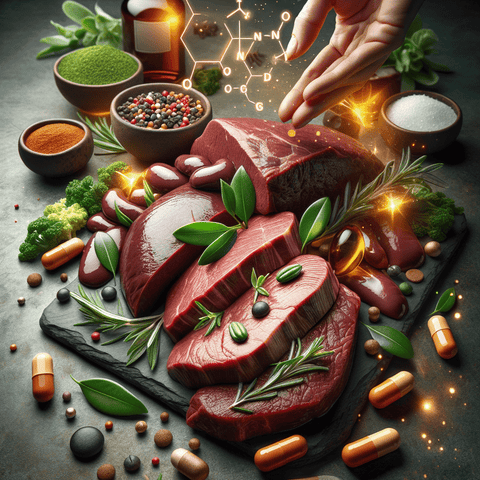
Vitamin A in meat is a topic that brings together nutrition data, food composition and practical label-reading. Meat and other animal foods can contain preformed vitamin A, mainly as retinol and related compounds, which is chemically different from the provitamin A carotenoids found in many plant foods. This page explains the broad picture: where vitamin A appears in meat, why organ meats are usually discussed separately, how values are reported, and what to check before comparing one number with another.
What Vitamin A in Meat Actually Refers To
When people talk about vitamin A in meat, they are usually referring to preformed vitamin A. This includes retinol and related retinoid compounds that are already in a form the body can use, rather than carotenoids that must first be converted. Preformed vitamin A is found in animal-derived foods, and meat is one of the food groups where it appears.
Food composition databases typically express vitamin A in micrograms of retinol activity equivalents (RAE) or in international units (IU). RAE is often used because it helps compare preformed vitamin A with provitamin A carotenoids on a common scale, while IU is still seen in some older labels and databases. Seeing both units on different sources is normal, and it is one reason direct number-to-number comparisons can be misleading if the units are not checked first.
Why Organ Meats Are Usually the Main Focus
The liver is the body's main storage organ for vitamin A, and this is reflected in food composition data. Liver from beef, chicken, pork, lamb and other animals is consistently reported as a concentrated source of preformed vitamin A, which is why liver and liver-based products tend to dominate discussions of vitamin A in meat.
Other organ meats, such as kidney, may also contain vitamin A, but usually at lower amounts than liver. Skeletal muscle meats like beef steak, pork chops, chicken breast and turkey are generally much lower in vitamin A by comparison. This distinction matters because a page or product that simply says “meat” without specifying the tissue can be difficult to interpret.
Major Meat Categories and What They Typically Contain
Even within the same animal, different cuts and tissues can have different vitamin A values. The table below summarises the broad categories commonly seen in food composition resources. Exact numbers vary by source, country and database, so treat these as qualitative guidance rather than fixed values.
- Liver (beef, chicken, pork, lamb): typically the richest source of preformed vitamin A among meats.
- Other organ meats (kidney, heart): may contain vitamin A, generally at lower amounts than liver.
- Red meat cuts (beef, lamb, pork): usually low in vitamin A compared with liver.
- Poultry muscle (chicken, turkey): generally low in vitamin A.
- Processed meats and pâtés: highly variable, depending on whether liver or other offal is included.
- Eggs: contain some vitamin A, mainly in the yolk.
For broader nutritional context on vitamin A sources and safety, you can explore the vitamin A benefits, sources and safety category, which covers the nutrient more generally.
How Vitamin A Values in Meat Are Measured and Reported
Vitamin A content in meat is not a single fixed number. It depends on several factors, and understanding them helps explain why two sources may report different values for what sounds like the same food.
- Tissue type: liver, kidney and muscle have different composition and storage roles.
- Animal species and diet: what the animal ate and how it was raised can influence tissue content.
- Preparation state: raw and cooked values are not directly comparable; cooking can change moisture and nutrient concentration.
- Measurement basis: some values are per 100 g, others per serving or per portion.
- Analytical method: laboratories may use different techniques, which can lead to small differences.
- Storage and processing: time, temperature and handling can affect the final reported amount.
Because of this variability, the most useful approach is to compare values using the same reference context. Check whether the value is for raw or cooked meat, whether it is per 100 g or per serving, which tissue and species it refers to, and whether the source explains how the value was obtained.
Vitamins and Supplements: Where Meat Fits in the Wider Picture
Vitamin A is one nutrient among many that the body needs. Some people look at meat and organ meats as part of a mixed diet, while others use supplements to support general nutritional intake. When considering supplements, it helps to look at the product label, the form of vitamin A used and the amount per serving, and to treat supplement information as part of a broader dietary picture rather than an isolated number.
For those exploring supplement options more generally, the natural supplements collection offers a wider view of product categories, while the vitamin A guide focuses specifically on this nutrient. These resources are provided for general information and do not replace personalised advice from a qualified health professional.
Important Considerations When Interpreting Vitamin A Data
Vitamin A is a nutrient where both too little and too much can matter, particularly for preformed vitamin A from animal sources and supplements. The liver stores a significant proportion of the body's vitamin A, which is why very high intakes over time are treated with caution in nutritional guidance.
This page is intended as a general educational overview of vitamin A in meat and related data interpretation. It does not provide medical advice, diagnosis or personalised dietary recommendations. If you have specific questions about your diet, health status or supplement use, it is appropriate to consult a qualified healthcare professional.
Where to Go Next
This tag page acts as a broad hub for understanding vitamin A in meat. The individual articles listed below explore specific angles in more detail, such as particular meat types, comparisons, preparation effects and related nutrient questions. Together, the hub and the associated articles provide a structured way to explore the topic from a general overview down to more focused questions.