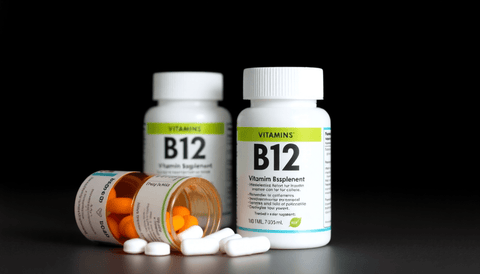
Vitamin B12 dosage is one of the most common questions in everyday nutrition, and for good reason: this single vitamin plays an essential role in red blood cell formation, nerve function, and DNA synthesis, yet needs vary considerably from person to person. How much B12 you truly need depends not only on official recommendations, but also on your age, diet, digestive health, and how well your body absorbs the nutrient. In this guide, you will learn the recommended daily intake by age, why supplement doses often far exceed the RDA, who is most at risk of low B12, which foods provide meaningful amounts, how different supplement forms compare, and how to make an informed decision about whether supplementation is right for you.
What Is the Right Vitamin B12 Dosage for You?
There is no single answer to the question of the "right" dosage, because vitamin B12 needs sit at the intersection of official dietary guidelines and individual circumstances. The recommended dietary allowance (RDA) provides a baseline for healthy people, but absorption capacity, dietary pattern, age, and medication use can all shift how much B12 you actually need to consume—or supplement—to maintain adequate status. Understanding both the general recommendations and the factors that modify them is the key to making a sensible, evidence-aware decision rather than simply guessing or copying someone else's routine.
Understanding Vitamin B12 and Why Your Body Needs It
Vitamin B12, also known as cobalamin, is a water-soluble vitamin that the human body cannot produce on its own. It must come from food or supplements, and it is stored in the liver, where reserves can last months or even years. This storage capacity makes acute deficiency rare in people with varied diets, but also means that low intake or poor absorption can go unnoticed for a long time before problems appear.
What Does Vitamin B12 Actually Do in the Body?
B12 participates in several fundamental processes. It is required for the production of healthy red blood cells, which carry oxygen throughout the body. It supports the myelin sheath that insulates nerve fibers, making it important for normal neurological function. It also plays a role in DNA synthesis and in the metabolism of homocysteine, an amino acid that is associated with cardiovascular health when kept within normal ranges. Because of these wide-ranging roles, inadequate B12 status can affect energy, cognition, and blood health—although these effects only become apparent when intake is genuinely insufficient.
The Difference Between Dietary Intake and Absorbed B12
A crucial but often overlooked point: how much B12 you eat is not the same as how much you absorb. Absorption of B12 relies on a protein called intrinsic factor, produced by cells in the stomach lining, and on sufficient stomach acid to release B12 from food proteins. Even if your diet contains ample B12, compromised stomach acid, intrinsic factor production, or intestinal function can dramatically reduce the amount that actually reaches your bloodstream. This is why some people can develop low B12 status despite eating a diet that appears adequate on paper.
How Much Vitamin B12 Do You Need Per Day?
Official Recommended Dietary Allowances (RDA) by Age
The RDA for vitamin B12, as established by health authorities such as the U.S. National Institutes of Health and reflected in European reference values, is small compared to most nutrients:
- Infants 0–12 months: approximately 0.4–0.5 mcg per day
- Children 1–8 years: 0.9–1.2 mcg per day
- Adolescents 9–13 years: 1.8 mcg per day
- Everyone aged 14 and older: 2.4 mcg per day
- Pregnant women: 2.6 mcg per day
- Breastfeeding women: 2.8 mcg per day
These amounts are measured in micrograms—a thousandth of a milligram—because the body's requirements are genuinely tiny. What matters is that this intake is met consistently, particularly for people whose diets contain little or no B12 naturally.
Why the RDA Differs from Therapeutic or Supplemental Dosages
If the RDA is only 2.4 mcg, why do B12 supplements often contain 100, 500, or even 1,000 mcg? The answer lies in absorption efficiency. When B12 is absorbed through the intrinsic factor pathway, only a small fraction of a large dose is actually taken up—roughly 1% or less of high supplemental doses is absorbed passively, independent of intrinsic factor. This is why supplement doses are often hundreds of times higher than the RDA: the body absorbs a small percentage of a large amount. Lower-dose supplements closer to the RDA can be sufficient when intrinsic factor function is intact and B12 is taken regularly with food.
Signs That Your Vitamin B12 Levels May Be Low
Common Early Signs of Low B12
When B12 status declines, the most commonly reported signs include persistent fatigue and weakness, pale or slightly yellowed skin, shortness of breath during mild exertion, tingling or numbness in the hands and feet, balance or coordination difficulties, a smooth or sore tongue, and in some cases memory problems, low mood, or difficulty concentrating. These symptoms arise because B12 is needed for both blood cell production and nerve maintenance.
Why Symptoms Alone Don't Confirm a Deficiency
The challenge is that none of these symptoms is specific to B12. Fatigue can stem from poor sleep, iron status, thyroid issues, stress, or countless other causes. Tingling may have several neurological origins. This is why symptoms alone cannot confirm a deficiency: vitamin B12 status is assessed reliably through blood tests, typically measuring serum B12, and in some cases additional markers such as methylmalonic acid (MMA) or homocysteine. If you suspect low B12, testing through a healthcare provider is a more reliable path than self-diagnosis and self-treatment.
Who Is at Higher Risk of Insufficient Vitamin B12?
While most people with varied diets maintain adequate B12 status, several groups have a genuinely higher likelihood of insufficient intake or absorption.
Age-Related Absorption Decline and Stomach Acid
Stomach acid production tends to decline with age, and acid is needed to liberate B12 from the protein it is bound to in food. Estimates suggest that a notable proportion of adults over 60 have reduced capacity to absorb B12 from food, even though they can usually still absorb the crystalline B12 found in supplements and fortified foods. This is why older adults are frequently identified as a group that may benefit from monitoring.
Dietary Patterns: Vegans, Vegetarians, and Low Meat Intake
Natural B12 is found almost exclusively in animal-derived foods. Vegans who do not consume fortified products or supplements will eventually deplete their liver stores, which can take years but is a real long-term concern. Vegetarians who eat dairy and eggs generally consume some B12, though often at lower levels than omnivores, and long-term vegetarian status is associated with a somewhat greater risk of marginal intake.
Digestive Conditions and Medications That Affect Absorption
Several conditions and medications interfere with B12 absorption. These include pernicious anemia (an autoimmune condition affecting intrinsic factor production), celiac disease, Crohn's disease, atrophic gastritis, and surgical removal of parts of the stomach or small intestine. Long-term use of proton pump inhibitors and H2 blockers, which reduce stomach acid, and metformin, a common diabetes medication, have both been associated with reduced B12 absorption over time. People in these categories often require higher intake or, in some cases, medically supervised supplementation.
Why One Dosage Does Not Fit Everyone
How Your Body Stores B12 and What That Means for Dosage
The liver typically stores 2–5 mg of B12, which represents several years' worth of requirements. This means a single missed day of intake is irrelevant, and low intake only becomes a problem over prolonged periods. It also means that for most people, consistent moderate intake matters more than large occasional doses. However, because stores deplete silently, people with restricted diets or absorption issues may not realize their reserves are running low until blood markers change.
Differences in Absorption Capacity Between People
Two people can eat identical diets yet have very different B12 status due to differences in stomach acid, intrinsic factor, gut health, and genetics. Some individuals absorb food B12 efficiently well into older age; others experience meaningful decline decades earlier. This variability is why "how much do you need" is best answered by looking at your own circumstances—age, diet, medications, and, where relevant, blood test results—rather than by a universal number.
Food First: How to Maximize B12 From Your Diet
For most people, a varied diet supplies more than enough B12, and food should be the starting point before considering supplements.
Animal-Based Food Sources Rich in B12
The richest natural sources include:
- Liver and other organ meats (by far the most concentrated source)
- Clams, mussels, and other shellfish
- Oily fish such as sardines, salmon, and tuna
- Beef, lamb, and poultry
- Eggs (mainly the yolk)
- Dairy products such as milk, cheese, and yogurt
A single serving of fish, meat, or dairy generally provides several times the daily requirement, so regular consumers of animal products rarely fall short through intake alone.
Fortified Foods for Plant-Based Diets
People following plant-based diets have reliable non-animal options in the form of fortified foods: many breakfast cereals, plant-based milks (soy, oat, almond), nutritional yeast, and meat alternatives are fortified with B12. Checking the label is important, as fortification levels vary. For vegans, health organizations generally recommend combining fortified foods with a regular B12 supplement, because relying on fortification alone requires consistent daily consumption.
Vitamin B12 Supplement Forms and Their Relevance
Cyanocobalamin vs. Methylcobalamin: What's the Difference?
The two most common forms of B12 in supplements are cyanocobalamin and methylcobalamin. Cyanocobalamin is a synthetic, stable form that the body converts into active forms (methylcobalamin and adenosylcobalamin). Methylcobalamin is already one of the active forms found in the body. Both are effective at raising B12 levels and correcting low status; head-to-head evidence does not clearly show that methylcobalamin is superior for most healthy people. Cyanocobalamin is typically less expensive and more stable, while some individuals prefer methylcobalamin for personal or tolerability reasons. Both are reasonable choices for general nutritional support.
Which Delivery Form—Tablets, Sublingual, or Injection—Makes Sense?
B12 supplements come as standard tablets or capsules, sublingual (under-the-tongue) tablets, sprays, liquids, and injections. High-dose oral supplements work even for many people with reduced intrinsic factor, because roughly 1% of a large oral dose is absorbed passively through the gut lining without intrinsic factor. Sublingual forms are popular, although evidence does not clearly show they outswallow standard oral tablets in overall effect. Injections, which bypass the gut entirely, are typically reserved for medically diagnosed deficiency, pernicious anemia, or malabsorption conditions, and should be administered under medical supervision—not chosen casually for self-treatment.
When Supplementation May Be Worth Considering
Supplementation is not automatically necessary, but there are well-defined situations in which it is a reasonable and evidence-supported choice.
Inadequate Dietary Intake
Strict vegans and many vegetarians, as well as people with highly restricted diets, may reasonably supplement because food sources are limited. In this case, a supplement provides nutritional support for a genuine dietary gap rather than serving as a replacement for a varied diet.
Reduced Absorption Due to Age or Digestive Health
Adults over approximately 50–60, people taking acid-lowering medications long-term, those on metformin, and individuals with digestive conditions that impair absorption may benefit from supplemental B12, which is often absorbed better than food-bound B12 in these circumstances. The appropriate dose and route depend on the underlying cause, which is why professional input is useful here.
Higher Requirements in Specific Life Stages
Pregnancy and breastfeeding increase B12 requirements slightly (2.6–2.8 mcg per day), which matters especially for women following plant-based diets. Adequate B12 during pregnancy is important for the developing baby's nervous system. Women in these life stages with limited dietary intake should discuss supplementation with their healthcare provider.
How to Choose a Vitamin B12 Supplement
Dosage Forms and Strength: What to Look For
For general nutritional support, a dose in the range of roughly 10–100 mcg per day is typically sufficient for people with functioning absorption. Higher doses (250–1,000 mcg) are commonly used when absorption is reduced, because only a small fraction of such doses is absorbed. Matching the dose to your situation matters more than choosing the highest number on the shelf—more is not inherently better.
Bioavailability Considerations for Different B12 Types
As noted above, both cyanocobalamin and methylcobalamin are absorbed effectively. The bigger bioavailability variable is the dose itself: at low doses, absorption is efficient via intrinsic factor; at high doses, absorption drops to a small passive percentage. Taking B12 with food can support absorption of lower doses, while high-dose supplements are generally absorbed regardless of timing. There is no compelling evidence that one chemical form dramatically outperforms the other at equivalent doses.
Quality Indicators and Third-Party Testing
Supplement quality varies between manufacturers. Indicators of a trustworthy product include clear labeling of the active form and dose, third-party testing or quality certification, transparent ingredient lists without unnecessary fillers, and appropriate suitability designations (for example, vegan-friendly formulations, which are particularly relevant for B12 given its main user group). Reputable brands are generally open about their manufacturing standards.
How to Read a Vitamin B12 Supplement Label
Understanding Micrograms (mcg) and Percent Daily Value
B12 is measured in micrograms (mcg), and a 500 mcg tablet may look modest but contains roughly 200 times the daily requirement—this is normal for B12 and reflects the low passive absorption rate. The "% Daily Value" on the label is based on the 2.4 mcg reference intake, so a 100 mcg tablet shows a very high percentage. Neither number means the tablet is dangerous; B12 has no established toxicity at supplemental doses, as discussed below.
Identifying the Active Form and Additional Ingredients
Check the ingredients panel for the form of B12 (cyanocobalamin, methylcobalamin, or adenosylcobalamin) and whether the product contains additional nutrients—many B-complex products combine B12 with folate and other B vitamins, which can be convenient or unnecessary depending on your needs. Look also for allergens, sweeteners in sublingual or chewable forms, and any coatings or fillers that matter to you.
Is High-Dose B12 Safe?
Upper Intake Levels and Known Side Effects
Vitamin B12 is unusual among vitamins: health authorities have not established a tolerable upper intake level, because no consistent toxicity has been demonstrated even at high doses, and excess amounts are simply excreted in urine. That said, very high doses are not automatically beneficial, and some people report mild effects such as acne-like skin reactions with very high-dose supplements. High-dose use should still have a rationale—for example, malabsorption or diagnosed low status—rather than being a casual habit.
Potential Interactions with Medications
B12 supplementation itself has few direct interactions, but the reverse relationships matter: long-term use of metformin and acid-reducing medications can lower B12 status, potentially increasing the need for supplementation. If you have a diagnosed deficiency being treated medically, or if you take prescription medications regularly, discussing your supplement use with a pharmacist or doctor is a sensible precaution.
Making an Informed Decision About Your B12 Dosage
Questions to Ask Yourself Before Supplementing
Before starting a B12 supplement, it helps to consider a few practical questions:
- Does my diet regularly include meat, fish, eggs, dairy, or fortified foods?
- Am I over 50–60, or do I take medications that affect stomach acid or B12 absorption?
- Do I have a digestive condition that could impair absorption?
- Am I pregnant, breastfeeding, or following a strictly plant-based diet?
- Have I had my B12 status tested, or am I relying on guesswork?
If your diet is varied and contains animal products, you may well be meeting your needs through food alone, and supplementation adds little. If one or more of the risk factors applies, a modest, regular supplement is a low-risk, reasonable step. For more on how B vitamins work together, our overview of vitamin B benefits, sources and safety provides useful background.
When to Consult a Healthcare Professional or Request Testing
If you experience persistent symptoms such as fatigue, tingling, or cognitive changes, or if you fall into a high-risk group and want clarity, a simple blood test through your healthcare provider is the most reliable way to establish your actual status. Testing is particularly worthwhile before committing to long-term high-dose supplementation, and it is essential if you suspect a genuine deficiency, since confirmed deficiency may require medical treatment rather than routine nutritional support. People with pernicious anemia, in particular, need medically guided care.
Final Takeaway: Matching Dosage to Your Personal Circumstances
Vitamin B12 dosage is less about a universal number and more about matching intake to your own situation. Most healthy people meet the modest 2.4 mcg daily requirement easily through a varied diet, and food should always be the first consideration. Supplementation becomes genuinely relevant for vegans and many vegetarians, adults over 50, people on acid-lowering medications or metformin, and those with absorption-affecting conditions. Supplement doses often look large compared to the RDA, and that is normal—absorption efficiency explains the gap. Whether you choose a low daily dose or an occasional higher dose, consistency and appropriateness matter more than magnitude. And when symptoms, risk factors, or uncertainty arise, a blood test offers far more reliable guidance than guesswork. For a general overview of supplement options across categories, our natural supplements collection may be a helpful starting point, and readers interested in overall nutrient coverage can also explore our multivitamins guide.
Key Takeaways
- The adult RDA for vitamin B12 is 2.4 mcg per day, rising to 2.6–2.8 mcg during pregnancy and breastfeeding.
- B12 is essential for red blood cell formation, nerve function, and DNA synthesis.
- Supplement doses (100–1,000 mcg) far exceed the RDA because only a small fraction of high doses is absorbed passively.
- Stomach acid and intrinsic factor are required to absorb B12 from food; both can decline with age or digestive conditions.
- Vegans, many vegetarians, adults over 50, and users of metformin or acid-lowering medications have a higher risk of insufficient B12.
- Symptoms like fatigue and tingling are not specific to B12; blood testing is the reliable way to assess status.
- Natural B12 comes from meat, fish, shellfish, eggs, and dairy; fortified foods and supplements are the main plant-based sources.
- Cyanocobalamin and methylcobalamin are both effective; evidence does not clearly favor one for general use.
- No tolerable upper intake level has been set for B12 because toxicity has not been demonstrated, but high doses should still have a rationale.
- Confirmed deficiency—especially due to pernicious anemia—requires professional medical care, not just self-supplementation.
Frequently Asked Questions
How much vitamin B12 should I take daily?
For general nutritional support in someone with normal absorption, roughly 10–100 mcg per day is typically sufficient, well above the 2.4 mcg RDA because supplement absorption is partial. If absorption is impaired, higher doses in the 250–1,000 mcg range are commonly used. Your best dose depends on your diet, age, and health circumstances.
Is 1,000 mcg of B12 too much?
For most people, no. No tolerable upper intake level has been established for B12 because toxicity has not been demonstrated, and excess is excreted in urine. However, such a high dose is only necessary when absorption is reduced; lower doses are adequate for many people.
Can I get enough B12 from food alone?
Yes, if you regularly eat meat, fish, eggs, or dairy—these foods provide several times the daily requirement per serving. People following vegan diets generally cannot rely on natural foods alone and need fortified foods, supplements, or both.
What is the best time of day to take vitamin B12?
There is no strictly required timing, and B12 can be taken with or without food. Taking it in the morning with a meal is a practical habit that supports consistent intake, though evidence for a specific optimal time is limited.
Which is better: cyanocobalamin or methylcobalamin?
Both forms effectively raise B12 levels, and research does not clearly show one is superior for most people. Cyanocobalamin is more stable and usually less expensive; methylcobalamin is already an active form. Either is a reasonable choice.
Do sublingual B12 tablets absorb better than regular tablets?
Direct comparative evidence is limited and mixed. Both sublingual and standard oral forms are effective at raising B12 status, partly because high oral doses are absorbed passively in the gut regardless of the delivery format. Choose the form you will take consistently.
Why is B12 measured in micrograms instead of milligrams?
The body's daily requirement is extremely small—just 2.4 micrograms for adults—so micrograms are the practical unit. This is normal for a few vitamins and minerals where needs are tiny relative to other nutrients.
How long does it take to correct low B12 levels?
Blood B12 levels can begin to rise within days to weeks of adequate supplementation, though restoring the body's full stores and resolving symptoms can take weeks to months depending on severity. Neurological symptoms in particular may recover slowly and warrant medical follow-up.
Can too much B12 be harmful?
No consistent harmful effects have been established at supplemental doses, which is why no upper limit has been set. Mild skin reactions have occasionally been reported with very high doses. Excess B12 in supplements is simply excreted rather than stored in dangerous amounts.
Does metformin affect vitamin B12?
Long-term metformin use has been associated with reduced B12 absorption and lower B12 status in some people. This is not a reason to stop the medication, but regular monitoring and possible supplementation are worth discussing with your doctor if you take metformin.
Do I need a B12 test before taking a supplement?
Not always. If you follow a vegan diet or are over 50, routine supplementation at modest doses is a reasonable low-risk choice. However, if you have symptoms suggesting low B12 or want to know your actual status before starting high doses, a blood test through your healthcare provider is the most reliable approach.
Is B12 supplementation necessary during pregnancy?
Requirements rise slightly to 2.6 mcg per day during pregnancy, and most women with varied diets meet this easily. Women following vegan or vegetarian diets, however, should pay particular attention and discuss supplementation with their healthcare provider, since adequate B12 supports the baby's developing nervous system.
Related Keywords
- vitamin b12 dosage
- how much vitamin b12 per day
- vitamin b12 recommended daily intake
- b12 dosage for adults over 50
- methylcobalamin vs cyanocobalamin dosage
- vitamin b12 deficiency dosage
- b12 supplement forms comparison
- vitamin b12 for vegans
- sublingual vitamin b12
- vitamin b12 absorption problems
- high dose vitamin b12 safety
- vitamin b12 rich foods
- b12 and metformin
- vitamin b12 blood test levels