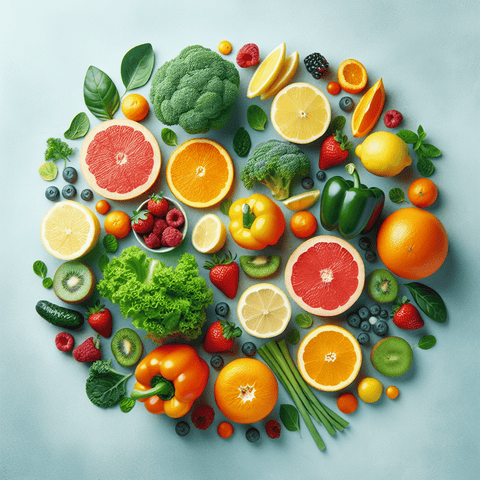
Vitamin C foods are the plant-based sources of ascorbic acid, a water-soluble nutrient the human body cannot produce on its own. Getting enough from everyday meals matters because vitamin C contributes to normal immune function, collagen formation, antioxidant protection and improved absorption of plant-based iron. Yet intakes vary widely depending on what ends up on the plate — and how those foods are stored, prepared and eaten. This guide explains what vitamin C does, how much you need, which vitamin C foods deliver the most per serving, how cooking changes the numbers, and when a supplement may or may not be a sensible addition to an otherwise balanced diet.
What Are the Best Vitamin C Foods?
The best vitamin C foods are those that combine a high concentration of the nutrient with realistic portion sizes and frequent consumption. Raw red bell peppers, guava, blackcurrants, kiwi, broccoli, kale and strawberries all perform strongly on that basis. Citrus fruits are popular and useful, but they are not uniquely superior — several fruits and vegetables deliver comparable or higher amounts per 100 grams.
Why Vitamin C Matters for Your Body
Vitamin C serves several well-established biological roles. It is required for the enzymatic steps that produce collagen, the structural protein in skin, blood vessels, cartilage and bone. It also acts as a water-soluble antioxidant, helping to protect cells from oxidative damage, and it supports normal functioning of the immune system. In the gut, vitamin C markedly enhances the absorption of non-heme iron — the form of iron found in plant foods — which is why pairing vitamin C foods with lentils, beans or spinach is a practical dietary strategy.
Beyond these core functions, vitamin C is involved in the synthesis of certain neurotransmitters and in the regeneration of vitamin E. Severe deficiency causes scurvy, now rare but not extinct. Milder insufficiency is more common and less specific, which makes diet quality a more reliable guide than symptom-spotting.
How Much Vitamin C Do You Actually Need Per Day?
Recommended intakes differ slightly between authorities. In the United States, the recommended dietary allowance is 90 mg per day for adult men and 75 mg per day for adult women, with an extra 35 mg per day suggested for people who smoke. The European Food Safety Authority sets a population reference intake of 110 mg per day for adults. Requirements rise during pregnancy and breastfeeding, and the EU labelling reference value used on food and supplement packaging is 80 mg per day.
Reaching these targets is straightforward with a varied diet. A single half red bell pepper, one kiwi, or a cup of strawberries can supply most or all of a day's requirement. The upper intake level for adults is 2,000 mg per day — a limit intended for supplemental intake, not food, since achieving that amount from whole foods is impractical.
How to Get the Most Vitamin C From Your Diet
Concentration in the food is only part of the picture. Vitamin C is sensitive to heat, oxygen and light, and it leaches into cooking water. Produce that has travelled far and sat in a fridge for two weeks may contain meaningfully less than freshly harvested food. Practically, that means buying smaller amounts more often, storing fruit and vegetables cool and dark, cutting them shortly before eating, and favouring cooking methods that use little water and short exposure to heat.
The 15 Best Vitamin C Food Sources
The list below groups sources by category. Values are approximate and refer to raw food per 100 grams, since cooking, variety, ripeness and storage all shift the numbers to some degree.
Fruits Highest in Vitamin C
- Guava — around 228 mg per 100 g, among the highest of commonly eaten fruits.
- Blackcurrants — roughly 180 mg per 100 g, also rich in anthocyanins.
- Kiwi — about 93 mg per 100 g; one fruit covers a typical adult requirement.
- Papaya — approximately 61 mg per 100 g, plus beta-carotene.
- Strawberries — around 59 mg per 100 g, easy to eat in useful portions.
- Oranges — roughly 53 mg per 100 g, with the whole fruit preferable to juice.
Vegetables Highest in Vitamin C
- Red bell pepper — about 128 mg per 100 g raw; yellow peppers are similarly high.
- Kale — around 120 mg per 100 g raw, though cooking reduces this.
- Broccoli — approximately 89 mg per 100 g raw, and still useful when lightly steamed.
- Brussels sprouts — roughly 85 mg per 100 g raw.
- Cauliflower — about 48 mg per 100 g raw, with modest losses on cooking.
Surprising Sources of Vitamin C You Might Not Know About
Some of the richest sources rarely appear in meal planning. Acerola cherry, a small tropical fruit, contains roughly 1,600–1,700 mg per 100 g and is often used in powdered or whole-food supplements. Rose hips — the fruit left after rose petals fall — can contain several hundred milligrams per 100 g and are traditionally used in teas and jams. Fresh parsley delivers around 133 mg per 100 g, and chilli peppers around 144 mg per 100 g. Even potatoes and snow peas contribute meaningfully in realistic portions, which is why everyday staples matter as much as exotic ones.
How Much Vitamin C Is in Each Serving?
Per-100-gram figures are useful for comparison but less so for planning. Translating them into servings gives a clearer picture: one medium orange (about 130 g) supplies roughly 70 mg; one kiwi (75 g) around 70 mg; half a red bell pepper (60 g) around 75 mg; one cup of strawberries (150 g) around 90 mg; and one cup of raw broccoli (90 g) around 80 mg. A single guava can exceed 100 mg.
Comparing Vitamin C Content: Fruits vs. Vegetables
Both categories are valuable, and the distinction matters less than overall variety. Fruits are typically eaten raw, which preserves vitamin C well, while vegetables often undergo cooking that reduces it. On the other hand, vegetables are consumed in larger savoury portions and contribute steadily across meals. A diet built around both — rather than relying on citrus alone — tends to deliver a more consistent intake. For a broader look at nutrient-dense whole foods, the superfoods guide covers how these foods fit into everyday nutrition.
Understanding Milligrams and Daily Value Percentages
Packaging percentages can confuse. In the EU, % NRV is calculated against 80 mg per day, so a product stating 100% NRV provides 80 mg. In the US, the Daily Value used on labels is 90 mg. A food supplying "15% DV" therefore contains about 13–14 mg. When comparing labels, always check the absolute milligram figure rather than the percentage alone, and remember that these reference values are population guides, not individual prescriptions.
Do Cooking and Storage Affect Vitamin C Levels?
Yes — substantially. Vitamin C is one of the most heat- and water-sensitive vitamins. Losses begin at harvest and continue through storage, preparation and cooking, which is why the same recipe can deliver quite different amounts depending on how it is handled.
How Heat and Water Impact Vitamin C Content
Boiling is the most damaging common method because vitamin C dissolves into the cooking water and is degraded by prolonged heat. Vegetables boiled for ten minutes or more can lose half or more of their vitamin C, with the loss increasing the longer they cook and the more water they sit in. Oxygen exposure also plays a role: cut surfaces oxidise, so produce chopped hours in advance loses more than produce chopped just before serving. Light exposure during storage adds a further, smaller decline.
Best Cooking Methods to Preserve Vitamin C
Steaming, stir-frying, roasting quickly at high heat and microwaving with minimal water all retain more vitamin C than boiling. Keeping pieces large reduces the surface area exposed to heat and oxygen. Adding raw elements at the end — a handful of parsley, a squeeze of lemon, raw pepper strips — restores some of what cooking removed. Reusing cooking water in soups and stews captures the vitamin C that has leached out rather than discarding it.
Who May Need More Vitamin C?
Requirements are not fixed. People who smoke have higher oxidative turnover and are advised to increase intake. Pregnancy and breastfeeding raise needs. Older adults may consume fewer vitamin C-rich foods, and anybody following a restrictive diet, or one low in fruit and vegetables, is more likely to fall short. Gastrointestinal conditions affecting absorption, some medications, heavy alcohol use and periods of illness or recovery can also shift the picture.
Lifestyle Factors That Increase Vitamin C Needs
Smoking is the best-documented factor, with an additional 35 mg per day recommended in US guidance. Diets lacking fresh produce, prolonged storage of food, and high intakes of processed foods all reduce intake. People with limited access to fresh fruit and vegetables, or who avoid them by preference, are the groups most likely to benefit from a deliberate focus on vitamin C foods.
Signs Your Vitamin C Intake May Be Low
Low intake can be associated with fatigue, bleeding gums, easy bruising, slower wound healing and dry skin. However, these symptoms are non-specific and have many possible causes; they do not establish a deficiency on their own. Overt deficiency — scurvy — produces more distinctive features such as gum disease, joint pain and poor wound healing, but it is uncommon. If symptoms persist, clinical assessment is more reliable than self-diagnosis from a checklist.
Can You Get Too Much Vitamin C From Food?
In practice, no. Whole foods contain water and fibre alongside vitamin C, and the volume required to approach 2,000 mg would be unrealistic. The tolerable upper intake level of 2,000 mg per day applies to supplemental forms, and even then the main documented effect of exceeding it is digestive — bloating, gas and loose stools rather than toxicity.
Is High Vitamin C Intake From Food a Concern?
Food-based intake carries little risk for healthy people. One nuance worth knowing is that vitamin C increases iron absorption, which is usually beneficial but can be a consideration for people with iron overload conditions such as hemochromatosis, who are typically advised to manage dietary iron and vitamin C timing with professional guidance. For everyone else, a diet rich in vitamin C foods requires no upper-limit tracking.
Vitamin C Foods vs. Supplements: What’s the Difference?
Food delivers vitamin C alongside fibre, potassium, folate and hundreds of plant compounds whose effects are not replicated by an isolated dose. Supplements, by contrast, offer a precise, convenient amount and are useful when dietary intake is genuinely inadequate. Neither is inherently superior — the right choice depends on baseline diet, requirements and circumstances. More detail on the nutrient's roles is available in this overview of vitamin C benefits, sources and immune support.
When a Supplement May Be Worth Considering
Supplementation is most reasonable when fruit and vegetable intake is consistently low, during periods of increased requirement, or when absorption is impaired. It may also be practical for people who travel frequently or have limited access to fresh produce. It is not routinely necessary for someone eating a varied diet with regular vitamin C foods. Where a diagnosed deficiency exists, treatment should be guided by a clinician rather than self-directed dosing.
How to Choose a Vitamin C Supplement if Needed
Products differ in chemical form: ascorbic acid is the most studied and least expensive, while sodium ascorbate and calcium ascorbate are buffered and may suit people who find plain ascorbic acid irritating to the stomach. Liposomal formulations claim improved delivery, though comparative human evidence remains limited and mixed. Whole-food or acerola-based products may include additional plant compounds but vary widely in actual vitamin C content.
What to Look for on a Vitamin C Supplement Label
Check the elemental amount of vitamin C per serving, not the total weight of the ingredient blend. Confirm the form used, the number of servings per container and whether the product is third-party tested. Look for allergens, added sugars in gummies, and unnecessary fillers. If you take medication regularly or have a medical condition, a pharmacist can flag relevant interactions before you start.
How to Add More Vitamin C Foods to Your Daily Diet
Small, repeatable changes outperform ambitious overhauls. Add raw pepper to a sandwich, top porridge with kiwi or berries, keep washed strawberries at eye level in the fridge, and finish cooked dishes with fresh herbs or lemon. These habits raise intake without requiring a new meal plan.
Simple Meal Ideas to Boost Vitamin C Intake
- Breakfast: yoghurt with kiwi, strawberries and a spoon of blackcurrant.
- Lunch: lentil salad with raw red pepper, parsley and lemon dressing.
- Snack: a whole orange or guava instead of juice.
- Dinner: lightly steamed broccoli or stir-fried kale alongside the main dish.
- Evening: rose hip or hibiscus tea as a caffeine-free alternative.
Practical Tips for Increasing Vitamin C Absorption
Pair vitamin C foods with plant sources of iron — beans, lentils, spinach, tofu — to improve non-heme iron uptake, a strategy covered in this guide to iron and other essential minerals. Keep chopped produce covered and chilled, avoid long soaking, and eat raw items first rather than leaving them at room temperature. If you supplement, splitting doses across the day may improve absorption compared with a single large dose, since uptake becomes less efficient as intake rises.
The Bottom Line on Vitamin C Foods
Vitamin C is easy to obtain from food, provided the diet includes regular portions of raw fruit and vegetables. Guava, blackcurrants, kiwi, citrus, red peppers, broccoli and kale all deliver meaningful amounts, and how those foods are stored and cooked matters as much as which ones you choose. Most healthy adults reach recommended intakes without effort or supplementation. Supplements make sense mainly as a targeted response to low dietary intake or increased requirements, not as a default habit. Individual needs vary with age, smoking status, pregnancy, diet quality and health conditions, so persistent symptoms or a suspected deficiency are better assessed professionally than guessed at.
Key Takeaways
- Adult requirements are typically 75–110 mg of vitamin C per day, depending on the authority and individual factors.
- Red bell peppers, guava, blackcurrants, kale and broccoli rival or exceed citrus in vitamin C per 100 g.
- A single kiwi, orange or half a red pepper can supply most of a day's vitamin C.
- Boiling causes the largest losses; steaming, stir-frying and microwaving with little water preserve more.
- Vitamin C foods enhance absorption of iron from plant sources such as beans and lentils.
- Smoking, pregnancy and low produce intake increase the likelihood of falling short.
- Vitamin C from food is not associated with excessive intake; the 2,000 mg upper level applies to supplements.
- Symptoms like fatigue or bruising are non-specific and do not confirm a deficiency.
- Supplements are a practical option when diet is inadequate, not a routine requirement.
- Label reading should focus on elemental vitamin C content, form and third-party testing.
Frequently Asked Questions About Vitamin C Foods
Which fruit has the most vitamin C?
Among commonly eaten fruits, guava ranks highest at roughly 228 mg per 100 g, followed by blackcurrants at around 180 mg. Acerola cherry and Kakadu plum are far richer still but are rarely eaten fresh in most countries. Kiwi, papaya, strawberries and oranges also contribute substantially in normal portions.
Are citrus fruits the only good source of vitamin C?
No. Citrus is convenient and widely available, but red bell peppers, kale, broccoli, Brussels sprouts and cauliflower all supply comparable or higher amounts per 100 g. Relying on a single food group narrows overall nutrient variety, so rotating sources is the better approach.
Can vitamin C foods help with iron absorption?
Yes. Vitamin C converts non-heme iron into a form that is more readily absorbed in the gut. Eating peppers, citrus or berries alongside lentils, beans or spinach can meaningfully improve iron uptake from a plant-based meal. This is particularly relevant for people following vegetarian or vegan diets.
How much vitamin C do you need per day?
US guidance recommends 90 mg for adult men and 75 mg for adult women, while the European Food Safety Authority sets 110 mg per day as a population reference intake. Smokers are advised to add around 35 mg daily, and pregnancy and breastfeeding raise requirements modestly.
Is it better to get vitamin C from food or supplements?
Food is preferable for most people because it supplies vitamin C together with fibre, potassium and plant compounds. Supplements are useful when dietary intake is consistently inadequate or requirements are increased. The two are not mutually exclusive, and a supplement does not compensate for a poor overall diet.
Does cooking destroy vitamin C in vegetables?
It reduces it, but does not eliminate it. Boiling can remove half or more of the vitamin C through heat degradation and leaching into water. Steaming, stir-frying and short microwave cooking retain considerably more, and reusing cooking water in soups captures what leaches out.
Is orange juice as good a source as whole oranges?
Juice provides vitamin C but lacks the fibre of whole fruit and is easy to consume in large quantities quickly. A whole orange is generally the better choice, with juice an occasional convenience rather than a dietary staple.
What are the early signs of low vitamin C intake?
Fatigue, bleeding gums, easy bruising and slower wound healing are sometimes associated with low intake, but each has many other causes. These signs do not confirm a deficiency. Genuine deficiency is best assessed clinically, and scurvy is rare in populations with regular access to fresh produce.
Does freezing reduce vitamin C in fruit and vegetables?
Frozen produce is usually blanched before freezing, which causes some initial loss, but vitamin C then remains relatively stable during storage. In practice, frozen berries and vegetables can retain comparable or higher levels than fresh produce that has been stored for a long time.
Should you take extra vitamin C when you have a cold?
Evidence on vitamin C and colds is mixed. Regular supplementation has not consistently been shown to prevent colds in the general population, though it may modestly shorten duration in some groups. It is not a treatment for infection, and medical advice should be sought if symptoms are severe or prolonged.
Can you take too much vitamin C?
From food, excessive intake is not a realistic concern. Supplemental doses above 2,000 mg per day may cause bloating, gas and diarrhoea. People with a history of kidney stones or iron overload conditions should discuss high-dose use with a healthcare professional.
Does vitamin C interact with medications?
High supplemental doses may interact with certain medications and can affect iron absorption, which matters for people with iron-loading conditions. Food-level intake is rarely an issue. If you take prescription medication regularly, check with a pharmacist before starting a high-dose supplement.
Related Keywords
- vitamin C foods list
- foods highest in vitamin C
- natural sources of vitamin C
- vitamin C rich fruits and vegetables
- how much vitamin C per day
- vitamin C foods for immunity
- ascorbic acid food sources
- vitamin C content of fruits
- best vegetables for vitamin C
- vitamin C and iron absorption
- cooking losses of vitamin C
- vitamin C deficiency signs
- vitamin C foods vs supplements
- daily vitamin C requirement adults