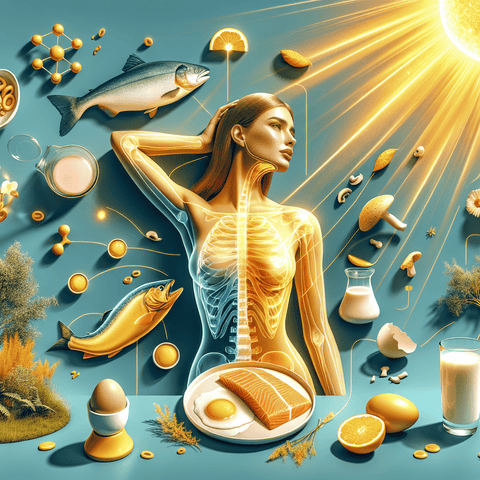
Vitamin D deficiency prevention is largely about everyday habits rather than a single fix: sensible sun exposure, a diet that supplies meaningful amounts of the vitamin, and, where genuinely needed, a well-chosen supplement. Because vitamin D supports bone health, muscle function and normal immune function, consistently low levels can matter over time — yet symptoms are often subtle or absent. This guide explains how vitamin D status is assessed, what drives low levels, and seven practical, evidence-informed ways to raise your levels faster. It also covers intake recommendations, supplement forms, safety limits and when testing or professional advice is the smarter first step. You can read the broader background on vitamin D benefits, sources and safety alongside this article.
What Is Vitamin D Deficiency and Why Does It Matter?
Vitamin D is a fat-soluble nutrient that the body can produce in the skin when exposed to ultraviolet B (UVB) light, and that can also be obtained from food and supplements. It behaves more like a hormone precursor than a classic vitamin: it must be activated in the liver and kidneys before it can influence calcium and phosphate regulation, bone mineralisation, muscle function and immune signalling. Because so many tissues carry vitamin D receptors, low status has been linked to a broad range of health outcomes — though association is not the same as proven cause and effect.
How Common Is Vitamin D Deficiency?
Precise figures vary enormously by country, season, skin tone, culture and measurement method, so headline numbers should be read with caution. What is consistent across surveys is that low vitamin D status is common in northern latitudes, in people who spend most of the day indoors, and in groups with darker skin living far from the equator. Deficiency is not rare, but it is also not universal — which is why blanket assumptions about your own status are unreliable.
What Are Normal Vitamin D Levels?
Status is usually assessed with a blood test measuring 25-hydroxyvitamin D, written as 25(OH)D. Many public health bodies define deficiency as below 20 ng/mL (50 nmol/L) and consider 20–30 ng/mL (50–75 nmol/L) as insufficient, with sufficiency generally starting around 30 ng/mL (75 nmol/L). Some clinical bodies set a higher target for specific groups. These thresholds are conventions rather than sharp biological cut-offs, and interpretation depends on age, health status and clinical context.
What Are the First Signs of Low Vitamin D?
Early low vitamin D often produces no obvious symptoms at all. When signs do appear, they tend to be nonspecific — persistent tiredness, muscle aches or weakness, bone discomfort, or a lower mood — and each of these has many other possible causes. Muscle and bone symptoms are more typical of pronounced or long-standing deficiency. Symptoms alone cannot confirm low vitamin D status; only a blood test can do that.
What Causes Vitamin D Deficiency in the First Place?
Why Is Sunlight Exposure the Main Factor?
For most people, sun exposure is the dominant contributor to vitamin D status. UVB radiation converts a cholesterol-derived compound in the skin into vitamin D3, but this process depends on latitude, season, time of day, cloud cover, pollution, clothing, sunscreen use and time spent outdoors. In winter at higher latitudes, the angle of the sun means UVB is too weak for meaningful skin synthesis, which is why levels often dip seasonally.
How Does Skin Tone Affect Vitamin D Production?
Melanin absorbs UV radiation, so darker skin requires longer exposure to produce the same amount of vitamin D as lighter skin. This is a normal physiological difference, not a defect, but it does mean that people with brown or black skin living in low-UV regions may be more reliant on diet and supplementation to maintain adequate status.
Which Dietary Habits Contribute to Low Vitamin D?
Few foods contain vitamin D naturally in large amounts, and they are mostly animal-derived: oily fish, egg yolks, liver and some dairy. Diets that exclude these foods, that rely heavily on ultra-processed products, or that are generally low in variety can contribute to lower intake. Vegan and vegetarian diets are not inherently deficient, but they usually depend on fortified foods or supplements to supply meaningful amounts.
How Do Age and Digestion Affect Vitamin D Absorption?
Skin synthesis becomes less efficient with age, and older adults often spend more time indoors. Fat absorption matters too: conditions affecting the gut or biliary system — coeliac disease, inflammatory bowel disease, cystic fibrosis, cholestasis, bariatric surgery — can reduce absorption of vitamin D and other fat-soluble nutrients. Body composition also plays a role, as vitamin D is stored in fat tissue and may be less available in people with higher body fat.
7 Evidence-Based Ways to Raise Vitamin D Levels Fast
1. Get Smart About Sensible Sun Exposure
Short, regular periods outdoors are more useful than occasional long exposures. Aim to expose arms and legs for a fraction of the time it would take your skin to burn — often 10–20 minutes in summer for lighter skin, longer for darker skin — then cover up or seek shade. Never allow skin to redden or burn, and treat sun exposure as one contributor rather than a guaranteed fix.
2. Prioritize Vitamin D-Rich Foods
Include oily fish such as salmon, mackerel, sardines or herring two or more times a week if you eat fish, plus eggs and, where suitable, liver. These foods contribute modest but real amounts, and they bring omega-3 fats and protein alongside. Food alone rarely corrects established deficiency quickly, but it improves baseline intake and supports long-term consistency.
3. Add Fortified Foods to Your Daily Routine
Fortified margarine, breakfast cereals, plant milks and some yoghurts can supply meaningful vitamin D in countries where fortification is practised. Check labels rather than assuming, since levels differ widely between products and markets. For people avoiding animal foods, fortified products are often the main dietary route.
4. Consider a Vitamin D Supplement (When Needed)
Supplementation is reasonable when sun exposure is limited, dietary intake is low, or a blood test shows low status. It is the most predictable way to raise levels, because the dose is known. Supplements are not automatically necessary for everyone, however, and they do not replace medical assessment when deficiency is suspected.
5. Pair Vitamin D with Fat for Better Absorption
Because vitamin D is fat-soluble, taking a supplement with a meal containing some fat modestly improves absorption compared with taking it on an empty stomach. This effect is practical rather than dramatic, but it costs nothing to implement. Consistency at the same meal each day also improves adherence.
6. Address Nutrient Synergy (Magnesium and Vitamin K2)
Magnesium is involved in the enzymes that convert vitamin D into its active form, and some evidence suggests that low magnesium status may blunt the response to supplementation — though the research is not conclusive. Vitamin K2 is often paired with vitamin D because of complementary roles in calcium metabolism, but clinical evidence for added benefit is still limited. If you are considering these nutrients, our guides to magnesium and vitamin K outline what the evidence does and does not support.
7. Re-Test and Adjust Your Approach
Guessing at progress is unreliable. If you have confirmed low status, retesting after roughly three months of a consistent routine shows whether your strategy is working. Interpretation should account for season, recent sun exposure and any changes in supplement dose. Adjust from data rather than from how you feel.
How Much Vitamin D Do You Need Per Day?
Recommended Dietary Allowance (RDA) vs. Higher Intakes
Public health recommendations generally set a Recommended Dietary Allowance of 600 IU (15 mcg) per day for adults aged 19–70 and 800 IU (20 mcg) for adults over 70, assuming minimal sun exposure. These figures aim to maintain bone health in the general population. Higher intakes are sometimes used clinically to correct deficiency, but that is a different context and should ideally be guided by testing and professional advice.
What Is the Upper Limit for Vitamin D Safety?
Most authorities set a tolerable upper intake level of 4,000 IU (100 mcg) per day for adults, a threshold considered safe for long-term use without medical supervision. Intakes above this are not automatically dangerous in the short term but should not be continued casually, because the margin between high intake and toxicity is narrower than for most water-soluble vitamins.
How to Choose a Vitamin D Supplement That Works for You
Vitamin D2 vs. Vitamin D3: What’s the Difference?
Vitamin D2 (ergocalciferol) is derived from plant or fungal sources, while vitamin D3 (cholecalciferol) is typically from lanolin or lichen. Most comparative trials suggest D3 raises blood levels somewhat more effectively, though the difference is modest and D2 remains effective. For vegans, lichen-derived D3 or D2 are the suitable options.
Capsules, Drops, or Tablets: Which Form Is Best Absorbed?
Well-formulated capsules, tablets, softgels and liquid drops all raise 25(OH)D effectively in most people. Drops and sprays can be useful for children, for people who dislike swallowing pills, or for flexible dosing. The bigger variables are the dose delivered, the presence of fat in the accompanying meal, and whether you actually take it consistently.
What Dosage Should You Look For?
A common maintenance dose is 800–2,000 IU per day, sitting comfortably within the upper limit. Higher daily doses or weekly protocols are sometimes used to correct deficiency, but these are best decided with a clinician, particularly if you take other medications or have a condition affecting calcium metabolism.
What Does “IU” Mean on a Vitamin D Label?
IU stands for International Unit, a measure of biological activity. For vitamin D, 1 microgram (mcg) equals 40 IU, so 1,000 IU is 25 mcg. Labels may show either or both, and comparing products is much easier once you convert them to the same unit.
Who Should Consider Vitamin D Supplementation?
Do You Live in a Low-Sun Climate or Work Indoors?
People in northern latitudes, shift workers, office workers and anyone who covers up for cultural or medical reasons may have limited skin synthesis for months of the year. For these groups, a modest daily supplement during low-UV months is a pragmatic, widely recommended approach.
Are You Over 50 or Postmenopausal?
Skin synthesis declines with age, and postmenopausal women face accelerated bone loss, making adequate vitamin D and calcium intake more important. Supplementation is commonly recommended here, alongside weight-bearing activity and adequate protein.
Do You Follow a Vegan or Vegetarian Diet?
Plant-based diets are nutritionally sound but typically low in naturally occurring vitamin D unless fortified foods are eaten regularly. Lichen-derived D3 or D2 supplements fit a vegan pattern and remove the uncertainty of relying on fortification alone.
Do You Have Gut Conditions That Affect Absorption?
Malabsorption, bariatric surgery, chronic liver or kidney disease and some pancreatic conditions can impair vitamin D absorption or activation. In these situations, higher doses or different forms may be needed under supervision, and standard over-the-counter dosing may be insufficient.
Key Safety Considerations for Vitamin D
Is It Possible to Take Too Much Vitamin D?
Yes. Vitamin D is fat-soluble and accumulates, and prolonged intakes well above the upper limit can cause hypercalcaemia, with symptoms such as nausea, constipation, confusion, excessive thirst and kidney problems. Toxicity is rare at ordinary supplement doses but becomes a genuine risk with very high-dose products taken over long periods.
How Vitamin D Interacts with Certain Medications and Health Conditions
Some anticonvulsants, rifampicin, glucocorticoids, orlistat and bile acid sequestrants can reduce vitamin D levels or absorption. Certain conditions — sarcoidosis, some lymphomas, hyperparathyroidism and kidney disease — require careful management because vitamin D can influence calcium handling. If any of these apply, discuss supplementation with your clinician rather than self-dosing.
Should You Test Your Vitamin D Levels Before Supplementing?
Testing is not essential for everyone considering a modest maintenance dose, but it is genuinely useful if you have symptoms, a condition affecting absorption, or a history of low results. A serum 25(OH)D test provides information that symptoms cannot, and it prevents unnecessary long-term high-dose use.
How to Prevent Vitamin D Deficiency Long-Term
Building a Sustainable Sunlight Routine
Small, repeatable habits outperform occasional effort: a short midday walk, coffee outdoors, or gardening without burning. In summer, brief exposures without sunscreen on exposed limbs are reasonable for many people; in winter, adjust expectations and lean more on food and supplements.
Making Vitamin D-Rich Food Choices Sustainable
Rotate oily fish, eggs and fortified staples into normal weekly meals rather than treating them as a temporary intervention. A pattern you enjoy is the one that lasts, and it supports nutrient intake more broadly than a single food ever could.
When to Re-Evaluate Your Supplementation Plan
Review your approach if your circumstances change — a move to a sunnier or darker climate, a new medication, pregnancy, or a change in diet. Retesting every few years, or after correcting a documented deficiency, keeps your routine aligned with your actual needs.
Conclusion: Your Practical First Steps to Healthier Vitamin D Levels
Preventing vitamin D deficiency is rarely about one dramatic intervention. It is about stacking modest, repeatable behaviours: sensible sun exposure where the climate allows, a diet that includes natural and fortified sources, and a supplement when sun and food genuinely cannot cover the gap. Individual needs vary with age, skin tone, latitude, diet, body composition, gut health and medication use, so the same plan will not suit everyone. If you suspect deficiency, testing gives you far better information than guesswork. Supplementation is a sensible tool for many people, but it works best as part of an informed routine rather than a reflex.
Key Takeaways
- Vitamin D status is best assessed with a 25(OH)D blood test, not symptoms alone.
- Sunlight is the main contributor, but UVB strength varies with season, latitude and time of day.
- Darker skin requires longer sun exposure to produce the same amount of vitamin D.
- Few foods contain vitamin D naturally; oily fish, eggs and fortified products matter most.
- Adults generally need 600–800 IU per day, with a tolerable upper level of 4,000 IU for most.
- Vitamin D3 tends to raise blood levels slightly more effectively than D2 in most trials.
- Taking a supplement with a meal containing fat modestly improves absorption.
- People with limited sun exposure, older adults, and those with malabsorption are at higher risk.
- High-dose long-term supplementation carries real toxicity risks and warrants supervision.
- Retesting after about three months shows whether your approach is actually working.
Frequently Asked Questions
What is the fastest way to raise vitamin D levels?
For someone with confirmed low status, a supplement raises levels most predictably because the dose is known. Sun exposure and food help but are harder to quantify and depend on season and latitude. Very high doses should ideally be guided by a clinician rather than self-prescribed.
How long does it take to correct vitamin D deficiency?
With consistent supplementation, blood levels typically begin rising within a few weeks, and meaningful improvement is usually visible after roughly two to three months. Re-testing at that point confirms whether the dose was adequate. Severe deficiency may take longer.
Can you get enough vitamin D from the sun in winter?
In many temperate and northern regions, winter UVB is too weak for meaningful skin synthesis, regardless of how long you stay outside. During those months, food sources and supplementation become more important. Sunny winter holidays at lower latitudes are an exception.
Which foods contain the most vitamin D?
Oily fish such as salmon, mackerel, sardines and herring are the richest natural sources, followed by egg yolks and liver. Fortified margarine, cereals and plant milks can contribute meaningfully in countries where fortification is standard.
Is vitamin D2 or D3 better?
Vitamin D3 generally raises 25(OH)D slightly more effectively and maintains levels better in most comparative studies. Vitamin D2 is still effective and remains a valid option, particularly for those preferring a plant-derived form.
Should I take vitamin D with food?
Yes, ideally with a meal that contains some fat, since vitamin D is fat-soluble and absorption improves modestly. Taking it consistently at the same meal each day also makes the habit easier to maintain.
Can I take vitamin D and magnesium together?
They are commonly taken together, and magnesium is involved in vitamin D metabolism. Evidence for a meaningful clinical benefit is still limited, but there is no general safety concern at standard doses for most healthy adults.
What are the signs of vitamin D toxicity?
Toxicity causes elevated blood calcium, which may produce nausea, vomiting, constipation, weakness, confusion, excessive thirst and kidney problems. It results from sustained very high intakes, not from normal sun exposure or standard supplement doses.
Does sunscreen block vitamin D production?
Sunscreen reduces vitamin D synthesis to some degree, but real-world use rarely eliminates it entirely, and no one should skip sun protection to raise vitamin D. Food and supplements are safer routes to adequate intake.
Who is most at risk of vitamin D deficiency?
Older adults, people with darker skin in low-UV climates, those who cover up or stay indoors, people with malabsorption or bariatric surgery, and those with obesity are commonly cited higher-risk groups. Vegans relying on unfortified diets may also be at risk.
How often should I test my vitamin D level?
If you have had a low result, retesting after about three months of treatment is typical. Otherwise, testing every few years or when circumstances change — new medication, pregnancy, dietary shift — is usually sufficient for healthy adults.
Can vitamin D prevent colds and infections?
Some trials suggest vitamin D supplementation may modestly reduce the risk of respiratory infections, particularly in people with low baseline levels, but results are inconsistent. It should not be treated as a guaranteed preventive measure.
Related Keywords
- vitamin D deficiency prevention
- how to increase vitamin D levels
- signs of low vitamin D
- normal vitamin D levels chart
- vitamin D3 vs D2 supplement
- how much vitamin D per day
- vitamin D rich foods
- vitamin D supplement dosage IU
- vitamin D deficiency symptoms adults
- vitamin D upper limit safety
- vitamin D and magnesium synergy
- best time to take vitamin D
- vitamin D for vegans lichen
- low sun exposure vitamin D risk