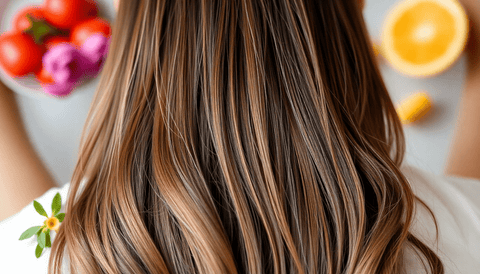
Vitamins for hair growth are increasingly recognized as a critical component in achieving fuller, healthier hair. With a myriad of supplements and products on the market, it can be overwhelming to navigate which vitamins and nutrients genuinely support hair health. This article aims to illuminate the science behind hair growth, explore key vitamins and minerals, and clarify how these nutrients may impact your hair's fullness and vitality. Understanding this topic is vital for anyone grappling with hair thinning or seeking to enhance their overall hair health.
How vitamins and nutrients relate to hair growth
The hair growth cycle basics: anagen, catagen, telogen, and shedding
The hair growth cycle comprises three primary phases: anagen (growth), catagen (transition), and telogen (resting). During the anagen phase, which lasts several years, hair follicles actively produce hair. The catagen phase signifies a transition period where growth halts, and the follicle shrinks. In the telogen phase, hair rests before eventually shedding. Nutrition plays a crucial role in maintaining the health of hair follicles at all phases, particularly during anagen, where nutrient supply is critical for optimal growth.
Role of nutrients in keratin formation, follicle health, and scalp environment
Hair is primarily composed of keratin, a protein that requires specific nutrients for optimal synthesis. Vitamins and minerals aid in forming keratin, maintaining follicle health, and supporting the scalp environment. A well-nourished scalp and healthy follicles foster a conducive environment for hair growth.
Distinguishing vitamins from non-vitamin nutrients (minerals, fatty acids, amino acids)
While vitamins are essential for hair growth, they are just part of the equation. Minerals, fatty acids, and amino acids are also crucial for hair health. Knowing the differences can help guide your supplement choices. For example, omega-3 fatty acids and amino acids support scalp health and keratin production, while micronutrients like iron and zinc play significant roles in energy and enzyme functions that underpin hair growth.
Key vitamins and minerals commonly linked to hair health
Biotin (vitamin B7) and B-complex roles
Biotin is often dubbed the "hair vitamin" due to its essential role in keratin synthesis. As part of the B-complex vitamins, biotin supports energy metabolism and encourages hair health. Supplementation with biotin may improve hair growth in individuals with ample dietary intake but may see benefits in those with deficiencies.
Vitamin D and its association with follicle cycling
Vitamin D plays a pivotal role in the hair growth cycle, particularly in the anagen phase by stimulating hair follicle growth and cycling. Insufficient levels of vitamin D have been associated with hair thinning conditions like alopecia. You can learn more about vitamin D's overall benefits here.
Iron and ferritin: oxygen delivery and hair integrity
Iron is critical for transporting oxygen to cells, including hair follicles. Low iron levels can lead to hair loss, as oxygen deficiency weakens the follicles. Ferritin, a storage form of iron, is also a vital indicator of the body's iron status relevant to hair health.
Zinc and copper: enzyme function and hair follicle support
Zinc is essential for enzyme activity required in protein synthesis and cell division, both vital for hair growth. Similarly, copper contributes to the production of melanin and the formation of collagen, which supports hair structure. Deficits in these minerals can negatively impact hair growth.
Vitamins A, C, E and antioxidant/collagen support
Vitamins A and C play roles in sebum production and collagen formation, respectively, both of which are vital for a healthy scalp and hair. Vitamin E acts as an antioxidant, protecting hair from oxidative stress. These vitamins contribute to a healthier hair environment and reduce damage. Explore more about vitamin C benefits here.
Other co-factors and lifestyle nutrients (omega-3s, protein intake, collagen basics)
Alongside vitamins and minerals, other nutrients like omega-3 fatty acids support scalp health by reducing inflammation, while adequate protein intake is necessary for overall keratin production. Collagen supplementation may also enhance skin and follicle integrity. An integrated approach to nutrition is essential for optimal hair health.
Evidence vs expectations: what current science suggests
Strength of evidence for each nutrient
While numerous studies support the benefits of vitamins and minerals for hair growth, the strength of evidence varies. Research often shows positive correlations but may not establish direct causation due to individual variability in responses.
Common limitations in studies (dosage, duration, populations)
Many studies on hair growth supplements have limitations, including small sample sizes, short durations, and variations in populations. Moreover, dosages used may not correspond to usual dietary intake, affecting their applicability to the general population.
Realistic outcomes: vitamins can support, not guarantee, fuller hair
While vitamins can contribute positively to hair growth, it is crucial to have realistic expectations. Nutritional supplements should complement a healthy diet rather than serve as a standalone solution for hair concerns.
Why vitamins for hair growth matter in everyday life
Prevalence of hair thinning and aesthetic concerns
Hair thinning is a common concern, affecting millions worldwide and influencing self-esteem. Understanding the role of nutrition could empower individuals to take actionable steps in their hair care routines.
The potential role of nutrition in age-related thinning and postpartum shedding
Age-related hair thinning is often exacerbated by nutritional deficiencies, while women may experience postpartum shedding due to hormonal changes. In both cases, proper nutrition can play a supportive role in restoring hair health.
Who is most at risk for nutrient-related hair concerns
Dietary restrictions, vegetarian/vegan diets, pregnancy and lactation
Individuals with restrictive diets, such as vegetarians and vegans, may be at higher risk for nutrient deficiencies affecting hair health. Women during pregnancy and lactation also have increased nutritional demands, making supplementation far more critical.
Disease states and medications that influence nutrient status
Conditions like gastrointestinal disorders and autoimmune diseases can interfere with nutrient absorption, increasing the risk of hair-related issues. Certain medications may also disrupt normal nutrient metabolism, making monitoring and supplementation essential.
Hair- and scalp-related signals that may hint at broader health issues
Common symptoms: diffuse shedding, brittle hair, slow growth, scalp inflammation
Signs of underlying health issues often manifest as hair and scalp problems. Diffuse shedding, brittle hair, slow growth, and inflammation can signal deficiencies or systemic conditions that require professional evaluation.
Deficiency indicators: iron-deficiency symptoms, brittle nails, fatigue
Indicators of nutrient deficiencies, such as fatigue and brittle nails, can often be associated with hair loss. Recognizing these symptoms can prompt individuals to seek help and explore their nutritional status.
Connections to systemic health: thyroid imbalances, autoimmune concerns, malabsorption
Thyroid issues and autoimmune disorders can significantly impact hair health, often requiring integrated medical assessments alongside nutritional evaluations to address underlying causes.
When hair symptoms reflect non-nutritional root causes
Telogen effluvium vs pattern hair loss vs cicatricial conditions
Hair loss can occur for many reasons, including telogen effluvium, which is often temporary, and pattern hair loss, which is associated with genetics. Cicatricial conditions can lead to permanent loss and must be diagnosed by a professional. Understanding these patterns is essential for proper management.
The risk of over-attributing hair changes to vitamins alone
It's crucial not to over-emphasize the role of vitamins in addressing hair changes. Hair health is multifactorial, and supplements should be considered as part of a broader lifestyle approach.
Individual variability in response to vitamins for hair growth
Genetic factors, sex, age, and hormonal milieu
Each individual may respond differently to vitamins due to genetics, hormonal levels, and age. A woman's hormonal changes during pregnancy can drastically affect their response to similar nutrients, highlighting the need for personalized approaches.
Baseline nutrient status and absorption differences
The individual's current nutrient status and ability to absorb these nutrients also play a crucial role. Some people may benefit more from supplementation due to lower baseline levels or absorption issues.
How lifestyle and comorbidities shape outcomes
Lifestyle factors, such as stress and smoking, can impact nutrient absorption and utilization in the body, ultimately influencing hair health outcomes. Comorbidities can further complicate this relationship.
Uncertainty and mixed evidence: interpreting research
Publication biases and study design differences
There's often a bias toward positive results in published studies, which can skew public perception of a nutrient's efficacy, leading to misinformation about vitamins for hair growth. Evaluating research critically is essential.
Real-world variance vs clinical trial results
While clinical trials can provide valuable insights, real-world results can differ significantly due to uncontrolled variables, including dietary habits and genetic predisposition.
The placebo effect and subjective perceptions of hair improvement
Many individuals report perceived improvements in hair health from supplements, which may relate to the placebo effect rather than direct biological efficacy. Understanding this can help set more realistic expectations.
The limitation of relying on symptoms to diagnose nutrient issues
Why hair changes are often multifactorial
Hair changes often involve various factors, both nutritional and non-nutritional. Without a comprehensive evaluation, assessing the underlying cause can be challenging.
The importance of objective evaluation and, when appropriate, lab testing
Objective assessment, including lab tests to measure vitamin and mineral levels, can provide clarity on whether supplementation is necessary.
Red flags requiring professional consultation (rapid, patchy loss, systemic symptoms)
Individuals experiencing rapid or patchy hair loss, along with systemic symptoms such as weight changes or skin alterations, should seek professional guidance to ensure appropriate assessments and treatment plans.
What supplements can and cannot do for hair growth
Situations where supplements are most relevant (documented deficiency, restrictive diets, life stages)
Supplements can be particularly effective for individuals with documented deficiencies, restrictive diets, or during life stages such as pregnancy and lactation that elevate nutritional needs.
The difference between correcting a deficiency and boosting healthy hair in non-deficient individuals
Correcting a deficiency may restore hair health, but for those who are not deficient, supplements may have limited benefits. Nutrition should aim at addressing specific needs rather than a generalized approach.
Safety considerations, potential interactions, and duration of use
It is vital to approach supplementation with caution, considering potential interactions with medications and safety concerns related to excessive intake. Monitoring duration and effects can ensure safe practices.
How supplements could support hair health in practice
Mechanistic rationale: how vitamins may influence follicles and scalp environment
Supplements can support hair follicles and scalp health through various mechanisms, including supplying essential nutrients that promote cellular energy and reduce inflammation.
Realistic expectations: gradual improvements and the need for consistency
Expect gradual improvements in hair health with consistent supplementation over time—not instant results. Transformations often require patience as hair grows slowly.
Synergy with other factors: protein intake, sleep, stress management
For optimal results, vitamins should complement proper protein intake, adequate sleep, and effective stress management. A holistic approach is necessary for achieving desirable hair growth outcomes.
Practical pathways for using vitamins to support hair growth
Targeted vs broad-spectrum approaches: when to focus on specific nutrients
Individuals may find success with targeted supplementation based on specific deficiencies or broad-spectrum approaches combining multiple nutrients to cover various bases.
Dosing principles: when to start low and reassess
Starting with lower doses can help individuals gauge their response before increasing intake as needed. Regular reassessment can optimize the supplementation strategy to match changing needs.
Duration and monitoring: typical timeframes to notice changes
Changes in hair health typically take several weeks to months to become noticeable, highlighting the necessity of ongoing monitoring and evaluation of dietary strategies.
Interactions, safety, and limits
Potential side effects and risk of excess intake (e.g., hypervitaminosis)
Over-supplementation can lead to adverse effects, including hypervitaminosis and other health issues. Understanding recommended daily allowances is critical to avoid these concerns.
Interactions with medications and existing health conditions
Individuals taking other medications or managing health conditions should consult healthcare providers before starting new supplements, given potential interactions that may affect efficacy.
Guidance on when to pause or discontinue
Consulting healthcare professionals regarding the appropriateness of continuing or pausing supplementation based on individual health needs will provide additional direction.
Decision framework: should you start vitamins for hair growth?
Step 1: assess symptoms and lifestyle; identify potential deficiencies
Self-assessment of symptoms combined with lifestyle factors is an essential first step in determining the need for vitamin supplementation related to hair growth.
Step 2: verify need with basic screening considerations (iron, thyroid as applicable)
Simple lab tests for iron levels and thyroid function can guide decisions regarding supplementation and help identify broader health concerns behind hair loss.
Step 3: decide on a focused supplement plan vs. dietary adjustments
Consider whether dietary adjustments can address deficiencies; if not, a supplement plan may be warranted based on individual evaluation.
Step 4: set expectations and a trial period (e.g., 8–12 weeks) with measurable cues
After establishing a supplement plan, a defined trial period, ideally of 8 to 12 weeks, allows individuals to observe changes and measure outcomes effectively.
Red flags and alternative paths
When to seek professional evaluation sooner (rapid shedding, scarring, systemic symptoms)
Consult a healthcare professional promptly upon experiencing red flags like rapid hair shedding or signs of systemic health issues, such as unexplained weight loss or skin changes.
When not to rely on supplements alone (hair loss patterns requiring dermatology input)
Recognizing that certain hair loss patterns may require dermatology consultations rather than only supplementation ensures comprehensive care.
Conclusion: turning knowledge into action with Topvitamine
How to translate the decision framework into product selection on Topvitamine
With this understanding, you can navigate the product selection on Topvitamine more confidently, choosing products that align with your specific health needs.
What constitutes quality on Topvitamine (verified ingredients, third-party testing, clear labeling)
Prioritize quality supplements characterized by verified ingredients and third-party testing to ensure safety and efficacy in hair growth-focused vitamins.
Practical next steps: read product pages, compare ingredients, and start with a safe, evidence-aligned option
Explore the ingredient profiles and benefits on the Topvitamine product pages. Starting with well-researched options allows for a balanced approach to enhancing your hair health.
Encouraging responsible use: consult a clinician if you have underlying conditions or medications
Before starting any supplementation, discussing your health concerns and medications with a healthcare provider can enhance safety and effectiveness.
Quick-reference: top nutrients to look for in hair-growth supplements
- Biotin
- Vitamin D
- Iron
- Zinc
- Vitamin C
- B-complex vitamins
Common questions
Do vitamins work for everyone?
Vitamins may benefit individuals with certain deficiencies and poor diets but do not guarantee results for everyone. Factors like genetics and health status play a significant role.
How long before you see results?
Results from vitamin supplementation typically take several weeks to months to manifest, depending on individual health, nutrient absorption, and baseline status.
Can you take vitamins for hair growth with other medications?
While many vitamins can safely coexist with medications, it’s essential to consult a healthcare professional to avoid potential interactions.
Are there any side effects to taking hair growth vitamins?
Some individuals may experience side effects, especially if taking excessive amounts. It's advised to consult healthcare professionals to determine appropriate dosages.
What lifestyle changes should accompany nutrient supplementation?
A balanced diet rich in proteins, healthy fats, and antioxidants, combined with adequate sleep and stress management, can enhance the effects of supplementation on hair growth.
Is hair loss during specific life stages normal?
Yes, hair loss can occur during various life stages, including postpartum and menopause, due to hormonal fluctuations. Addressing nutritional health can support recovery.
How do you know if a vitamin deficiency is affecting your hair?
Symptoms like hair thinning, brittle hair, or scalp issues may indicate deficiencies. Lab testing can confirm specific nutrient levels to guide supplementation choices.
Can a vegan diet impact hair growth?
A vegan diet can be nutrient-rich but may lack specific vitamins and minerals important for hair health, making supplementation necessary for those following such diets.
What is the best way to support hair health naturally?
Supporting hair health naturally involves a holistic approach, including a balanced diet, regular exercise, proper hydration, stress management, and adequate sleep.
What should you do if you don't see improvement?
If no improvement is noted after a defined supplementation period, consult with a healthcare provider to reassess your nutritional intake or explore other underlying causes.
Keywords
- vitamins for hair growth
- nutrients for hair health
- biotin
- vitamin D
- iron
- zinc
- scalp health
- nutritional supplements
- healthy hair
- hair loss solutions