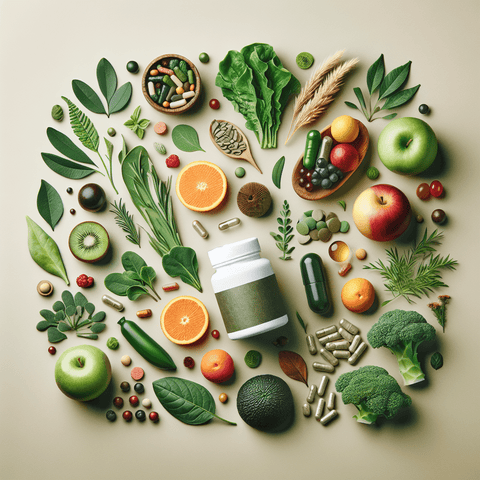
A whole-food multivitamin is a dietary supplement in which vitamins and minerals are delivered alongside, or derived from, concentrated food ingredients rather than appearing only as isolated synthetic compounds. Interest in whole-food multivitamin benefits centers on one question: can nutrients in a more food-like form support everyday energy and overall nutritional status more effectively? This article explains what whole-food multivitamins are, how they differ from conventional multivitamins, what the evidence says about bioavailability, which nutrients matter for energy metabolism, and how to evaluate product quality, safety, and personal fit before deciding whether one belongs in your routine.
What Is a Whole-Food Multivitamin?
A whole-food multivitamin is designed to provide a broad spectrum of vitamins and minerals in a matrix that resembles food as closely as possible. Instead of a tablet built purely from synthetic nutrient isolates, these products typically combine nutrients with dried fruit and vegetable powders, plant extracts, fermented ingredients, or food concentrates. The intention is to mimic the way nutrients occur naturally in meals, where they are accompanied by co-factors such as fiber, polyphenols, and enzymes.
Whole-Food vs. Synthetic Multivitamins: What’s the Difference?
Synthetic multivitamins contain nutrients produced through industrial processes in their isolated chemical form, for example ascorbic acid for vitamin C or cyanocobalamin for vitamin B12. Whole-food multivitamins attempt to present these nutrients embedded in, or paired with, food-derived material. In practice, the distinction is not always absolute: many "whole-food" products use a combination of cultured nutrients, food concentrates, and conventional nutrient forms. Reading labels carefully matters more than trusting front-of-pack marketing.
How Are Whole-Food Multivitamins Made?
Manufacturers use several methods. Some grow or "culture" nutrients in a medium such as yeast, where the organism takes up vitamins or minerals during fermentation; the nutrient-rich biomass is then dried and incorporated into the product. Others blend conventional nutrients with high concentrations of powdered fruits, vegetables, herbs, and botanicals. A smaller group uses genuinely food-extracted nutrients, though extraction at meaningful potency is difficult and expensive, which is why truly 100% food-sourced products are relatively rare.
Are Whole-Food Multivitamins More Bioavailable?
Bioavailability describes how much of an ingested nutrient is actually absorbed and usable by the body. Food matrix effects can influence absorption for some nutrients, and certain food-derived co-factors may aid uptake. However, the evidence does not show that whole-food forms are universally better absorbed than well-chosen synthetic forms. For example, synthetic folic acid is, if anything, more efficiently absorbed than folate from food. Claims about superior bioavailability should therefore be viewed critically: whole-food formulas may offer gentler digestion for some people and additional plant compounds, but they do not automatically outperform conventional supplements in every respect.
How Whole-Food Multivitamins Support Everyday Energy Production
It is important to understand what "energy" means here. Vitamins and minerals do not contain calories the body can burn; rather, many act as co-factors in the metabolic pathways that convert carbohydrates, fats, and proteins into usable cellular energy (ATP). A multivitamin can only support energy production insofar as it corrects or buffers inadequate intake of these co-factors.
The Role of B-Vitamins in Cellular Energy Metabolism
B-vitamins are central to energy metabolism. Thiamine (B1), riboflavin (B2), niacin (B3), pantothenic acid (B5), and biotin participate directly in enzymatic reactions that extract energy from macronutrients. Vitamins B6, B12, and folate support red blood cell formation and homocysteine metabolism, both relevant to oxygen delivery and cardiovascular health. Learn more about individual B-vitamin functions, sources, and safety. When intake of any of these vitamins is inadequate, fatigue can be one consequence — which is why adequate B-vitamin status is associated with normal energy-yielding metabolism.
Why Real Food Forms May Support Smoother Energy Release
The idea behind food-matrix nutrition is that nutrients arrive with companions that modulate absorption and utilization. In theory, this may translate into steadier nutrient availability rather than a sharp spike and drop. Practically, evidence for smoother, food-like energy release from a supplement capsule is limited. What is better established is that nutrient-dense meals, distributed across the day, support stable blood sugar and consistent energy — a pattern a whole-food multivitamin is designed to complement, not replace.
Can Whole-Food Multivitamins Help With Fatigue?
Fatigue has many possible causes, including insufficient sleep, stress, low iron or B12 status, thyroid issues, depression, and chronic illness. If fatigue stems from inadequate intake of one or more micronutrients, a multivitamin may help restore status over weeks to months. If the cause is medical or lifestyle-related, supplements will not resolve it, and self-treating can delay appropriate care. Persistent fatigue deserves professional evaluation rather than a guess at the supplement shelf.
Why Your Diet Alone Might Fall Short
A well-planned diet can meet most nutrient needs, but real-world intake frequently falls short for several nutrients. National dietary surveys consistently identify shortfalls in vitamins D, folate, and several minerals across population groups. Understanding why helps clarify whether a multivitamin is a reasonable safety net for you.
Modern Soil, Food Storage, and Nutrient Depletion
Nutrient content in crops depends on soil quality, plant variety, harvest time, and agricultural practices. Long storage, transport, and processing further reduce vitamin content — vitamin C, for example, degrades during prolonged storage and cooking. These losses are usually modest rather than dramatic, but they can contribute to a cumulative gap between theoretical and actual intake.
How Age and Digestion Change Nutrient Absorption
Absorption efficiency changes over the lifespan. Stomach acid production often declines with age, reducing absorption of vitamin B12 from food. Gastrointestinal conditions such as celiac disease, inflammatory bowel disease, or prior bariatric surgery can substantially impair uptake of multiple nutrients. Certain medications, including proton pump inhibitors and metformin, are associated with reduced absorption of specific vitamins.
Lifestyle Factors That Increase Daily Nutrient Needs
- Physical activity: intense training increases turnover of some B-vitamins and minerals such as iron, magnesium, and zinc.
- Stress and poor sleep: these affect eating patterns and may increase needs indirectly.
- Alcohol and smoking: both are associated with lower status of several vitamins, including folate and vitamin C.
- Restrictive eating patterns: vegan, low-calorie, or highly processed diets can limit intake of specific nutrients such as B12, iron, or iodine.
Key Nutrients to Look for in a Whole-Food Multivitamin
A good multivitamin delivers meaningful amounts of the nutrients most relevant to energy and general health, at doses grounded in recognized reference values.
B-Complex Vitamins from Food Sources
Look for meaningful amounts of all eight B-vitamins, delivered either as cultured or food-associated forms or as standard nutrient isolates in a food blend. Note that vitamin B12 and folate often require supplementation forms regardless of the "whole-food" label, because achieving adequate levels from food extracts alone is difficult.
Antioxidants and Co-Factors from Plant Extracts
Many whole-food formulas include fruit and vegetable concentrates, polyphenols, carotenoids, and flavonoid-rich extracts. These compounds have been associated with antioxidant activity and may complement the vitamins that contribute to antioxidant defense, such as vitamins C and E. Research on specific added extracts is generally less mature than research on established vitamins and minerals.
The Role of Iron, Magnesium, and Zinc in Energy
Iron supports oxygen transport via hemoglobin; low iron stores are a common, documented cause of tiredness, particularly in menstruating women. Magnesium is required for ATP production and neuromuscular function, and evidence links low magnesium intake with fatigue and impaired exercise performance. Zinc participates in enzymatic reactions throughout metabolism and supports immune function. Explore magnesium's role in energy and muscle support and essential mineral supplementation in more depth. Note that iron supplementation should ideally be guided by testing, since excess iron can be harmful.
Do Whole-Food Multivitamins Need to Be Refrigerated?
In most cases, no. Well-formulated whole-food multivitamins in capsules or tablets are shelf-stable when stored cool, dry, and out of direct sunlight. Products containing live cultures (probiotics) or certain liquid formulations may require refrigeration — check the label. Always respect the stated shelf life, as food-derived ingredients can be more sensitive to heat and moisture than pure synthetic nutrients.
Best Forms: Capsules, Powders, or Liquid?
Capsules and tablets are convenient, precisely dosed, and stable. Powders can be mixed into drinks or smoothies and suit people who dislike swallowing pills, but they require careful measurement and can be messier. Liquids may be easier to digest for some individuals but often have shorter shelf life and may need refrigeration. Choose the form that fits your routine — consistency matters more than the delivery format itself.
Understanding Potency and Raw Food Concentrates
Some products emphasize "raw" or high-concentration food blends. Assess how much of each food concentrate is actually included per serving: a blend listing dozens of ingredients may contain only milligrams of each — too little to be nutritionally meaningful. Genuine nutrient potency always comes down to the stated amounts of vitamins and minerals per serving, not the length of the ingredient list.
How to Choose a High-Quality Whole-Food Multivitamin
Reading the Label: "Food Blend" vs. Active Nutrient Amounts
Scrutinize the nutrient panel, not the marketing. Verify that each vitamin and mineral lists a concrete amount per serving, ideally expressed as a percentage of reference intake values. Watch for formulas that list a large "proprietary blend" of foods without specifying quantities, which obscures whether the product delivers meaningful nutrition.
Third-Party Testing and Quality Certifications to Look For
Look for products manufactured in certified facilities and, where available, tested by independent laboratories for identity, potency, and contaminants such as heavy metals. Certifications indicating good manufacturing practice (GMP) and non-GMO or organic sourcing can add confidence, though no single label guarantees quality. For guidance on navigating supplement options, see our multivitamins guide covering ingredients, usage, and safety.
Avoiding Fillers, Synthetic Additives, and Allergens
Review the "other ingredients" list for unnecessary binders, colors, artificial sweeteners, or allergens such as gluten, dairy, or soy if these matter to you. People with allergies or sensitivities should check for cross-contamination statements. A shorter, transparent ingredient list is generally a positive sign.
Who May Benefit Most from a Whole-Food Multivitamin?
Athletes and Highly Active Individuals
Higher training volumes increase energy turnover and the demand for B-vitamins and minerals involved in muscle function and recovery. Athletes with restricted energy intake or limited dietary variety may find a multivitamin a practical safeguard, though it should never replace adequate food intake.
Adults Over 50 With Reduced Absorption
Older adults often absorb less vitamin B12 from food due to declining stomach acid, and vitamin D needs rise with age. A multivitamin formulated for this age group can help close common gaps, alongside attention to dietary protein, calcium, and vitamin D. See our overview of vitamin D benefits, sources, and safety.
People on Restrictive or Processed Diets
Those following vegan, very low-calorie, elimination, or heavily processed diets are more likely to fall short on specific nutrients such as B12, iron, zinc, iodine, or folate. A multivitamin can serve as a nutritional buffer, though targeted single-nutrient supplementation may be more appropriate where a specific gap is known — for example, B12 for vegans.
Safety Considerations and Possible Side Effects
Multivitamins are generally well tolerated at recommended doses, but "food-derived" does not mean risk-free. Mild digestive upset or nausea can occur, particularly when taken on an empty stomach. Taking a multivitamin with a meal typically reduces this.
Can You Take Too Many Fat-Soluble Vitamins?
Yes. Vitamins A, D, E, and K accumulate in body tissue because they are not readily excreted in urine. Chronic intake above established upper limits — particularly of vitamin A and vitamin D — can lead to toxicity over time. This is also why combining a multivitamin with several other fortified products or supplements requires attention to cumulative totals. Review vitamin A safety considerations before stacking multiple products.
Medication Interactions and Supplement Timing
Vitamin K can interfere with blood thinners such as warfarin; iron and calcium compete for absorption with each other and with certain antibiotics; and high-dose antioxidants may interact with some chemotherapy protocols. If you take prescription medication, discuss supplement use with a pharmacist or physician, and space minerals away from medications that impair their absorption.
When to See a Doctor Instead of Self-Supplementing
Seek medical evaluation rather than self-treatment if you experience persistent or severe fatigue, unexplained weight change, hair loss, breathlessness, or other ongoing symptoms. These may indicate conditions requiring diagnosis and treatment that no multivitamin can address. Blood testing for iron status, B12, and vitamin D can identify genuine deficiencies and guide targeted supplementation far more reliably than symptom-based guessing.
How to Decide If a Whole-Food Multivitamin Is Right for You
When Food Adjustments Should Come First
Diet should always be the foundation. If your intake falls short, improving meal composition — more vegetables, legumes, whole grains, quality protein, and varied produce — addresses multiple nutrients and fiber simultaneously. A multivitamin is best viewed as a supplement to a decent diet, not a substitute for a poor one. Prioritize nutrient-dense foods, then consider a multivitamin as a pragmatic backstop for nutrients that are hard to cover consistently.
Questions to Ask Before Buying a Product
- Does the label state concrete amounts for each vitamin and mineral, or only vague blend totals?
- Are doses aligned with reference intakes rather than excessively high?
- Is there third-party testing or GMP certification?
- Does it contain allergens or additives I need to avoid?
- Do I have a specific, known nutrient gap — or would testing tell me more than guessing?
Key Takeaways
- A whole-food multivitamin delivers vitamins and minerals alongside food-derived concentrates, cultured nutrients, or plant extracts rather than only isolated synthetic compounds.
- B-vitamins, magnesium, zinc, and iron act as co-factors in energy metabolism; adequate status supports normal energy-yielding metabolism.
- Claims of universally superior bioavailability for whole-food forms are not strongly supported; some nutrients are absorbed efficiently in synthetic form.
- Dietary gaps, aging, digestive conditions, and demanding lifestyles can increase the gap between needs and actual intake.
- Look for labeled nutrient amounts, sensible doses, third-party testing, and minimal unnecessary additives.
- Iron supplementation is best guided by testing; excess iron is harmful.
- Fat-soluble vitamins can accumulate, so cumulative intake across products matters.
- Persistent fatigue warrants professional evaluation, not self-diagnosis or supplement guessing.
- A multivitamin complements — never replaces — a nutrient-dense, varied diet.
Conclusion
Whole-food multivitamins occupy a sensible middle ground between an optimized diet and a purely synthetic supplement. The real-world benefits hinge less on marketing language and more on whether the product delivers adequate amounts of the nutrients you personally fall short of — particularly the B-vitamins and minerals involved in energy metabolism. Food-first thinking, informed label reading, attention to cumulative fat-soluble vitamin intake, and testing when symptoms or risk factors exist will serve you better than any single product claim. Used as a targeted safety net within a nutrient-dense diet, a well-chosen whole-food multivitamin can be a reasonable part of supporting consistent everyday energy and long-term nutritional status.
Frequently Asked Questions
What is a whole-food multivitamin?
It is a multivitamin in which nutrients are paired with, cultured in, or derived from food materials such as fermented yeast, fruits, vegetables, and botanicals. The aim is to provide micronutrients in a more food-like matrix. In practice, many products combine food-derived and standard nutrient forms.
Are whole-food multivitamins better absorbed than regular multivitamins?
Not universally. Absorption depends on the specific nutrient, the chemical form, and individual digestive factors. Some synthetic forms, such as folic acid, are actually absorbed very efficiently, while food matrix effects benefit certain other nutrients. Evidence for a blanket advantage is limited.
Can a multivitamin really give you more energy?
Only indirectly. Vitamins and minerals support the metabolism that produces cellular energy, so correcting inadequate intake may improve energy over time. If fatigue stems from poor sleep, stress, or a medical condition, a multivitamin will not resolve it.
What nutrients matter most for energy production?
The B-vitamin family (B1, B2, B3, B5, B6, biotin, folate, B12), magnesium, iron, and zinc all play roles in energy metabolism and oxygen transport. Adequate intake of each supports normal energy-yielding metabolism.
Should I take a whole-food multivitamin with food?
Yes, taking it with a meal generally improves tolerability and can support absorption of fat-soluble vitamins (A, D, E, K), which require dietary fat for optimal uptake.
Can I take a multivitamin and individual supplements together?
Often yes, but you must account for cumulative amounts, particularly of fat-soluble vitamins and iron. Avoid exceeding established upper intake levels, and consult a professional if you combine multiple products regularly.
Is iron in every multivitamin safe for everyone?
No. Men and postmenopausal women generally need less iron, and excess iron can accumulate harmfully. Iron-containing formulas suit those with higher needs; testing is the most reliable way to determine whether iron supplementation is appropriate for you.
How long before I notice any effect from a multivitamin?
If you had a genuine nutritional shortfall, improvements in wellbeing may take several weeks to a few months, since body stores take time to replenish. If nothing changes after a few months, the fatigue or concern likely has another cause worth investigating.
Do whole-food multivitamins expire faster than regular ones?
Food-derived ingredients can be somewhat more sensitive to heat, light, and moisture, so respecting the printed expiry date and storing the product cool and dry is important. Most capsule forms remain shelf-stable without refrigeration.
Are whole-food multivitamins suitable for vegans?
It depends on the product. Cultured nutrients grown in yeast are typically vegan, but some formulas contain fish-derived ingredients, gelatin capsules, or dairy. Check the label and look for explicit vegan certification.
Can pregnant women take a whole-food multivitamin?
Pregnancy requires specific nutrients at specific doses — particularly folic acid, iodine, and iron — and some ingredients should be avoided. A standard multivitamin is not a substitute for a prenatal formula, so consult a healthcare provider before choosing a product.
Is a "proprietary blend" a red flag?
It can be. A blend that lists many ingredients without individual amounts makes it impossible to verify nutritional potency. Products that transparently state the amount of every vitamin, mineral, and food concentrate are easier to evaluate and generally more trustworthy.
Related Keywords
- whole-food multivitamin benefits
- whole food vs synthetic vitamins
- food-based multivitamin bioavailability
- best whole-food multivitamin for energy
- B-vitamin energy metabolism
- multivitamin for fatigue
- natural energy supplements from real food
- fermented vitamins benefits
- multivitamin for adults over 50
- vitamin deficiency and tiredness
- how to choose a quality multivitamin
- multivitamin safety and interactions
- nutrient co-factors and absorption
- plant-based multivitamin