Understanding Absorption Enhancers
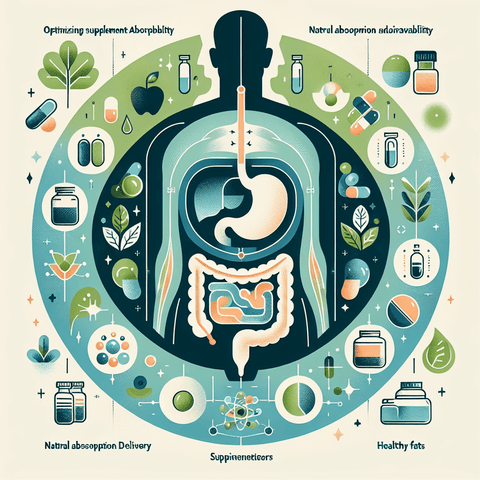
Absorption enhancers are substances or strategies that help improve the body's ability to absorb nutrients from supplements or food. They are a key factor in determining a supplement's bioavailability—the proportion of a nutrient that actually enters your bloodstream and becomes available for your body to use. Understanding how absorption enhancers work can help you make more informed choices to maximize the benefits of your nutritional regimen.
Many factors influence whether the nutrients you consume are effectively absorbed, including the supplement's formulation, your digestive health, and the presence of specific compounds that can either aid or hinder this process. This article defines absorption enhancers, explains the key factors that affect absorption, and offers practical, evidence-based tips to support better nutrient uptake.
Key Factors That Increase Supplement Absorption
Several critical factors determine how well your body absorbs supplements. Understanding these can help you optimize your routine.
Solubility and Permeability: A supplement must first dissolve in digestive fluids (solubility) and then pass through the intestinal lining (permeability) to enter the bloodstream. Factors like stomach pH and the presence of bile acids can influence this process.
Gastric Emptying and Food Effects: The speed at which your stomach empties and the presence of food can significantly impact absorption. For instance, taking fat-soluble vitamins with a meal containing healthy fats can dramatically improve their uptake.
Supplement Formulation: The physical form of a supplement—such as liquid, powder, tablet, or advanced delivery systems like liposomes—plays a major role in how easily it is broken down and absorbed by the body.
Individual Health Status: Your digestive health, age, and genetics also affect absorption efficiency. A healthy gut lining and balanced microbiome are foundational for optimal nutrient uptake.
Types and Mechanisms of Absorption Enhancers
Absorption enhancers can be classified by how they work. In pharmacology, these mechanisms are well-studied and also apply to supplement ingredients.
- Permeation enhancers: These temporarily increase the permeability of the intestinal lining, allowing larger molecules to pass through more easily. Examples include bile salts and certain surfactants.
- Solubility enhancers: These improve the dissolution of poorly water-soluble nutrients. Lipids, cyclodextrins, and emulsifiers can help nutrients like fat-soluble vitamins dissolve better in digestive fluids.
- Enzyme inhibitors: Some compounds, like piperine from black pepper, may inhibit metabolic enzymes that break down nutrients, thereby increasing the amount that reaches the bloodstream.
- Efflux pump inhibitors: Certain substances can inhibit transport proteins that pump compounds back into the intestinal lumen, increasing net absorption.
These mechanisms are relevant to supplement absorption because they influence how much of a nutrient is available for the body to use.
Examples of Absorption Enhancers for Supplements
Many natural compounds and formulation techniques can act as absorption enhancers. Here are common examples relevant to dietary supplements.
- Piperine: A compound from black pepper that may support the absorption of nutrients like curcumin by influencing metabolic pathways.
- Vitamin C: Known to support the absorption of non-heme iron (the form found in plant-based sources and some supplements) when taken together.
- Healthy Fats: Dietary fats are essential for the absorption of fat-soluble vitamins (A, D, E, and K).
- Bile Salts: These natural emulsifiers can enhance the absorption of fat-soluble nutrients and some medications.
- Surfactants: Some food additives and pharmaceutical excipients can increase the solubility and permeability of certain nutrients.
- Specialized Formulations: Technologies like liposomal delivery or nanoemulsions are designed to protect nutrients and improve their passage into the bloodstream.
- Digestive Enzymes and Probiotics: These can support a healthy digestive environment, which may facilitate the breakdown and uptake of nutrients.
It's important to choose enhancers that are appropriate for the specific nutrient you are taking and to consult a healthcare professional for personalized advice.
ADME: The 4 Stages of Nutrient Journey in the Body
To fully understand absorption, it helps to see it as part of a larger process often referred to as ADME, which stands for Absorption, Distribution, Metabolism, and Excretion. Absorption is the second stage.
- Administration: The nutrient is ingested, for example, by taking a supplement.
- Absorption: The nutrient moves from the digestive tract into the bloodstream. This is the primary focus of using absorption enhancers.
- Distribution: The nutrient is carried by the blood to various tissues and organs where it is needed.
- Metabolism and Excretion: The body uses the nutrient, and any leftover components are processed and eliminated.
By focusing on the absorption stage, you can help ensure more of the nutrient is available for the subsequent stages of distribution and use.
How Drug Absorption Is Enhanced: A Pharmacological Perspective
In pharmacology, absorption enhancers are used to improve the delivery of medications, especially those with poor oral bioavailability. The same principles apply to supplements. Permeation enhancers increase the ability of substances to cross the intestinal lining. Solubility enhancers improve dissolution in the gastrointestinal tract. Enzyme inhibitors protect the active ingredient from being broken down too quickly. These strategies are also seen in supplement formulations to improve nutrient uptake.
Practical Strategies to Enhance Supplement Bioavailability
Beyond specific enhancers, several practical strategies can help you get the most out of your supplements.
Choose the Right Form: Liquids and powders are often absorbed more quickly than tablets or capsules. Advanced formulations like liposomal vitamin C or emulsified vitamin D may offer higher bioavailability.
Time Your Intake: Align supplement intake with your body's needs. Take fat-soluble vitamins with meals containing fats, and consider taking water-soluble vitamins like B-complex on an empty stomach for quicker absorption, if tolerated.
Support Digestive Health: A healthy gut is crucial. Consuming a diet rich in fiber and considering probiotics may help maintain a balanced gut environment conducive to absorption.
Mind Supplement Compatibility: Some supplements can compete for absorption. For example, taking calcium and iron separately can help ensure optimal uptake of both minerals.
Frequently Asked Questions
What are examples of absorption enhancers?
Common examples include piperine (from black pepper), vitamin C (for iron), healthy fats (for fat-soluble vitamins), bile salts, and advanced delivery systems like liposomal formulations used in some supplements.
What increases drug absorption?
Factors that can increase absorption include the solubility and permeability of the substance, the presence of food or specific enhancers, the health of the digestive system, and the formulation of the medication or supplement itself.
What are the enhancers of iron absorption?
Vitamin C is a well-known enhancer of non-heme iron absorption. Consuming iron with meat, fish, or poultry, or with foods rich in vitamin C, can also support iron uptake.
How to increase rate of absorption?
You can increase absorption by choosing easily absorbable supplement forms, taking fat-soluble vitamins with food, supporting digestive health, and using specific enhancers like piperine or vitamin C where appropriate.
Conclusion
Understanding and utilizing absorption enhancers is a practical way to maximize your investment in nutritional supplements. By focusing on factors that increase bioavailability—from choosing the right formulation and timing to incorporating natural aids—you can support your body's ability to use the nutrients you provide. Always remember that individual needs vary, and consulting with a healthcare provider can help you tailor these strategies effectively for your wellness journey.