Counterfeit vitamin detection is becoming an essential skill for anyone who buys supplements, because fake products have moved from niche marketplaces to mainstream online listings. Counterfeit supplements may contain the wrong ingredients, incorrect doses, unlisted substances, or contaminants such as heavy metals, and they can be surprisingly difficult to distinguish from genuine products by appearance alone. This guide explains what counterfeit, adulterated, and substandard supplements actually are, why fake products pose real health and financial risks, the ten most reliable warning signs to check before use, the verification tools and certifications that are hard to fake, and what to do if you suspect you have already bought or taken a fake vitamin.
Introduction: Why Counterfeit Vitamin Detection Matters
Supplements are largely self-directed products: people take them to support their nutritional intake, often without a doctor's oversight. That places the burden of product quality on the buyer, and counterfeiters know it. A fake multivitamin that looks identical to the real thing can do more than waste money — it can delay appropriate care, expose you to contaminants, or deliver doses far from what the label claims.
Regulators and researchers have documented fake products ranging from placebos made of fillers to capsules spiked with undeclared pharmaceutical ingredients. Learning the basics of counterfeit vitamin detection — packaging checks, batch verification, and certification literacy — dramatically reduces your risk and makes you a harder target for sellers of fraudulent goods.
What you'll learn in this guide to identifying fake supplements
This guide walks through the definitions that matter, the scale and health risks of the counterfeit supplement market, ten practical warning signs, where fake products are most commonly sold, how verification tools and third-party certifications work, and the steps to take if you have already consumed a suspicious product. It closes with guidance on choosing supplements you can trust and on deciding whether supplementation is necessary for you at all.
What Are Counterfeit Vitamins? Definition and Key Terms
Counterfeit supplements are products deliberately misrepresented to imitate a legitimate brand. They may copy packaging, logos, and even certification marks, but the contents — identity, strength, purity — do not match the label. Fraudulent products sit alongside two related categories that regulators distinguish carefully.
Counterfeit vs. adulterated vs. substandard supplements
Counterfeit products are intentionally faked, usually to mimic a reputable brand. Adulterated products contain undeclared ingredients — sometimes illegal pharmaceutical substances, especially in products marketed for weight loss or performance. Substandard products are authorized but fail quality specifications, with too little or too much of the labeled ingredient. A product can fall into more than one category, and consumers usually cannot tell them apart without laboratory testing.
How fake supplements differ from recalled or expired products
Recalls and expiration are quality-control processes, not fraud. A recalled product was manufactured in good faith but found to have a defect; an expired product has passed its stated shelf life and may lose potency. Counterfeit products, by contrast, were never legitimate in the first place — there is no manufacturer accountability, no quality system, and no accurate label to trust.
The supplement gray market: where counterfeit products come from
Much counterfeit supply enters through the gray market: unauthorized distributors, diverted stock with broken custody chains, and outright fabrication. Because dietary supplements are often sold through complex distribution networks with limited traceability, fake goods can be introduced at multiple points. Products repackaged after passing through uncontrolled warehouses are particularly hard to trace back to a source.
Why Fake Supplements Are a Growing Problem
How big the counterfeit supplement market really is
Precise figures are difficult to establish because counterfeiting is, by definition, hidden. What is documented is the direction: customs seizures of counterfeit supplements have risen substantially, and analyses of seized and marketplace products repeatedly find products with little or none of the claimed active ingredient, undeclared stimulants, or heavy metal contamination. The economic incentive is clear — supplements are high-margin, lightweight, and easy to ship.
Health risks of counterfeit vitamins: wrong ingredients, wrong doses, contamination
The risks fall into three groups. First, ineffective dosing: a product containing a fraction of the labeled vitamin D or iron provides no benefit, which matters for people with genuine needs. Second, wrong ingredients: adulterated products have been found to contain undeclared drugs that can cause real harm. Third, contamination: unregulated manufacturing can introduce bacteria, mold, or toxic metals such as lead. For individuals with medical conditions, allergies, or pregnancy, these risks are compounded.
Why online marketplaces are the most common source of fake supplements
Large marketplaces mix authorized and third-party sellers in the same listing, sometimes sharing inventory pools. A listing may look identical whether it comes from the brand or an anonymous seller. Marketplaces have improved enforcement, but enforcement lags fraud, and buyers often cannot verify the seller behind a specific shipment.
How to Identify Counterfeit Vitamins: 10 Warning Signs to Check
Suspiciously low prices and "too good to be true" deals
Genuine supplements carry manufacturing, testing, and compliance costs. A best-selling brand offered at 60–80% below its usual price is one of the most reliable red flags, particularly when combined with sellers who have no track record. Counterfeiters rely heavily on price to convert impulse buyers.
Packaging red flags: typos, blurry labels, broken seals, and missing batch numbers
Legitimate manufacturers invest in printing quality and tamper-evident packaging. Compare against the brand's website: fonts, colors, and spelling of ingredient names. Broken or re-glued seals, misaligned caps, and thin, easily scratched labels suggest repackaging. Every genuine product should display a batch or lot number and an expiration date.
Missing or unverifiable lot numbers and expiration dates
Batch numbers allow manufacturers to trace a product's production run. If the number is missing, printed inconsistently, or smudged on arrival — or if it does not appear on both the bottle and the outer carton — treat the product as suspect.
Pill appearance, smell, and taste: when something seems off
Compare against a known genuine product if you have used the brand before. Unusual color, crumbling tablets, a rancid or chemical odor (especially with fish oil or oil-based softgels), or a dramatically different texture can indicate a fake or a degraded product. These signs alone are not proof, but they justify stopping use.
Label red flags: missing Supplement Facts panel, vague claims, and no manufacturer contact information
A legitimate product has a complete Supplement Facts panel with nutrient amounts, serving size, and daily values. Be wary of labels that list proprietary "complexes" without quantities, promise implausible results, or omit the manufacturer's name and address. Also check for missing allergen statements and country-of-origin information where required.
QR codes, holograms, and serial numbers that don't verify
Many brands now use serialized QR codes or holograms. A code that scans to an error page, resolves to an unrelated website, or has already been verified by someone else is a classic counterfeit marker. Always use the brand's official verification portal rather than a link printed on suspicious packaging.
Where Counterfeit Vitamins Are Most Commonly Sold
Third-party sellers on large online marketplaces
The highest-risk channel is buying name-brand products from unknown third-party sellers, especially when the seller is newly registered, ships from unexpected locations, or has sparse reviews. "Frequently bought together" and shared-inventory mechanisms can mean your order does not come from the seller you think it does.
Social media ads, unverified websites, and "direct from factory" offers
Flash-sale ads, influencer discount codes, and websites claiming "factory direct" pricing funnel buyers away from accountable channels. These sites frequently disappear after complaints accumulate, leaving no recourse.
Why buying directly from brands and authorized retailers lowers your risk
Buying from the manufacturer's own site or an authorized retailer preserves the documented supply chain from factory to your door. Established specialty retailers that source directly from verified manufacturers — for example, stores carrying lines such as Healthy Origins supplements or Nature's Plus supplements — reduce the odds of encountering diverted or faked stock.
Counterfeit Vitamin Detection Tools and Verification Methods
Manufacturer verification portals, QR code scanners, and authenticity apps
Many major brands operate online portals where you enter a serial or batch number to confirm authenticity. Some use serialized QR codes unique to each unit. These systems work only if you access them through the brand's official website — never through a URL printed on a suspect package or an emailed link.
How to read batch numbers and check them with the brand
Batch or lot numbers typically combine production date, line, and location codes. Contact the manufacturer's customer service with the batch number and purchase details; legitimate companies can confirm whether the run is real, whether the expiration date matches, and whether the number has been reported elsewhere. Keep a photo of the batch number before you discard packaging.
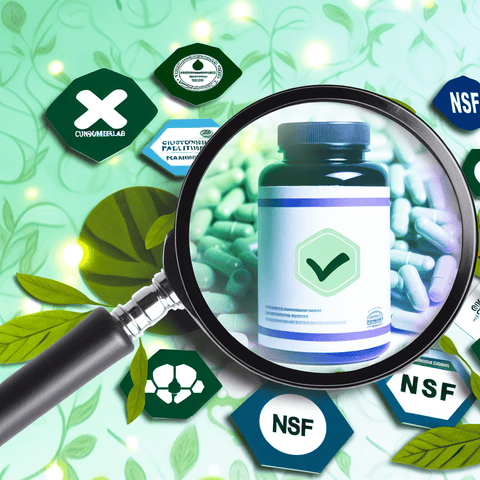
Third-party certifications that are hard to fake: USP, NSF, Informed Choice
Independent certification programs — USP Verified, NSF Certified for Sport, and Informed Choice/Informed Sport — audit manufacturing facilities and test finished products for identity, potency, and contaminants. Certification marks can be copied, so confirm certification on the certifier's own website. Certified products give you an additional layer of assurance that label claims are accurate.
At-home and lab testing options: what's realistic for consumers
At-home test kits for supplement authenticity are limited and largely unreliable for vitamins. If you suspect contamination or serious mislabeling, the realistic path is to report the product and, where necessary, have authorities or an accredited laboratory analyze it — consumer-grade testing is not a practical routine check.
What to Do If You've Bought or Taken a Fake Supplement
Signs you may have consumed a counterfeit or contaminated product
Unusual reactions after starting a new bottle — unexpected side effects, allergic-type reactions, no effect at all after consistent use of a product that normally works, or off smells and appearance — may suggest a suspect product. These signs are nonspecific, so do not self-diagnose; seek medical advice if symptoms are significant.
How to report counterfeit supplements to the FDA and marketplace platforms
Report suspected counterfeit or adulterated supplements to the FDA's MedWatch program and, in parallel, to the marketplace or retailer where you bought it. The FDA also accepts complaints through its safety reporting portals. Reports help regulators identify patterns and issue warnings, even when a single case seems minor.
Steps to take: stop use, save packaging, document your purchase
- Stop using the product immediately, but do not throw it away.
- Save the packaging, bottle, and remaining contents — regulators may want them.
- Document the purchase: order confirmation, seller name, listing screenshots, and photos of the label and batch number.
- Seek medical advice if you experienced adverse effects, especially if you are pregnant, managing a chronic condition, or taking medications.
How to Choose Supplements You Can Trust
Once you can spot fakes, the next step is choosing products whose quality you can verify proactively rather than reactively.
Why third-party testing and certifications matter more than marketing claims
Marketing cannot substitute for manufacturing quality. Third-party testing verifies what actually matters: that the bottle contains the nutrient at the stated dose, without significant contaminants. Prioritize brands that publish certificates of analysis or hold recognized certifications over brands that emphasize impressive-sounding but unverified claims. Educational resources on natural supplements and product quality can help you compare how different brands approach testing.
Buying direct from manufacturers vs. authorized retailers vs. marketplaces
Manufacturer-direct and authorized-retailer channels preserve supply-chain accountability. Marketplaces are not automatically unsafe, but they require more diligence: check the seller's identity, history, and whether the product page is "sold by" the brand or an anonymous third party. When in doubt, buy the same product from an accountable source.
How to evaluate a brand's transparency: sourcing, testing, and manufacturing practices
Trustworthy brands disclose where raw materials are sourced, whether ingredients meet pharmacopeial standards, where the product is manufactured, and how finished products are tested. Vague sourcing claims and absent contact information are cautionary signals; detailed, verifiable transparency is a positive one.
Reading a supplement label like an expert: Supplement Facts panel, forms, and serving sizes
The Supplement Facts panel tells you the nutrient, its chemical form (for example, magnesium citrate versus magnesium oxide), the amount per serving, and the percent Daily Value. Two products with the same nutrient name can differ substantially in form and effective dose. Compare servings carefully — some products list two or three capsules per serving.
Forms and formats: capsules, tablets, powders, and gummies — quality differences that matter
Capsules often protect sensitive ingredients from oxidation; tablets are compact and stable but may contain more binders; powders allow flexible dosing; gummies are palatable but typically contain less nutrient per piece and may degrade faster. No format is universally superior — the best choice depends on the nutrient, the dose you need, and what you will take consistently.
Allergens, added ingredients, and red-flag fillers to watch for on labels
Check allergen declarations (soy, gluten, dairy, nuts), and note excipients. Common fillers are generally safe, but consumers with sensitivities or specific preferences — such as avoiding artificial colors or gelatin — should read the "other ingredients" list, not just the active nutrients.
Does a Genuine Supplement Fit Your Needs? Diet First, Supplements Second
Getting nutrients from food: why whole-food sources come first
A verified supplement is only worth taking if supplementation is warranted in the first place. Whole foods provide nutrients in forms and combinations the body handles well, along with fiber and phytochemicals. Leafy greens, legumes, fish, eggs, dairy, nuts, and fortified foods cover most nutrient needs for people eating a varied diet. Our guides on vitamin D sources and safety and vitamin C and antioxidant nutrition review food-based intake alongside supplement considerations.
When dietary intake may fall short: age, lifestyle, absorption, and dietary restrictions
Certain situations can make dietary intake insufficient: restrictive diets (for example, vitamin B12 in vegan diets), limited sun exposure (vitamin D), increased requirements in pregnancy, reduced absorption with age or gastrointestinal conditions, and higher needs in some athletes. In these cases, a genuine, quality-verified supplement may be relevant — which makes counterfeits a particular concern for the very people who need real products most.
Why individual nutrient needs vary — and why "one-size-fits-all" products (real or fake) should raise suspicion
Nutrient requirements differ by age, sex, diet, medication use, and health status. A product promising extraordinary universal results — or a "cure-all" multivitamin sold at implausible prices — fails the credibility test whether it is fake or real. Individual needs are best assessed, not guessed.
When Supplementation May Be Worth Considering
Situations where food alone may not be enough
Supplementation may be worth considering when a dietary pattern reliably omits a nutrient, when physiological requirements are elevated, or when a clinician identifies low intake or low blood levels. Examples include folic acid before and during early pregnancy, vitamin B12 for strict vegans, and vitamin D in winter months at high latitudes — each supported by established nutritional evidence.
The role of blood testing and professional assessment before supplementing
For nutrients with validated tests — vitamin D, B12, iron status — blood testing provides more useful information than symptoms, which are often nonspecific. A healthcare professional can interpret results in context and recommend appropriate doses and durations rather than trial-and-error supplementation.
General nutritional support vs. addressing a diagnosed deficiency
A general multivitamin may serve as modest nutritional insurance for some adults with imperfect diets; a diagnosed deficiency requires a specific nutrient at a specific dose, monitored over time. Counterfeit risk matters most in the second scenario — a fake iron or B12 product can silently prolong a real deficiency.
Safety Considerations: Doses, Interactions, and Upper Limits
Why counterfeit products are especially risky at high doses
Every nutrient has a tolerable upper intake level; exceeding it can cause harm, from gastrointestinal effects to more serious toxicity with nutrients like vitamin A or iron. A counterfeit product with uncontrolled dosing makes it impossible to stay within safe limits — another reason verified products and moderate doses matter.
Common supplement–medication interactions to discuss with your doctor or pharmacist
Supplements can interact with medications: vitamin K affects blood thinners such as warfarin; high-dose calcium or magnesium can interfere with certain antibiotics; and herbal products interact with a wide range of drugs. Bring your complete supplement list to your doctor or pharmacist, especially before surgery or when starting new medication.
Special considerations for pregnancy, children, and chronic conditions
Pregnant women, children, older adults, and people with kidney, liver, or chronic diseases have different requirements and tolerances. These groups should not experiment with unverified products — and should confirm any supplement, dose, and brand with a qualified healthcare professional first.
Key Takeaways: Staying Safe From Fake Supplements
- Counterfeit supplements intentionally imitate legitimate brands and may contain wrong ingredients, wrong doses, or contaminants.
- Online marketplaces and third-party sellers are the most common sources of fake vitamins; buying direct from brands or authorized retailers lowers your risk.
- Prices far below normal retail are one of the most reliable red flags.
- Always check packaging quality, batch numbers, expiration dates, and a complete Supplement Facts panel before use.
- Verify QR codes, serial numbers, and holograms only through the brand's official website.
- Third-party certifications such as USP, NSF, and Informed Choice provide assurance that is difficult to fake.
- If you suspect a fake product, stop use, keep the packaging, document the purchase, and report it to the FDA and the platform.
- Diet should come first; supplementation is most relevant when intake, absorption, or requirements make food alone insufficient.
- Blood testing and professional assessment are more reliable than symptoms for evaluating nutritional status.
- Because needs vary by age, diet, health status, and medications, supplement choices — including dose and form — should be individualized.
Frequently Asked Questions
Are fake vitamins dangerous, or just ineffective?
Both. Some counterfeits are essentially placebos that waste money, but laboratory analyses of seized fake supplements have found undeclared pharmaceutical ingredients, stimulants, and heavy metal contamination. Even "merely" ineffective products can cause harm if someone relies on them to correct a genuine deficiency.
Can I tell if a vitamin is fake just by looking at it?
Sometimes, but not reliably. Typos, poor print quality, broken seals, and missing batch numbers are strong warning signs, yet sophisticated counterfeits can look nearly identical to genuine products. Physical inspection should be combined with batch verification and purchasing from accountable channels.
Is it safe to buy vitamins on Amazon or other online marketplaces?
It can be, with caution. Risk rises significantly when buying name-brand products from unknown third-party sellers rather than the brand itself or an authorized retailer. Check the "sold by" information, seller history, and pricing, and consider verifying the batch number with the manufacturer after purchase.
Do fake supplements really contain harmful ingredients?
Some do. Regulatory analyses have identified counterfeit and adulterated supplements containing undeclared drugs, stimulants, lead, and other contaminants — particularly in products marketed for weight loss, energy, or sports performance. Others contain only inert filler. There is no way to know without testing, which is why prevention is key.
What certifications prove a supplement is genuine?
No certification proves a specific unit is genuine, but independent programs — USP Verified, NSF Certified for Sport, and Informed Choice — verify that products meet label claims and contaminant limits, and are audited at the manufacturing level. Confirm certification marks on the certifier's official website, since marks can be copied.
How do I verify a supplement's batch number?
Find the lot number on the bottle or carton, then contact the manufacturer through its official website or verification portal. Legitimate brands can confirm the batch is real, match it to the printed expiration date, and tell you whether the number has been flagged or reported previously.
What should I do if I already took a supplement I now suspect is fake?
Stop using it, keep the packaging and remaining product, document where and when you bought it, and report your experience to the FDA's MedWatch program and the selling platform. If you feel unwell or have a medical condition, contact a healthcare professional and mention the suspect product.
Why are counterfeit supplements so common online?
Supplements are lightweight, high-margin, and easy to ship, and marketplace structures that mix sellers make enforcement difficult. Fraudsters can list products that appear identical to brand listings, and by the time complaints accumulate, sellers often re-register under new names.
Can a fake supplement still be safe if it looks fine?
Appearance is not evidence of safety. Contamination and ingredient substitutions are invisible without laboratory analysis. Even if a counterfeit turns out to be harmless filler, you cannot count on that — treat unverifiable products as unsafe.
Are store-brand or pharmacy vitamins less likely to be counterfeit?
Established pharmacies and reputable store brands generally source through controlled supply chains, making counterfeits less likely than through anonymous online sellers. Quality still varies, so checking for third-party testing and a complete Supplement Facts panel remains worthwhile.
Do certifications or QR codes get faked too?
Yes. Counterfeiters copy certification logos and print QR codes that lead to lookalike sites. Always verify certification status on the certifier's own website and scan codes using the brand's official app or web address, never a URL printed on suspect packaging.
How can I make sure the supplements I buy are high quality overall?
Buy from the manufacturer or authorized retailers, look for third-party testing or published certificates of analysis, check the Supplement Facts panel for named nutrient forms and clear doses, and confirm batch numbers on arrival. Quality assurance starts with the supply chain, not the marketing.
Conclusion: Stay Skeptical, Verify, and Choose Quality
Counterfeit vitamin detection ultimately comes down to three habits: buy from accountable sources, verify what you receive, and choose products whose quality can be independently confirmed. At the same time, remember that supplementation itself is not automatically necessary — a varied diet meets most people's needs, and testing with professional guidance is more reliable than guesswork when you suspect a shortfall. Because individual requirements vary with age, diet, health status, and medications, any supplement decision — including which brand, form, and dose — deserves the same skepticism you now apply to suspicious listings. A verified, quality-tested product taken for a well-understood reason is the only kind of supplement worth having in your cabinet.
Related Keywords
- counterfeit vitamin detection
- fake supplements warning signs
- how to spot fake vitamins
- supplement counterfeit market
- verify supplement batch number
- USP verified supplements
- third-party tested supplements
- buying supplements online safely
- adulterated supplements FDA
- supplement label red flags
- supplement quality and safety
- supplement–medication interactions