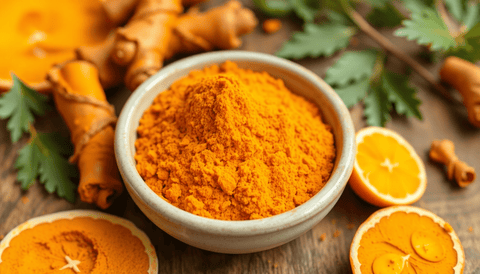
Curcumin is the primary active compound in turmeric and one of the most extensively studied natural ingredients in nutrition science. Interest in curcumin benefits centers on its potential to support a healthy inflammatory response, provide antioxidant protection, and contribute to joint, cardiovascular, cognitive, digestive, and skin health. In this article, you will learn what curcumin is, how it works in the body, which effects research has actually supported, why absorption is a critical limiting factor, and how to decide whether a curcumin supplement makes sense for you.
What Is Curcumin and How Is It Different from Turmeric?
Curcumin is a naturally occurring polyphenol belonging to a group of compounds called curcuminoids, which give turmeric its intense golden-yellow color. Turmeric itself is a root in the ginger family, used for centuries in traditional cooking and wellness practices across South Asia. While turmeric contains several active compounds, curcumin is the one most responsible for its biological activity and the focus of the majority of modern research.
Curcumin vs. Turmeric: What’s the Difference?
The distinction matters more than many people realize. Turmeric powder, as used in cooking, typically contains only about 2–5% curcumin by weight, along with starches, volatile oils, and other curcuminoids such as demethoxycurcumin. A curcumin supplement, by contrast, usually contains a concentrated, standardized extract that delivers a much higher and more consistent amount of curcuminoids per serving. In short: all curcumin comes from turmeric, but not all turmeric provides meaningful amounts of curcumin.
Why Curcumin Is the Most Studied Compound in Turmeric
Of the curcuminoids in turmeric, curcumin makes up the largest share and shows the strongest biological activity in laboratory and clinical research. Thousands of studies have examined its interactions with inflammatory signaling molecules, oxidative stress pathways, and cellular processes. It is worth noting that research quality varies considerably: some findings come from test-tube or animal studies, and human clinical trials often use doses far higher than what could be obtained from turmeric spice alone. That is why it is important to distinguish well-supported effects from preliminary or emerging findings.
How Does Curcumin Work in the Body?
Curcumin is a pleiotropic compound, meaning it interacts with multiple molecular targets rather than a single pathway. Two areas of research stand out for understanding its potential benefits: oxidative stress and inflammatory signaling.
The Role of Curcumin in Oxidative Stress
Oxidative stress occurs when reactive molecules called free radicals accumulate faster than the body can neutralize them, potentially damaging cells over time. Curcumin can act directly as an antioxidant by scavenging free radicals, and research suggests it may also influence the body's own antioxidant enzyme systems, including pathways involving glutathione and superoxide dismutase. This dual action is one reason curcumin is frequently discussed in the context of healthy aging and cellular protection.
Curcumin’s Influence on Inflammatory Pathways
Curcumin has been shown in laboratory studies to modulate several signaling molecules involved in the inflammatory response, most notably NF-κB, a protein complex that regulates the expression of inflammatory cytokines. By influencing these pathways, curcumin may help support the body's normal, balanced inflammatory response rather than suppressing inflammation indiscriminately. This mechanism underlies much of the research on joint comfort and recovery discussed below.
7 Science-Backed Curcumin Benefits
The following overview reflects the general direction of current research. Many findings are promising but mixed in strength, and effects in studies depend heavily on dose, formulation, study duration, and the population examined.
1. Supports a Healthy Inflammatory Response
This is the best-characterized area of curcumin research. Clinical studies suggest that curcumin supplementation may help modulate markers associated with inflammation, such as certain cytokines and C-reactive protein in some study populations. The evidence supports a role in supporting a balanced inflammatory response, not in treating inflammatory disease.
2. Provides Antioxidant Protection
Curcumin's ability to neutralize free radicals and support endogenous antioxidant systems is well documented in laboratory research, and some human studies have observed improvements in markers of oxidative stress. This antioxidant activity is one reason curcumin is often grouped with other polyphenols studied for healthy aging.
3. Supports Joint Comfort and Mobility
Several randomized controlled trials, particularly in people experiencing joint stiffness and discomfort, have found that standardized curcumin extracts were associated with improvements in self-reported joint comfort and function, in some comparisons performing similarly to conventional approaches at a study level. The evidence base is among the stronger ones for curcumin, though study sizes are generally modest and formulations vary.
4. May Support Cardiovascular Health
Emerging research suggests curcumin may positively influence factors associated with cardiovascular wellness, such as endothelial function and lipid markers, in some study groups. However, findings are inconsistent across trials, and this remains an area where more high-quality human research is needed. Curcumin should not be considered a substitute for established cardiovascular care.
5. Supports Cognitive Function and Brain Health
Curcumin can cross the blood-brain barrier in animal models, and research is exploring its relationship with brain-derived neurotrophic factor (BDNF) and cognitive performance. Some small human studies suggest possible benefits for mood and memory, but the evidence is early-stage and should be viewed as preliminary rather than established.
6. Promotes Digestive Comfort
Traditionally, turmeric has been used to support digestive well-being, and some clinical observations suggest curcumin may contribute to gastrointestinal comfort and normal digestive function. Research in this area is still developing, and responses can vary between individuals.
7. Supports Skin Health and Appearance
Curcumin's antioxidant and skin-soothing properties have made it a subject of interest in dermatology research, including studies on skin comfort and appearance. Most evidence relates to topical applications; evidence for oral supplementation specifically improving skin is more limited.
Curcumin Bioavailability: Why Absorption Matters
Curcumin's biggest practical limitation is not its potential but its poor absorption. Understanding this issue is essential for anyone evaluating curcumin products.
Why Curcumin Is Poorly Absorbed on Its Own
Curcumin is poorly soluble in water, is rapidly metabolized in the liver and intestinal wall, and is quickly eliminated from the body. As a result, plain curcumin powder taken orally shows very low levels in the bloodstream. This is why study results and real-world effects can differ dramatically depending on the formulation used.
Piperine (Black Pepper Extract) and Its Role in Absorption
Piperine, the compound that gives black pepper its pungency, inhibits certain metabolic enzymes and has been shown in research to substantially increase curcumin absorption—by up to around 2,000% in one frequently cited human study. This is why many quality curcumin supplements combine curcumin with piperine. Note that piperine can also affect the absorption of medications, which is worth discussing with a healthcare provider if you take prescription drugs.
Liposomal and Phytosome Forms of Curcumin
Alternative delivery technologies address curcumin's absorption problem differently. Phytosome (or meriva-type) formulations bind curcumin to phospholipids, improving solubility and uptake. Liposomal curcumin encapsulates the compound in lipid vesicles designed to protect it through digestion. Several enhanced-formulation products have demonstrated significantly higher blood curcumin levels than standard extracts in comparative studies, and some clinical trials use these forms specifically because of improved bioavailability.
How Much Curcumin Should You Take?
Typical Dosages Used in Clinical Studies
Clinical studies have used a wide range of doses, often between roughly 500 and 2,000 mg of curcuminoids per day, usually in enhanced-bioavailability forms. Because no official recommended daily intake exists for curcumin, these figures reflect research practice rather than established requirements. Always follow the dosage on the product label and consult a professional for individual guidance, especially at the higher end of this range.
Factors That Influence Your Individual Needs
Individual considerations include your dietary intake of turmeric, your reasons for interest (general wellness versus a specific concern), body weight, digestive health, medication use, and the bioavailability of the formulation you choose. Someone eating turmeric-rich meals regularly with black pepper may need less supplemental support than someone with minimal dietary intake.
Curcumin from Food vs. Supplements: What’s More Effective?
How Much Turmeric You Would Need to Eat for Therapeutic Effects
Given that turmeric powder is only roughly 2–5% curcumin by weight and that absorption of plain curcumin is low, reaching the doses used in clinical studies through food alone would require very large amounts of turmeric daily—an impractical goal for most people. Culinary use still has value, especially when turmeric is cooked with fat and black pepper, but it primarily delivers modest amounts of curcumin alongside flavor and other food compounds.
When a Supplement May Be More Practical
A standardized, bioavailability-enhanced curcumin supplement can be a more practical option when someone is interested in the intake levels studied in research. Turmeric supplements vary widely in curcuminoid concentration, so checking the extract standardization is important. That said, supplementation is a personal choice, and dietary patterns rich in colorful spices, vegetables, and polyphenols provide broader nutritional benefits on their own.
How to Choose a High-Quality Curcumin Supplement
Standardized Curcumin Extract vs. Whole Turmeric Powder
Whole turmeric powder in capsules delivers the full spectrum of turmeric compounds but at low curcuminoid levels. A standardized extract—commonly labeled "95% curcuminoids"—guarantees a consistent, potent dose. Neither is inherently wrong; the choice depends on whether you want a food-like, low-dose product or research-level potency.
Key Ingredients to Look For (Piperine, Phospholipids, Liposomes)
Prioritize products that either include a bioavailability enhancer such as piperine or use a documented enhanced-delivery form like a phytosome or liposomal complex. Products combining curcumin with other supportive compounds may also be relevant depending on your goals; some people pair curcumin with broader antioxidant support as part of an overall wellness routine.
What to Avoid: Fillers, Artificial Additives, and Low Potency
Be cautious with products that do not disclose curcuminoid standardization, use proprietary blends that hide doses, or contain unnecessary fillers, artificial colors, or additives. Very low per-serving curcuminoid content in a large capsule often indicates poor potency. Reputable brands provide transparency about sourcing, extraction methods, and third-party testing.
Capsules, Powders, and Liquids: Which Delivery Form Is Right for You?
Capsules and softgels offer convenience, precise dosing, and protection from curcumin's strong taste and staining tendency. Powders allow flexible dosing and can be mixed into smoothies or golden milk but stain easily and often taste bitter. Liquids and liposomal drops may suit people who have difficulty swallowing capsules. Delivery form affects convenience more than efficacy—the formulation's bioavailability matters more than the packaging.
How to Read a Curcumin Supplement Label
Understanding Curcuminoid Content and Percentage
Look for the total curcuminoid content per serving, not just the amount of extract. An extract standardized to 95% curcuminoids at 500 mg delivers about 475 mg of curcuminoids, whereas 500 mg of plain turmeric powder delivers only around 10–25 mg. This distinction is the single most important number on a curcumin label.
Serving Size vs. Amount Per Serving
Check whether the listed amounts apply to one capsule or to multiple capsules per serving. Some products appear well-dosed until you notice that three or four capsules are required to reach the stated amount, which affects both cost and practicality.
Identifying Bioavailability Enhancers on the Label
Scan the ingredient list for piperine (often listed as BioPerine®), phospholipid complexes, or terms such as "liposomal" or "phytosome." Their presence usually indicates the manufacturer has addressed the absorption issue. If none appears, the product may deliver far less active compound to your bloodstream than the label suggests.
Safety, Side Effects, and Interactions of Curcumin
Curcumin is generally well tolerated in studies at moderate doses, but like any bioactive compound, it deserves sensible precautions.
Common Side Effects and Upper Intake Considerations
Mild digestive symptoms—nausea, bloating, or diarrhea—can occur, particularly at higher doses or on an empty stomach. European regulatory assessments have considered intakes around 3 mg per kg of body weight per day from all sources as a point of reference for long-term use. Taking curcumin with food may improve tolerability. Very high doses should not be used casually or long-term without professional guidance.
Who Should Avoid Curcumin Supplements?
People who are pregnant or breastfeeding should generally avoid curcumin supplements beyond culinary amounts unless advised otherwise. Those with gallbladder problems or a history of kidney stones should use caution, and curcumin supplements are typically not recommended around the time of surgery because of possible effects on platelet function. Individuals with existing medical conditions should consult a professional before starting.
Curcumin and Medication Interactions: What to Discuss with Your Doctor
Curcumin may interact with blood-thinning medications, and piperine can alter the metabolism of various prescription drugs by inhibiting liver enzymes. If you take anticoagulants, diabetes medication, or any regular prescription medication, discuss curcumin supplementation with your doctor or pharmacist before starting.
Who May Benefit Most from Curcumin Supplementation?
Supplementation is not universally necessary, but certain groups may find it more relevant than others.
Athletes and Active Individuals
Intense exercise temporarily increases inflammatory and oxidative stress markers as part of normal recovery. Some research suggests curcumin may support exercise recovery and post-exercise muscle comfort, making it a popular option among athletes exploring natural recovery support alongside training, sleep, and nutrition fundamentals.
Older Adults Concerned with Joint and Cognitive Health
Because joint comfort and cognitive wellness are two of the better-researched areas of curcumin science, older adults interested in supporting these aspects of healthy aging may find supplementation relevant—ideally in combination with an overall nutrient-dense diet and active lifestyle. General antioxidant intake from other nutrients can complement this approach, such as the compounds covered in vitamin E for antioxidant and cell health.
Individuals with Low Dietary Intake of Spices and Antioxidants
People whose diets contain few polyphenol-rich foods and spices may have limited curcumin intake overall. In such cases, either increasing dietary variety or considering a supplement could be reasonable, depending on personal goals and preferences.
Should You Take a Curcumin Supplement? A Practical Decision Guide
When Food and Lifestyle Changes May Be Sufficient
If your goal is general wellness and you enjoy turmeric-rich cooking, regularly using turmeric with black pepper and a source of fat in meals may be entirely adequate. A diet rich in colorful vegetables, fruits, herbs, and spices delivers a broad spectrum of polyphenols that no single supplement can replicate.
When Supplementation Is Worth Considering
A standardized curcumin supplement may be worth considering if you want consistent intake at levels similar to those used in clinical research, if dietary intake is minimal, or if you have specific interests—such as joint comfort or recovery support—that align with curcumin's better-studied benefits. If you are exploring botanical options more broadly, our herbal supplements guide covers safety and sourcing considerations for plant-based products.
Questions to Ask Your Healthcare Provider Before Starting
- Could curcumin interact with my current medications or health conditions?
- Is there a specific reason, based on my health history, to try or avoid curcumin?
- What dose and duration would be reasonable for my goals?
- Should I reassess after a set period to evaluate whether it is helping?
Final Takeaway: Making Curcumin Work for Your Health
Curcumin is one of the better-researched natural compounds in the wellness space, with the strongest evidence around supporting a healthy inflammatory response, antioxidant protection, and joint comfort. Its main limitation—poor absorption—is largely solvable through modern formulations that include piperine or use phospholipid-based delivery. Dietary turmeric remains a valuable part of a healthy eating pattern, while supplements can offer a practical route to consistent, research-relevant intake. Individual needs vary based on diet, health status, and medications, so the most sensible approach is to strengthen your dietary foundation first, choose a well-formulated, transparently labeled product if you decide to supplement, and consult a healthcare provider when you have specific conditions or take regular medication.
Key Takeaways
- Curcumin is the primary active compound in turmeric, responsible for most of its studied biological activity.
- Regular turmeric powder contains only about 2–5% curcumin, far below doses used in most clinical research.
- The best-supported curcumin benefits relate to a healthy inflammatory response, antioxidant activity, and joint comfort and mobility.
- Curcumin works by modulating inflammatory signaling pathways and supporting the body's antioxidant defenses.
- Curcumin is poorly absorbed on its own; piperine, phytosome, or liposomal formulations dramatically improve bioavailability.
- Clinical studies typically use roughly 500–2,000 mg of curcuminoids daily in enhanced-absorption forms.
- Check labels for standardized curcuminoid content (e.g., 95%) and bioavailability enhancers before buying.
- Mild digestive side effects can occur; high long-term doses should not be used without professional guidance.
- People who are pregnant, have gallbladder issues, or take blood thinners or other regular medications should consult a professional first.
- Food-first habits—turmeric-rich cooking with black pepper and fat—remain valuable, with supplements as an optional addition.
Frequently Asked Questions
What is curcumin and how is it different from turmeric?
Curcumin is the main active polyphenol in turmeric, a yellow spice root. Turmeric powder contains only about 2–5% curcumin by weight, so eating turmeric provides modest amounts, while concentrated supplements deliver standardized, higher doses of curcuminoids.
What are the main benefits of curcumin?
The best-supported benefits include supporting a balanced inflammatory response, providing antioxidant protection, and supporting joint comfort and mobility. Evidence for cardiovascular, cognitive, digestive, and skin benefits is promising but generally earlier-stage and more mixed.
Why is curcumin poorly absorbed, and how can absorption be improved?
Curcumin is poorly water-soluble and rapidly metabolized and eliminated, so blood levels after plain curcumin intake are very low. Combining it with piperine (black pepper extract) or using phytosome or liposomal formulations substantially increases absorption.
How much curcumin should I take daily?
Clinical studies commonly use 500–2,000 mg of curcuminoids per day, typically in enhanced-bioavailability forms. There is no official recommended daily intake, so follow the product label and seek individual advice from a healthcare professional, especially for higher doses.
Can I get enough curcumin from food alone?
Culinary turmeric contributes small amounts of curcumin, and cooking with fat and black pepper helps somewhat. Reaching the intake levels used in clinical research through food alone would require impractically large daily amounts of turmeric.
When is the best time to take curcumin?
Taking curcumin with meals can improve both tolerability and absorption, since it is fat-soluble. Consistency matters more than exact timing, so choose a time you can maintain daily.
Which form of curcumin supplement is best?
A standardized extract (often labeled 95% curcuminoids) paired with piperine or delivered in a phytosome or liposomal form is generally the most sensible choice. Comparative studies show these enhanced forms achieve far higher blood levels than plain curcumin powder.
Can you take too much curcumin?
Yes. Very high doses can cause digestive upset, and long-term use of large doses lacks safety data. Regulatory assessments have used around 3 mg per kg of body weight per day as a reference point for extended use from all sources.
Does curcumin interact with medications?
Curcumin may affect blood-thinning medications, and piperine can alter the metabolism of many prescription drugs by inhibiting liver enzymes. If you take any regular medication, consult your doctor or pharmacist before supplementing.
Are there people who should avoid curcumin supplements?
Yes. Those who are pregnant or breastfeeding, have gallbladder conditions or a history of kidney stones, or are approaching surgery are generally advised to avoid or postpone curcumin supplements unless a professional recommends otherwise.
How long does it take to notice effects from curcumin?
In clinical studies, measurable effects have sometimes appeared within 4–8 weeks, depending on the outcome measured and the formulation used. Curcumin is not a fast-acting compound, and results vary by individual and goal.
Is curcumin safe to take long term?
Moderate doses in enhanced formulations are generally well tolerated in studies lasting several months. For long-term use, staying within moderate intake levels and periodically checking in with a healthcare provider is a sensible approach.
Related Keywords
- curcumin benefits
- curcumin vs turmeric
- curcumin anti-inflammatory properties
- curcumin antioxidant benefits
- curcumin bioavailability and absorption
- curcumin with piperine
- liposomal curcumin
- curcumin phytosome supplements
- curcumin dosage per day
- curcumin for joint comfort
- curcumin side effects and interactions
- turmeric supplements benefits
- curcuminoids standardized extract
- best time to take curcumin