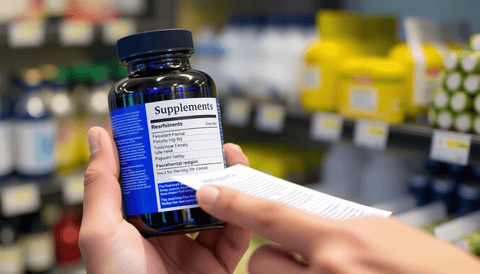
Daily value percentages, shown as %DV on nutrition labels, tell you how much one serving of a food contributes to your recommended daily intake of key nutrients. Learning to read these percentages makes it possible to compare products at a glance, spot nutrient-dense options, and identify foods high in sodium, added sugar, or saturated fat. This article explains what the Daily Value means, how it differs from other reference values, how to use it when reading labels, and when %DV information can also guide supplement choices.
What Does “Daily Value” Actually Mean on a Nutrition Label?
The Daily Value (DV) is a reference amount established by food authorities that represents how much of a given nutrient an average adult should aim to consume per day, based roughly on a 2,000-calorie diet. When a label states that a food provides 15% DV for fiber, it means one serving contributes 15% of the amount generally recommended for a day.
Importantly, the %DV is not a personal prescription. It is a general benchmark designed for population-wide labeling, which makes it a useful comparison tool rather than an individualized target. Your actual needs may be higher or lower depending on your age, sex, life stage, activity level, and health status — a distinction explored later in this article.
DVs apply to nutrients that must be declared on labels, including fiber, vitamins, minerals, sodium, added sugars, and saturated fat. In some regions, listing %DV is mandatory for most declared nutrients; in others, it is voluntary or presented in slightly different formats such as “reference intake” percentages.
Daily Value vs. Recommended Dietary Allowance: Key Differences
Although often confused, the Daily Value and the Recommended Dietary Allowance (RDA) are not the same thing. The RDA is a scientific estimate of intake that meets the needs of roughly 97–98% of healthy people in a specific age and sex group. It is used primarily by researchers, dietitians, and policy makers rather than consumers.
The DV, by contrast, is a simplified labeling reference, usually derived from population-wide intake recommendations. It is deliberately generalized so that a single number can appear on all packaged foods for all adults. As a result, the DV for a given nutrient sometimes differs from the RDA for a particular group — for example, the iron needs of a menstruating woman may exceed the generalized DV used on labels.
For practical purposes, this distinction rarely matters when comparing products in a supermarket. The %DV remains a consistent yardstick across foods, which is exactly what makes it valuable. It only becomes relevant to understand the difference when you start calculating your own nutrient intake in detail or interpreting blood-test results alongside dietary advice.
How to Use Daily Value Percentages to Read a Nutrition Label
Reading a label through the lens of %DV is straightforward once you know what to look for. Start with the serving size at the top of the panel — all percentages refer to that specific portion, not to the package as a whole. A bag of chips that contains three servings will show modest percentages per serving that triple if you eat the whole bag.
Next, scan the nutrients you want to encourage and the ones you want to limit. %DV is most useful as a two-directional tool: higher percentages are generally desirable for fiber, vitamins, minerals, and (in some labeling systems) protein, while lower percentages are preferable for saturated fat, sodium, and added sugars.
The 5% and 20% Rule for Quick Interpretation
A widely used rule of thumb helps interpret %DV quickly: 5% DV or less per serving is considered low, while 20% DV or more is considered high. This applies in both directions.
- Low is good for: saturated fat, sodium, and added sugars. A frozen meal with 40% DV for sodium per serving is significant.
- High is good for: dietary fiber, calcium, iron, potassium, and vitamin D. A cereal providing 25% DV for fiber per serving is a meaningful contributor.
The rule is a heuristic, not a strict standard, but it offers a fast way to triage products when time is limited.
How to Compare Foods Using Daily Value Percentages
Because DVs use the same reference for every product, %DV allows apples-to-apples comparison even when serving sizes differ in weight. The key step is to normalize for serving size. Two breads may show 8% and 12% DV for fiber, but if one lists a 30 g slice and the other a 45 g slice, you need to adjust mentally to a realistic portion.
A practical comparison method:
- Compare the nutrients that matter most for your goals rather than the entire panel.
- Adjust for realistic portions — how much you would actually eat, not the label serving.
- Use %DV to spot foods that pull their weight nutritionally (high fiber, high micronutrients, low sodium).
Why Focusing on Daily Value Percentages Can Improve Nutritional Choices
Most people cannot recall how much potassium or vitamin B12 they eat in a day, let alone compare it to a reference intake. %DV translates abstract numbers into an intuitive scale. Over time, this makes it easier to build a diet that consistently meets micronutrient needs without meticulous tracking.
Identifying Nutrient-Dense Foods with %DV
Nutrient density refers to the amount of beneficial nutrients relative to calories. A food providing 20–30% DV for several vitamins and minerals in a modest calorie serving is nutrient-dense; a food providing similar percentages with a much larger calorie load is less so. Using %DV alongside calorie information per serving is an efficient way to identify nutrient-dense options across categories like bread, dairy, cereals, and ready meals.
Recognizing Hidden Sodium, Added Sugar, and Saturated Fat
Many foods that do not taste salty or sweet contain surprisingly high percentages of sodium or added sugar. Bread, sauces, processed meats, and plant-based meat alternatives are common sources of hidden sodium. Flavored yogurts, granola, and sauces often carry significant added-sugar percentages. Because %DV puts these amounts in context of a whole day's allowance, it reveals how quickly a few convenience foods can exhaust your daily “budget” for these nutrients.
Factors That Influence Your Personal Daily Value Needs
While the label assumes a generalized adult, individual requirements vary considerably. Understanding where you may deviate from the standard reference helps you interpret %DV in the context of your own needs rather than treating it as a fixed target.
Age, Gender, and Life Stage
Reference intakes differ across life stages. Iron needs are higher for menstruating women than for men. Calcium and vitamin D recommendations increase for older adults, whose bones benefit from additional support. Pregnant and breastfeeding women have elevated needs for folate, iron, iodine, and several other nutrients. Children and teenagers have their own reference values that may differ substantially from the adult DV shown on labels.
Activity Level and Health Status
People with high energy expenditure — for example, athletes or those in physically demanding jobs — may have higher overall nutrient needs simply because they eat more food and lose more minerals through sweat. Certain health conditions and medications can also affect nutrient absorption or increase requirements: proton pump inhibitors can reduce vitamin B12 and magnesium absorption, metformin can affect B12 status, and gastrointestinal conditions such as Crohn's disease or celiac disease can impair absorption of multiple nutrients.
Foods That Contribute to Meeting Daily Values
A well-constructed diet can meet most Daily Values without difficulty. Key food groups that reliably contribute to daily micronutrient and fiber targets include:
- Vegetables and fruits — fiber, potassium, vitamin C, folate, and a range of antioxidants.
- Whole grains — B vitamins, fiber, magnesium, and iron (depending on fortification).
- Legumes and nuts — fiber, magnesium, iron, zinc, and plant protein.
- Dairy or fortified alternatives — calcium, vitamin B12, and often added vitamin D.
- Fatty fish — vitamin D, omega-3 fatty acids, and B12.
- Eggs and lean meats — B12, iron, zinc, and high-quality protein.
If you want a deeper overview of how whole foods and fortified products contribute to nutrient intake, our guide to superfoods and approved nutrient claims offers additional context.
Practical Ways to Cover Common Nutrient Shortfalls
Population surveys in many countries consistently identify a handful of nutrients where average intake falls short: fiber, vitamin D, calcium, potassium, magnesium, and iron (particularly among women). Practical strategies include:
- Choosing whole-grain versions of bread, pasta, and rice to boost fiber and B vitamins.
- Including legumes or nuts in most days of the week for magnesium, iron, and fiber.
- Eating fatty fish once or twice per week for vitamin D and omega-3s.
- Using %DV on labels to prioritize cereals, plant milks, and snacks with meaningful micronutrient content.
Relevant Nutrients and Supplements for Closing Daily Value Gaps
When diet alone leaves persistent gaps, supplements can help close the distance between typical intake and daily values. The most commonly supplemented nutrients — vitamin D, magnesium, calcium, and the B vitamins — all have well-established reference values that make %DV a useful benchmark for evaluating supplement doses. For example, vitamin D and magnesium are among the nutrients most frequently reported as insufficient in dietary surveys, which is reflected in their popularity as supplements.
Minerals more broadly, including iron, zinc, selenium, and iodine, can be difficult to obtain in optimal amounts from modern diets, and a guide to mineral supplements can help clarify when individual minerals may be relevant.
When Supplementation May Be Worth Considering
Supplementation is not automatically necessary for everyone, and food should generally be the first strategy. However, certain situations make it harder to meet daily values through diet alone, and in these cases a supplement may reasonably be considered.
Situations Where Food Alone May Not Cover Daily Values
- Limited sun exposure: vitamin D synthesis depends on UVB exposure, which is insufficient at northern latitudes in winter and for people who cover their skin or spend most time indoors.
- Restrictive diets: vegans and vegetarians may need attention to vitamin B12, iron, zinc, iodine, and omega-3 intake.
- Increased requirements: pregnancy, breastfeeding, rapid growth in adolescence, and older age all shift nutrient needs upward.
- Reduced absorption: gastrointestinal conditions, some medications, and age-related changes can lower how much of a nutrient is actually absorbed from food.
- Consistently low intake: people who repeatedly see low %DV contributions for a nutrient across their usual foods may have a genuine gap.
How to Prioritize Supplements Based on Your Nutrient Gaps
The most rational approach is to identify which nutrients are actually low in your diet before buying anything. A simple review of your typical weekly meals — or a period of tracking where %DV values are visible — can highlight recurring shortfalls. Prioritize nutrients with established insufficiency risk in your region or demographic group, and avoid accumulating multiple products that overlap in the same nutrients, which can push total intake above intended levels. Where available, blood testing for nutrients such as vitamin D, B12, ferritin, and folate provides more reliable information than symptom-based guessing.
How to Choose a Supplement to Help Meet Daily Values
If you have identified a genuine gap, several factors distinguish high-quality supplements from poorly formulated ones.
Single Nutrients vs. Multivitamins
A single-nutrient supplement (for example, vitamin D or magnesium alone) allows precise dosing targeted at a specific gap. A multivitamin provides broad coverage across many nutrients at once, which suits people with generally variable diets but offers less flexibility. If your diet review shows one or two clear gaps, single-nutrient products are usually more efficient; if intake is unpredictable across the board, a multivitamin may offer a practical baseline.
Nutrient Forms and Bioavailability
The chemical form of a nutrient affects how well it is absorbed and tolerated. For example, magnesium exists as oxide, citrate, glycinate, and other salts, with the citrate and glycinate forms generally better absorbed than oxide. Vitamin B12 appears as cyanocobalamin or methylcobalamin; folate as folic acid or the active 5-MTHF form. Evidence on whether "active" forms are meaningfully superior for healthy people is mixed in many cases, but form can matter for absorption, tolerability, and specific populations. Checking the form on the label rather than only the headline nutrient name is a sensible habit.
Third-Party Testing and Quality Certifications
Because supplements are not always tested to the same rigor as pharmaceuticals, third-party certification (such as independent laboratory testing or recognized quality seals) provides reassurance that the product contains what the label claims within acceptable limits. Reputable manufacturers, clear ingredient lists without unnecessary fillers, and transparent labeling practices are all useful indicators of quality.
Reading the Supplement Label: Key Elements to Understand
Supplement labels mirror food labels in some respects but include important additional elements:
- Amount per serving and %DV: just like food labels, many supplements show how much of the Daily Value one serving provides. A supplement offering 100% DV is designed to cover the full reference amount; one offering 400% DV significantly exceeds it and warrants caution.
- Form of the nutrient: for example, magnesium citrate vs. magnesium oxide.
- Serving size and servings per container: determines how long the product lasts and what a single dose actually contains.
- Other ingredients: fillers, allergens, sweeteners, and capsule materials matter for people with sensitivities or dietary preferences (such as vegan capsules).
- Warnings and contraindications: relevant for pregnancy, medication use, and specific health conditions.
Note that %DV is not established for every nutrient found in supplements, such as some plant extracts or trace compounds. In those cases, the label lists only the absolute amount.
Who Should Consider Using the %DV to Guide Supplementation?
Using %DV as a benchmark is most helpful for people who want a straightforward, non-technical way to evaluate whether a supplement dose is appropriate — high enough to be meaningful, but not so high that it displaces a sensible safety margin. This includes people self-directing their supplement routine, those comparing multiple products, and anyone building a diet-plus-supplement plan to address known shortfall nutrients. People with diagnosed deficiencies, medical conditions, or complex medication regimens should instead rely on individualized dosing from a healthcare professional.
Safety, Upper Limits, and Interactions to Keep in Mind
Higher intake is not inherently better. Nutrients have established tolerable upper intake levels (ULs) — the maximum daily amount unlikely to cause adverse effects. Fat-soluble vitamins A, D, E, and K accumulate in the body and can reach harmful levels with chronic excessive intake, while even water-soluble nutrients such as vitamin C, niacin, and zinc have upper limits.
Interactions matter as well. High-dose zinc taken long-term can interfere with copper absorption; calcium and iron compete for absorption when taken together in large amounts; vitamin K can affect blood-thinning medications such as warfarin. If you take prescription medication, are pregnant or breastfeeding, or have kidney, liver, or other chronic conditions, consult a healthcare professional before starting any new supplement.
How to Turn Daily Value Percentages into an Actionable Plan
Knowledge only becomes useful when applied. A practical sequence looks like this:
- Week 1–2: pay attention to %DV on the foods you buy most often; note where sodium or added sugar percentages run high and where fiber and micronutrient percentages run low.
- Ongoing: adjust purchases toward foods with favorable %DV profiles for your goals.
- Assessment: identify which nutrients remain persistently low in your overall pattern.
- Action: if dietary adjustments are insufficient or impractical, consider a targeted supplement — or seek testing and professional guidance first.
Questions to Ask Before Buying a Supplement
- Which specific nutrient gap am I trying to address, and is it confirmed by my diet pattern or a test?
- What dose does the product provide, and how does it compare to the %DV and to upper intake levels?
- Which chemical form of the nutrient is used, and is it well absorbed?
- Does the product carry third-party testing or recognized quality certification?
- Does it contain allergens, unnecessary additives, or overlapping nutrients with other products I already take?
When to Consult a Healthcare Professional
Professional guidance is advisable if you suspect a deficiency (symptoms alone cannot establish nutritional status), take prescription medications, are pregnant or breastfeeding, manage a chronic condition, or plan to use high doses long-term. A doctor or registered dietitian can arrange blood tests that measure actual nutrient status, which is far more reliable than inferring needs from labels or symptoms.
Conclusion: Making Informed Choices with Daily Value Percentages
Daily value percentages transform nutrition labels from dense data into a practical decision tool. The 5%/20% rule gives you a fast way to judge any product; comparing %DV across foods reveals which options genuinely contribute to your nutrient targets; and watching sodium, added sugar, and saturated fat percentages helps you spot the foods quietly consuming your daily allowance. Because %DV is based on a generalized adult, treat it as a comparison benchmark rather than a personal prescription — your own needs depend on age, sex, life stage, and health status. For most people, a varied whole-food diet covers the majority of daily values, with supplements serving as a targeted tool for well-identified gaps rather than a default. When gaps persist, testing and professional guidance are the most reliable next steps before committing to long-term supplementation.
Key Takeaways
- %DV shows how much one serving of a food contributes to the recommended daily intake of a nutrient, based on a generalized adult reference.
- The 5%/20% rule offers a quick interpretation: 5% or less is low, 20% or more is high — in both helpful and unhelpful directions.
- Always check the serving size first; all percentages apply to that portion, not the package.
- Use %DV to seek high percentages of fiber, vitamins, and minerals and low percentages of sodium, added sugar, and saturated fat.
- Daily Values differ from RDAs: DVs are simplified labeling benchmarks, while RDAs are scientifically derived for specific population groups.
- Individual needs vary with age, sex, pregnancy, activity level, medications, and health conditions.
- Diet should be the primary strategy for meeting daily values; supplements are most useful for well-identified gaps such as vitamin D, magnesium, or B12 in at-risk groups.
- Higher supplement doses are not better — tolerable upper intake levels exist, and fat-soluble vitamins can accumulate with chronic excessive use.
- Blood testing and professional assessment provide more reliable information about nutrient status than symptoms or label percentages alone.
Frequently Asked Questions
What does 10% DV mean on a nutrition label?
It means one serving of the food provides 10% of the daily reference amount for that nutrient. Whether that is good depends on the nutrient: 10% DV of fiber per serving is a reasonable contribution, while 10% DV of sodium per serving in a small snack adds up quickly if you eat several such foods per day.
Are Daily Values the same for everyone?
No. The DV used on labels is a single generalized adult reference, typically based on a 2,000-calorie diet. Actual nutrient requirements vary by age, sex, life stage, and health status, so your personal needs may be above or below the label reference.
What is the difference between %DV and RDA?
The RDA is a scientific estimate of intake meeting the needs of about 97–98% of healthy people in a specific age and sex group. The DV is a simplified, population-wide labeling value derived from intake recommendations, used so that one consistent number can appear on all food labels.
How much %DV should I look for in a healthy food?
A useful benchmark is 10–20% DV or more per serving for beneficial nutrients like fiber, calcium, iron, and vitamins, alongside 5% DV or less for sodium, added sugars, and saturated fat. No single food needs to meet all criteria, but the overall daily pattern should favor this profile.
Should I aim for 100% of the Daily Value for every nutrient every day?
Aiming for roughly 100% on average over several days is sensible for most nutrients, but you do not need each individual food or each individual day to hit exactly 100%. Nutrient stores buffer day-to-day variation, and some nutrients are absorbed less efficiently than the raw numbers suggest.
Can a supplement provide more than 100% DV — is that safe?
Some supplements intentionally exceed 100% DV, and occasional use is generally within safe ranges for many nutrients. However, chronic intake above the tolerable upper intake level can be harmful, particularly for fat-soluble vitamins (A, D, E, K), iron, zinc, and niacin. Check both the dose and any additional fortified foods you consume before choosing high-percentage products.
Why do some supplement labels not show a %DV?
A %DV is only established for nutrients with official reference values. Plant extracts, some trace compounds, and newer ingredients may not have an assigned DV, so the label lists only the absolute amount per serving.
Do added sugars and natural sugars count the same on labels?
Labels distinguish "added sugars" (those introduced during processing) from total sugars (which include naturally occurring sugars in fruit and dairy). The %DV applies specifically to added sugars, reflecting dietary guidance to limit them, while naturally occurring sugars in whole foods come packaged with fiber, vitamins, and other nutrients.
How accurate is %DV for children and older adults?
For these groups, the label DV can be misleading in either direction. Children generally need less of most nutrients than the adult reference, while older adults often need more calcium, vitamin D, and B12. Use %DV for product comparison, but rely on age-specific reference values or professional advice for personal targets.
Can I use %DV to check if I have a vitamin deficiency?
No. %DV reflects label information about food content, not your body's actual nutrient status. Estimating intake from labels is a rough screening approach at best, and symptoms alone cannot establish deficiency. Blood tests and clinical assessment are the reliable ways to evaluate nutrient status.
Do percentages still apply if I eat more than one serving?
Yes — simply multiply. Two servings of a food providing 15% DV for fiber contributes 30% DV. This is why checking the serving size first matters: packages often contain multiple servings despite appearing to be single portions.
Which nutrients most often fall short of daily values in typical diets?
Dietary surveys commonly flag fiber, vitamin D, calcium, potassium, magnesium, and iron (especially among menstruating women) as the nutrients with the widest gaps between typical intake and reference values. These are reasonable starting points when evaluating whether supplementation may be relevant.
Related Keywords
- daily value percentages
- what is daily value on nutrition label
- %DV meaning
- daily value vs recommended dietary allowance
- 5% and 20% rule nutrition label
- how to read a nutrition label
- nutrient-dense foods
- daily value for vitamins and minerals
- tolerable upper intake level
- supplement label %DV
- common nutrient shortfalls
- added sugar daily value
- sodium percentage daily value
- nutrition facts label guide